Jump to ...
Not All Grocery Anchors Perform the Same, JLL’s Naveen Jaggi Says
Specialty Grocers Gain Momentum With Shoppers
Target Repositions $24B Grocery Business Around Differentiation and Experience
Walmart and Costco Double Down on Physical Stores
Aldi Tests a More Flexible Store Format
Investment in Grocery-Anchored Centers Remains Strong
Restaurants Face Growing Competition From Grocery and C-Stores
SoCal Micromarkets Pair Grocery With EV Charging
Grocers Rework Formats, Footprints and Brand Identity to Stay Competitive in a $900B+ Market
The grocery industry is navigating an era of reinvention, as retailers large and small reevaluate their formats, identities and footprints. From Target’s pivot toward specialty grocer to tiny-format markets alongside electric vehicle chargers, grocers are pursuing strategies to keep pace with shoppers’ evolving habits. These moves come as grocers and landlords chase bigger slices of what market research company IBISWorld estimated is a $912.4 billion sector in the U.S.
Not All Grocery Anchors Perform the Same, JLL’s Naveen Jaggi Says
While traditional grocers still capture the majority of shopping visits, their market share is slipping, JLL president of Americas retail advisory services Naveen Jaggi wrote in a LinkedIn article titled Not All Grocery Anchors Are Created Equal. Now, he said, value-oriented and fresh-format concepts are driving growth in the grocery sector. This split is “reshaping the grocery landscape,” he wrote.
“The days when any grocery store could anchor a center equally well are fading.”
He added: “Grocery-anchored centers remain one of the strongest performing retail formats. Vacancy sits well below the broader shopping center market, and these properties continue to command rent premiums. But the days when any grocery store could anchor a center equally well are fading.”
No definitive figure is available for the number of grocery-anchored retail centers in the U.S. However, JLL Income Property Trust’s Supermarket Trade Area Scoring System database, or STARS, tracks 40,000 grocery-anchored retail centers nationwide.
FROM THE C+CT ARCHIVE: Phillips Edison & Co.’s Joe Schlosser on Grocery-Anchored Leasing
Specialty Grocers Gain Momentum With Shoppers
Specialty grocers are picking up market share. Trader Joe’s 3% year-over-year growth for the period that ended Feb. 28 led the specialty sector, according to Consumer Edge’s U.S. Grocery Outlook 2026 report. Trader Joe’s outperformed the entire grocery sector by 6 percentage points. “The brand is gaining traction across income levels and age groups, including double-digit year-over-year growth among Gen Z shoppers,” Consumer Edge said. At the same time, traditional grocers like Publix and Safeway “are seeing pullbacks from every income group, with the sharpest declines among lower-income shoppers,” the firm said. In the discount grocery sector, dominated by operators like Aldi and Food 4 Less, growth has plateaued since mid-2025, according to Consumer Edge.
“What’s happening in grocery isn’t just about price,” said Consumer Edge senior vice president of research and market intelligence Michael Gunther. “Shoppers are making more deliberate choices about where they spend their money, and they’re gravitating toward retailers that give them a clear reason to be loyal, whether that’s unbeatable value at a hard discounter or a curated private-label experience at a specialty grocer. Traditional supermarkets are caught in the middle, and the data suggests that pressure isn’t going away.”
FROM THE C+CT ARCHIVE: Grocery Stores’ Enduring Appeal to Shoppers, Investors and Developers
Target Repositions $24B Grocery Business Around Differentiation and Experience
As market share grows for specialty grocers, Target, which sells groceries as part of its vast product lineup, is taking a Trader Joe’s-style turn. As Target has been ceding traditional-grocer territory to rivals like Kroger and Walmart, the big-box retailer now seeks to bolster its “unique identity” in the food business. “We are not trying to be an everything grocer or just another grocer down the street. Instead, we’re building a truly distinctive grocery destination where emerging brands, wellness and owned brands intersect,” executive vice president and chief marketing officer Cara Sylvester said during a recent earnings call.
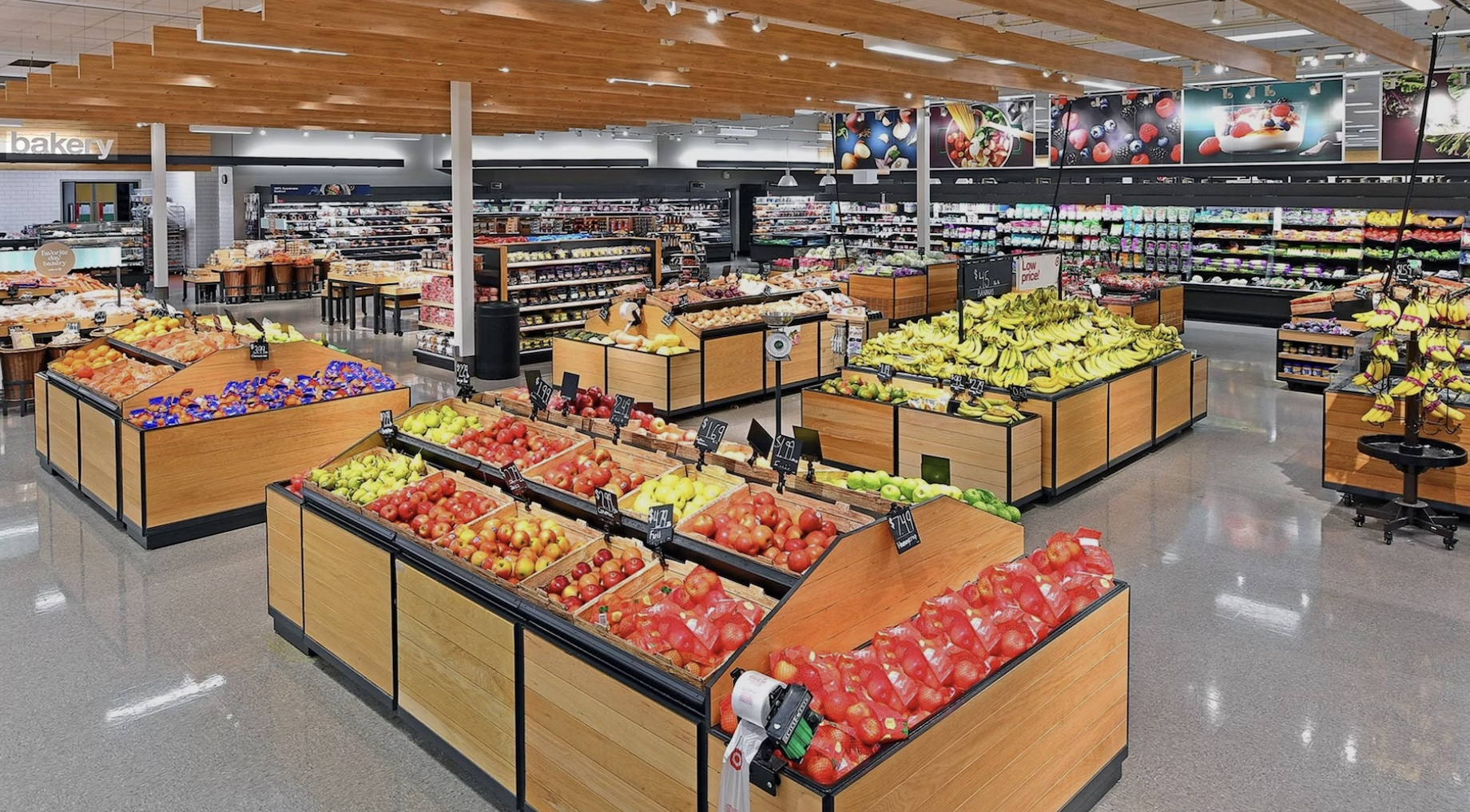
The grocery department at a Target in Irving, Texas, a Dallas-Fort Worth suburb. Photo courtesy of Target
In that vein, she said, Target will cater to grocery-shopping families “looking for fun, trend-forward options.” It’s a big bet on Target’s biggest category: The retailer’s food-and-beverage segment generated more than $24 billion in net sales during fiscal year 2025, which ended on Feb. 1. “We’re … investing meaningfully in the in-store food experience,” said Sylvester, citing food samplings as an example, “because shopping for food at Target should feel distinctly Target — delightful, joyful, unlike what you’ll find anywhere else.”
MORE FROM C+CT: 6 Retailers Grow Store Counts, Including Target’s $1B Investment Increase
Walmart and Costco Double Down on Physical Stores
Two other big-box retailers that operate in the grocery sector, Walmart and Costco, are doubling down on their brick-and-mortar presences. Walmart is remodeling more than 650 standard stores and Neighborhood Markets this year and is opening about 20 stores in 2026 and early 2027. In fiscal year 2026, which ended on Jan. 31, Walmart allocated more than $5.5 billion for about 675 store remodels and opened 12 stores. As of Jan. 31, Walmart operated more than 5,200 stores in the U.S.
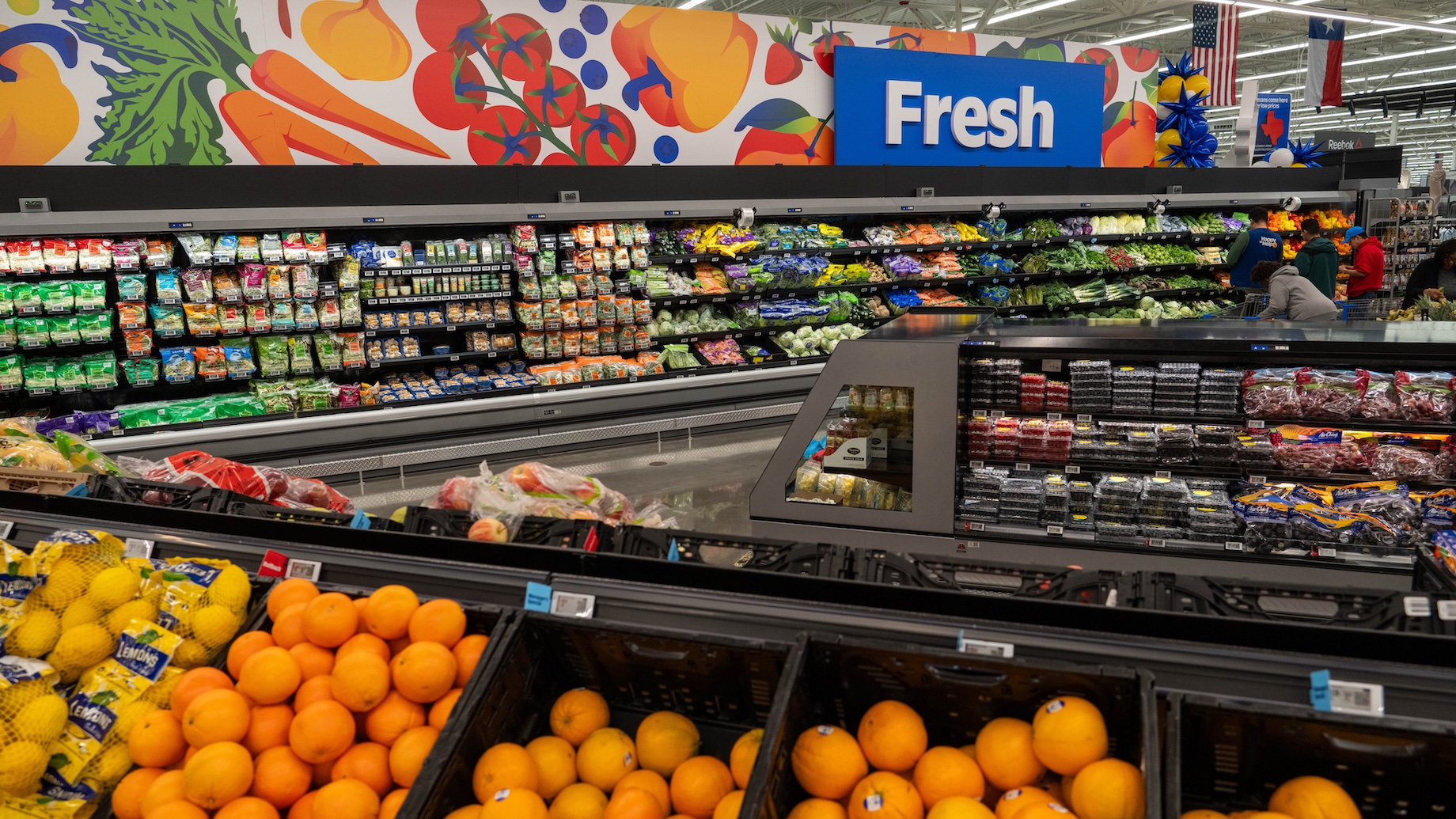
Walmart’s 2026 remodeling program will include a refresh of interiors and exteriors, such as new signage. Photo courtesy of Walmart
Meanwhile, Costco targets 30-plus new stores annually “in the coming years.” During a recent earnings call, Costco executive vice president and CFO Gary Millerchip said the warehouse retailer expects 28 net new openings in fiscal year 2026, which started on Sept. 1. Costco operates nearly 640 stores in the U.S.
MORE FROM C+CT: Costco Builds Standalone Gas Stations
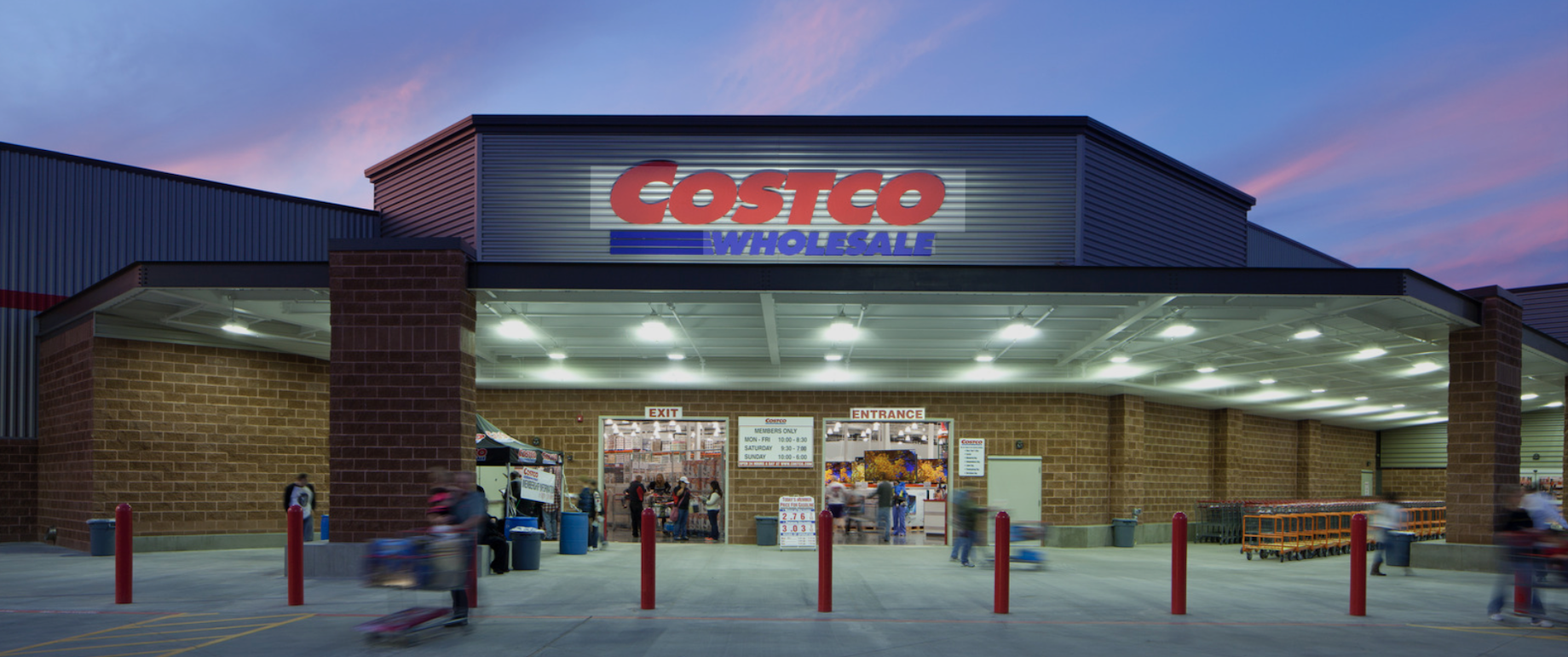
Costco operates nearly 640 warehouse stores in the U.S. Photo courtesy of MG2
Aldi Tests a More Flexible Store Format
Discount grocer Aldi is introducing flexibility into its store format. Parent company Aldi South Group, which operated nearly 7,600 stores in the U.S. and 10 other countries as of 2024, is using the U.S. as a testing ground for a new global layout, Forbes reported. The pilot kicked off in September in Aventura, Florida, a Miami suburb, and is expected to continue in the Sunshine State through 2026.
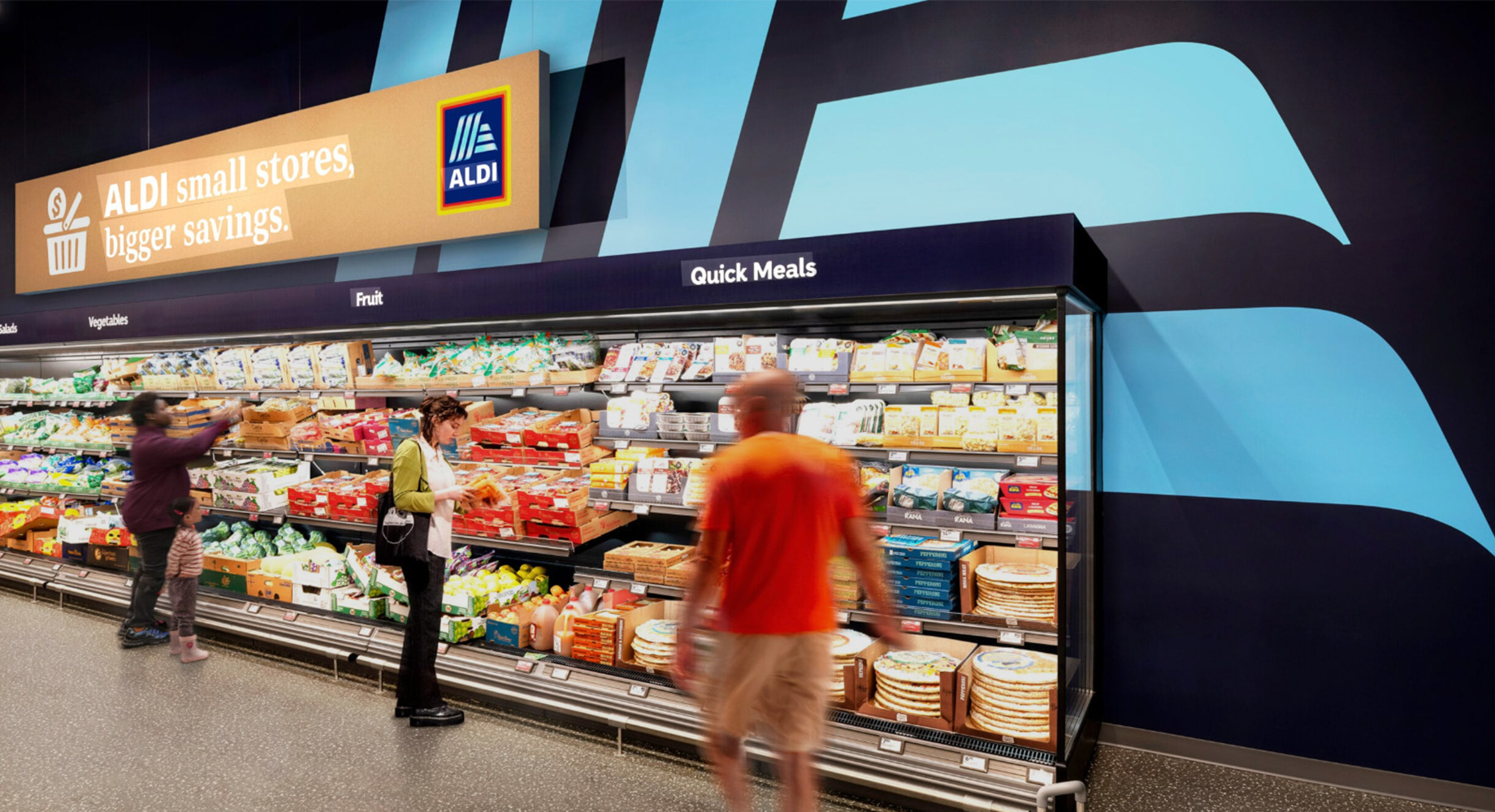
Aldi South Group started testing its new store format last year in Aventura, Florida. Photo by Andrew Meredith and courtesy of Landini Associates
“The redesign introduces a modular approach that can be adapted across store sizes and formats, from traditional suburban supermarkets to smaller urban footprints,” according to Forbes. “While Aldi has long been known for its standardized layouts — optimized for speed, efficiency and minimal staffing — the new model aims to create a more flexible environment that can respond to local real estate constraints and shifting shopping patterns without sacrificing cost discipline.” Of its nearly 7,600 stores around the world, Aldi South Group operates more than 2,400 in the U.S. To mark its 50th anniversary in the U.S., the German grocer is opening 150 stores in the country this year.
Investment in Grocery-Anchored Centers Remains Strong
Regency Centers and Brixton Capital are among the many retail landlords continuing to put capital into grocery-anchored retail.
A clear sign of the wave: Last year, deals for grocery-anchored centers in the U.S. totaled almost $11 billion, up 42% from 2024, according to JLL’s Grocery Tracker 2026.
This year, for example, Brixton Capital has spent close to $130 million to acquire two grocery-anchored retail centers. The most recent was the $29.4 million purchase of Las Vegas’ Vons-anchored Las Palmas Village, a 106,838-square-foot property that’s 95% leased. Earlier this year, Brixton Capital acquired the Vallarta Supermarkets-anchored Quad at Whittier in suburban Los Angeles for $100 million. The 314,593-square-foot, nine-building center was 95.6% leased at the time of the purchase.
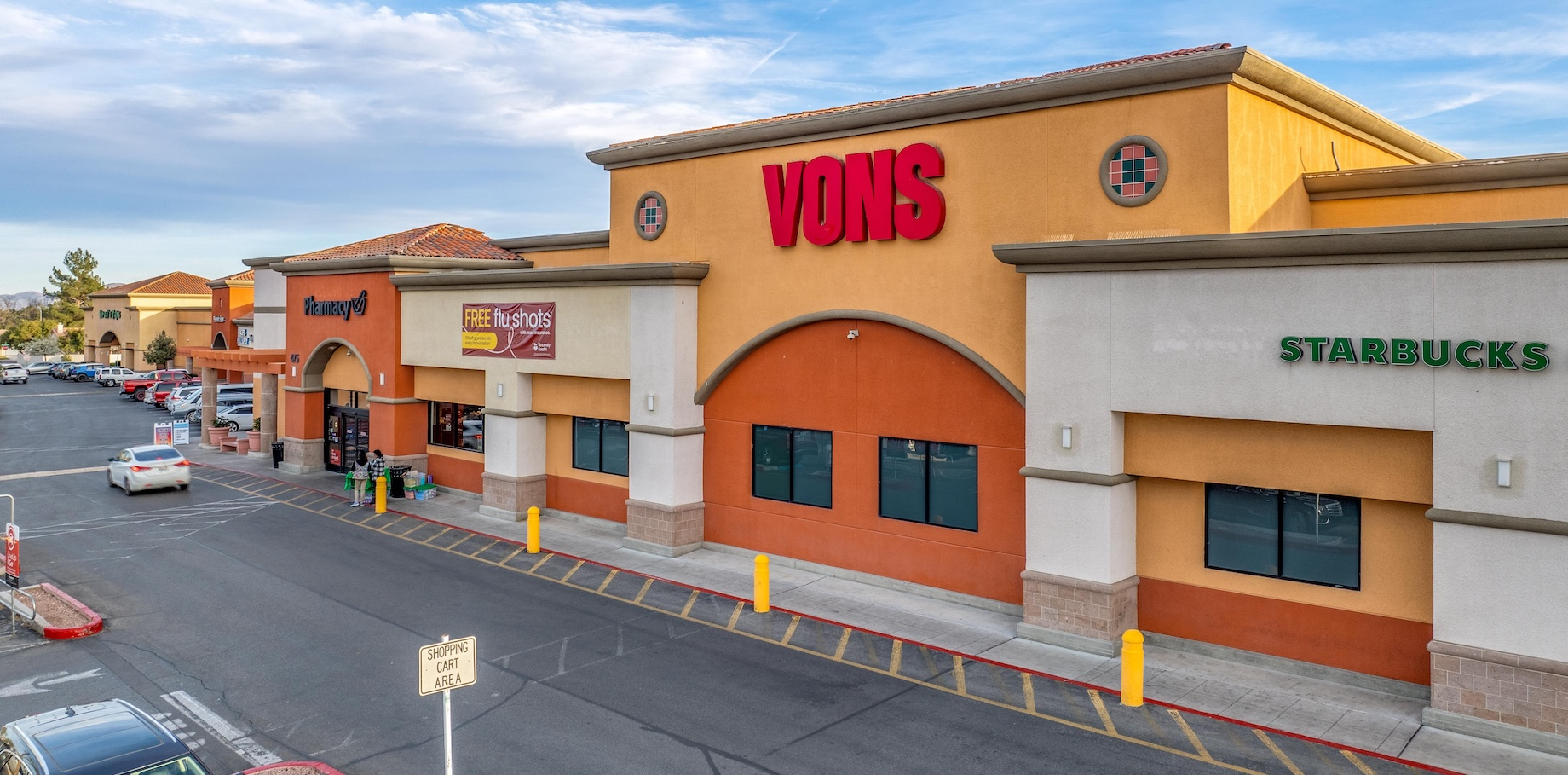
A Vons grocery store anchors Las Vegas’ Las Palmas Village, which Brixton Capital has acquired for $29.4 million. Photo courtesy of JLL
In two other grocery-related transactions this year, Medipower bought a 558,000-square-foot portfolio of seven grocery-anchored retail centers for $115 million, and Nuveen paid $298 million for a 956,865-square-foot, seven-property retail portfolio, with six of the centers anchored by grocery stores.
MORE FROM C+CT: Nuveen Real Estate Has Assembled More Than $2.5B To Invest in Grocery-Anchored and Other Necessity-Based Retail
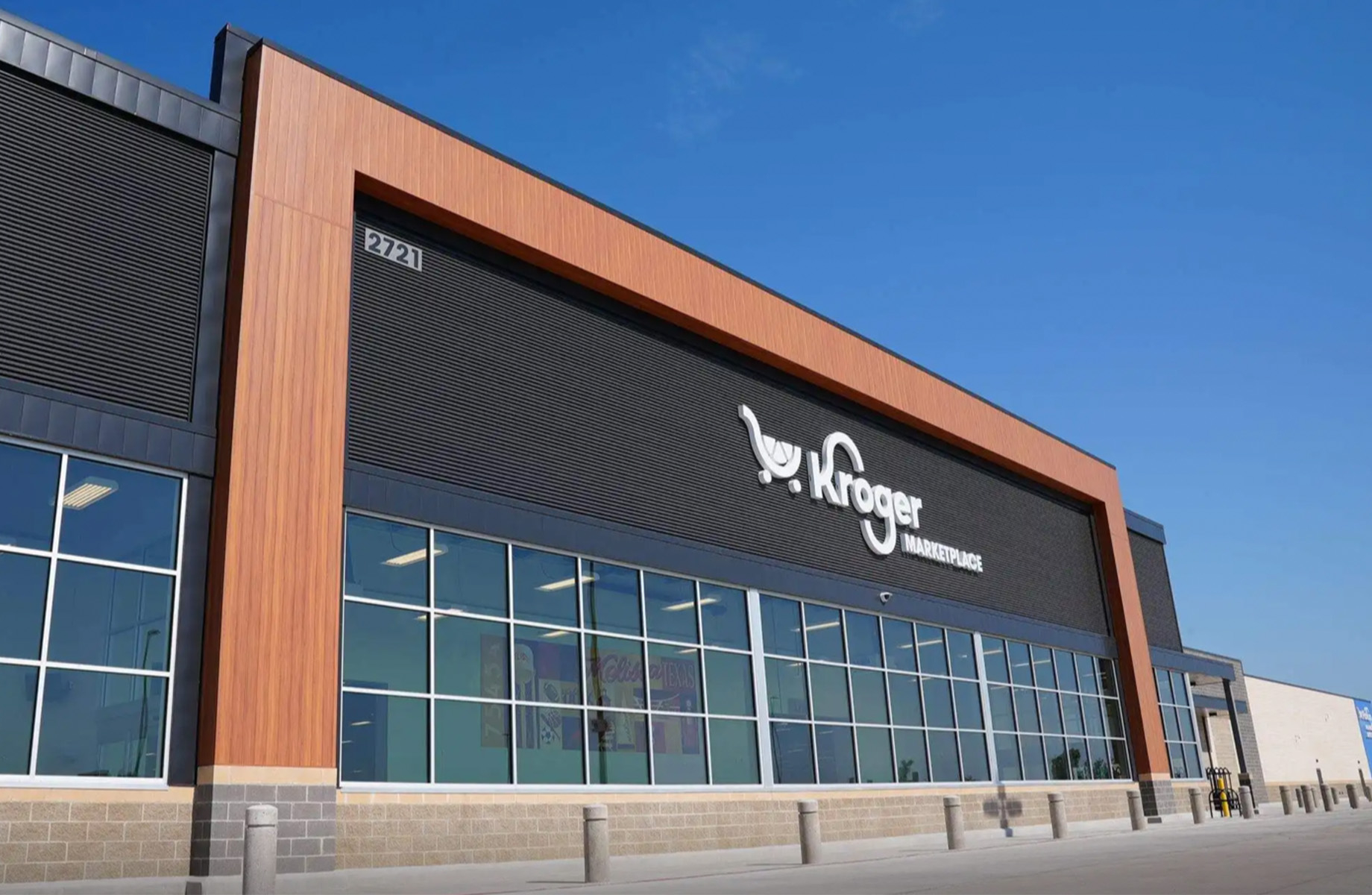
In 2025 and 2026, Blackstone Real Estate acquired three largely grocery-anchored portfolios comprising 130 properties for a total of $6.7 billion. Kroger is among the tenants. Photo courtesy of Venture Commercial
And although retail construction has slowed considerably, some real estate developers are still building grocery-anchored centers. For instance, Regency Centers is developing a 71,400‑square‑foot, Whole Foods-anchored center in Redlands, California. In addition to the 36,000-square-foot grocery store, four more retail buildings at the center, called The Marketplace, will accommodate as many as 18 stores, and a pad site is being created for a drive-thru concept.
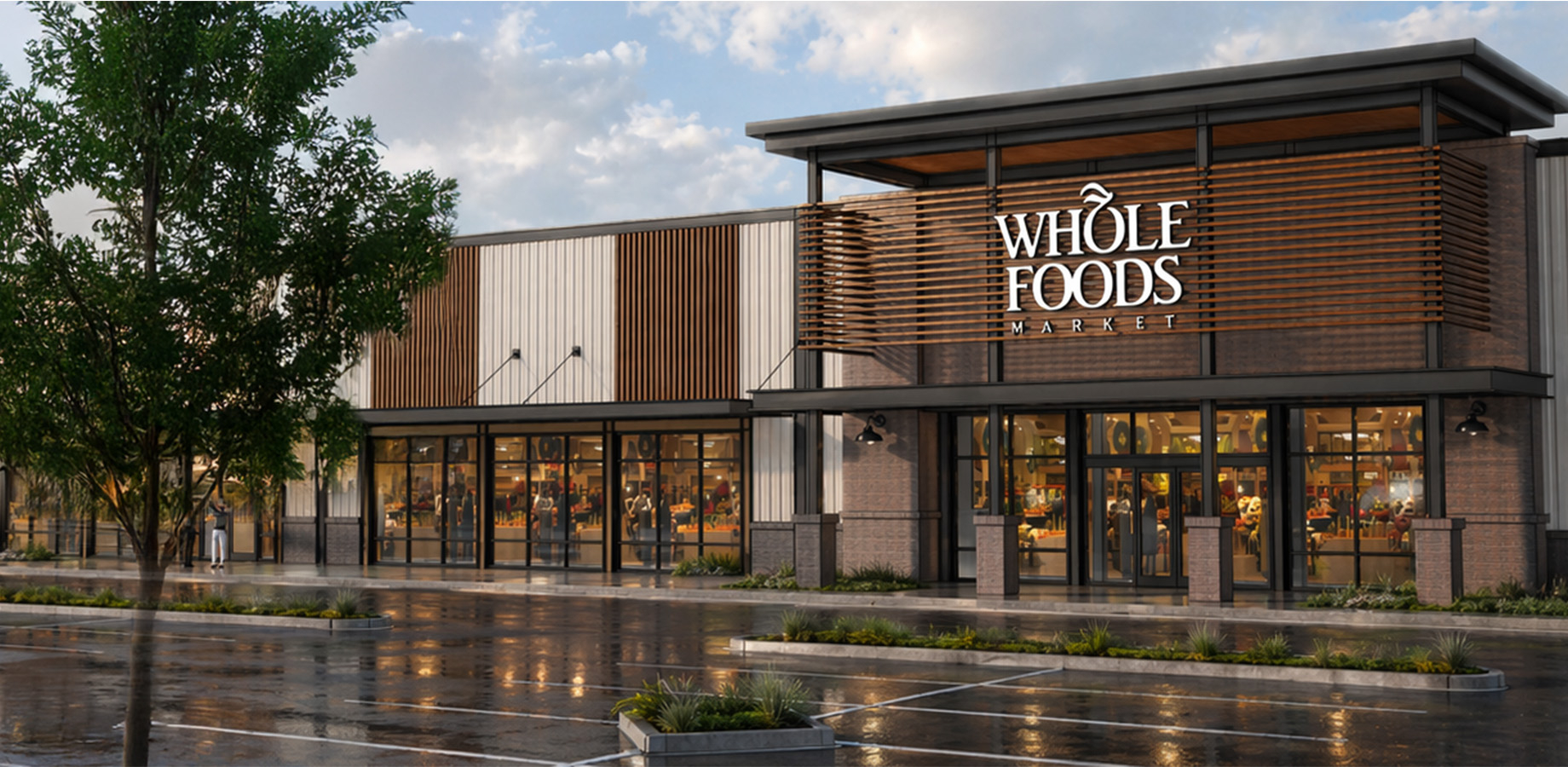
Regency Centers is developing a Whole Foods-anchored shopping center in Redlands, California. Rendering above and at top courtesy of KTGY
Restaurants Face Growing Competition From Grocery and C-Stores
Tillster’s 2026 Phygital Index Report survey of U.S. diners suggests fast-food and fast-casual restaurant chains are losing dining business to grocery stores and convenience stores. Of the 2,144 diners surveyed, 29% were frequenting fast-food chains less often and 37% said the same about fast-casual chains. Meanwhile, 36% of diners were visiting grocery stores more often, and 33% were heading to c-stores more frequently. “As nontraditional foodservice players win more dining occasions and beat fast-food and fast-casual on perceived value, restaurants must move beyond discounting and prioritize seamless and personalized experiences to stay competitive,” the report said. Tillster sells commerce technology to quick-service and fast-casual brands.
SoCal Micromarkets Pair Grocery With EV Charging
U.S. grocery stores are shrinking, according to FMI, The Food Industry Association, but California-based Gelson’s, which operates 27 traditional grocery stores in Southern California, is taking the small-format trend to a tiny level. The grocer recently opened its second ReCharge by Gelson’s micromarket, at 5,400 square feet, in the Los Angeles area’s Costa Mesa, according to The Shelby Report.
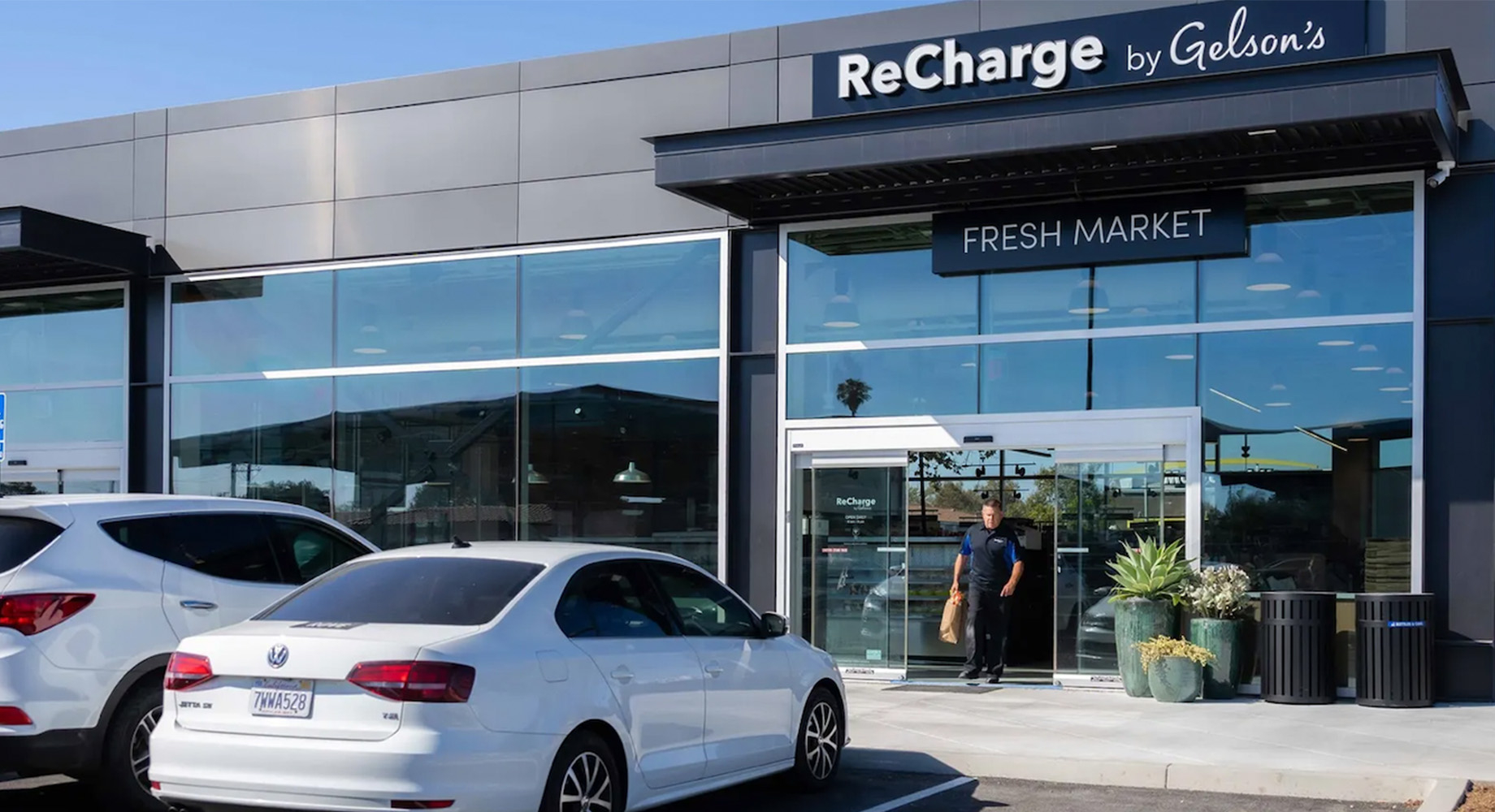
Gelson’s operates 27 traditional grocery stores and two “premium convenience stores” like this one in Southern California. Photo courtesy of Gelson’s
Each micromarket, billed as a “premium convenience store,” pairs with a Rove fast-charging hub for electric vehicles. Amenities include an indoor lounge, free Wi-Fi, restrooms and a car wash. The store sells groceries like fresh produce, bread, beverages, snacks, pasta, beer and wine; hot food like breakfast burritos, chicken wings and pizza; and grab-and-go items like sandwiches and small bites. The first Gelson’s micromarket, measuring 3,000 square feet, is in nearby Santa Ana.
By John Egan
Contributor, Commerce + Communities Today