Jump To …
7 Retail and Restaurant Chains Plan 13,000+ New Locations
Mixed-Use Projects Take Shape at Former Macy’s, Naval Base and Brick Factory Sites
World Cup Drives Downtown Foot Traffic Growth in U.S. Host Cities
3 New Investment Platforms Pursue Retail and Mixed-Use Real Estate
Kroger-Giant Eagle Deal and JLL Survey Highlight Grocery Growth and Investor Demand
Family Dollar Sells 46 Stores in $75M Sale-Leaseback
7 Retail and Restaurant Chains Plan 13,000+ New Locations
Seven chains spanning fast-casual, convenience, off-price, apparel and wireless are making greater commitments to brick-and-mortar retail. IPO candidate Jersey Mike’s is shooting for almost 12,000 new shops, Casey’s plans at least 400 new convenience stores within three years, Einstein Bros. Bagels and Burlington are heading past 1,000 locations each, and IPO-bound Reformation aims to roughly double its footprint to 130 stores. This growth comes alongside format changes: Burlington is shrinking stores to roughly a third of their traditional size, Freddy’s is moving into end-cap and inline spaces and Consumer Cellular is opening stores while some wireless competitors remain digital-only.
Jersey Mike’s Targets 15,000 Global Stores Ahead of Planned IPO
It looks like Jersey Mike’s Subs might spend a sizable chunk of cash from its planned initial public offering on a massive expansion of its footprint. In IPO paperwork filed with the U.S. Securities and Exchange Commission, Jersey Mike’s outlined a goal of operating about 15,000 stores around the world, up from its current count of more than 3,200 stores in the U.S. and Canada. In the U.S. alone, Jersey Mike’s envisions opening about 7,500 over the long term, up from a previous projection of about 6,400 new stores. The chain has a pipeline of more than 1,600 new stores in the U.S., according to the SEC filing. Additionally, Jersey Mike’s is adding 300 in Canada and is entering the U.K. and Ireland with 300 there, as well. “We believe our international opportunity is substantial and could ultimately exceed the size of our domestic business,” Jersey Mike’s said in the SEC filing.
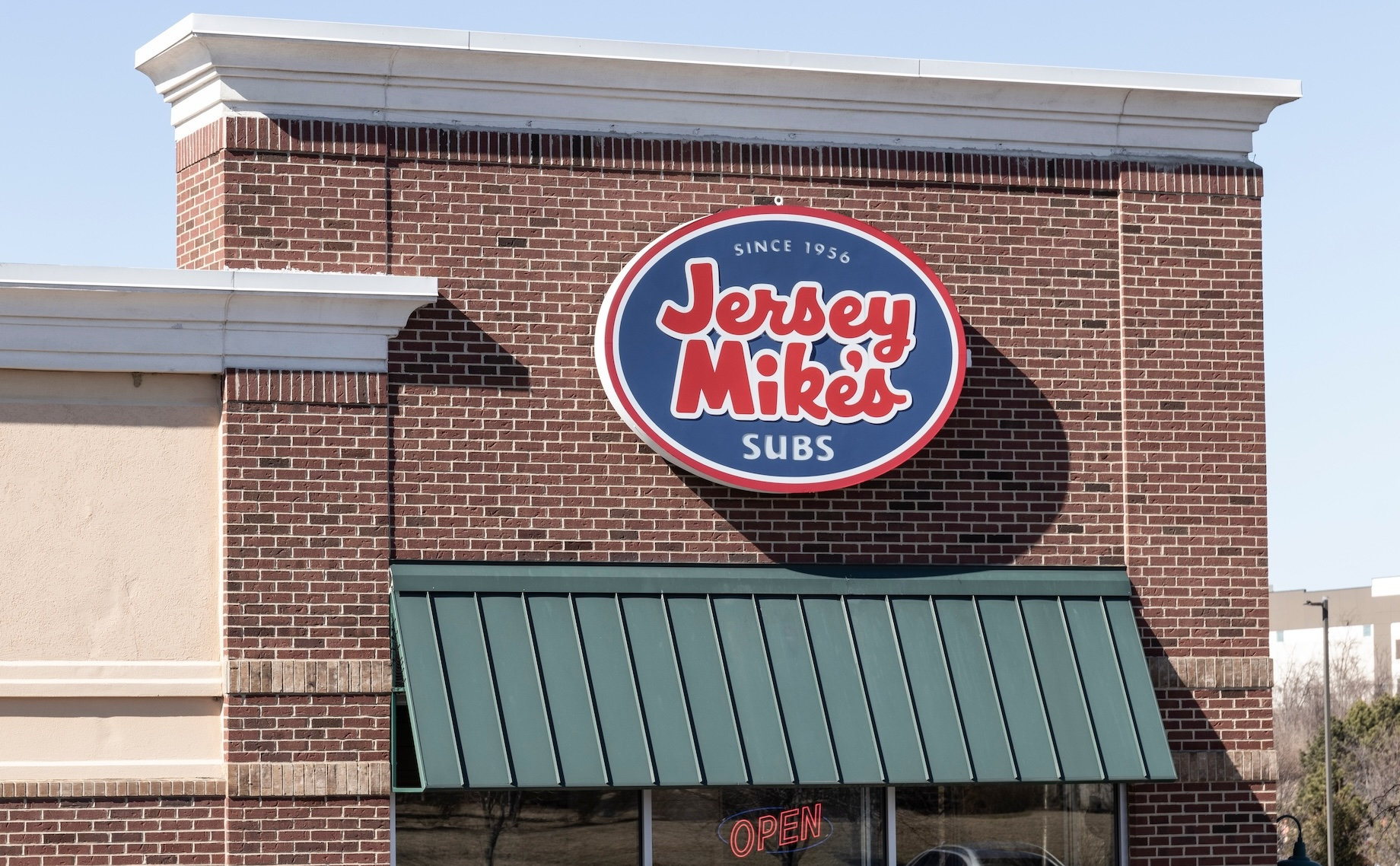
Jersey Mike’s foresees opening about 7,500 new stores in the U.S. over the long term. Photo above and at top: jetcityimage - stock.adobe.com
Casey’s Plans at Least 400 New Stores Over 3 Years
The Casey’s convenience store chain has adopted a three-year plan to add at least 400 stores to its current count of nearly 3,000. At Casey’s Analyst/Investor Day in late June, CFO Stephen Bramlage said the growth will come through single-store and small multistore deals, as well as new construction. Looking further ahead, Casey’s is banking land for new stores that would open in fiscal year 2030 and beyond, said Bramlage.
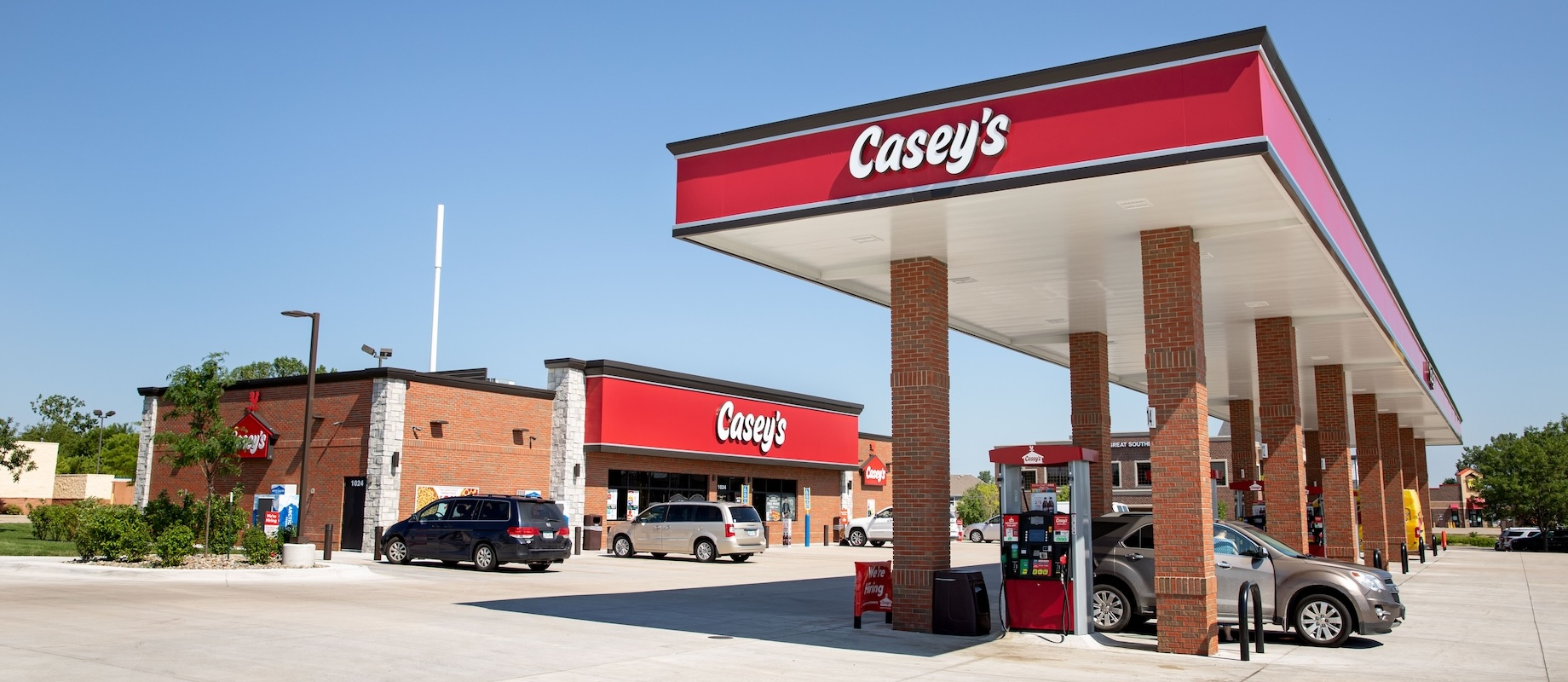
Casey’s is plotting growth of its footprint through acquisitions and new builds. Image courtesy of Casey’s/Business Wire
Einstein Bros. Bagels Plans More Than 300 New Stores by 2030
Einstein Bros. Bagels’ recipe for growth includes adding more than 300 stores by 2030. Today, the fast-casual chain operates more than 700 stores in the U.S.; the new plan would push its footprint past 1,000. The company said new stores will adopt a prototype that “blends premium finishes, warm neighborhood character and thoughtful layouts that make every visit easy and enjoyable, with the fresh-baked bagel case placed front and center.”
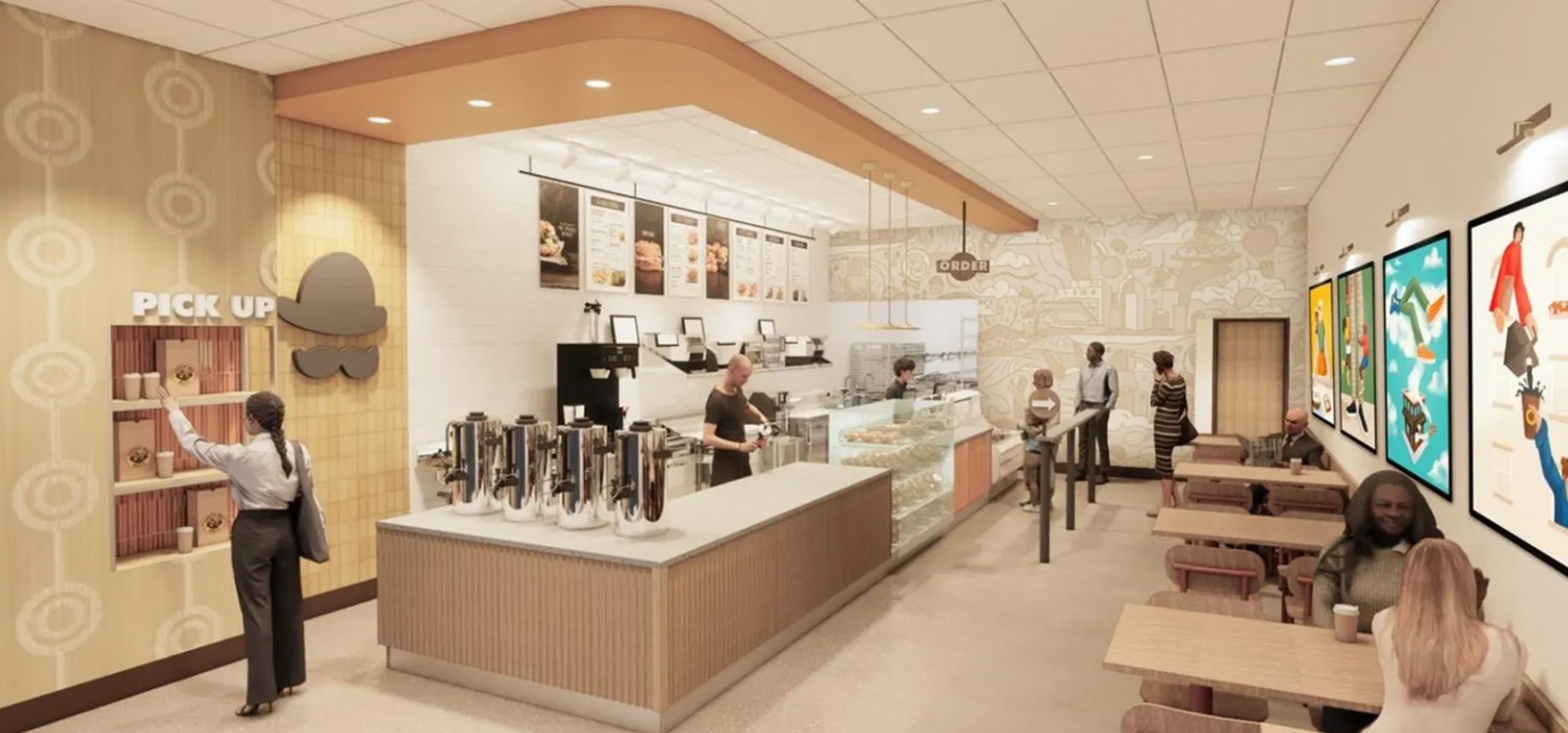
This preliminary rendering from 2025 hints at the new format for Einstein Bros. Bagels stores. Rendering courtesy of Einstein Bros. Bagels
Burlington Expects 80% of Its Stores Will Be in Smaller Formats by 2028
These days, small-box spaces dominate real estate moves at off-price retailer Burlington. Eighty percent of Burlington’s footprint will have been downsized, relocated or newly opened in small-format spaces by 2028, CEO Michael O’Sullivan told WWD. Burlington is shrinking stores to an average of 25,000 square feet from the traditional 80,000 to 100,000, WWD reported. “Despite the fact that our stores are a third the size of what they used to be, they’re doing similar sales volumes, and on a sales-per-square-foot basis, we’ve seen a huge increase in productivity,” said O’Sullivan. “So what the customer is saying is, they like that smaller format.” While the brand focuses on smaller-format locations, it’s not downsizing plans for new stores. In 2019, when O’Sullivan joined Burlington, the retailer operated a little over 700 stores, he said. Two years from now, it expects to have a 1,500-store footprint, up from a little over 1,200 at the end of fiscal year 2025, which ended on Jan. 31.
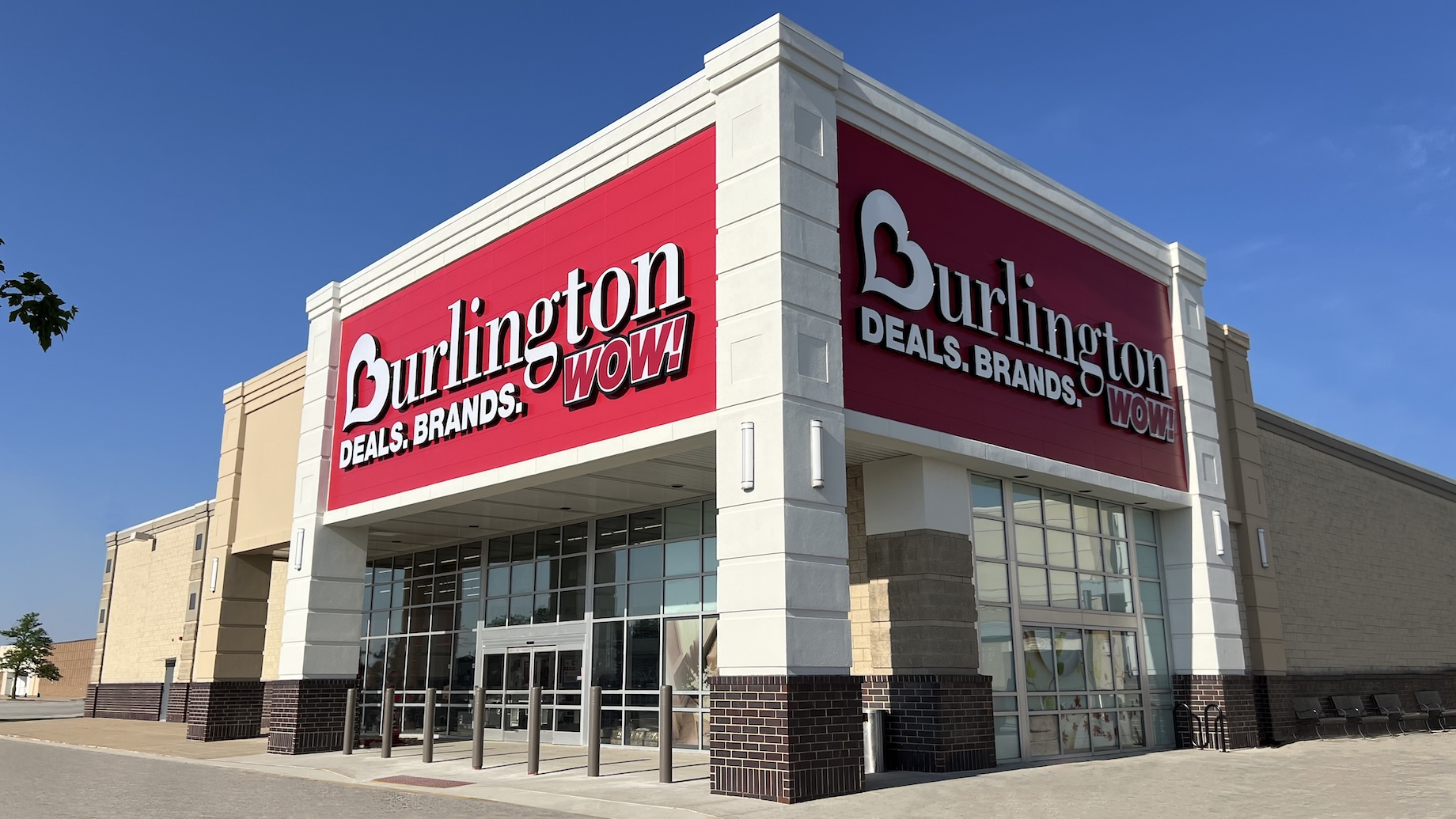
Burlington is downsizing stores to an average of 25,000 gross square feet. Image courtesy of Burlington
Consumer Cellular Plans 20 More Stores by the End of 2026
Wireless service provider Consumer Cellular, whose target customers are Americans 50 and above, recently opened its 100th company-owned store and envisions a 120-store footprint by the end of this year. “While much of the wireless industry continues to shift customers toward digital-only experiences, Consumer Cellular is moving in the opposite direction,” the company explained. Consumer Cellular said last month that its stores accounted for 14.4% of new customers year to date, up from 6.3% during the same period last year.
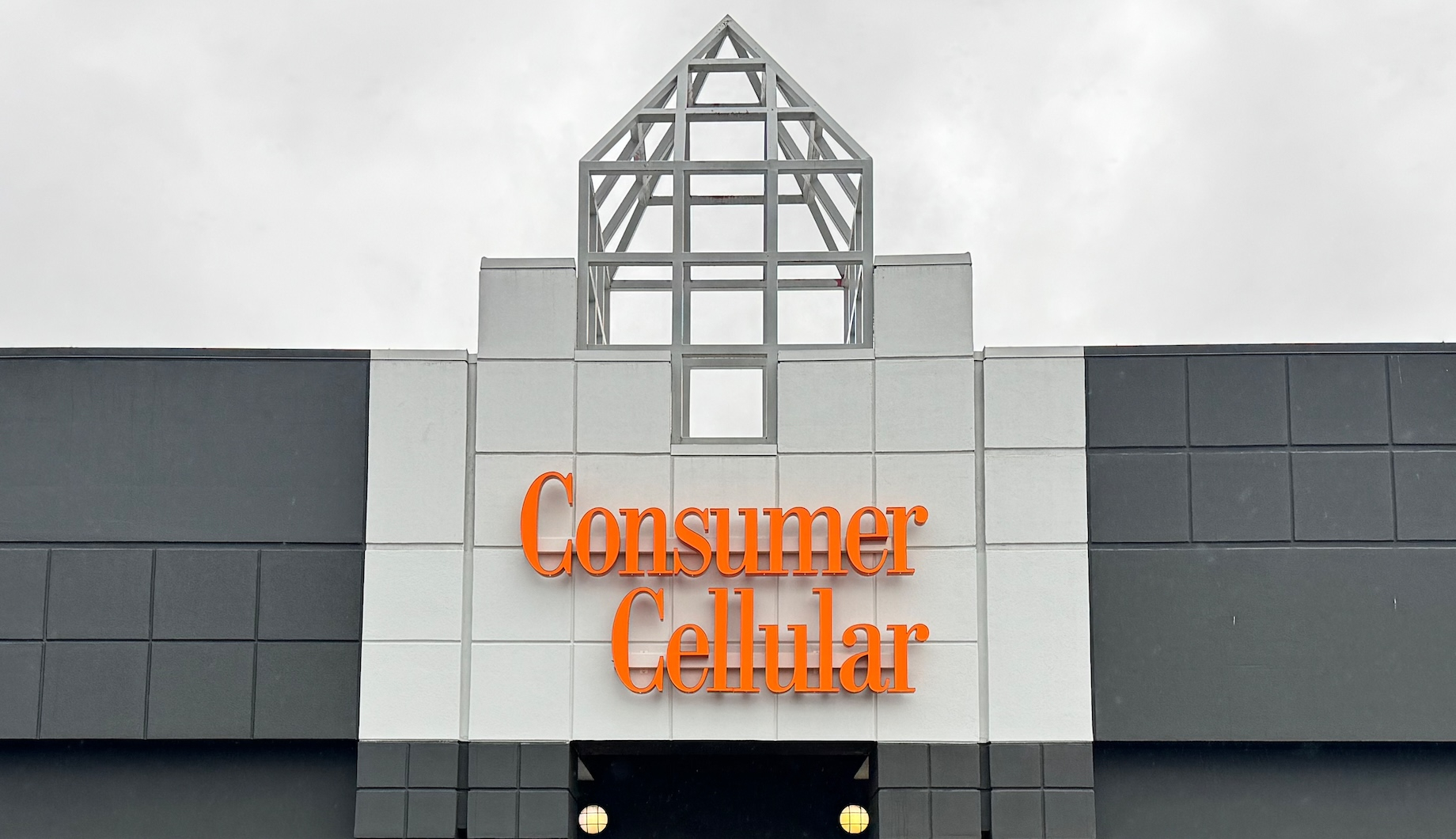
Consumer Cellular recently opened its 100th company-owned store, in Salem, Oregon. Image courtesy of Consumer Cellular
Reformation Targets Roughly 130 Stores Within Five Years
Sustainable womenswear brand Reformation, which filed last month for an initial public offering, has laid out the vision for its post-IPO footprint. As of June 22, Reformation operated 60 stores in the U.S. and 10 across Canada, the U.K. and France. In IPO paperwork filed with the U.S. Securities and Exchange Commission, Reformation said it sees a “clear path” toward a store count of roughly 130 over the next five years, based on its 66-store footprint in the first quarter. Regarding expansion opportunities in the U.S., the company emphasized it operates stores in only half of the 50 most-populated U.S. metro areas.
Freddy’s Adds End-Cap and Inline Restaurants in 60-Location Expansion
The Freddy’s Frozen Custard & Steakburgers chain is opening 60 more restaurants this year, going beyond its traditional standalone model to focus on end-cap and inline spaces. “These build types provide additional flexibility for franchisees while creating new pathways for growth in priority markets,” Freddy’s said. The new formats will strengthen franchise opportunities and fuel the 2027 development pipeline, said Freddy’s. The chain is prioritizing growth in the Northeast, Rust Belt, Midwest, Pacific Northwest, Northern California and Florida. As part of a multiyear growth initiative, Freddy’s continues to seek franchisees in the U.S. and Canada, where it operates more than 580 restaurants, and in Mexico.
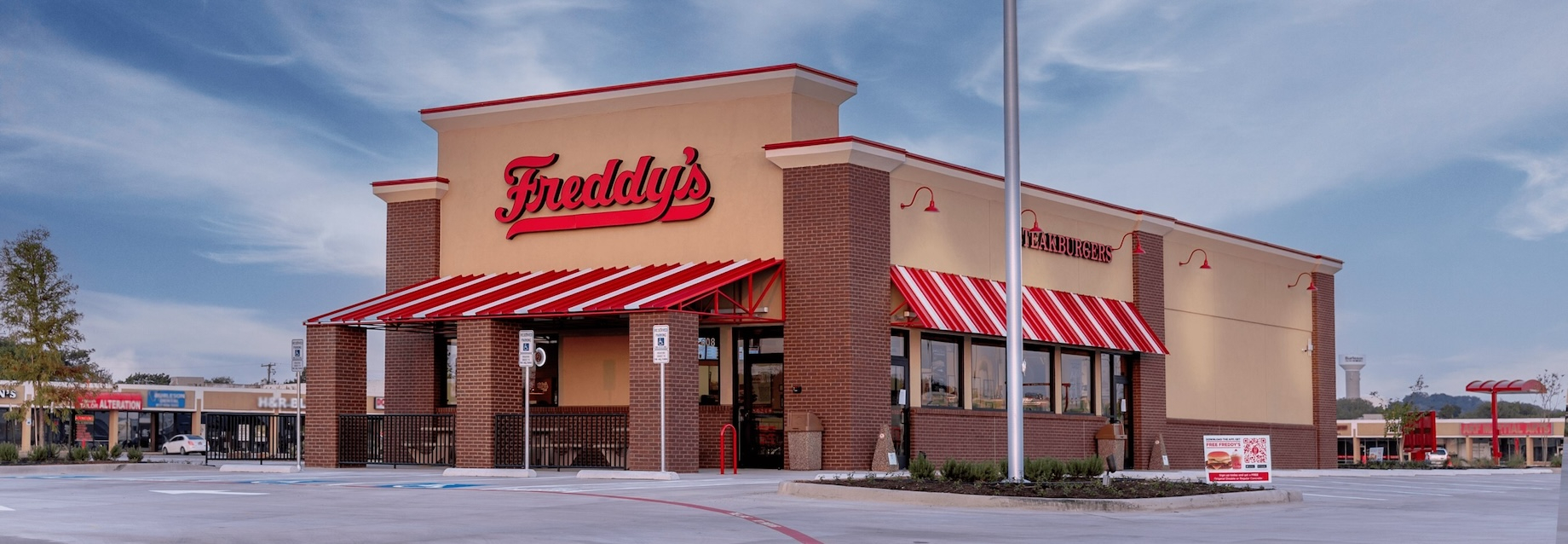
Freddy’s opened its 500th location in 2023 in Burleson, Texas. Image courtesy of Freddy’s/PR Newswire
Mixed-Use Reinventions Take Shape at Former Brooklyn Macy’s, Boston Naval Base and Maryland Brick Factory Sites
A mixed-use project at a shuttered 440,000-square-foot Macy’s store in Brooklyn, New York; a 1,400-acre naval base redevelopment near Boston; and a $450 million project at the site of a former Maryland brick factory show adaptive reuse and mixed-use momentum building on the East Coast.
Former Downtown Brooklyn Macy’s Planned as 440,000-Square-Foot Retail and Entertainment Hub
A partnership plans to transform a shuttered 440,000-square-foot Macy’s store in downtown Brooklyn, New York, into a mixed-use destination. The five-level project, called BKX, would be the largest contiguous block of retail space available in New York City, the Brooklyn Daily Eagle reported. Developer United American Land, Dreamscape Retail & Entertainment and investor The Jackson Group envision BKX will include flagship retailers, entertainment concepts, immersive attractions, food-and-beverage experiences and more, according to the publication. The available space per floor will range from 60,000 to 70,000 square feet, with ceiling heights of 17.5- to 22.5 feet. “BKX represents a once-in-a-generation opportunity to create a first-of-its-kind urban entertainment destination,” Dreamscape president of retail and entertainment Joshua Strauss said, according to the Brooklyn Daily Eagle.
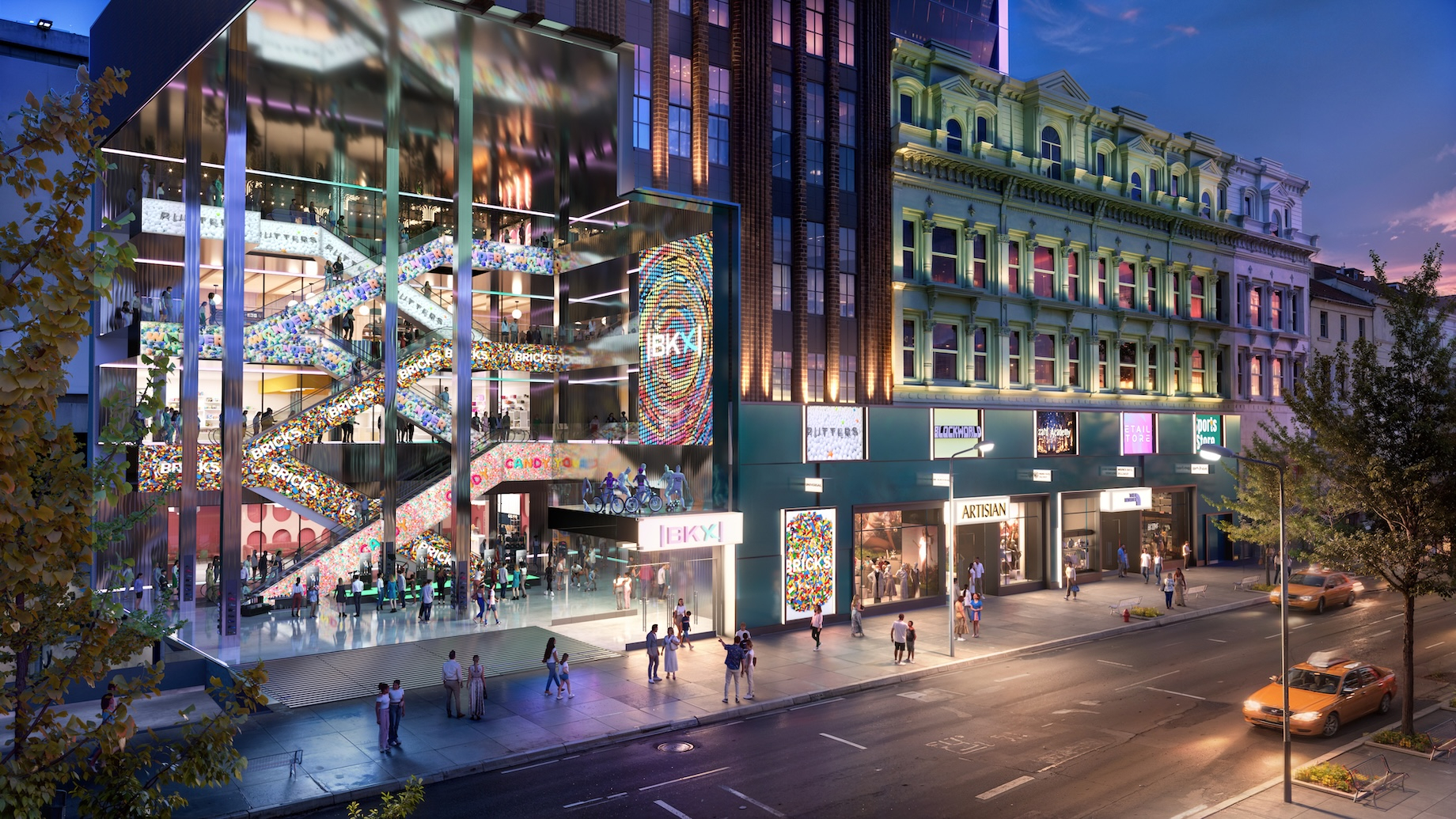
Retail and entertainment tenants are being lined up for the BKX mixed-use project, a redevelopment of the former Macy’s in downtown Brooklyn, New York. Rendering courtesy of Journey
Commercial Observer reported that United American Land, The Jackson Group and Crown Acquisitions bought the Macy’s building, which started operating as a department store in 1885, in December 2024 for $23 million, or about $53 per square foot. Macy’s closed the store in March 2025, PIX11 said. “Rather than pursuing a traditional retail redevelopment, we’re creating a destination that reflects how people want to spend time today — bringing together entertainment, dining, retail and community under one roof,” said United American Land principal Albert Laboz.
Strauss said negotiations have yielded tenants for about half the project. Openings will happen tenant by tenant, with announcements expected to start within the next few months as leases are signed, Dreamscape vice president of retail and entertainment Scott Zinovoy told Commercial Observer.
Brookfield JV Moves Ahead With 1,400-Acre South Weymouth Naval Base Redevelopment Near Boston
A joint venture between Brookfield and New England Development plans to convert the former Boston-area site of Naval Air Station South Weymouth into a more than 1,400-acre mixed-use development. The project is moving ahead after the joint venture’s $65 million purchase of a South Weymouth parcel from investment adviser Washington Capital Management.
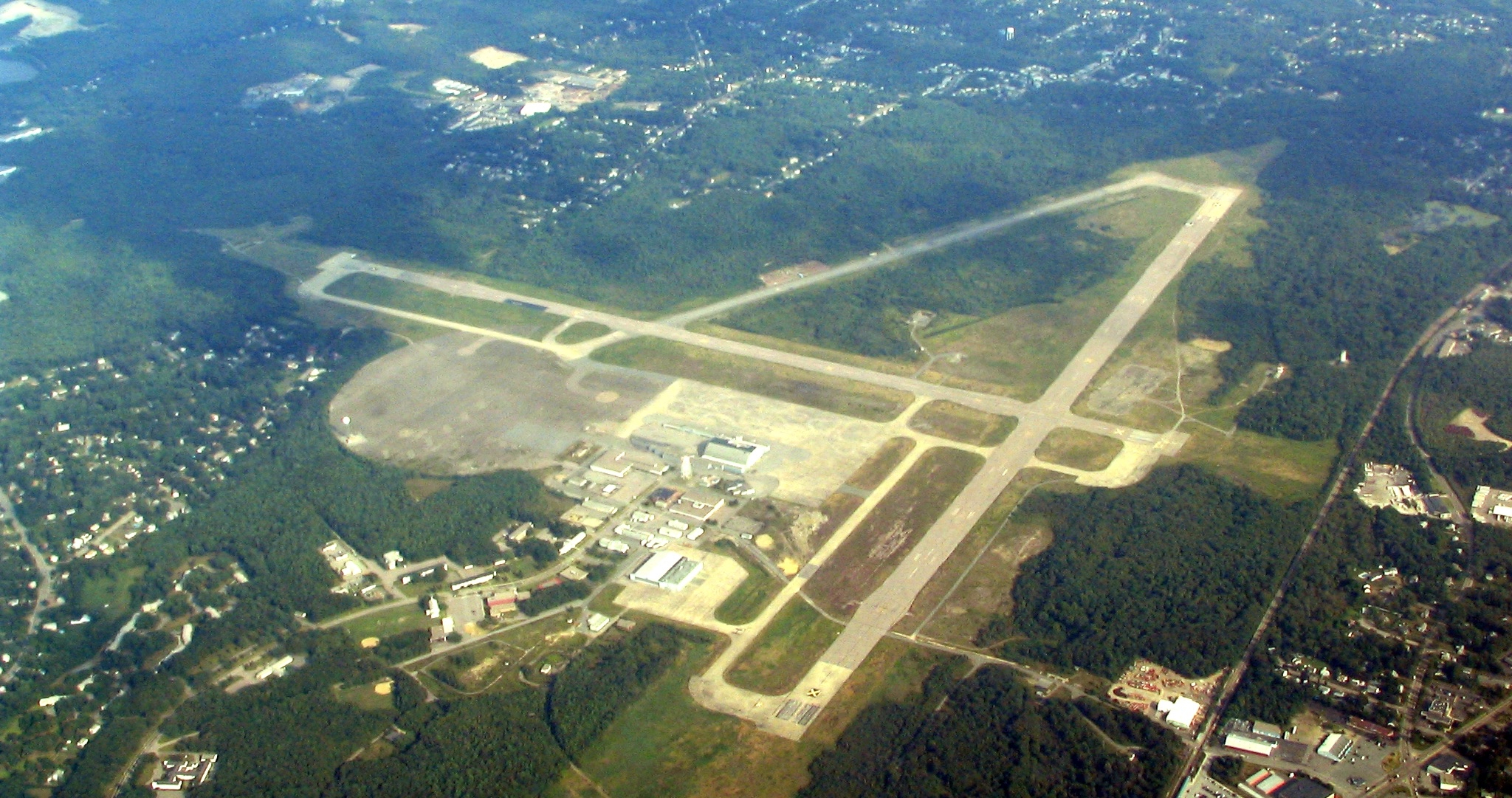
The shuttered South Weymouth Naval Air Station, pictured here in 2006, is on track for conversion into a mixed-use development that will include about 2 million square feet of retail and commercial space. Photo credit: Peter Kaminski from San Francisco, California, USA - South Weymouth Naval Air Station, CC BY 2.0
Local, state and business leaders have pushed for redevelopment of the property since the base closed in 1997. The proposed redevelopment would include 6,500 residential units and about 2 million square feet of retail and commercial space. Nearly 1,300 homes already stand on the site, along with 73,000 square feet of commercial space and a 25,000-square-foot sports complex, the Boston Business Journal and The Boston Globe reported. New England Development executive vice president John Twohig said the redevelopment will be the largest residential and commercial project in Massachusetts. Infrastructure work is set to start this fall.
Construction Starts on $450M Frederick Brickworks Mixed-Use Project
Greenberg Gibbons is starting construction this month on a more than $450 million mixed-use project in Frederick, Maryland, a Washington, D.C., exurb. The Frederick Brickworks development, named after the former brick factory on the 65-acre site, will feature up to 100,000 square feet of retail and restaurant space, with an organic grocer and a fitness studio among the tenants. Greenberg Gibbons said in late June that 50% of the retail space was already leased. The first phase, including the retail component, is scheduled for completion in 2028.
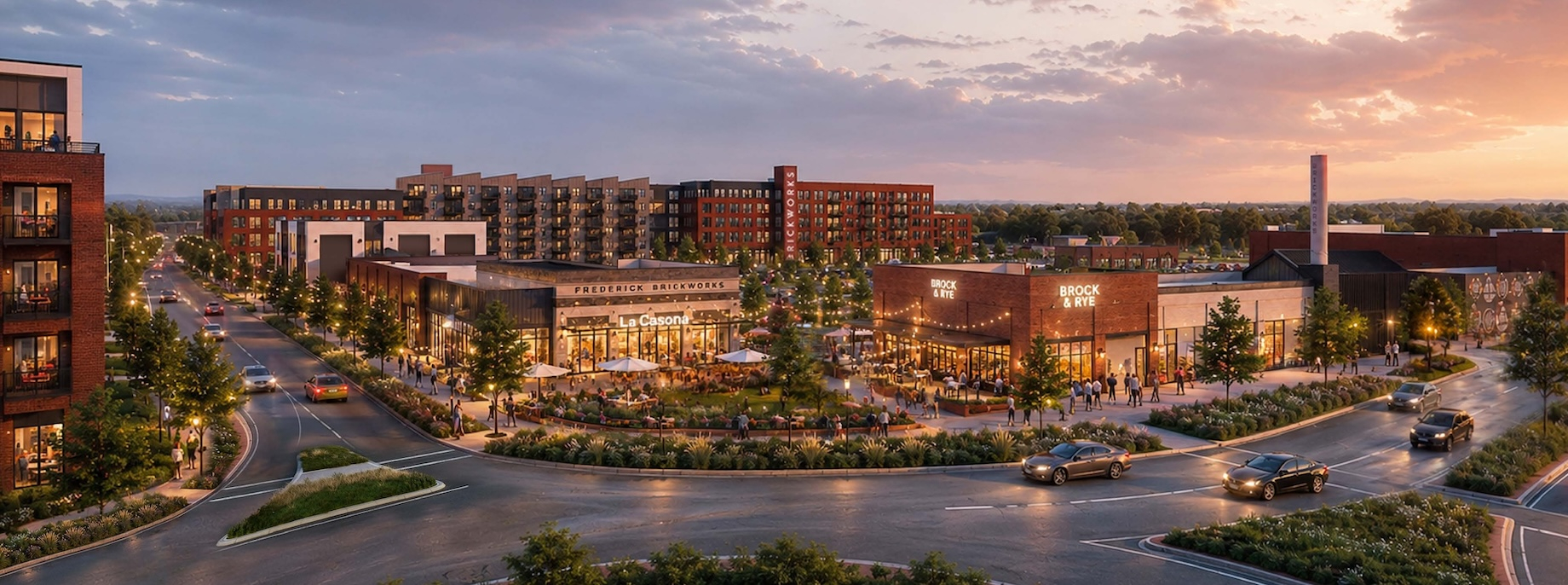
The Frederick Brickworks mixed-use project will offer 100,000 square feet of retail. Rendering courtesy of Greenberg Gibbons
World Cup Drives Downtown Foot Traffic Growth in U.S. Host Cities
FIFA World Cup 2026 has emerged as a “clear catalyst” in bumping up recent foot traffic in U.S. host cities, according to MRI Software’s Footfall Analytics. From May 31 to July 4, foot traffic in host cities’ downtowns jumped 4.1% year over year, MRI said, with shopping malls experiencing a 1.2% year-over-year gain. The 4.1% increase was the strongest year-over-year growth in downtown foot traffic since 2022, according to MRI. The 11 U.S. host cities have benefited not only from fans attending World Cup matches, but also from fan festivals, watch parties, hospitality activity and tourist spending, said MRI. The software provider said that as World Cup momentum grew, major host markets “consistently outperformed national averages, suggesting the competition has become a meaningful driver of urban footfall and tourism activity.”
MORE FROM C+CT: Retailers and Landlords Prepare for World Cup’s “Gravitational Pull”
3 New Investment Platforms Pursue 1031, Sports-Anchored Mixed-Use and Neighborhood Retail
MCB’s new Wealthbridge division courts 1031 exchange investors; a KKR-related venture bets on sports-anchored districts, starting with one at the University of Tennessee; and a Norwegian pension fund has committed $500 million to a neighborhood retail-focused joint venture.
MCB Real Estate Launches Wealthbridge 1031 Exchange Platform
MCB Real Estate has launched a division dedicated to 1031 exchanges and other tax-friendly and income-and-growth offerings. The new division, MCB Wealthbridge, is geared toward high-net-worth investors. The platform will focus on stabilized properties in sectors like retail, multifamily, student housing and industrial. Mike Waddell, former president of 1031 exchange sponsor Capital Square, is CEO of MCB Wealthbridge. MCB manages a $4 billion real estate portfolio totaling about 22 million square feet and has almost 6 million square feet in its development pipeline.
Mike Waddell is CEO of the new MCB Wealthbridge. Photo courtesy of MCB Real Estate
Arctos, RVX and Magellan Form JV for Sports-Anchored Mixed-Use Districts
Arctos, an arm of investment giant KKR, has teamed up with real estate companies RVX Ventures and Magellan Development Group to develop sports-anchored projects. RVX specializes in mixed-use entertainment districts, and Magellan specializes in urban mixed-use real estate. “We believe sports-anchored entertainment districts represent one of the most compelling opportunities in experiential real estate today,” RVX principal Taylor Gray said.
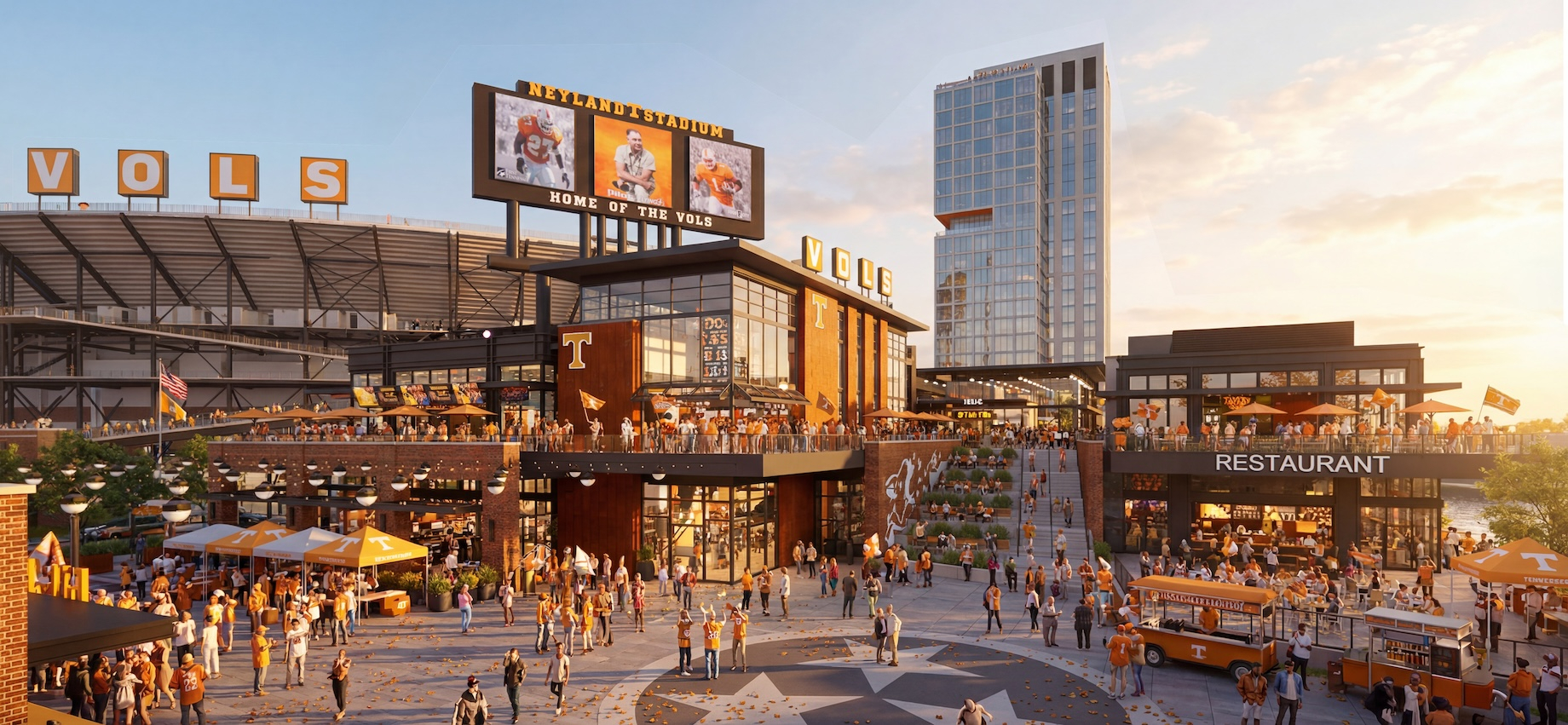
This rendering shows what the Neyland Entertainment District at The University of Tennessee in Knoxville might look like. Rendering courtesy of Arctos/Business Wire
The joint venture’s first project is the Neyland Entertainment District, a mixed-use development to be built adjacent to Neyland Stadium at The University of Tennessee in Knoxville. The district will comprise 100,000 square feet of entertainment space, a members-only club and a hotel and residential high-rise. Arctos is the majority investor in the new platform, and RVX, Magellan and broker Dixon Greenwood are partners.
MORE FROM C+CT: Machete Group’s Playbook: Why Winning Mixed-Use Is Sports-Adjacent, Not Sports-Dependent
Asana Partners and Norges Bank Form $500M Neighborhood Retail JV
Retail real estate investment firm Asana Partners has formed a joint venture with institutional investor Norges Bank Investment Management to spend $500 million on purchasing neighborhood retail centers in the U.S. Asana Partners Strategic Partners I is targeting high-quality core and core-plus grocery-anchored centers, unanchored centers, street retail properties and mixed-use properties. The JV’s initial move involves purchasing a 50% stake in a portfolio of grocery-anchored centers. Norges Bank Investment Management, which runs the Norwegian government’s global pension arm, committed the $500 million. Asana manages more than $9 billion worth of neighborhood retail properties.
Kroger-Giant Eagle Deal and JLL Survey Highlight Grocery Growth and Investor Demand
In addition to the Asana and Norges joint venture, Kroger Co.’s $1.65 billion Giant Eagle deal, a JLL survey showing 81% of investors targeting grocery-anchored retail and a hostile bid for Canada’s Plaza Retail REIT all point in the same direction: Grocery-anchored retail remains an investment hotbed.
Kroger’s Proposed $1.65B Giant Eagle Acquisition Would Expand Its Geographic Reach
The Kroger Co.’s proposed $1.65 billion acquisition of the Giant Eagle grocery chain would give Kroger a greater geographical advantage, analysts said. Strategic Resource Group managing director Burt Flickinger called Kroger’s pending acquisition of Giant Eagle “a master stroke, opening the gateway to the eastern Great Lakes and Mid‑Atlantic markets, as well as the Northeast including all the New England states, where grocery prices tend to be higher and competition tends to be lower,” the Cincinnati Business Courier reported.
Publicly held Kroger Co. operates more than 2,700 stores, and privately held Giant Eagle operates 197 grocery stores and 11 standalone pharmacies. Kroger Co. and Giant Eagle said the deal, scheduled to close next year, is expected to result in limited divestitures of Giant Eagle stores. The only market where Kroger and Giant Eagle significantly overlap is Columbus, Ohio, according to the Cincinnati Business Courier. The deal comes less than a year after Giant Eagle launched a two-year, $100 million initiative to improve its stores.
In a LinkedIn post, GlobalData Retail managing director and analyst Neil Saunders wrote that while the deal would not solve Kroger’s various woes and would not be a “terrible move,” it in some ways is “a lighter version of the proposed mega-merger with Albertsons, as it is designed to expand Kroger’s geographical reach and provide it with a bump in market share.” The $24.6 billion Kroger Co.-Albertsons Cos. merger, announced in 2022, collapsed in 2024.
Research firm R5 Capital also chimed in. In a research note quoted by Grocery Dive, R5 said the acquisition would enable Kroger to better compete with mass merchants like Costco and Walmart. R5 added that Kroger has agreed to buy Giant Eagle, a regional grocer, at a time when Giant Eagle faces intense competition from retail rivals, particularly Walmart, according to Grocery Drive.
81% of Retail Real Estate Investors Include Grocery-Anchored Properties in Their Plans
As Kroger Co. seeks approval for its Giant Eagle acquisition, a new JLL survey underscores real estate investors’ continued interest in grocery-anchored retail. In the 2026 U.S. Retail Thematic Outlook and Investor Survey, 81% of retail real estate investors said they’re including grocery-anchored properties in their investment plans. Asked which tenants they favor most, investors picked Whole Foods, followed in descending order by The TJX Cos., Trader Joe’s, Target, Lululemon and Publix. “This is a clear signal that the strategy right now is all about non-discretionary categories that hold up through any economic weather,” said JLL.
MORE FROM C+CT: New Grocery Formats, Store Growth and Investment Activity Signal a Sector in Motion
Whole Foods is the favorite tenant among retail real estate investors, a JLL survey shows. Image courtesy of Whole Foods
Plaza Retail REIT Reviews CAD$1.23B Hostile Take-Private Offer
Canada’s publicly traded Plaza Retail REIT is reviewing a hostile takeover bid from Axia Real Assets valued at 1.23 billion Canadian dollars. Axia, a Canadian firm that invests in grocery-anchored retail centers and industrial properties, urged investors to press Plaza to “engage” on the proposal. According to Axia, the REIT’s largest shareholder, Morguard Corp., “strongly” supports the unsolicited offer and is prepared to vote for approval of Axia’s take-private deal. As of March 31, Plaza owned 190 properties in Canada totaling about 8.8 million square feet in the essential needs, value and convenience categories, with an occupancy rate of 97.5%. Tenants listed on Plaza’s website include Loblaws, HomeSense, KFC, Starbucks, Tim Hortons, Dollarama, Michaels, Staples, PetSmart, Giant Tiger, NAPA and Canadian Tire.
Family Dollar Sells 46 Stores in $75M Sale-Leaseback
An unidentified institutional investor acquired a 19-state, 46-property Family Dollar portfolio through a $75 million sale-leaseback. The seller was FD Retail Properties, a real estate arm of the deep-discount retailer. “The transaction marks a significant milestone in Family Dollar's continued growth and momentum. Through disciplined operational improvements and strategic investments, the retailer has meaningfully strengthened its national platform, attracting a marquee institutional buyer and validating the progress made across the portfolio,” said JLL Capital Markets and GA Group Real Estate, both of which represented FD Retail Properties. Family Dollar operates more than 7,000 stores across the U.S. Dollar Tree sold Family Dollar last year to Brigade Capital Management and Macellum Capital Management in a $1 billion deal.
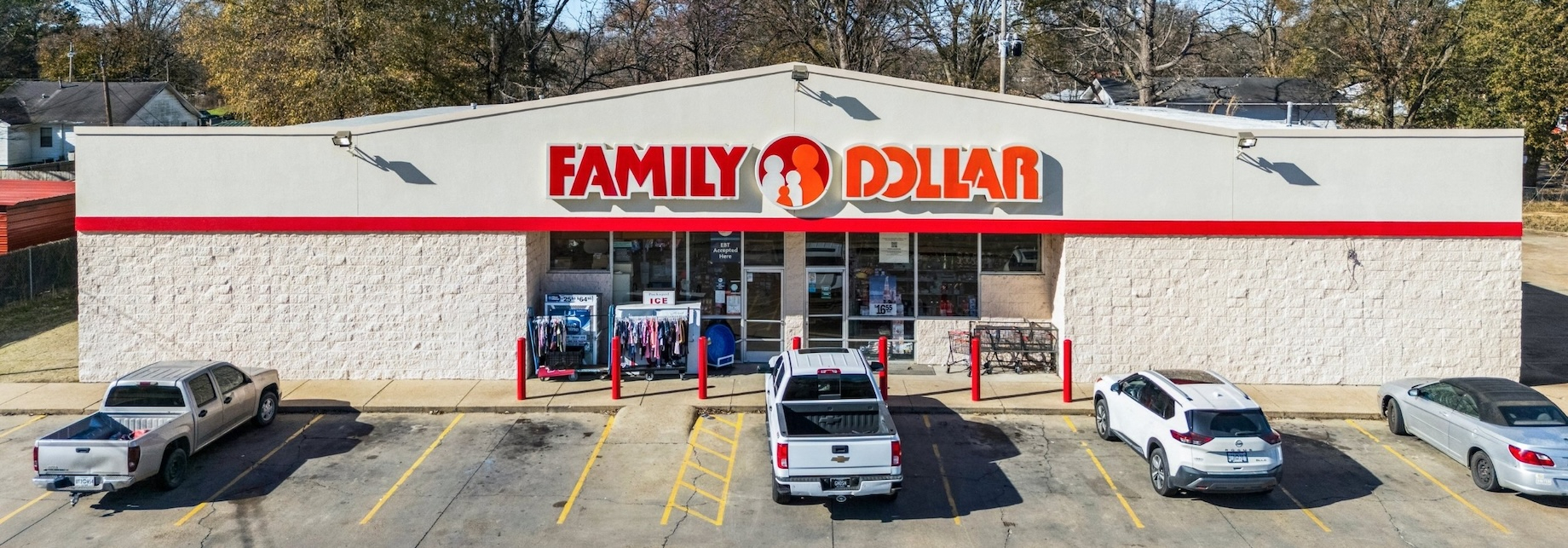
Family Dollar stores in the sale-leaseback operate in 19 states. Image courtesy of JLL Capital Markets
By John Egan
Contributor, Commerce + Communities Today