Jersey Mike’s Plans To Double U.S. Store Count and Enter Europe
The Jersey Mike’s Subs chain has put rapid growth on the corporate menu, shooting for an eventual U.S. store count of about 6,400. New CEO Charlie Morrison told Entrepreneur that Jersey Mike’s plans to roughly double its current U.S. footprint of about 3,200 locations, though he offered no timeline for the expansion. Morrison succeeded Jersey Mike’s longtime CEO Peter Cancro last April after Blackstone’s November 2024 acquisition of a majority stake in the chain. Cancro retains a minority stake in Jersey Mike’s and chairs its board.
Cancro also is leading a franchise group that will take the chain to Europe, opening 400 shops in the U.K. and Ireland. Jersey Mike’s has just ranked No. 1 on the Entrepreneur Franchise 500 2026 list.
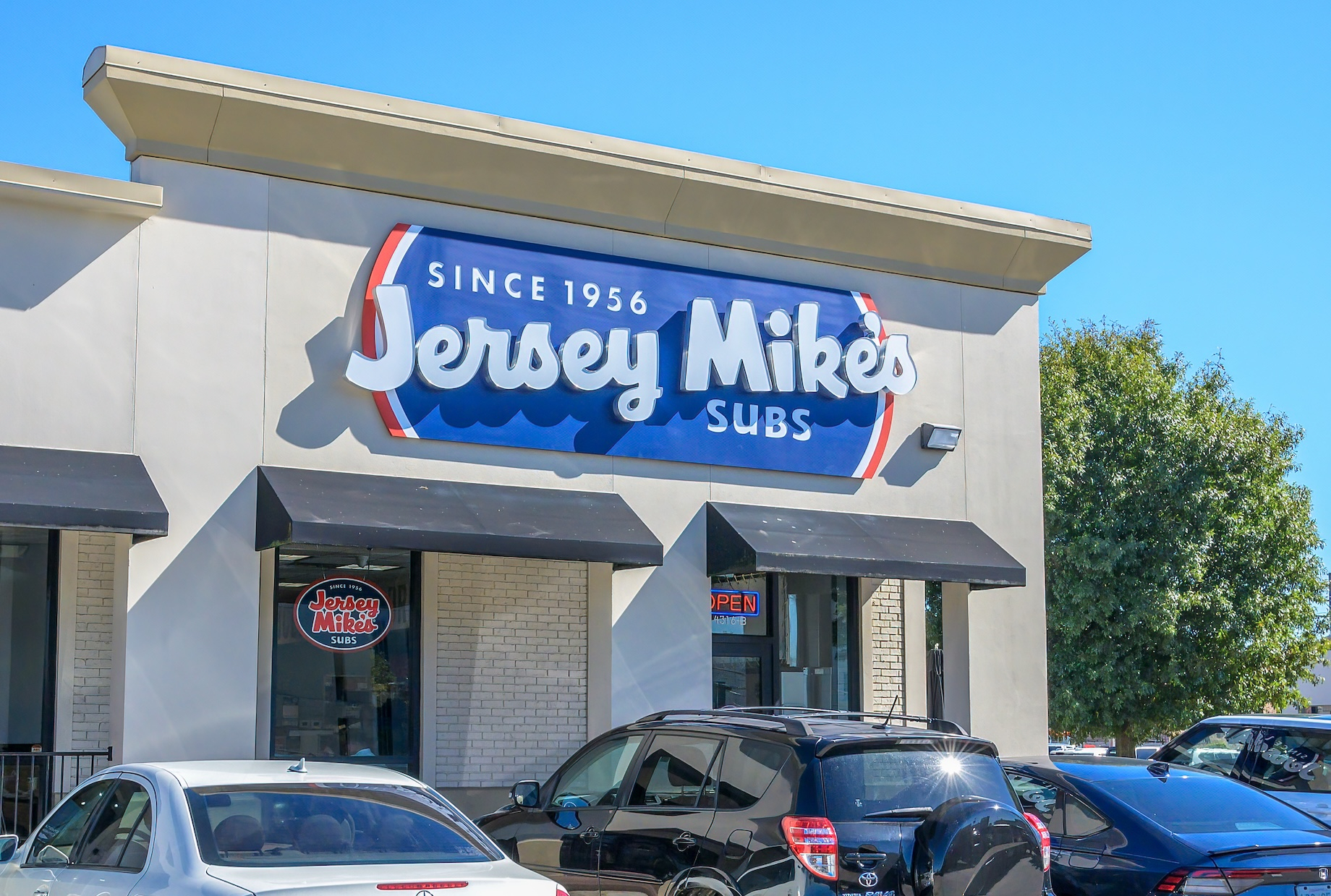
Above: Jersey Mike’s Subs in New Orleans’ Metairie. At top: Jersey Mike’s Subs in Napa, California Photo above: William A. Morgan - stock.adobe.com; photo at top: Rhoda - stock.adobe.com
Amazon Proposes 229K-SF Retail Center Near Chicago
Amazon is seeking permission from village leaders in the Chicago suburb of Orland Park, Illinois, to build a nearly 229,000-square-foot shopping center on a 35-acre site, as well as buildings from 5,000 to 13,750 square feet on six outparcels. The center will feature products like groceries and general merchandise, plus “accessory services” and potentially dining locations for prepared food sold on-site. An Amazon spokesperson called the proposed development a “new concept.”
The first phase of the project would require demolition of the vacant Petey’s II steakhouse. At a meeting of the village’s plan commission, Amazon representatives said the company plans to break ground on the shopping center in 2027, NBC 5 Chicago News reported. The plan commission approved Amazon’s proposal, which is expected to go before the village board on Jan. 19.
MORE FROM C+CT: Shopping Centers Adopt E-Commerce-Style Personalization To Target Shoppers
Aldi Moves Ahead With 180-Plus New Stores Under $9B Expansion Plan
As part of a $9 billion, five-year initiative to expand its U.S. presence, low-price grocery chain Aldi is adding more than 180 stores in 31 states this year. The initiative will include Aldi’s entry into Denver and Colorado Springs, where 50 stores are set to open over a two-year period, along with an expansion into Maine. The Phoenix market will gain 40 stores by the end of 2030, including 10 this year, according to the company.
The grocer is on track to be operating nearly 2,800 U.S. stores by the end of this year, working toward the goal of 3,200 by the end of 2028. A spokesperson said the chain currently operates more than 2,600 stores in the U.S.
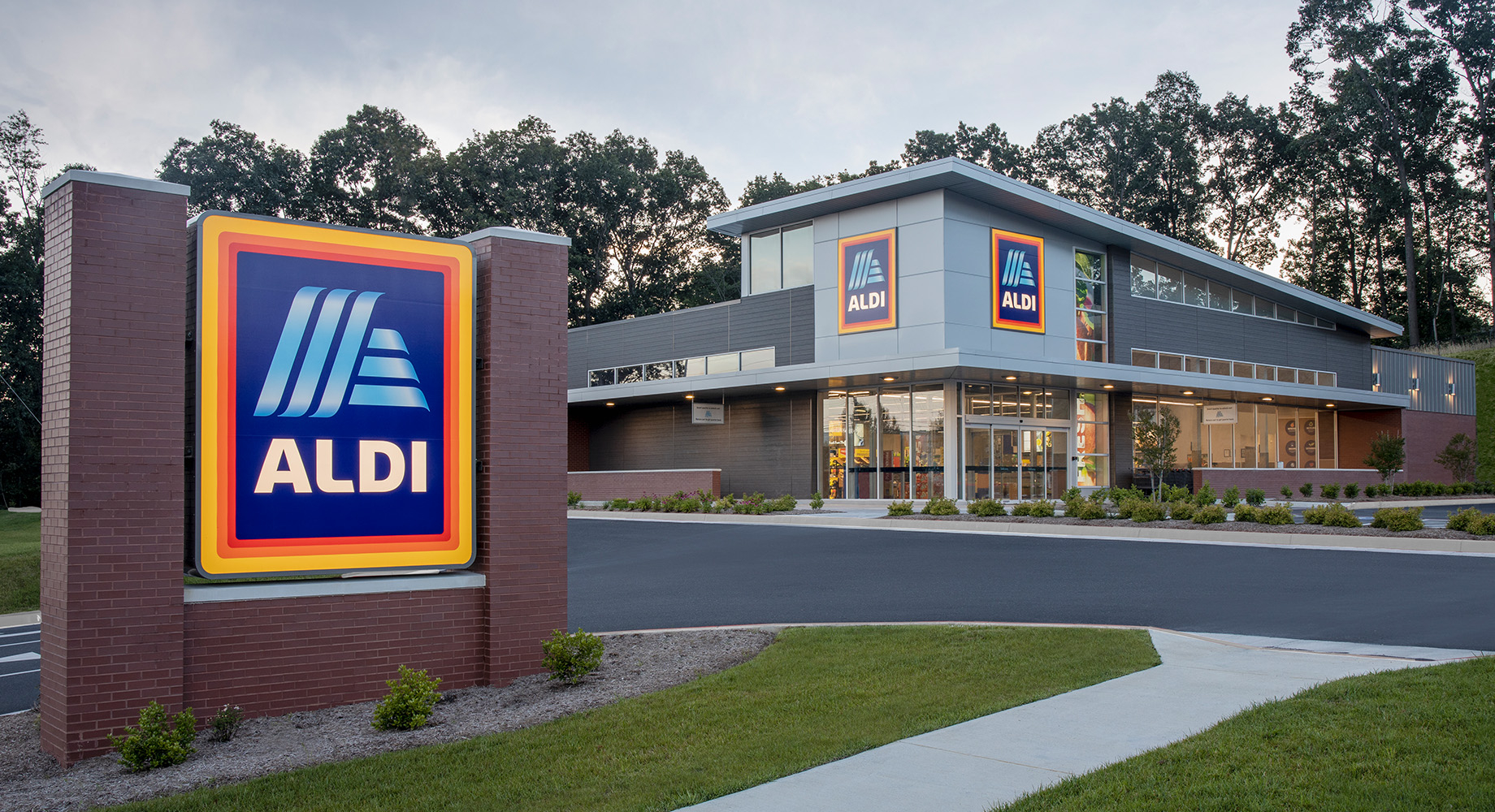
Aldi’s U.S. footprint includes this store in Harrisburg, Pennsylvania. Photo courtesy of Aldi
TGI Fridays Plans Global Expansion Following Bankruptcy Restructuring
One year after emerging from Chapter 11 bankruptcy, casual dining chain TGI Fridays is staging an ambitious comeback, targeting a store count of more than 1,000 and revenue of $2 billion by 2030. It’s unclear how many of the new locations will open in the U.S.
Today, the chain consists of nearly 400 restaurants in more than 40 countries, including 79 in the U.S. When TGI Friday’s filed for bankruptcy in November 2024, it had more than 460 restaurants in 41 countries. The chain operated about 270 U.S. locations in early 2024, CNN reported. The $2 billion revenue goal represents a more than 40% jump from about $1.4 billion in global sales recorded in the pre-bankruptcy year of 2023, according to Nation’s Restaurant News.
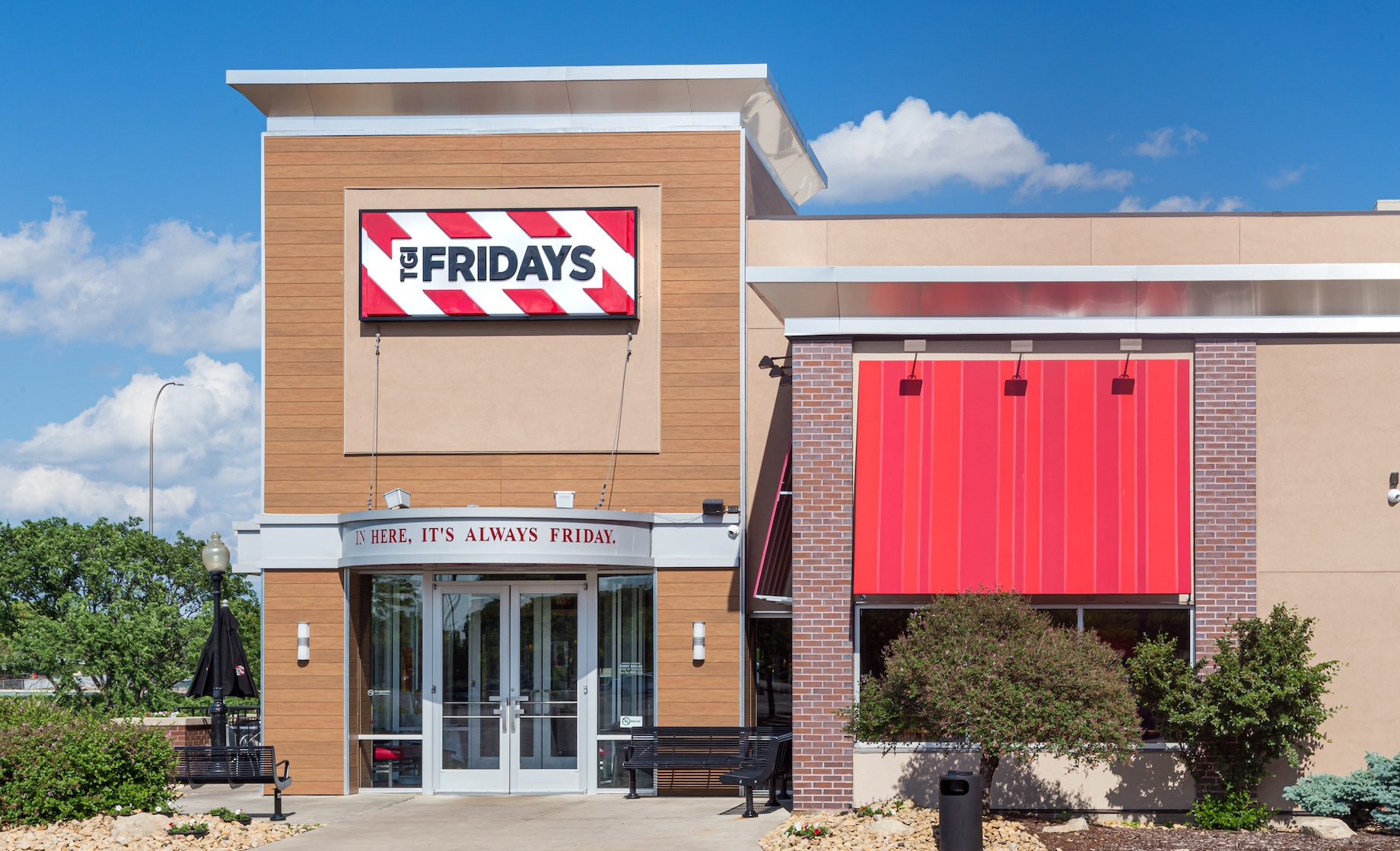
Photo credit: wolterke - stock.adobe.com
Dollar General Plans More Than 1,000 New U.S. Stores Over Two Years
Discount retailer Dollar General is riding the wave of value-oriented shopping. The company recently reaffirmed plans to open about 575 new stores in the U.S. during fiscal year 2025, which ends this month. Dollar General’s growth isn’t stopping there, as the retailer said it plans to open about 450 new stores in the U.S. during fiscal year 2026. If Dollar General goes through with that expansion, it will have opened more than 1,000 new U.S. stores over the course of two fiscal years. As of Oct. 31, Dollar General operated more than 20,000 stores in the U.S.

Dollar General plans to open 450 new stores in fiscal year 2026. Photo credit: Refrina - stock.adobe.com
Academy Sports Continues Steady Store Expansion Into 2026
Following the opening of 24 new stores so far in fiscal year 2025, which ends Jan. 31, sporting goods retailer Academy Sports + Outdoors is targeting 20 to 25 store openings in fiscal year 2026. As of Nov. 1, Academy operated 317 stores in 21 states.

Academy Sports + Outdoors has opened 24 new stores in fiscal year 2025. Photo courtesy of Academy Sports + Outdoors/PR Newswire
Pacsun Returns to Store Growth After Nearly 2 Decades
Pacsun, a longtime mall fixture that sells clothing, footwear swimwear and accessories geared toward the youth market, is expanding in the U.S. for the first time in nearly two decades. Pacsun opened nine U.S. stores in 2025 and has signed leases for another nine set to open in 2026, the company said, citing double-digit growth in foot traffic. One of those openings will be at the Mall at Millenia in Orlando, Florida. In all, the retailer plans to add 20 to 35 new U.S. stores over a three-year period. Pacsun operated more than 350 stores as of September 2023.

Pacsun’s flagship store in New York City’s SoHo. Photo courtesy of Pacsun/PR Newswire
Sally’s Apizza Targets National Expansion to 1,000-Plus Locations
A Connecticut-based pizza chain is expanding with the goal of operating more than 1,000 locations nationwide. Sally’s Apizza, acquired in 2017 by Lineage Hospitality, targets 255 new restaurants in 12 states, including 45 in Texas, 35 in Florida, and 25 each in New Jersey and New York. The Sally’s Apizza website lists 15 current and anticipated locations in Connecticut and Massachusetts. According to the Boston Business Journal, the chain’s first Florida and New York locations are in the works.
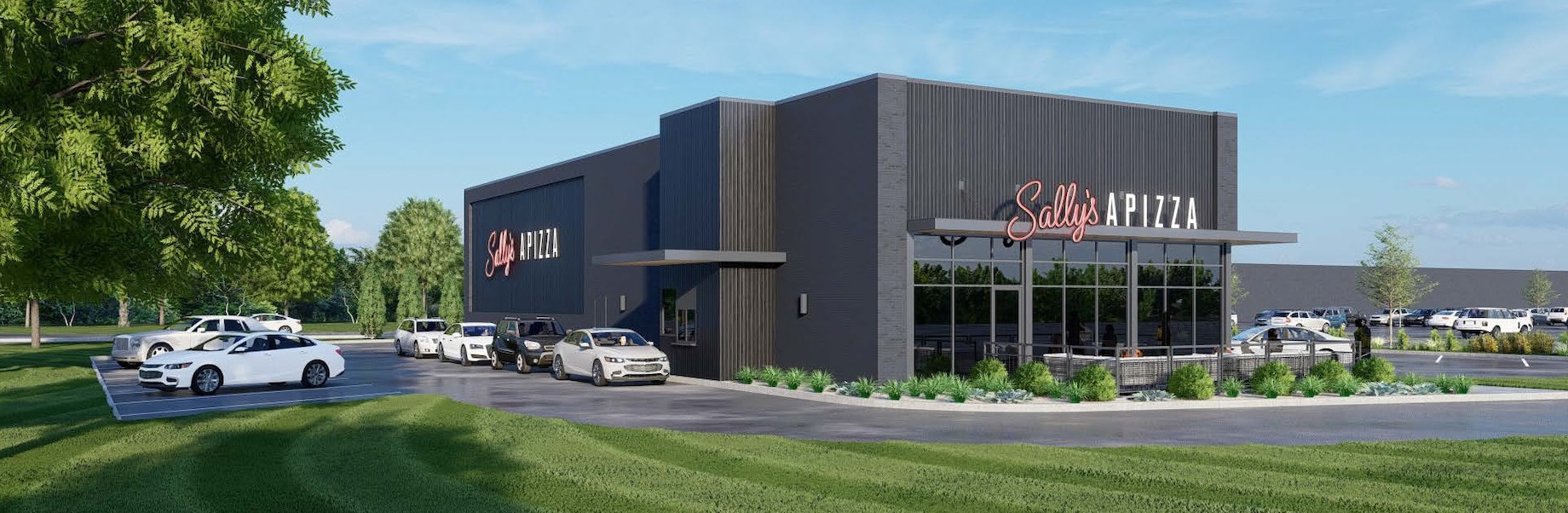
Sally’s Apizza unveiled its drive-thru prototype in 2022. Rendering courtesy of Sally’s Apizza/PR Newswire/Onyx Creative
MORE FROM C+CT: From Pizza to Apparel: 5 Retailers Expanding Their Footprints
Jollibee Aims For 500 North American Locations by 2030
Fueled by a new franchising program, fried chicken restaurant chain Jollibee is spreading its wings in North America. The chain now comprises more than 100 company-owned and franchised locations in the U.S. and Canada. Jollibee aims to boost its North American store count by roughly 400%, targeting a 500-location footprint by 2030. Last year, Jollibee opened its first franchised U.S. location in Queens, New York, and added franchisees in Staten Island, New York; Sacramento, California; and Dallas-Fort Worth. Other wholly owned or franchised brands in the portfolio of Jollibee Group, the chain’s Philippines-based parent company, include Burger King, Panda Express, Smashburger and The Coffee Bean and Tea Leaf.

Jollibee’s first Michigan restaurant opened two years ago in Sterling Heights, a suburb of Detroit. Photo courtesy of Jollibee
Saks Global Reviews Store Portfolio Following Chapter 11 Filing
Weighed down by debt from its $2.7 billion acquisition in 2024 of Neiman Marcus, luxury retail conglomerate Saks Global filed for Chapter 11 bankruptcy on Tuesday. Saks Global has secured a $1.75 billion financing package so it can stay in business and, at least for now, keep its roughly 160 stores open. The portfolio includes stores operating under the Saks Fifth Avenue, Saks Off 5th, Neiman Marcus, Neiman Marcus Last Call and Bergdorf Goodman banners. As part of the filing, Saks Global said Wednesday that it’s evaluating its footprint to invest money where “it has the greatest long-term potential. This approach reflects an effort to focus the business in areas where [our] luxury retail brands are best positioned for sustainable growth.”
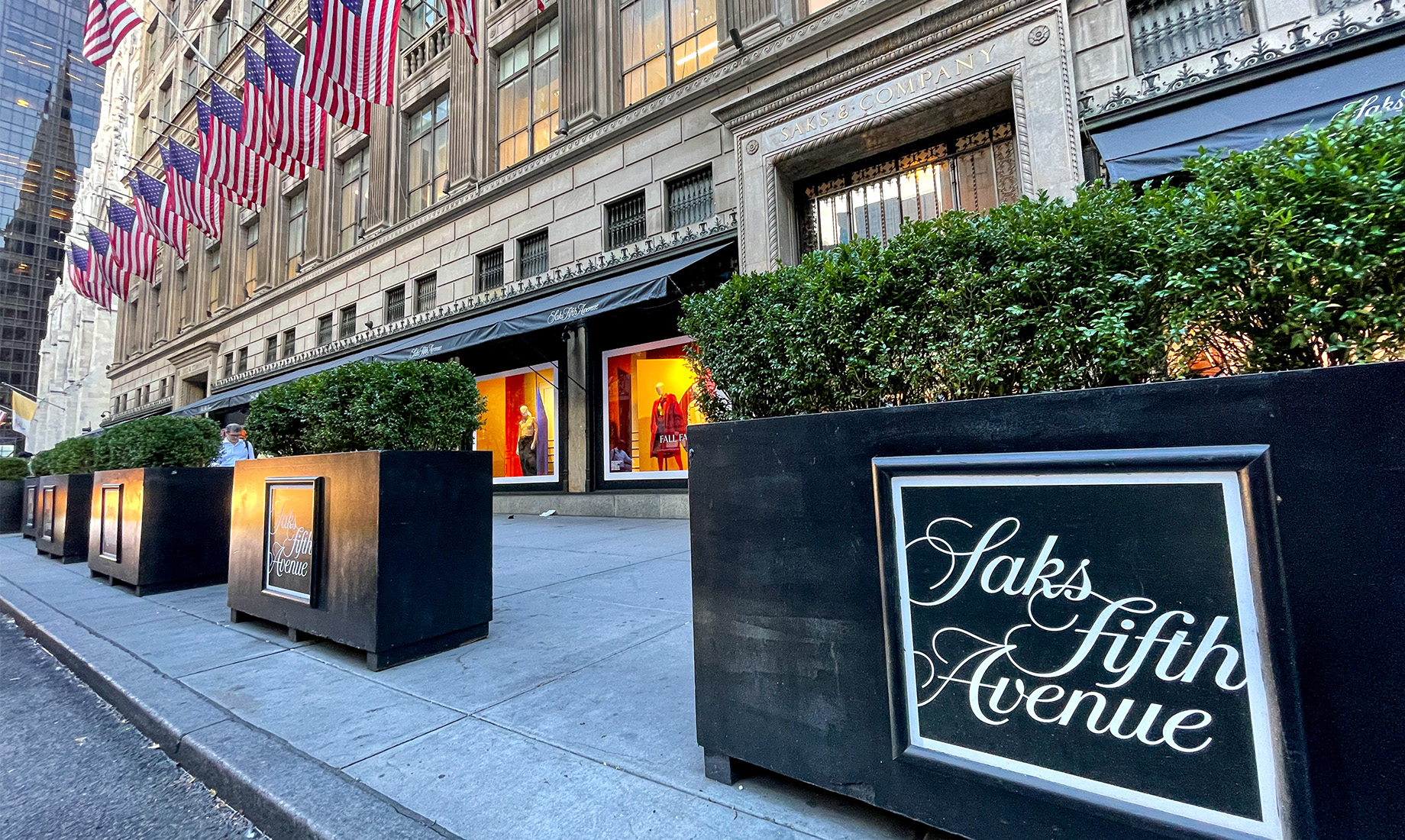
Saks Fifth Avenue in Midtown Manhattan Photo credit: Roman Tiraspolsky - stock.adobe.com
Retailers often close stores to cut costs after filing for bankruptcy. Saks Global owns a nearly 13 million-square-foot real estate portfolio that was valued at $7 billion in 2024, including the Saks Fifth Avenue flagship in New York City and the Neiman Marcus flagship in Dallas. The Dallas store was the subject of much closure speculation last year. It’s unclear what will happen to the portfolio, but the company could sell all or part of it to generate cash.
Geoffroy van Raemdonck, former CEO of Neiman Marcus, was brought aboard as CEO of Saks Global effective immediately after the recent back-to-back departures of two CEOs. Among the existing investors in Saks are Abrams Capital, the Abu Dhabi Investment Council sovereign wealth fund, Amazon, Authentic Brands Group, G-III Apparel Group and Salesforce.
MORE FROM C+CT: Why Retailers File for Bankruptcy — and When It Makes Strategic Sense
Macy’s Inc. Closures Could Release More Than 2.3M SF of Retail Space
Based on the average size of stores, upcoming full-line store closures by Macy’s Inc. could result in more than 2.3 million square feet of space hitting the market. After shuttering about 130 stores during fiscal years 2024 and 2025, the department store chain plans to close another 14 stores in fiscal year 2026 as part of its revitalization strategy, a spokesperson told C+CT. In 2024, Macy’s Inc. said it planned to close about 150 underperforming locations over a three-year period, targeting a store count of 350 by the close of fiscal 2026, which ends on Feb. 2, 2027.

The Macy’s location at Livingston Mall in New Jersey is among the 14 stores the company plans to close in fiscal year 2026. “Livingston Mall Livingston, NJ February 2020” by Mike Kalasnik, CC BY-SA 2.0
The company’s website listed 424 full-line Macy’s stores and 21 small-format Macy’s stores as of Wednesday. According to Chain Store Age, the average size of a full-line Macy’s store ranges from 180,000 to 200,000 square feet. Based on the midpoint of that range — 190,000 square feet per store — and the size of two small-format stores being closed, 2.34 million square feet of space would be up for grabs. To put that number into perspective, South Florida’s Aventura Mall encompasses more than 2.8 million square feet.
American Signature Will Close Remaining Furniture Stores
Following an unsuccessful attempt to sell the company, American Signature is closing its remaining American Signature Furniture and Value City Furniture stores. Court documents filed on Jan. 4 in the parent company’s Chapter 11 bankruptcy case identified 89 stores that would be shuttered. As of Wednesday, the company’s website listed 94 stores. In November, American Signature began a court-supervised process to sell the company as part of its bankruptcy case in November, but a scheduled Jan. 8 auction of American Signature’s assets was canceled, so the company is winding down operations and shuttering its remaining stores. Retail turnaround firm SB360 Capital Partners, hired to handle the furniture retailer’s store closures, said in mid-October that the retailer operated more than 120 stores.

Roughly 90 All American Signature and Value City furniture stores are being shuttered. Photo credit: jetcityimage - stock.adobe.com
By John Egan
Contributor, Commerce + Communities Today