In December, Lawrence Falbe, who has served as the chair of ICSC’s Environmental Policy and Land Use Committee for two years, joined an elite list of ICSC members who have stepped up to provide expert testimony before Congress on issues of importance to the industry.
Falbe testified before the House Energy and Commerce Environment Subcommittee during a hearing examining the impacts of EPA’s designation of PFOA and PFOS (per- and polyfluoroalkyl substances, commonly referred to as PFAS, or so-called “forever chemicals”) as “Hazardous Substances” under the Comprehensive Environmental Response, Compensation and Liability Act (CERCLA).
ICSC has long advocated for legislation and regulations that provide clear rules for PFAS and other emerging chemicals. The primary focus has been establishing liability protection for buyers and lenders who follow proper testing and cleanup plans—including during refinancing—so projects can move forward without fear of unexpected lawsuits. Alternatively, the committee has suggested strengthening CERCLA defenses such as the “Bona Fide Prospective Purchaser Defense” (BFPP). The committee has also raised a need for clear background levels for PFAS so property owners aren’t held responsible for minute amounts of contamination that are common in the environment.
Following the hearing, Falbe shared his thoughts on the experience.
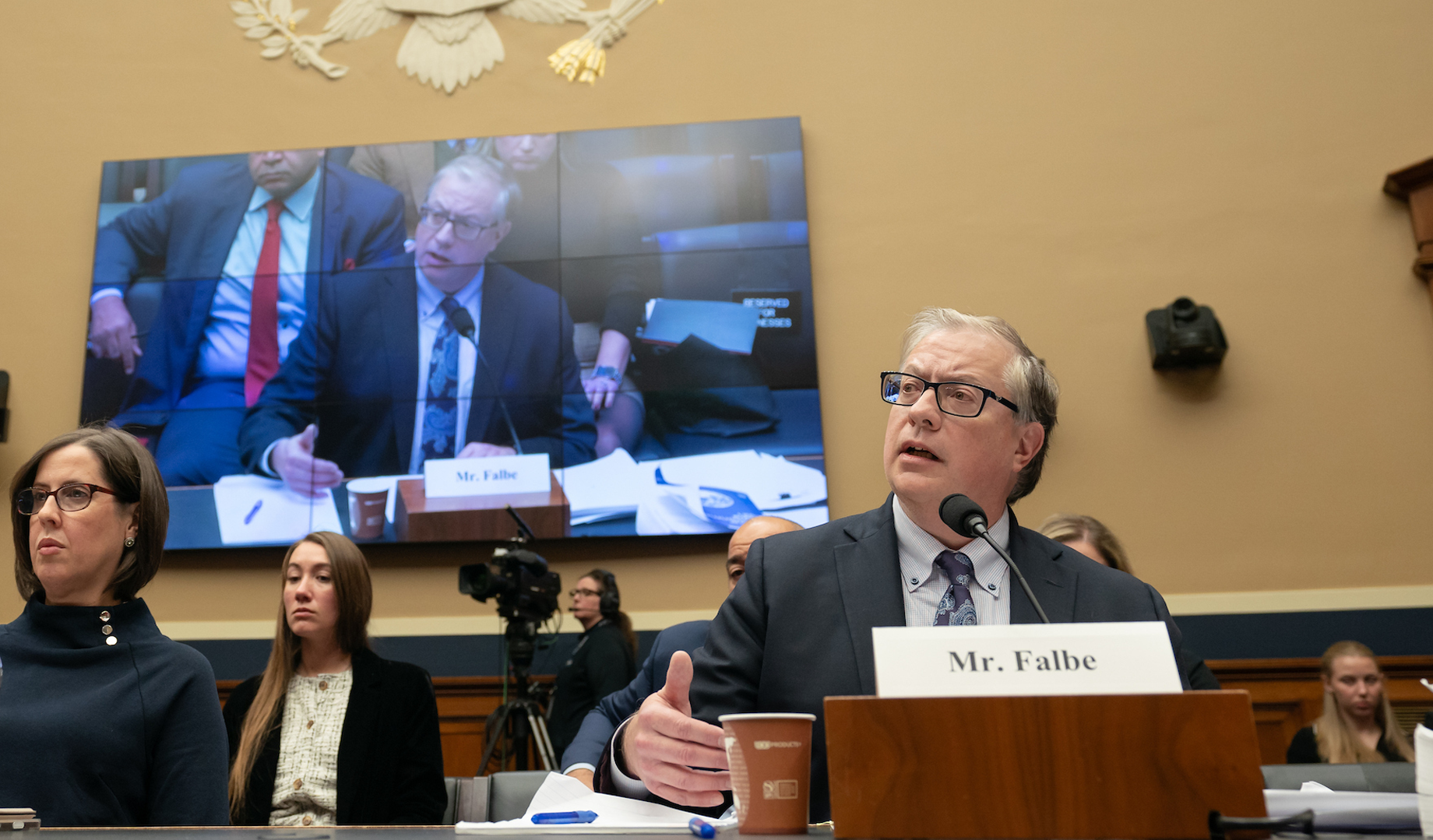
Lawrence Falbe (Miller Canfield), chair of ICSC’s Environmental Policy and Land Use Committee, testifies before the House Energy and Commerce Environment Subcommittee during a hearing on December 18, 2025.
Which issues are most important to ICSC’s Environmental Policy and Land Use Committee?
We’re very much engaged on the PFAS issue, and how it affects so-called “passive receivers,” as well as other issues like the definition of WOTUS (Waters of the U.S.) and wetlands issues, brownfield redevelopment and Superfund reform. We’re continually conducting outreach to the EPA so they have a better understanding of how developers work and how they evaluate risk. PFAS has lately been the 800-pound gorilla in the room, but we’re seeing other issues like AI crop up and the potential impact of AI in terms of creating environmental due diligence reports.
Why were you invited to testify on PFAS?
Our committee, in conjunction with ICSC’s Office of Government Relations & Public Policy, has been very busy over the last three years proactively doing outreach to Congress, specifically the committees that have jurisdiction over environmental issues. And all this came about when EPA promulgated–or even when it began first talking about–this new PFAS rule, which added PFOS and PFOA to the CERCLA list of hazardous substances.
During the last two ICSC Federal Fly-Ins we secured environmental meetings with committee staff members and we’ve continued having those conversations. We found our positions well received by some members and not so well by others. And for the ones who seemed interested in what we had to say, we kept up those relationships and worked to become a resource to share ideas on how to resolve this issue. When Congress became more serious about legislation to address the passive receiver issue, we were on their list of potential witnesses to call. And since I’m the chair and happen to have a lot of experience with CERCLA in my practice, I was put forward to give testimony.
How did you prepare your testimony?
I was very well prepared, thanks to Abby Jagoda [ICSC senior vice president, Public Policy] and Michael Stroud [ICSC consultant and partner at Ice Miller LLP]. They were instrumental in explaining to me what testifying was going to entail. First, we worked on the written testimony, which is submitted ahead of time, then we synthesized that into the oral testimony. After that we spent a long afternoon practicing possible questions and answers from the subcommittee. By the time the day arrived, I felt pretty comfortable. Of course, you never know what it’s going to be like until you actually sit in that chair!
What was the experience like for you when you arrived on Capitol Hill and the session began?
I’ve been to the Capitol many, many times, but I’ve never actually been a witness in a hearing room. I spent that morning reviewing my notes, going over it in my head, picking out my tie, then meeting Abby and Michael. We had a one-on-one meeting with Congressman Scott Peters (D-CA-50) that morning to talk with him about CERCLA reform and how it can be done in such a way that it’s still protective of human health and the environment but without a chilling effect on the economy. This was great practice for the hearing afterward, during which he ended up asking me a bunch of questions that were an outgrowth of our conversation that morning.
What surprised you about the experience?
When they film the hearings, it’s a pretty tight camera angle, usually just showing the chair and the ranking member. Aside from the chair, the ranking member and a few others, people are constantly in and out. It was interesting because some people would come in literally three minutes before they were called on, ask a bunch of questions, get their answers and then leave. And of course, you don’t see that on TV, but you see it when you are in the room. That might have been a little off-putting had they not explained to me that’s very typical and not to take it personally!
What advice would you give someone testifying before Congress?
It’s a team sport. I had great support from Abby, Michael and the rest of the ICSC team who have been there before and helped me understand the process, because it’s not very intuitive. Understanding what to expect and when to expect it was really important. If you don’t have somebody preparing you for that, you’re not going to perform nearly as well. Practicing and having a team behind you will help you be the best advocate you can be.
For more information about ICSC's Environmental or Economic Committees, email gpp@icsc.com.