On December 18, Lawrence Falbe, chair of ICSC’s Environmental Policy and Land Use Subcommittee, testified before the House Energy and Commerce Environment Subcommittee during a hearing examining the impacts of EPA’s designation of PFOA and PFOS as hazardous substances under the Comprehensive Environmental Response, Compensation and Liability Act (CERCLA).
In his testimony, Falbe emphasized that while the designation does not mandate cleanup at any specific site, it has materially altered the risk landscape for commercial real estate owners, developers, lenders and investors. The change has introduced significant uncertainty into real estate transactions and redevelopment efforts—particularly for brownfield and infill projects that are critical to local economic growth, housing supply and community revitalization.
Falbe explained that PFAS contamination is often widespread and frequently originates off-site, including from historic industrial activity, airports, firefighting foam, municipal biosolids or airborne deposition. Yet CERCLA’s strict, joint-and-several and retroactive liability framework can expose current property owners to substantial and unpredictable liability. This dynamic is already influencing market behavior, contributing to delayed transactions, constrained financing, insurance exclusions and stalled redevelopment.
Falbe also highlighted that existing regulatory safeguards do not provide the certainty needed for markets to function effectively. EPA’s PFAS Enforcement Discretion Policy, while helpful, is non-binding and does not shield property owners from third-party litigation. Similarly, the Bona Fide Prospective Purchaser defense is complex, uncertain and unavailable to many longtime owners, offering limited comfort during due diligence or underwriting. Inconsistent approaches to PFAS are also complicating participation in EPA’s Brownfields Program, undermining a proven tool for revitalizing underutilized sites.
Throughout the hearing, ICSC reaffirmed its support for science-based PFAS regulation, protection of drinking water and holding true polluters accountable. At the same time, the association underscored the importance of ensuring that environmental policy does not inadvertently discourage investment, freeze redevelopment or shift unlimited liability to passive property owners.
ICSC urged Congress to reaffirm four guiding principles: that polluters—not passive landlords—should bear responsibility; that clean drinking water must be protected; that economic redevelopment and housing construction should not be sacrificed; and that brownfields and infill redevelopment should be encouraged rather than penalized. To advance these objectives, ICSC recommended targeted clarifications to CERCLA liability for passive receivers, stronger and more predictable due-diligence protections, a source-focused approach to PFAS remediation, binding guidance on allocation and contribution and greater alignment between federal and state implementation.
ICSC remains committed to working constructively with Congress, the EPA, states and communities to address PFAS contamination in a manner that protects public health while preserving the investment and redevelopment essential to strong local economies.
For more information contact Abby Jagoda at ajagoda@icsc.com.
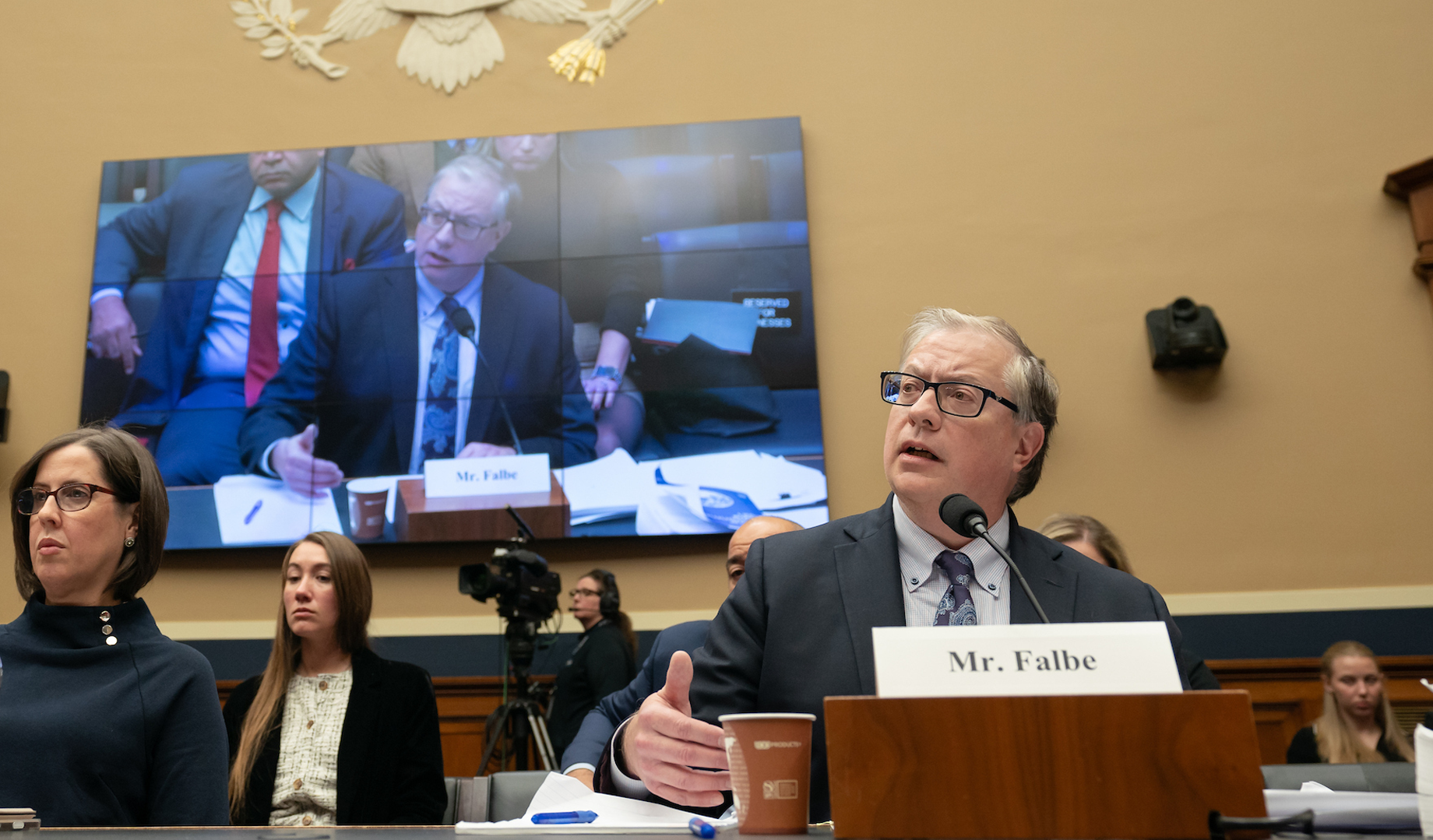
Lawrence Falbe, chair of ICSC’s Environmental Policy and Land Use Subcommittee, testifies before the House Energy and Commerce Environment Subcommittee during a hearing on December 18, 2025.