The Short Version
- Consumer misperceptions about retail real estate development often stem from how much of the process happens out of public view. Projects can take years before groundbreaking, with design, entitlements, engineering, permitting, financing, leasing and other work occurring well before construction begins.
- Changes in financing conditions or delays to public infrastructure can force developers to revisit plans and push back construction timelines.
- Developers say early communication with residents and local officials help address misconceptions about project timing, design and the tenant mix a community realistically can support.
- Consumers also may consider leasing to be a simple process, though developers actually must consider multiple factors like trade area demand, space requirements, merchandising and long-term property strategy.
What Owners and Developers Wish the Public Understood
Most local residents assume that a retail real estate development begins at groundbreaking, said Vestar senior vice president of development Kean Thomas. But they’re unfamiliar with the pre-development work that can take two to five years to complete, he noted. That gap in understanding can lead to friction between developers and the public.
Locals may misconstrue the motivations of developers or question the timing of projects or the types of tenants that will occupy them. “It doesn’t matter if you’re developing a project in the suburbs or the city; you’re going to run into some folks who have the wrong perceptions,” said Trademark senior vice president of retail and mixed-use development Lance Taylor. “They think that all we’re out to do is make a bunch of money and leave them with a bunch of traffic. They don’t consider that developers are providing something the community needs.”
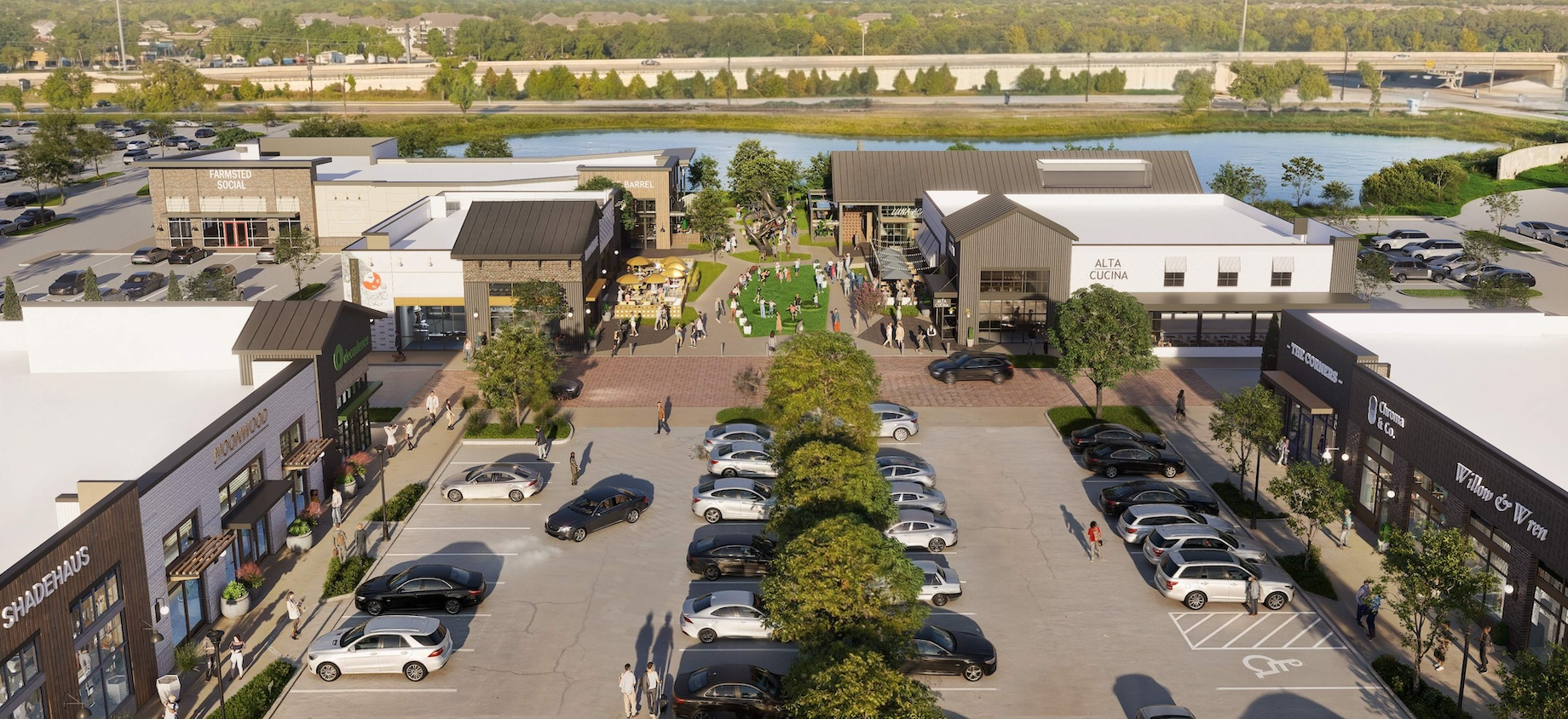
Over the summer, Trademark and equity partner MetLife Investment Management secured debt financing to begin construction of Dunham Pointe, a 202,000-square-foot retail and restaurant district on 25 acres in Cypress, Texas. Whole Foods will anchor the project, which was more than 60% pre-leased as of late September. Image above and at top courtesy of Trademark Property Co.
“They think that all we’re out to do is make a bunch of money and leave them with a bunch of traffic. They don’t consider that developers are providing something the community needs.”
What Happens Before Groundbreaking
Thomas described consumer misperceptions as a lack of visibility into the machinations of the retail real estate business. During years of pre-development work, the developer may invest millions into design, entitlements, planning, engineering and legal work. Among other projects, Vestar’s prep work on the $275 million Verrado Marketplace in Buckeye, Arizona, for example, began in 2021, and yet new stores in the 500,000-square-foot project continue to open after Target and a handful of other tenants opened in May.
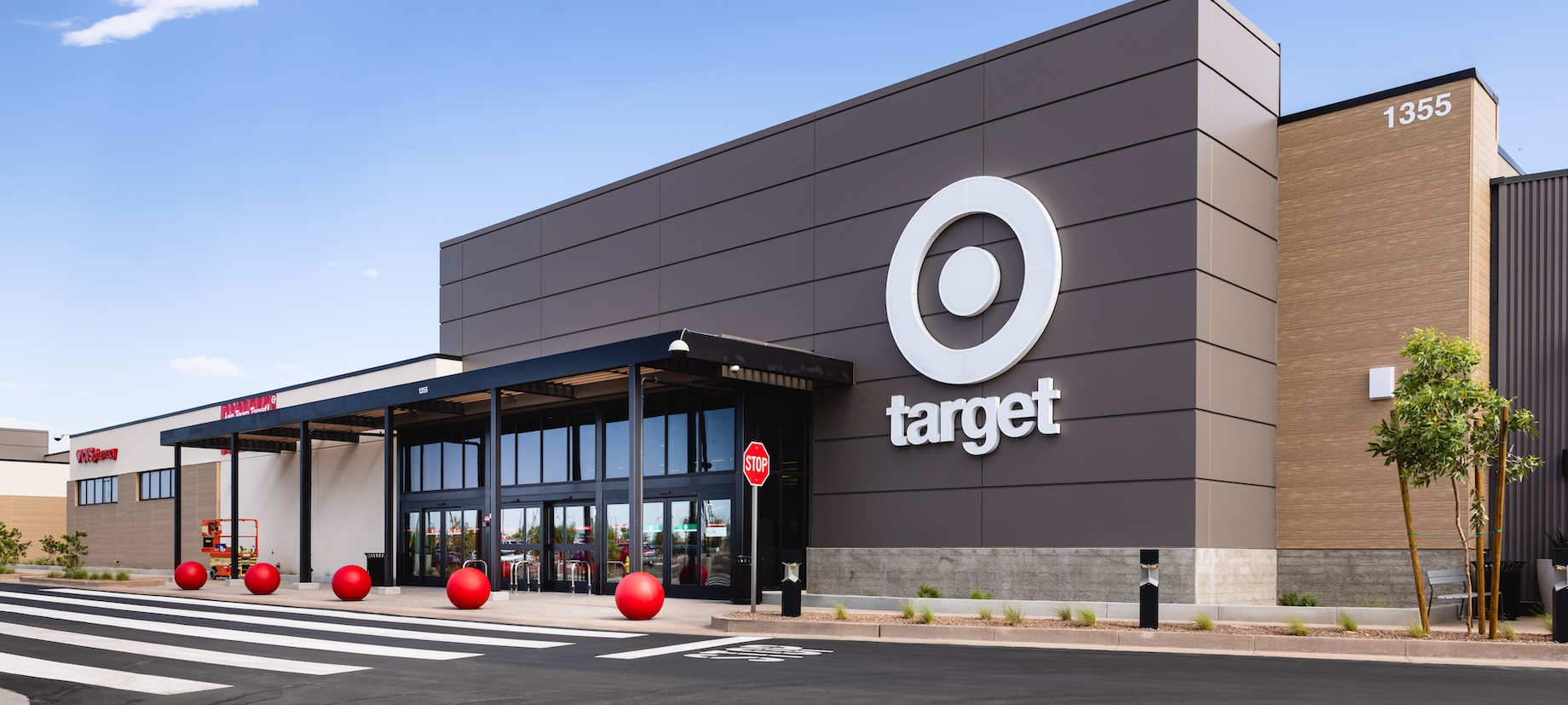
Vestar’s Verrado Marketplace, a 500,000-square-foot Target-anchored shopping center on the west edge of Phoenix, opened in May, and new stores and restaurants will continue to open through 2026. Once complete, the asset will feature more than 55 retailers and businesses, as well as a community green, a live performance stage and other public amenities. Image courtesy of Vestar
“People hear about a project and will watch it go through the entitlement process, and then they’re wondering why it isn’t being built immediately,” he said. “Entitlements allow us to start the design, which takes time. Groundbreaking is actually when some of the pressure lightens because we’ve got enough leases to get the equity and lender on board and we’ve got our bids and our budget is set.”
What’s more, most future customers of a proposed center are unaware that lenders and equity providers won’t commit financing until the developer has a building permit in hand, Taylor reported.
“People hear about a project and will watch it go through the entitlement process, and then they’re wondering why it isn’t being built immediately.”
Why Early Communication Matters
To dispel common misunderstandings, forward-thinking shopping center developers have developed communication processes that include private meetings with residents and city officials well before any needed planning and zoning hearings. Trademark’s approach builds consensus by first informing a town’s mayor and city council members, who dislike learning about such endeavors from constituents, Taylor said. The firm then holds information sessions with homeowners associations and other resident groups to involve them in decisions, including design aspects like parks or green space for events. “Our message is that it doesn’t really matter what we want; what matters is what residents want because we’re going to build it and at some point in the future sell it,” Taylor reported. “If we build something and they feel bad about it, that just further facilitates a distrust of developers.”
The tenant lineup also may not play out the way locals anticipated. Residents often envision the market’s hottest steakhouse or wine bar occupying a new center or even retailers like Macy’s or Nordstrom, Thomas said. Such lofty aspirations might be appropriate for an infill redevelopment in an established trade area, but they’re unrealistic at greenfield retail centers serving sprawling edge communities. “We hold informational sessions as part of an education process and point to all the other projects we own in town to show them how intimately we know the market,” Thomas stated. “We are very direct and honest on the fact that we are reaching for the best tenant combination of uses and brands tailored for that community and demographic.”
Why Development Timelines Change
Consumers also may be unaware of external events that can disrupt the best-laid development plans, observers said. Both the five-year and 10-year U.S. Treasury yields recently surged above 5% for the first time since 2007. That kind of volatility can delay projects as developers rework financial assumptions to reflect higher costs of capital. Public infrastructure projects also can influence retail developments. In Victorville, California, for example, NewMark Merrill has pushed back the development timeline of its roughly 300,000-square-foot Desert Sky Plaza II after delivery of a power line was delayed.
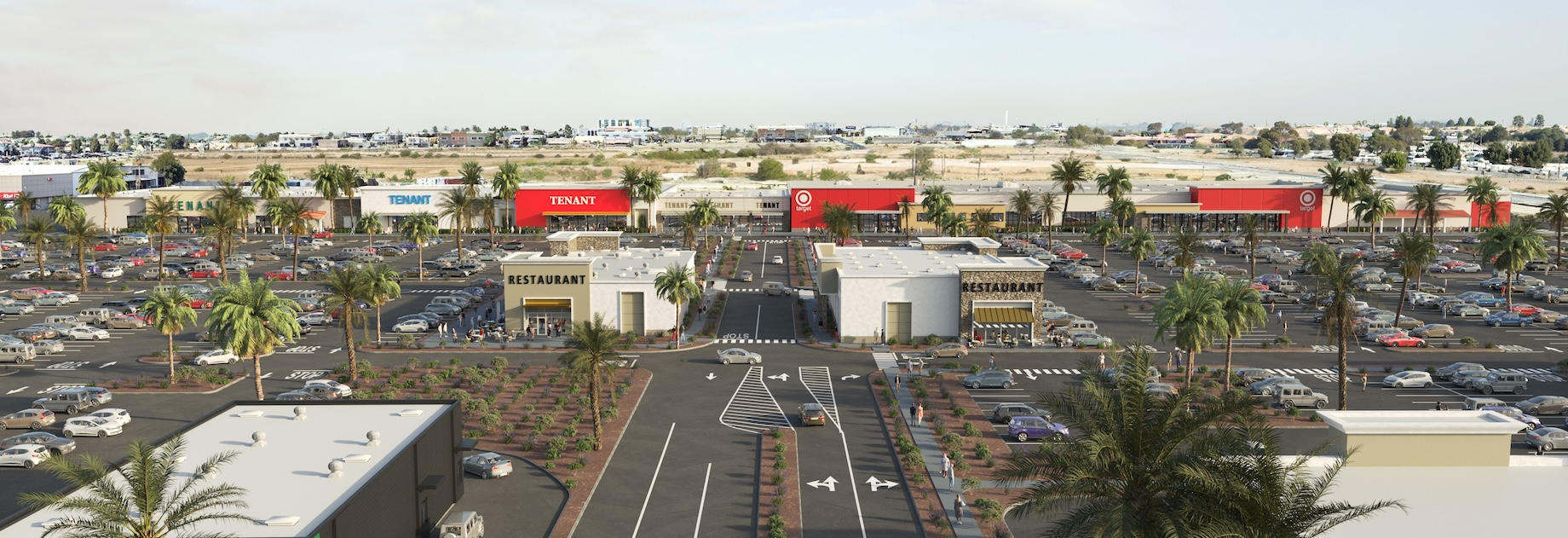
A delay related to power infrastructure has pushed back the construction start for NewMark Merrill Cos.’ Desert Sky Plaza II, a nearly 300,000-square-foot center in Victorville, California, whose tenants will include Target, Ross Dress for Less and Burlington. Image courtesy of NewMark Merrill Cos.
“You have to be honest. If you pretend the delay is for one reason but it’s a different reason, you’re going to get yourself in trouble,” said NewMark Merrill president and CEO Sandy Sigal. “You say that you’re working on finding a way to deliver what you’ve promised even if it’s going to take more time. I think most people are understanding in those situations.”
Why Vacancies Don’t Tell the Whole Story
Consumers also tend to look at small or isolated challenges and see much bigger problems, said Tanger executive vice president and chief revenue officer Justin Stein. If they see a vacant store in a shopping center, for example, they assume the entire property is in trouble. Further, they think replacing a tenant is as simple as finding another retailer, but there’s more to consider: the surrounding customer base, the size of the space and the property’s merchandising mix and long-term positioning, he added. Similarly, if a shopping center is struggling, they project that distress onto the entire market.
The best way to address those and other misconceptions is to explain how ongoing investment in centers will bring new uses and experiences to consumers, Stein explained. That could include renovations or the activation of peripheral land. In Foley, Alabama, north of Gulf Shores, Tanger recently kicked off the renovation of a 555,000-square-foot asset that will add green space and walkable breezeways in the central shopping area that will be lined with new food-and-beverage offerings and shaded seating areas, among other changes. “Retail is constantly evolving, and the health of a property is influenced by much more than occupancy,” Stein said. “Ownership strategy, investment, merchandising, tenant mix, consumer demand and the surrounding market all play a role.”
By Joe Gose
Contributor, Commerce + Communities Today