The Short Version
- Urban retail vacancy remains higher than suburban vacancy, but the gap has narrowed since the pandemic. Recovery varies by market, neighborhood and retail corridor.
- Prime luxury shopping corridors continue to attract strong demand, though larger spaces can be harder to fill. Retailers are adapting their expansion strategies, while landlords are introducing new experiential uses.
- Experiential retail, food-and-beverage concepts and wellness tenants are giving consumers new reasons to visit urban shopping districts, particularly outside traditional work hours.
- In underserved urban neighborhoods, landlords and developers are emphasizing placemaking, community needs and a mix of local, regional and national tenants to attract shoppers and drive long-term value.
As Urban Retail Recovers, Leasing Strategies Evolve Across Both High Street and Underserved Corridors
Urban retail once boasted lower vacancy than suburban and exurban retail. The pandemic reversed that pattern as remote work drained daytime traffic from cities. Recovery is taking shape, albeit in varying style: Prime urban corridors are tight, downtowns are slowly filling space and neighborhood centers in underserved communities are attracting a different mix of tenants.
Suburban Retail Remains Tighter Than Urban Retail
The suburban advantage created by the pandemic hasn’t disappeared, but the gap is narrowing.
National retail vacancy is now about 6% as rents have continued to rise, according to Cushman & Wakefield. Urban retail vacancy is at 7.3% in major urban markets in the western U.S. — which covers Washington, Oregon, California, Nevada, Arizona and Texas — according to Kidder Mathews. But vacancy rates vary widely from city to city, neighborhood to neighborhood. In New York City, for example, storefront vacancy is as high as 20% in parts of Lower Manhattan, Brooklyn and Queens, according to a report from the city comptroller’s office.
Newmark head of U.S. retail research Brandon Isner commented on the trend line following the COVID flip. “Suddenly, suburban availability was tighter than urban availability. That gap has shrunk a little bit over time, but for the most part, I think it’s a gap that will probably stay, with suburban retail remaining a little bit tighter than urban,” Isner said. “People have really gravitated toward those well-kept, well-managed suburban centers.”
Urban retail demand is improving overall, but it has not returned to pre-pandemic patterns. Second-quarter data from Placer.ai showed that urban retail corridor visits are 12.5% below 2019. Weekday daytime traffic, in particular, is still 20% to 30% lower. The recovery is stronger, though, outside traditional work hours. Friday evening visits are 2% above pre-pandemic levels and Saturday evenings are up 0.7%, while average dwell time has increased from 118 minutes a year earlier to 123.
For urban retail, meaningful recovery doesn’t mean filling every vacant storefront but rather matching the right tenants to spaces that may be uniquely challenging.
Location and visibility are critical, Isner said, with some retailers willing to pay more per square foot for smaller or unconventional spaces. He pointed to grocery store chain Aldi, which in January announced plans to add more than 180 stores across 31 states in 2026. In June, the chain opened a 25,000-square-foot store below street level in a residential tower near Manhattan’s Times Square — its first below-ground U.S. location.
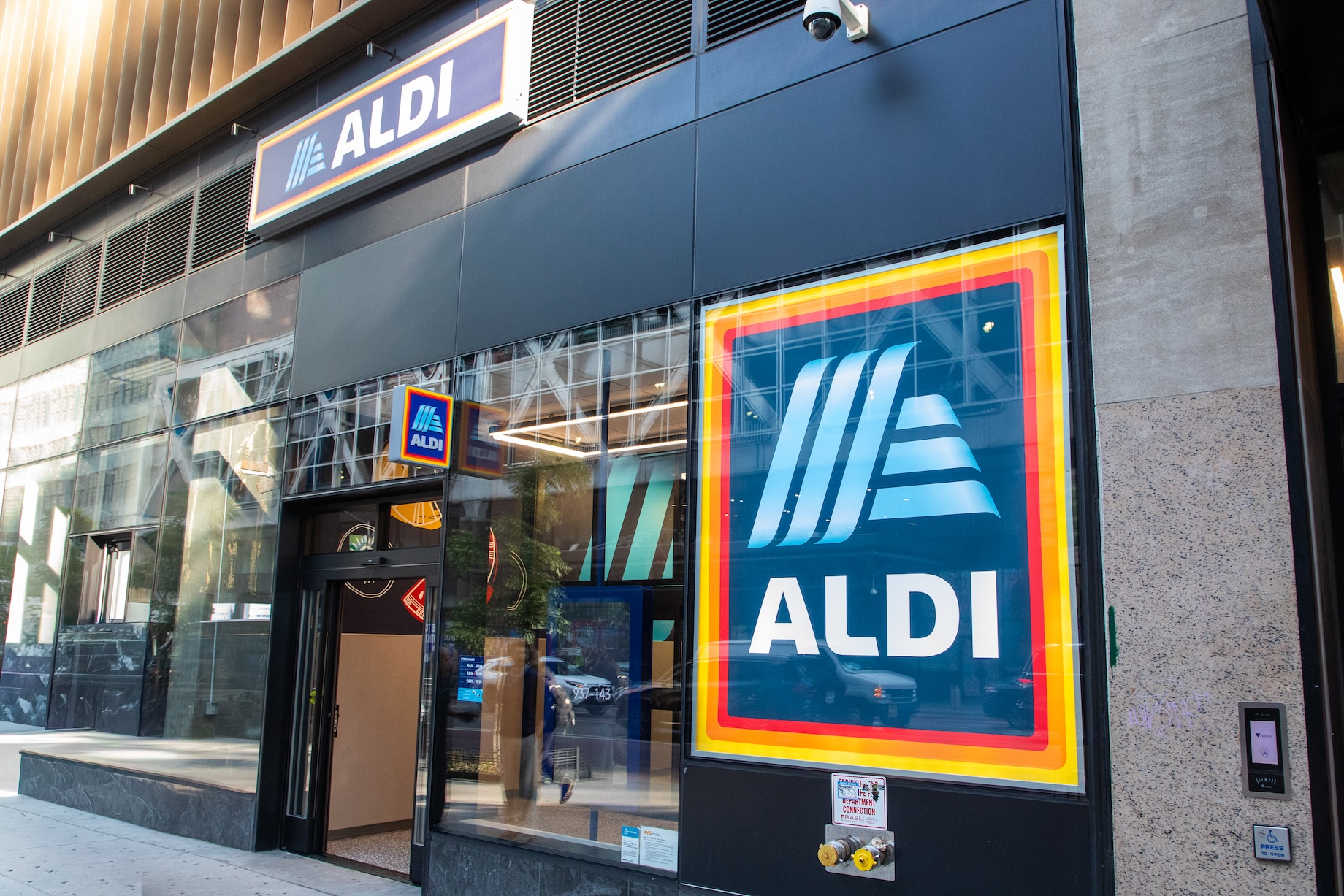
Aldi's Midtown Manhattan store, which opened in June beneath a residential building, is the chain's first below-ground location. Photo courtesy of Aldi
“It takes a specific kind of tenant to take on some of these spaces, but there are retailers willing to do it just to get their brand into an urban market,” Isner said. “We’re seeing more discounters move into cities.”
Luxury Corridors: Scarcity and Scale
High-end-retail corridors, though, have little vacancy to solve.
According to MasonRE founder and CEO David Abrams in a May column posted on retail talent recruiter Brobston Group’s website, luxury retail corridors have become more concentrated since 2019, with demand clustering in these tourism-driven locations. Vacancy is scarce in premium corridors and rents have increased by an average of about 10% over the year prior, according to JLL’s Prime Urban Retail 2026: The New Rules of Engagement, published in February. Rather than renting, JLL also noted, some luxury brands are buying properties to gain entry to these corridors.
It’s become a winner-take-all land grab in places like SoHo and Madison Avenue in New York City; Georgetown’s M Street in Washington, D.C.; Newbury Street in Boston; and the Miami Design District, according to Isner. “The retailers really want that prime space in the middle so they can face off against their competitors,” he said. “If your competitors are on that street, you'll want to be right there with them. You don’t necessarily want to be five streets over in a less-traveled district.”
On Chicago’s Magnificent Mile, meanwhile, spaces of 10,000 square feet and larger have higher availability than smaller storefronts, Isner said. One strategy is similar to the backfilling strategies being implemented in suburban malls: bringing in experiential retailers. For example, a 60,000-square-foot former Uniqlo space at 830 N. Michigan Avenue will welcome the Candy Hall of Fame in summer 2027. Notably, Uniqlo still finds value in the high-end corridor and opened a smaller but still sizable 30,000-square-foot location at 600 N. Michigan Ave. in March.
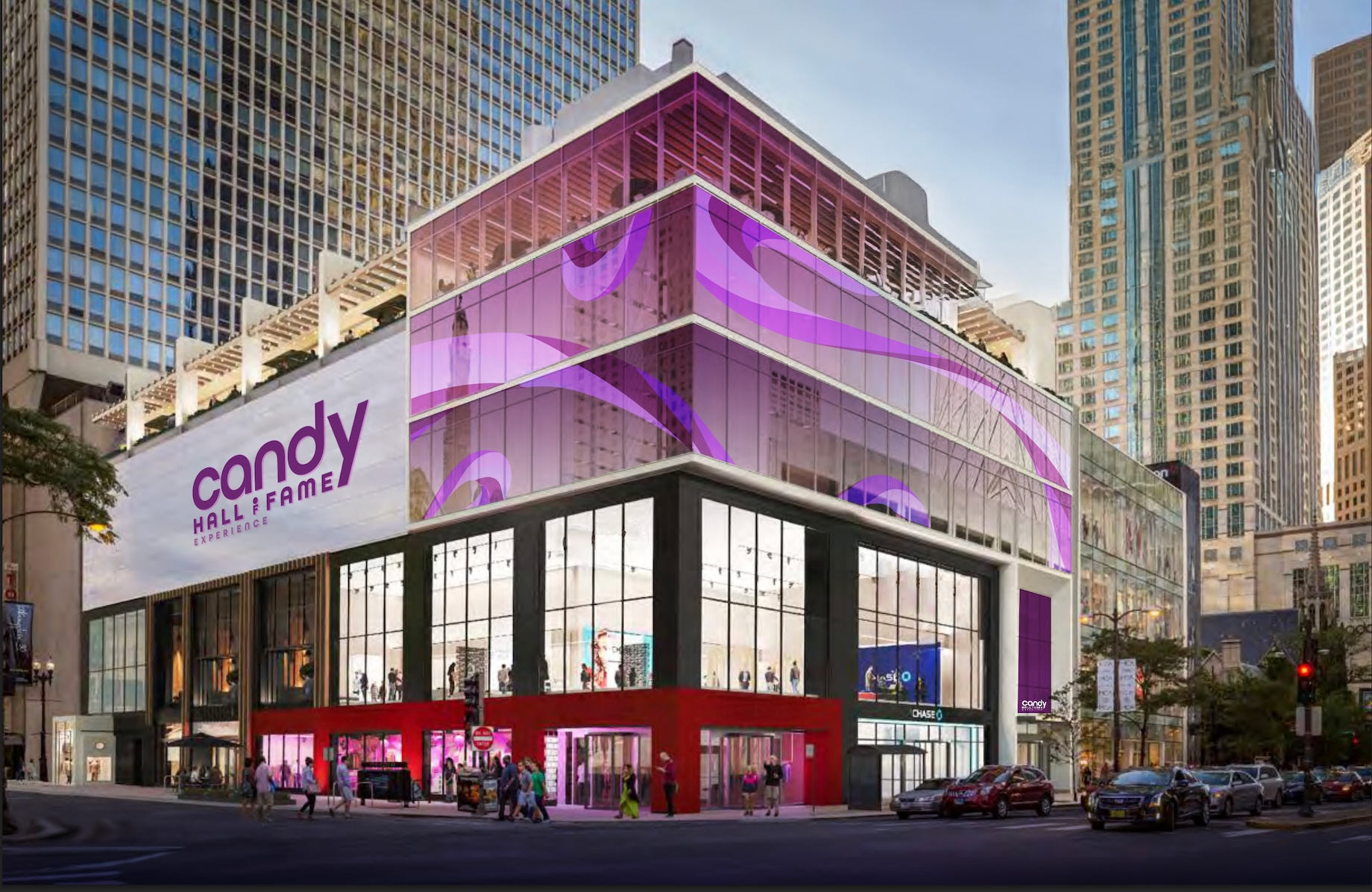
The Candy Hall of Fame will fill 60,000 square feet on Chicago’s Magnificent Mile when it opens in 2027. Image above and at top courtesy of Canvas Real Estate/P.Hodges
JLL data points to a selective expansion approach by luxury retailers, with brands opening fewer stores overall and favoring smaller formats. U.S. luxury store openings totaled about 123,000 square feet in the first half of 2026, down 46% from 227,000 square feet a year earlier, according to JLL. Nearly half of the openings were under 2,500 square feet, and only 5.3% exceeded 10,000 square feet. Street retail accounted for 45 of the luxury openings, and prime corridors captured 30 of those.
The takeaway: Prime retail corridors are not broadly suffering from excess space. The vacancy that does exist concentrates in larger and thus harder-to-fill spaces.
Experiential Retail and Wellness Create New Reasons To Visit
Beyond high streets, replacing lost weekday urban shopping traffic means giving people new reasons to visit. Pop-ups and experience-driven retail helped bring people back to urban spaces after the pandemic, said Avison Young senior vice president Sarah Wiebenson, and these submarkets are shifting once more. Now, she said, they’re “seeking community again” and creating “third spaces where you can gather.”
She pointed to the “hobbyamory” trend, in which people connect through shared interests without necessarily dating or partying. Think a local sushi restaurant that hosts Mahjong Mondays. “I really love that creativity of retailers and food-and-beverage [venues] to bring people together,” she said. “Gen Z is part of that shift. They want to have experiences and have that community.”
MORE FROM C+CT: From Game Night to a Third Place: Is Mahjong the Next Pickleball?
The focus on experience is changing the tenant mix. Isner said clothing remains a predominant category, but food services is growing, with retailers adding cafes to create new experiential entry points.
Health-and-wellness is also expanding. Wiebenson described a new building near her home in Boulder, Colorado, in which five of the six ground-floor tenants are wellness concepts, including massage, Pilates and med spas. Niche concepts are descending on the market, she said. “Consumers can go to one place for eyelashes, another for dry needling, then a sauna or Pilates class. You can kind of mix and match whatever is the type of life activity that you’re seeking now.” These uses give consumers a reason to spend time in a space rather than simply passing through it.
MORE FROM C+CT: This Property Doubled NOI by Focusing on Health, Wellness, Fitness and F&B
Placemaking and Local Tenants Drive Urban Retail Strategies
In underserved urban-retail submarkets, success depends on meeting local demand and curating the right tenant mix. In downtown Detroit, developer Bedrock takes a district-wide approach in The Belt, known for public art, and Parker’s Alley, a pedestrian retail and dining destination. Both contribute to the broader downtown environment around Woodward Avenue, a major corridor.
Bedrock senior vice president of leasing Jennifer Skiba said curating the district, rather than leasing individual spaces to the highest bidder, creates long-term value. “Something that’s always been important for us is starting with place, not retailers,” Skiba said. “We’re not just trying to lease storefronts. We want to create places where people stumble onto something unexpected, make memories and experience Detroit in a way that feels authentic.”
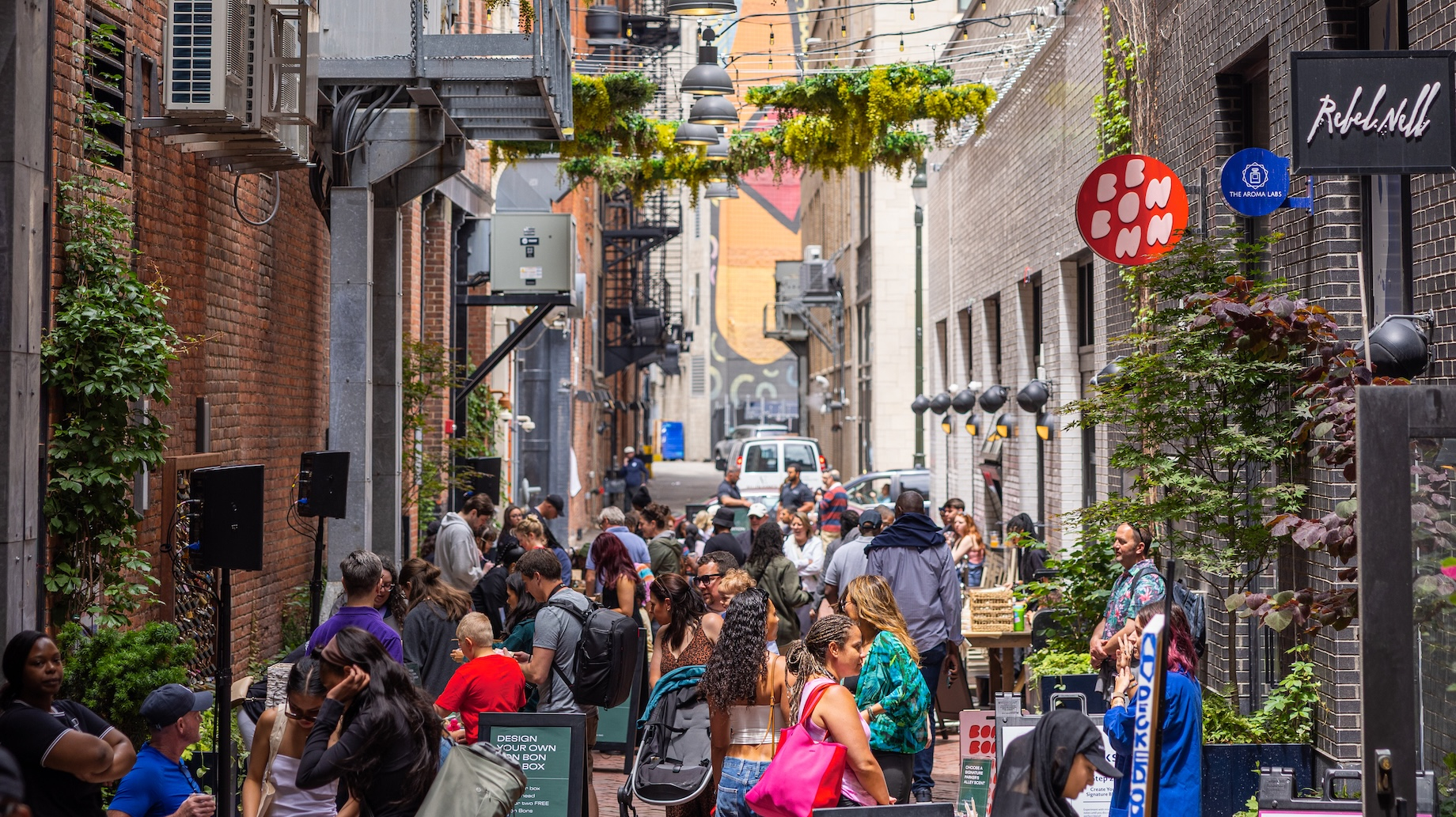
Bedrock helped revitalize downtown Detroit through projects like Parker’s Alley, a pedestrian retail and dining destination off Woodward Avenue, and Shinola Hotel, developed in partnership with Detroit-based watchmaker Shinola. Both are part of the broader, multibillion-dollar investment reshaping downtown. Photo courtesy of Bedrock
In low- and moderate-income communities, Chicago TREND co-founder and CEO Lyneir Richardson sees growing opportunities for local and regional retailers to coexist with national brands. “There’s a host of local and regional tenants who give our shopping centers vibrancy and vitality,” he said. “It’s the special Chinese food place or the special boutique” — what he calls “non-Amazon-able retailers” that provide manicures, haircuts and other services.
Healthcare is another growing category in underserved markets. “We really are starting to see more healthcare users understand the importance of being closer to the customers,” he said, pointing to urgent care, health clinics, dialysis centers, pediatric dentists, physical therapy and behavioral health.
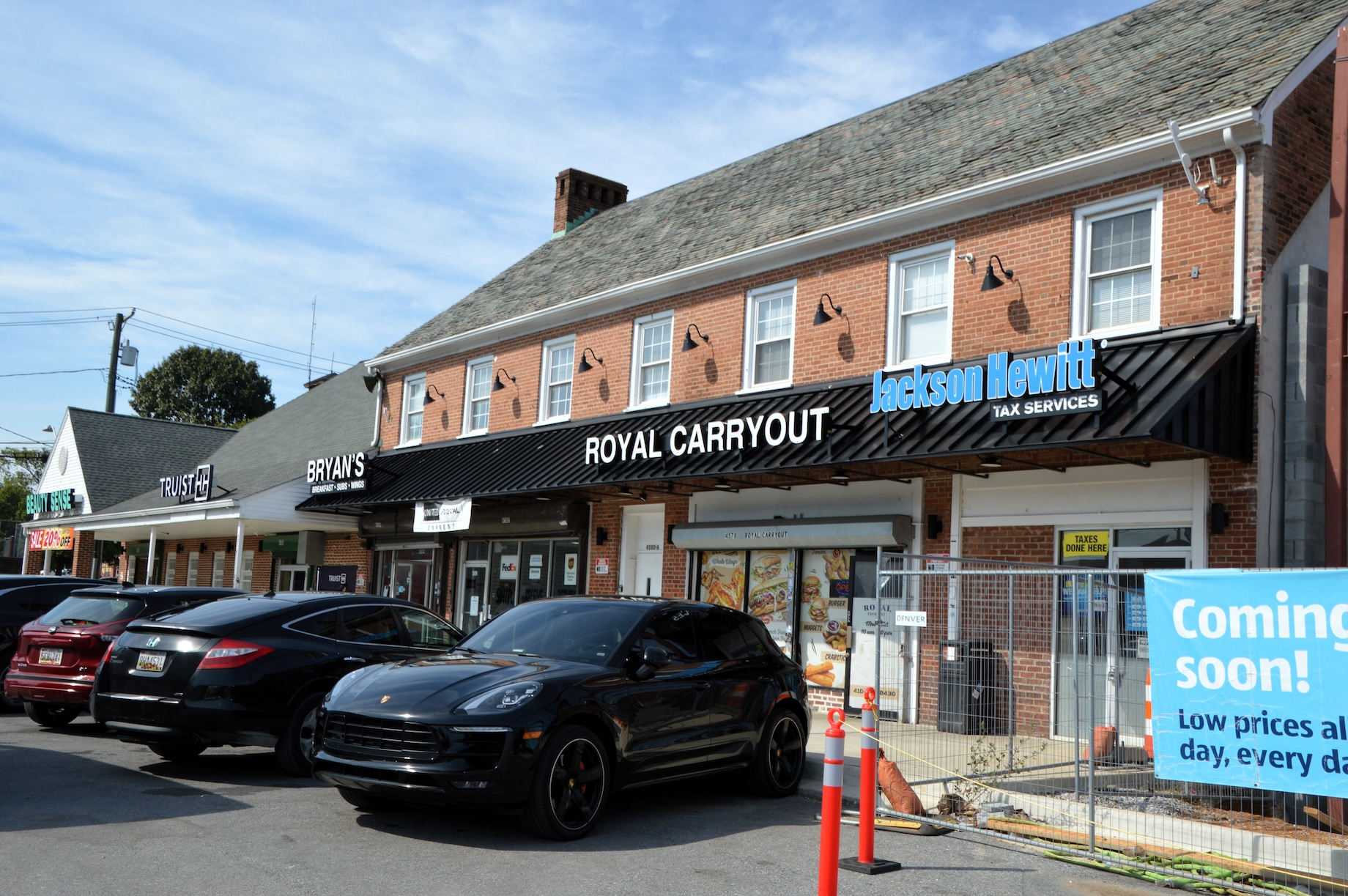
Chicago TREND is revitalizing Baltimore’s Edmondson Village Shopping Center through a community-ownership model that brought more than 200 investors into the deal. The redevelopment is adding essential services, including a grocery store, primary care, childcare and restaurants, giving residents not only a greater stake in the property but also new neighborhood amenities. Photo courtesy of Lashelle Bynum
“It’s not just about the nationals anymore,” he said. “What makes the shopping center unique and ultimately profitable is the local and regional tenants that round out the tenant mix.”
MORE FROM C+CT: Don’t Overlook Workhorse Services Tenants: The Quiet Drivers of Retail Success
Urban Retail’s Future Depends on the Right Tenant Mix
Urban retail recovery is unlikely to look like a return to the pre-pandemic market. Instead, landlords are adapting space and tenant mixes to a more selective consumer. Prime corridors will remain highly competitive, though larger, harder-to-fill spaces offer opportunity to add experiences to the high street game. Neighborhood centers in other urban submarkets, meanwhile, will succeed when they match local demand with the right mix of tenants. That may be the clearest lesson of the post-pandemic market: The question is no longer whether people will come back to cities but rather whether the retail offering will give them a reason to.
By Halley Bondy
Contributor, Commerce + Communities Today