The Short Version
- Mahjong is surging in popularity, with searches for clubs and lessons jumping sharply as the game evolves into a social lifestyle and modern third place.
- Mahjong studios and in-store classes are emerging as experiential retail, driving dwell time, repeat visits and community engagement.
- Landlords are betting on affluent, experience-seeking customers and flexible revenue streams.
- Retailers and operators are blending classes, open play, events and product sales to create sustainable business models around mahjong.
Mahjong’s Surge Signals a New Kind of Social Lifestyle
Mahjong is becoming a lifestyle. Yelp recently named the Chinese tile game a top trend of 2026, noting that searches for mahjong clubs surged 4,467% year over year for the period from September 2024 to August 2025 and that searches for mahjong lessons rose 819%. Julia Roberts and Meghan Markle play regularly with friends. Even the trendy Standard hotel in New York City has hosted Green Tile Mahjong Social Club. Ultimately, Wise Guy Reports forecasts, the global mahjong market will grow from $1.9 billion in 2024 to $3 billion by 2035, a 4.4% compound annual growth rate.
Mahjong could even be the next pickleball. “I see similarities,” said SRS Real Estate Partners vice president Daniel Poku, who represented the landlord in a lease to The Charleston Club, a mahjong studio that opened in Dallas in October. “It’s highly social, there’s a skill component and at its core, it’s about community and connection.”
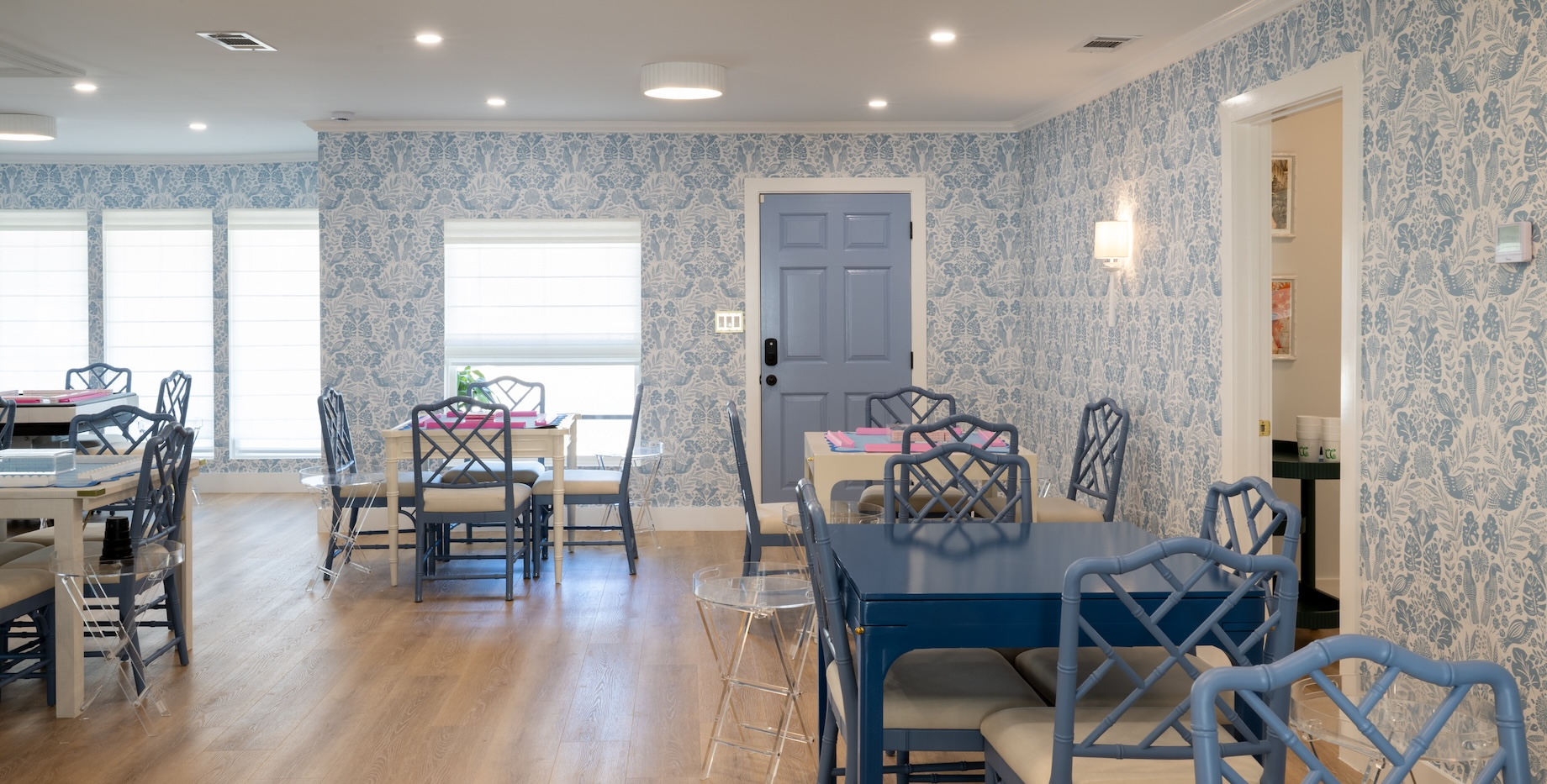
Lisa Rocchio started playing mahjong with friends six years ago and in October opened The Charleston Club, a mahjong studio and retail concept in Dallas. She designed the spot to feel like a friend’s home rather than a commercial space. Photo courtesy of The Charleston Club
More on Pickleball From the C+CT Archive
Landlords Craving Pickleball Can Learn From This Operator
The Picklr Plans 500 Pickleball Locations
Pickleball Craze Helps Fill Vacancies
A Cross-Generational Opportunity Emerges
Long associated with older age groups, mahjong is crossing generations. “Everyone’s grandma knows how to play,” laughed Amy Myers, owner of The Mahjong Maison, a 1,300-square-foot studio that opened in January in Eton Chagrin Boulevard, a Cleveland lifestyle center owned by Stark Enterprises. Myers learned to play in 2007 when her son was in preschool. “It was my excuse to get out every week,” she said. “It was a way to just kind of reconnect with my girlfriends.”
In 2022, she bought a mahjong-tile bag online to replace the metal briefcase that had come with her set and that required precise packing. That online activity prompted her Instagram feed to balloon with announcements about open-play mahjong events and pictures not only of highly designed tiles and embroidered mats but also of younger players. She realized mahjong was taking off. “This is what people are doing” she realized as COVID waned. “We’re having lunches again. We’re having game nights again. And the tiles are really pretty. I thought people want to be a part of that.”
Pandemic-Era Habits Sparked a Mahjong Revival
It prompted an idea of how she could be a bigger part of it herself: “I thought: ‘I could totally teach. I love being with people.’” So a year-and-a-half ago, Myers began offering lessons in living rooms and borrowed community spaces, hauling her sets from place to place. The classes filled quickly, and after every session, “they didn’t want it to end,” she said. “People kept asking: ‘Where do we play now?’”
Considering that demand and her frustration at “schlepping my stuff to everybody’s house all the time,” she dreamed of a permanent space where she could host guided-play sessions, welcome drop-in players and continue to grow the community. Key to growth, she knew, was the consistency such a spot would allow. “It’s a game you need to play consistently to feel confident and improve your skills,” Myers said.
Mahjong Studios as Modern Third Places
Players have filled The Mahjong Maison since it opened last month, said Myers, who sees mahjong studios like hers as part of the rise of third places — neither home nor work — where people regularly can spend time. “We’re all looking for somewhere to go, and we want it to feel good when we get there,” she said.
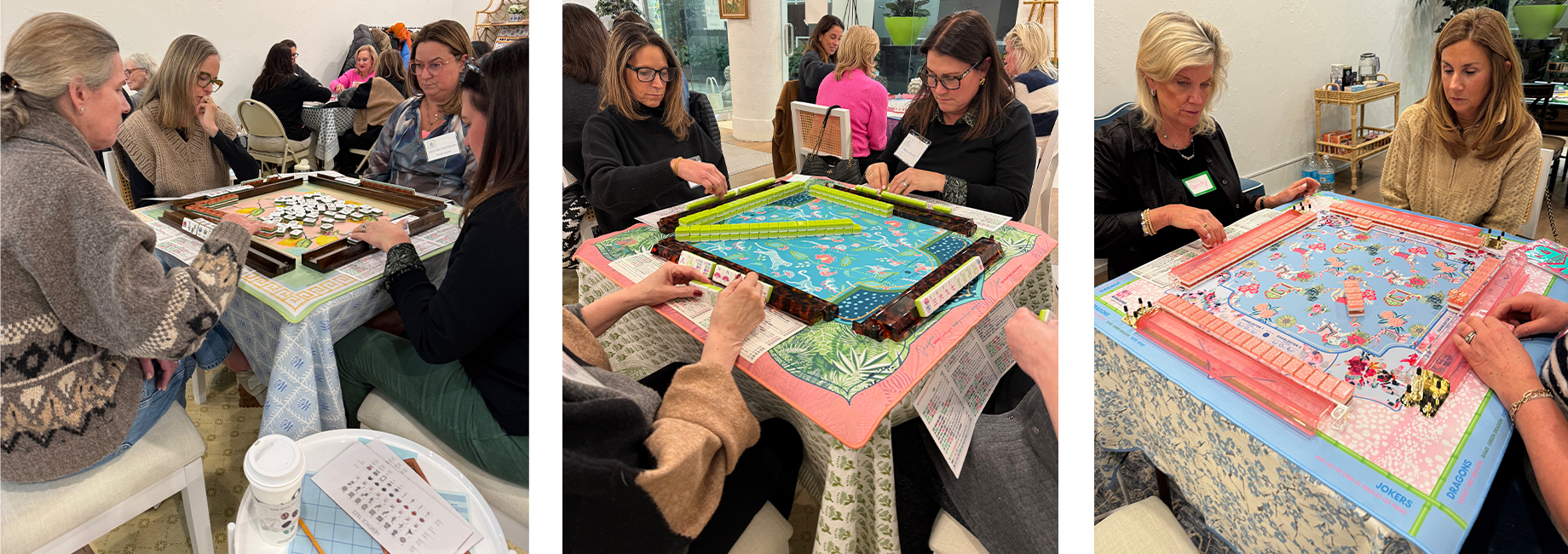
Players contemplate their tiles at The Mahjong Maison in Cleveland’s Eton Chagrin Boulevard. Photos above and at top courtesy of The Mahjong Maison
Mahjong is bringing new customers to The Truffle Pig in Collierville, Tennessee. Co-owner Tara Gorman began offering lessons and selling mahjong sets two-and-a-half years ago. Sales increased across the gift boutique’s inventory, and mahjong now is one of the store’s most profitable categories, she said. The shop hosts one or two beginner classes a month, plus advanced sessions, and all of them sell out. “They’ll be four strangers, and 20 minutes in, they’re laughing together,” Gorman said. “An hour later, they’ve decided they’re signing up for the next class as a group so they can sit together.” The game “fits perfectly with our store because we’ve always believed shopping should be an experience, not just a transaction,” Gorman said. “Now it’s more of a gathering space. People come in, make friends, learn something new, see pretty things and just experience joy.”
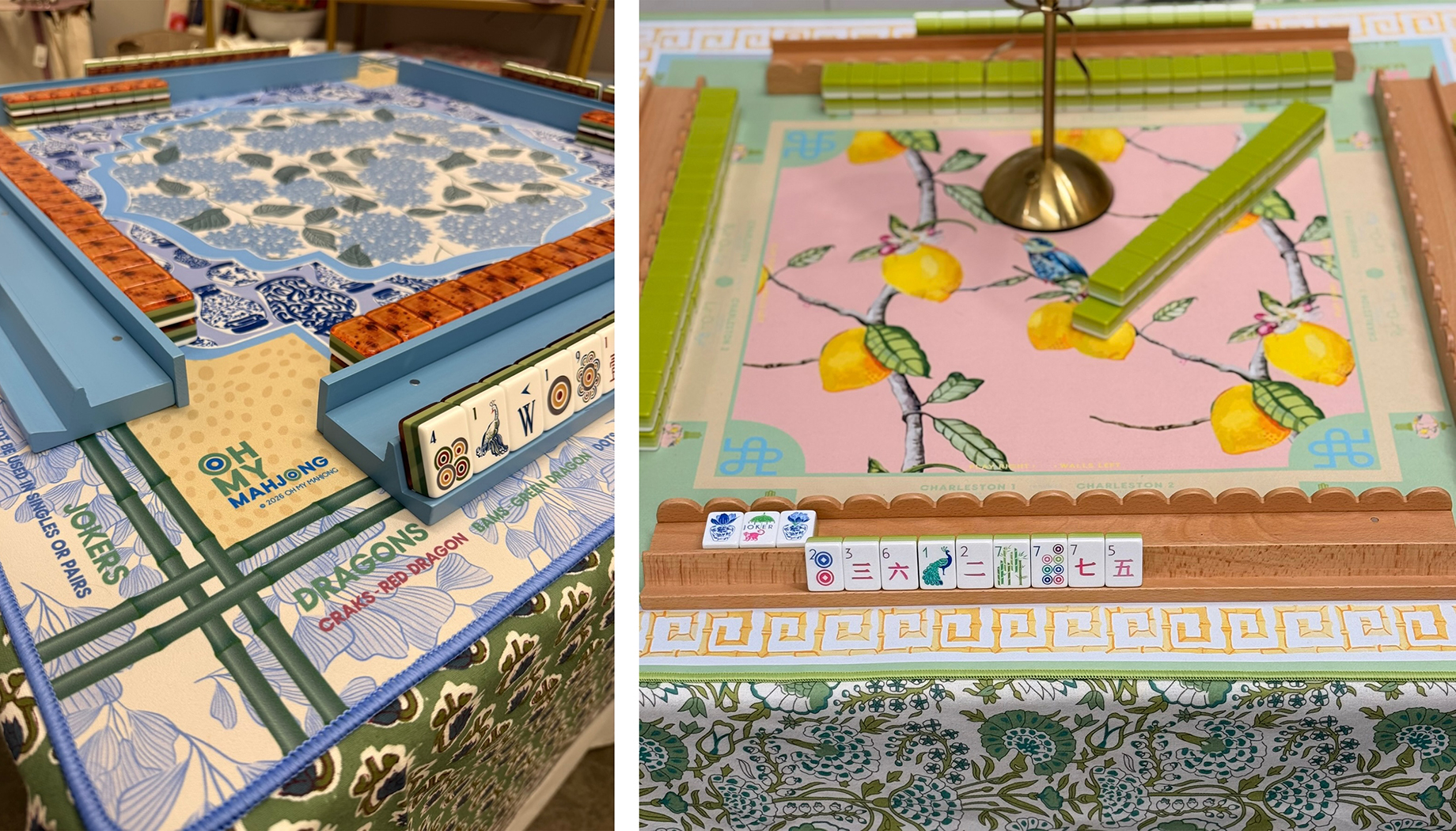
Modern mahjong sets have become a high-performing category for Collierville, Tennessee’s Truffle Pig boutique, which also offers mahjong classes. Photos courtesy of The Truffle Pig
Experiential Retail Boosts Dwell Time and Repeat Visits: Why Landlords Have Taken a Liking to Mahjong Concepts
Gorman said many of the new customers mahjong brings in turn into repeat customers. Indeed, experiential offerings can fuel not only repeat visits but also dwell time. That’s one reason Lisa Rocchio’s landlord helped The Charleston Club get off the ground on West Lovers Lane, a corridor of boutiques, medical spas and dining near some of Dallas’ most affluent ZIP codes. The demand among affluent women with time was strong enough that the landlord committed low six figures to gut and build out the space for Rocchio’s Charleston Club, a mahjong parlor that opened in October, she said. SRS associate Lauren Dickson, who helped represent the landlord, said: “It fits the lifestyle here. Men have golf; women have mahjong.”
Rocchio dreamed up the concept in early 2020 when mahjong became a way to connect with friends during COVID. “Instead of lunch or drinks, we met to play,” Rocchio said. She believed Dallas would be the right market for a mahjong gathering place. “It’s a very mature mahjong city,” she said. “People have been playing here for years, and most already have their own tiles and groups.”
Now, The Charleston Club hosts weekly classes, as well as birthday parties, bridal gatherings and team-bonding sessions. “It spans ages,” Rocchio said. “People are looking for ways to gather that aren’t on their phones.” Though she designed the space to feel like a friend’s home rather than a commercial venue, Rocchio knew retail had to be part of the model.
Retail, Rentals and Events: The Mahjong Revenue Stack
The 1,500-square-foot studio includes a retail section for selling tiles, racks, mats and playing tables. “There was nowhere you could go to touch and sample different brands of tile,” she said. “People care about that. Some people like thin tiles. Others like thicker ones.”
“Rentals and events definitely have higher margins than retail,” Rocchio said, but products also can bring in profit: Her tables — right now, she has tables from nine designers — sell from $945 to $4,800.
At Mahjong Maison, Myers focuses on attendees. “I didn’t need walk-by traffic,” she said of what she was looking for in a space. “I needed people to be able to get here easily and stay for hours.” The studio hosts leagues, lessons and open play. On Monday nights alone, 32 players gather for league play. At least one nearby shop decided to stay open later thanks to that evening crowd, Myers said, and players head to restaurants and bars for dinner or drinks before and after games.
Her base is women ages 40 to 60, but the game is spreading to younger adults, to men, even to teenagers, Myers said, and that reveals a long horizon for the game and gathering places for players. “My son plays with his friends. One of them stole his mom’s set.”
By Rebecca Meiser
Contributor, Commerce + Communities Today