The House Energy and Commerce Subcommittee on Environment held a hearing on March 4 examining bipartisan proposals aimed at strengthening the federal Brownfields Program and accelerating the cleanup and redevelopment of contaminated properties across the U.S.
The hearing, titled “Ready for Reuse: Legislative Proposals to Unleash the Potential of America’s Brownfields Sites,” focused on how federal policy can better support redevelopment of long-idle industrial and commercial properties while protecting public health and the environment. Lawmakers from both parties expressed interest in ensuring that the Brownfields Program continues to support redevelopment while adapting to evolving economic needs.
Among the witnesses was Gerald Pouncey, senior counsel of Taft, Stettinius & Hollister, LLP, and 2025 recipient of the ICSC Trustees Distinguished Service Award. Drawing on his service as former chair of the ICSC Environmental and Land Use Policy Committee and more than three decades of experience redeveloping contaminated properties nationwide, Pouncey emphasized the central role the private commercial real estate sector plays in transforming dormant sites into productive community assets.
“Brownfield redevelopment is central to restoring land to commercial use and to helping improve surrounding communities,” Pouncey said. “The private commercial real estate sector is often the sector most capable of transforming contaminated or abandoned parcels into community assets that generate jobs, tax revenue and long-term economic growth, while also undertaking cleanup of these parcels.”
Pouncey’s appearance before Congress comes on the heels of testimony by the current ICSC Environmental Committee Chair, Larry Falbe, who testified before the same House Committee in December.
Pouncey described many brownfield sites as large, centrally located properties—often exceeding 100 acres—that have been abandoned or severely underutilized for years. When left idle, he said, they can become magnets for crime, pose safety hazards and create long-term environmental uncertainty for surrounding communities. Redevelopment, by contrast, can restore economic vitality, improve public safety and create opportunities for housing, retail, industrial and mixed-use development. Many brownfield sites are also located near existing infrastructure such as power and natural gas lines, making them attractive for new industrial uses and reducing pressure to develop undeveloped “greenfield” land.
Despite their potential, Pouncey told lawmakers that brownfield projects face significant financial and regulatory hurdles. Environmental due diligence alone can cost five to ten times more than comparable greenfield development, and those costs must often be incurred before developers can determine whether a project is even viable. Cleanup costs, uncertain regulatory timelines and liability exposure further complicate financing decisions for developers, lenders and investors.
“Without predictable liability protections, clear regulatory pathways, and targeted financial incentives, many brownfield projects simply cannot move forward,” Pouncey said.
A key theme of the hearing was the role state programs play in enabling redevelopment. Pouncey urged Congress to strengthen partnerships with state voluntary cleanup and brownfield programs, which often provide liability protections and financial incentives that make redevelopment feasible. Most states now offer programs that allow purchasers and lenders to obtain protections from environmental liability for contamination they did not cause.
These programs may also offer tax abatements or other financial incentives to offset cleanup costs. Pouncey pointed to Georgia’s program as an example of their effectiveness: since 2004, more than 1,500 properties have entered the state’s brownfield program and more than 800 have completed cleanup and achieved final closure.
Federal brownfields grants also play a critical role, Pouncey said, particularly when municipalities partner with private developers to conduct targeted testing and remediation. He expressed support for recent increases in federal cleanup grant limits and suggested Congress consider prioritizing funding in several areas, including supporting state brownfield programs working directly with redevelopment projects and testing and remediation of sites on the National Priorities List to enable their transition into state programs.
With growing demand for sites suitable for advanced manufacturing, logistics and energy infrastructure, brownfield redevelopment is increasingly viewed as a strategic opportunity to repurpose existing land and infrastructure while revitalizing communities.
“Brownfield redevelopment is one of the most effective tools available to revitalize communities, expand economic opportunity, and return underutilized land to productive use,” Pouncey told the subcommittee. “But the private sector cannot succeed without predictable liability protections, targeted financial incentives and strong state and federal partnerships.”
For more information contact gpp@icsc.com.
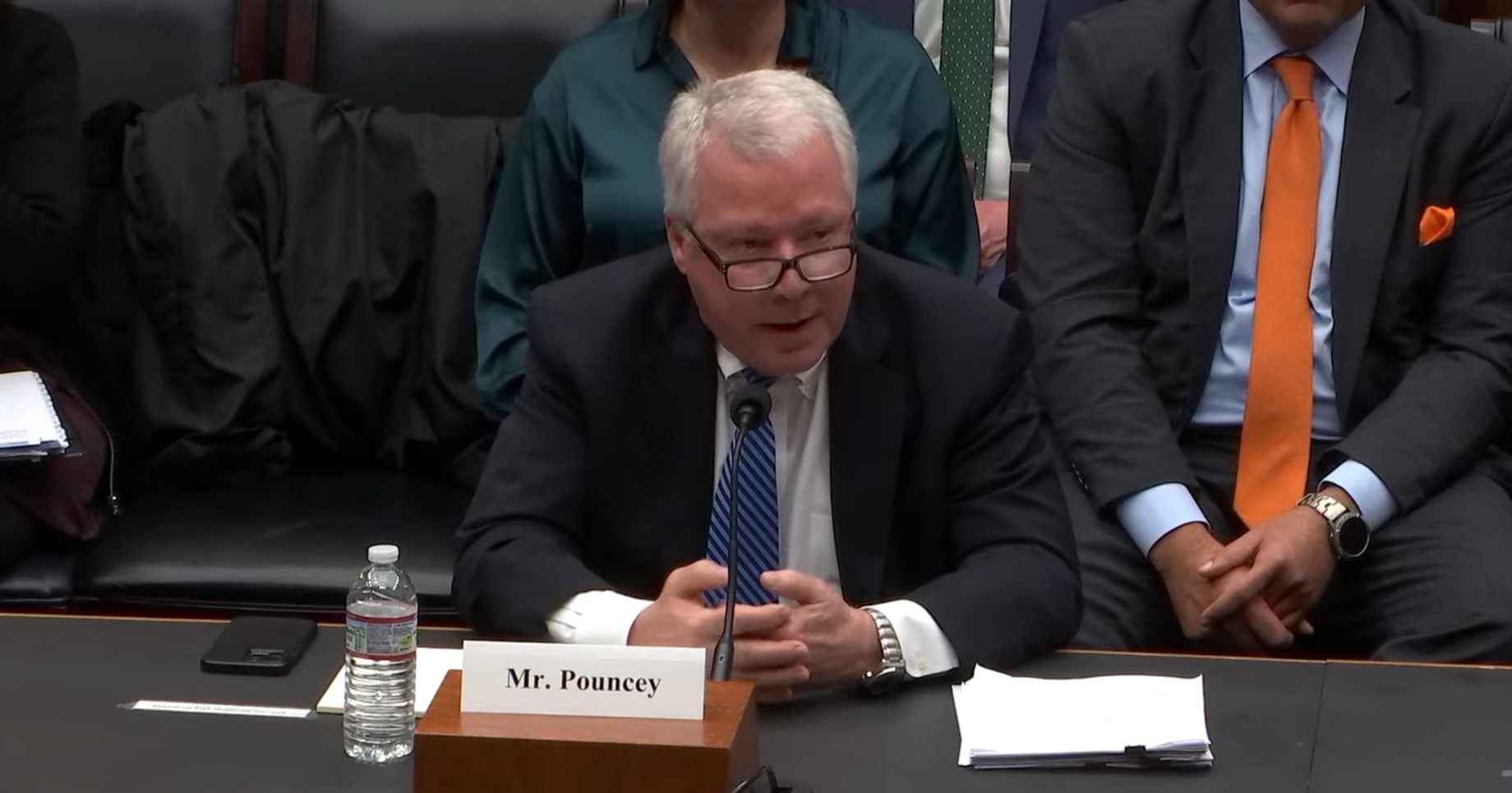
Gerald Pouncey (Taft, Stettinius & Hollister, LLP), former chair of ICSC’s Environmental Policy and Land Use Committee, testifies before the House Energy and Commerce Environment Subcommittee during a hearing on March 4, 2026.