Jump to ...
Downtown Retail Landmarks in San Francisco, Boston and Chicago Attract $360M in Investment
2 New Investments Target Grocery-Anchored and Open-Air Retail Centers
Smoothie King and Starbucks Build Out Their Store Pipelines
Academy Sports and Starbucks Point to Retailers’ Exurban Growth Opportunity
EastBanc Names Philippe Lanier CEO
Downtown Retail Landmarks in San Francisco, Boston and Chicago Attract $360M in Investment
Action at four downtown-defining retail properties underscores investor confidence in high-profile retail destinations. Ghirardelli Square in San Francisco sold for up to $80 million, the Chanel and Cartier stores on Boston’s Newbury Street fetched $113.5 million and a $170 million-plus overhaul will consolidate and reinvent the retail in Water Tower Place on Chicago’s Magnificent Mile.
Ghirardelli Square Sale Transfers an Iconic Adaptive Reuse and Mixed-Use Destination
Real estate investment firm Embrace Real Estate and its asset management arm, 1823 Partners, acquired an iconic retail property in San Francisco from real estate investor and manager Jamestown. Citing unidentified sources, the San Francisco Business Times reported Jamestown sold Ghirardelli Square for $75 million to $80 million.
The property, which Jamestown bought 13 years ago, encompasses 12 brick buildings along the San Francisco waterfront. Ghirardelli Square offers 105,000 square feet of rentable retail space, according to the San Francisco Business Times. Thirty-two multifamily units were not included in the deal. The property, whose origins date back to the mid-1800s, is listed on the National Register of Historic Places. It opened to the public in 1964 and is considered the first successful adaptive reuse project in the U.S., according to a 2012 academic article, Revitalizing Cities: Adaptive Reuse of Historic Structures. Embrace Real Estate said the deal “represents a generational transfer of one of the most recognized mixed-use destinations in the country.”
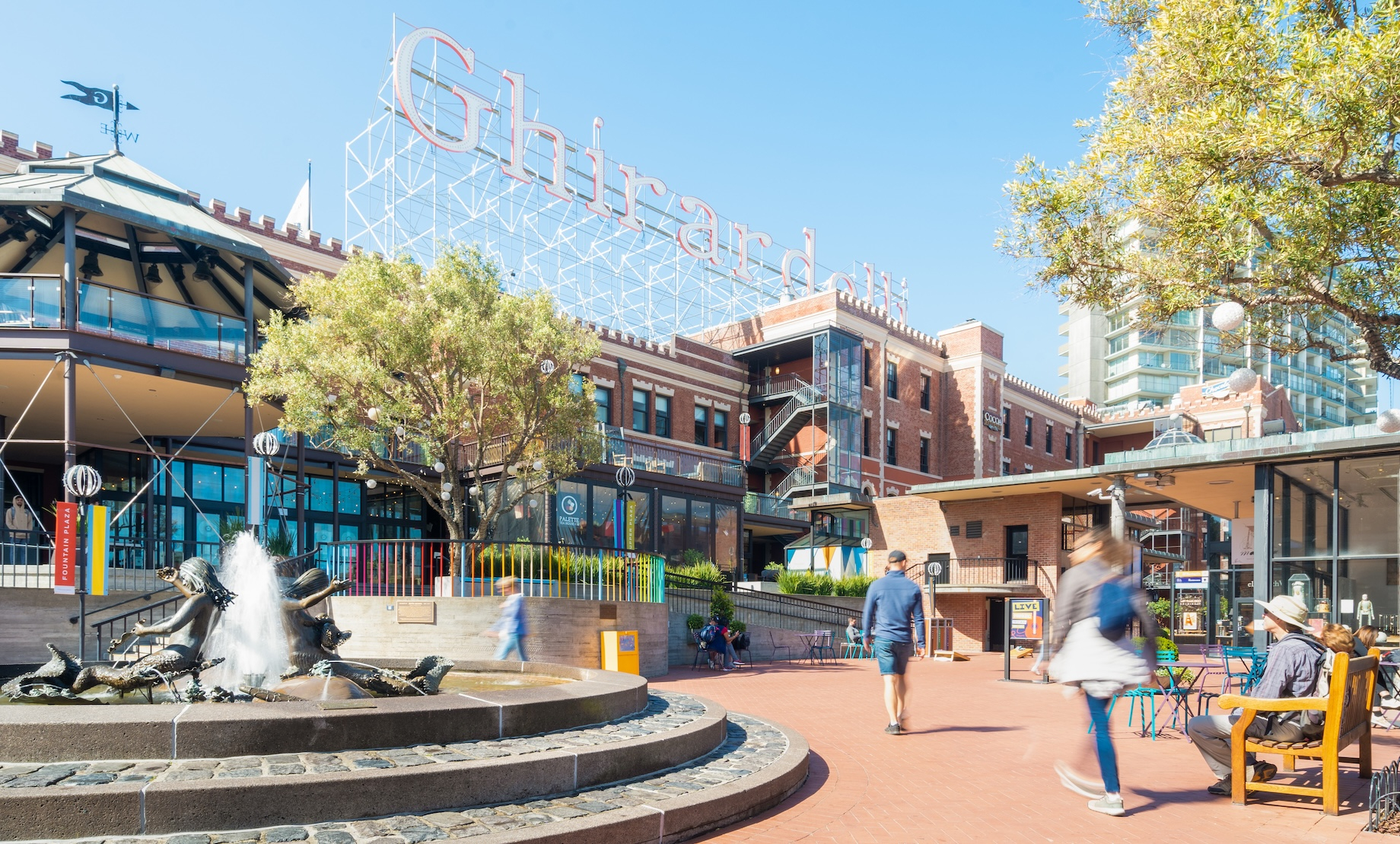
San Francisco’s Ghirardelli Square, known for its red-brick buildings, is listed on the National Register of Historic Places. Photo above and at top courtesy of Jamestown
The property, distinguished by a 19-foot illuminated Ghirardelli sign installed in 1915, attracts 9 million visitors per year. Tenants include the flagship Ghirardelli Chocolate store, a Fairmont Heritage Place hotel, a McCormick & Kuleto’s seafood and steak restaurant, SF Brewing Co. & Restaurant, women’s apparel retailer Gigi Rose and real estate firm Compass. Embrace Real Estate and developer Continuum Partners will oversee leasing and other day-to-day operations.
Boston Newbury Street Stores Leased to Chanel and Cartier Sell for $113.5M
Two luxury retail buildings on Boston’s iconic Newbury Street have sold for $113.5 million. A joint venture between Acadia and Osiris Ventures purchased 4-6 Newbury St. and 28 Newbury St. from ASG Equities. Home to the only Chanel boutique in Boston, 4-6 Newbury comprises 10,328 square feet across a two-story retail condo. 28 Newbury houses New England’s only Cartier boutique in 18,952 square feet across four stories. Newbury Street is a mile-long, eight-block collection of hundreds of shops and restaurants in Boston’s high-end Back Bay neighborhood.
Chicago’s Water Tower Place Plans $170M+ Retail Reconfiguration
An iconic five-decade-old fixture along Chicago’s iconic Magnificent Mile shopping strip is getting a more than $170 million retail makeover. Retail has occupied eight floors in the iconic Water Tower Place, but Macy’s vacated more than 300,000 square feet there in 2021, according to the Chicago Tribune. Now, a redo will consolidate retail tenants into the first three floors, totaling 250,000 square feet, said a spokesperson for the property. The fourth through eighth floors will switch to other uses, such as office and medical office.
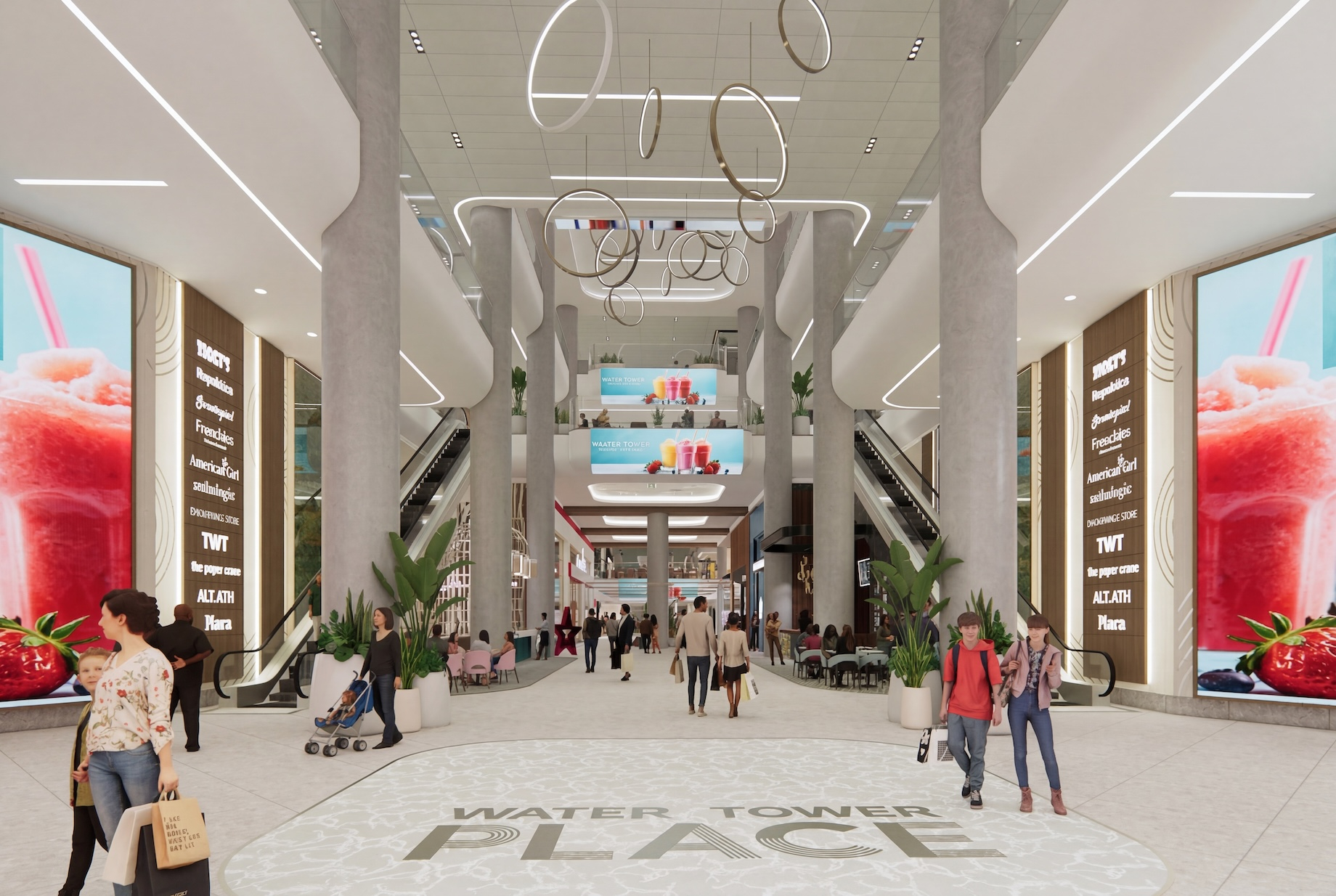
A $170 million makeover will reconfigure retail space at Chicago’s Water Tower Place. Rendering courtesy of Neumann/Smith
Construction is expected to start in 2027 and mostly wrap up in 2028. MetLife Investment Management owns the property, which the spokesperson said attracts 2.5 million visitors per year. The 818,174-square-foot mall sits at the base of a 74-story residential tower, according to CoStar.
2 New Investments Target Grocery-Anchored and Open-Air Retail Centers
CBRE Investment Management and MCB Real Estate purchased a 1.1 million-square-foot grocery-anchored portfolio. And DLC is now armed with $2.3 billion for acquisitions thanks to a cash infusion from private equity firm Temerity Strategic Partners, building on a history of $1.55 billion in acquisitions the firms have closed together.
CBRE Investment Management and MCB Buy 1.1M-SF Grocery-Anchored Portfolio
A joint venture between CBRE Investment Management and developer and investment manager MCB Real Estate purchased a grocery-anchored retail portfolio totaling 1.1 million square feet in Hawaii, Louisiana, Minnesota, North Carolina and Texas. The largest property is the 285,518-square-foot Marketplace Shopping Center in Temple, Texas.
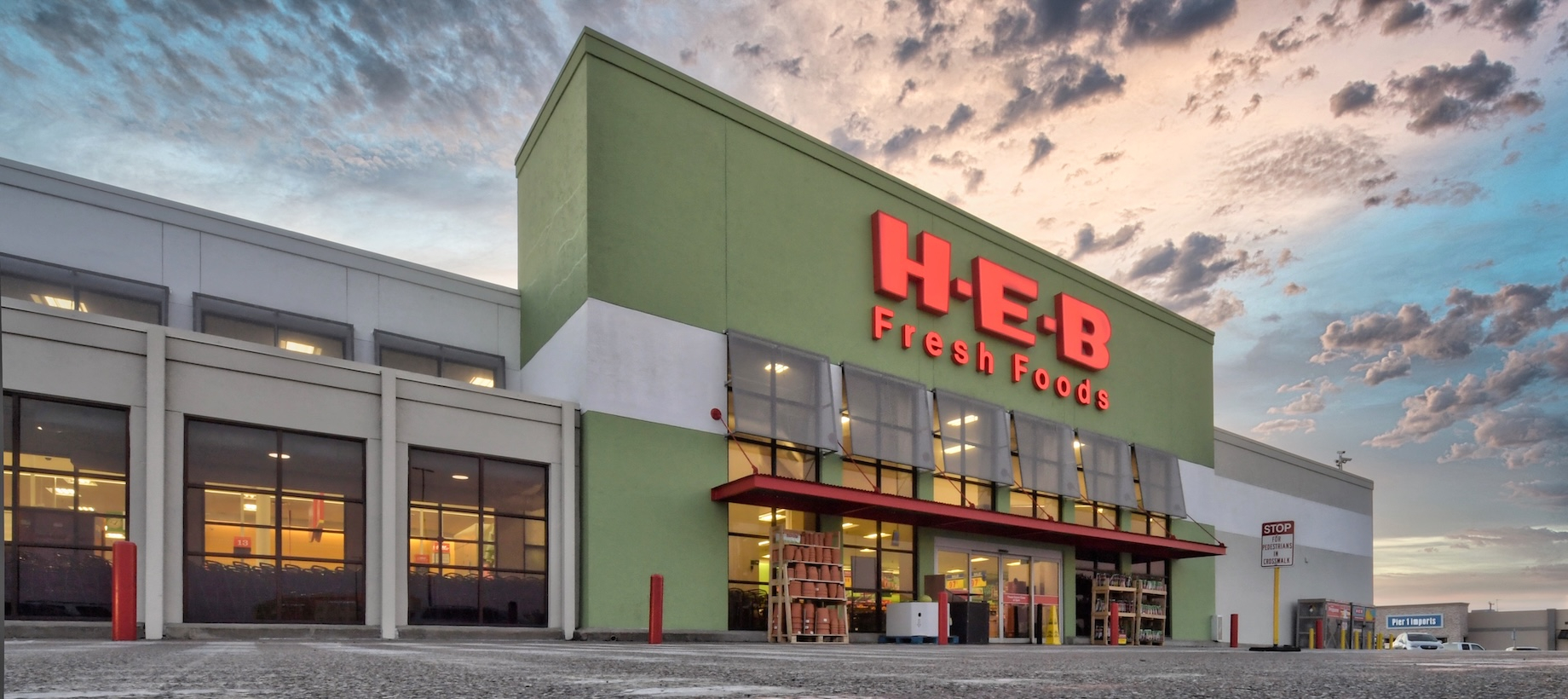
CBRE Investment Management and MCB Real Estate acquired a 1.1M-square-foot portfolio of grocery-anchored properties, the largest of which is Temple, Texas’ 285,518-square-foot Marketplace Shopping Center. Photo courtesy of CBRE Investment Management
Grocery tenants include Harris Teeter, H-E-B, Kroger, Safeway and The Fresh Market. CBRE Investment Management, an independently operated affiliate of CBRE, has more than $155 billion in assets under management. MCB, which has about $4 billion in assets under management, owns or manages about 22 million square feet, including retail and mixed-use properties.
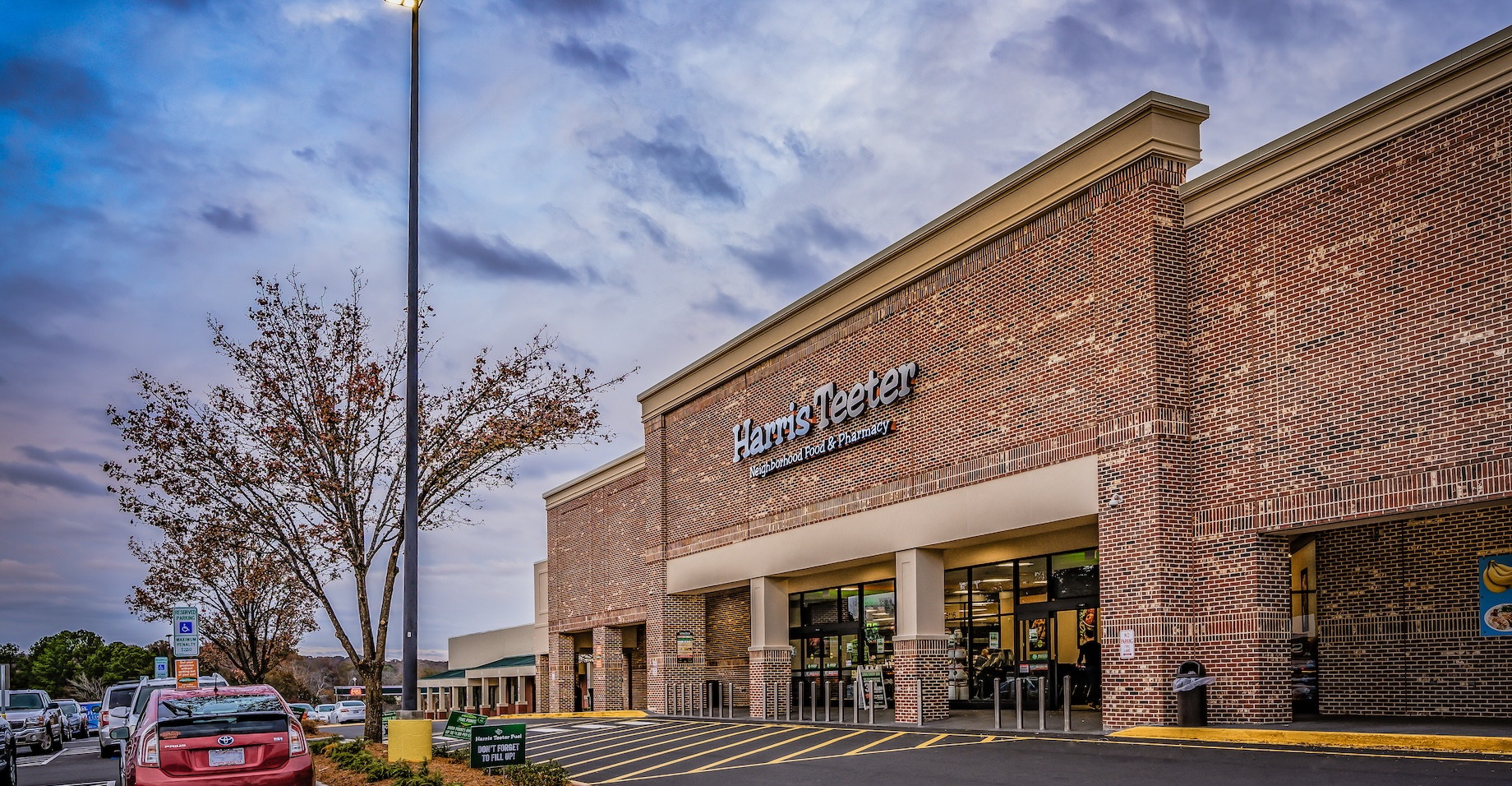
The portfolio CBRE Investment Management and MCB Real Estate acquired also includes Durham, North Carolina’s 125,430-square-foot Riverview Shopping Center. Photo courtesy of CBRE Investment Management
DLC Secures $2.3B for Open-Air Retail Acquisitions
Open-air retail center owner and operator DLC is now equipped with $2.3 billion to spend on acquisitions. Private equity firm Temerity Strategic Partners provided the capital. Since their partnership launched three years ago, DLC has made about $1.55 billion in acquisitions and has more than $560 million in purchases under contract. “We’ve built this platform to act decisively, and this additional capital allows us to do exactly that,” DLC founder and CEO Adam Ifshin said. DLC, which specializes in grocery-anchored and power centers, has over $4 billion in assets under management across more than 90 properties.
Smoothie King and Starbucks Build Out Their Store Pipelines
Smoothie King, which franchises smoothie shops in the U.S. and claims to have created the smoothie category in 1973, is expanding its footprint. The 53-year-old company has locked in franchise deals for more than 200 new stores and has over 1,500 available trade areas in its development pipeline. Today, the chain comprises more than 1,200 locations. As it grows its store count, Smoothie King is upgrading its store design with a warmer color scheme, new lighting, a retooled menu board and branded artwork and merchandise.
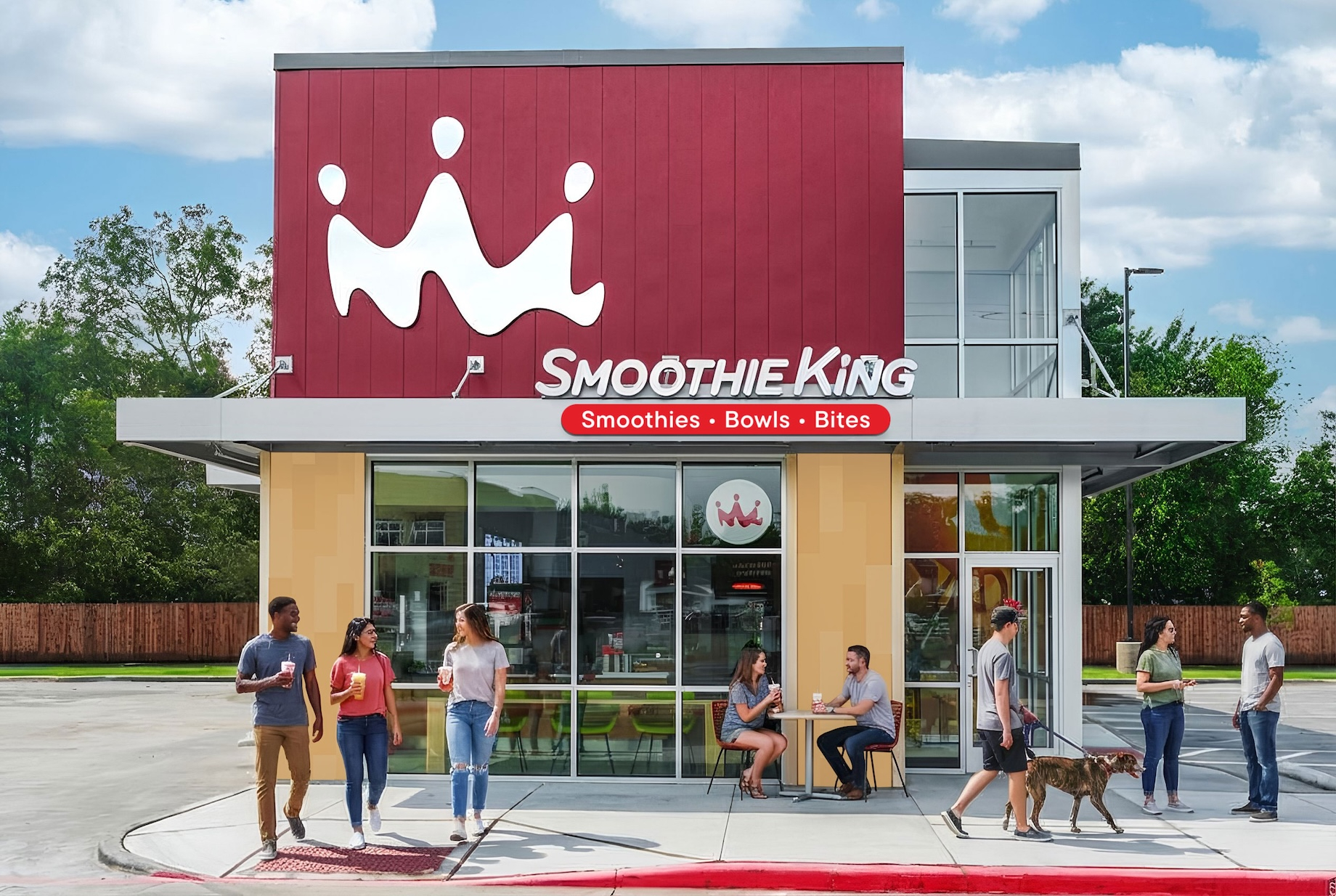
Smoothie King is gradually rolling out a new store design, as seen in this rendering. Rendering courtesy of Smoothie King
And Starbucks is adding 150 to 175 net new company-operated U.S. coffee shops in fiscal year 2026, which ends in September, as part of a 600- to 650-store global expansion of its corporate and licensed footprint. Starbucks’ company-operated and licensed stores in the U.S. totaled 16,944, according to an earnings report for the 2026 fiscal year’s second quarter, which ended March 29.
Same-store U.S. sales rose 7.1% year over year for the quarter, driven by a 4.3% jump in the number of transactions and a 2.7 increase in the amount of the average ticket at those stores. During an earnings call, CEO Brian Niccol said: “Q2 marked a significant step forward in our turnaround. ... Our focus now is on sustaining our momentum and making our results repeatable and durable, all while delivering a healthy cost structure that supports profitable growth.” On the same call, principal accounting officer, executive vice president and CFO Cathy Smith said the coffeehouse giant would continue to assess its footprint as the company rebuilds its development pipeline.
Academy Sports and Starbucks Point to Retailers’ Exurban Growth Opportunity
As retailers pursue untapped markets, some are heading to America’s exurbs, the areas just outside metros’ rings of suburbs. Academy Sports + Outdoors, which plans to open 125 stores over the next five years, is targeting historically overlooked outer-ring communities like Celina, Texas, near Dallas Fort-Worth, and Zanesville, Ohio, near Columbus, Ohio, for new locations.
At the retailer’s recent Analyst Day, CEO Steve Lawrence called this an “outside-in strategy.” Exurban markets hold appeal, he said, because of limited competition in the sporting goods and outdoor recreation sector and because they lend themselves to smaller-format stores. In the retailer’s suburban and urban markets, competition can be fierce and larger formats are common, he said. Lawrence said 80% of the 125 new stores will be in legacy and existing markets and 20% will be in new markets. Exurban locales could fall in both categories.
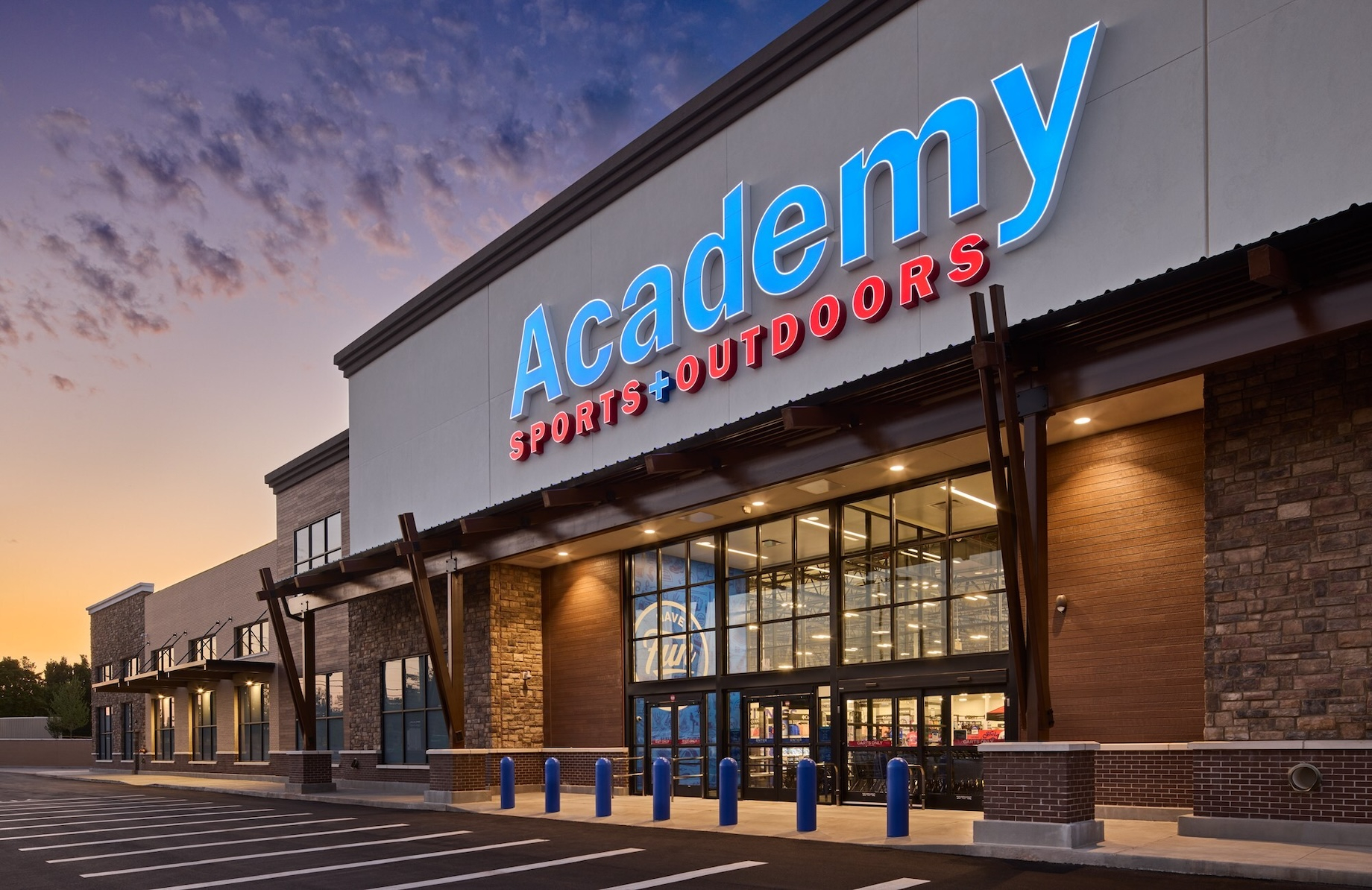
Academy Sports + Outdoors operates more than 300 stores in the U.S. Photo courtesy of Academy Sports + Outdoors/PR Newswire
Meanwhile, The Hustle explained that Starbucks is “becoming an exurban company” because those areas, unlike densely populated cities, allow plenty of room for drive-thrus. Although some Starbucks customers still prefer the in-store experience, according to The Hustle, a business publication run by HubSpot, drive-thrus “are far more successful [financially], prompting an expansion into areas where there’s enough asphalt for people to wait in line in their cars.”
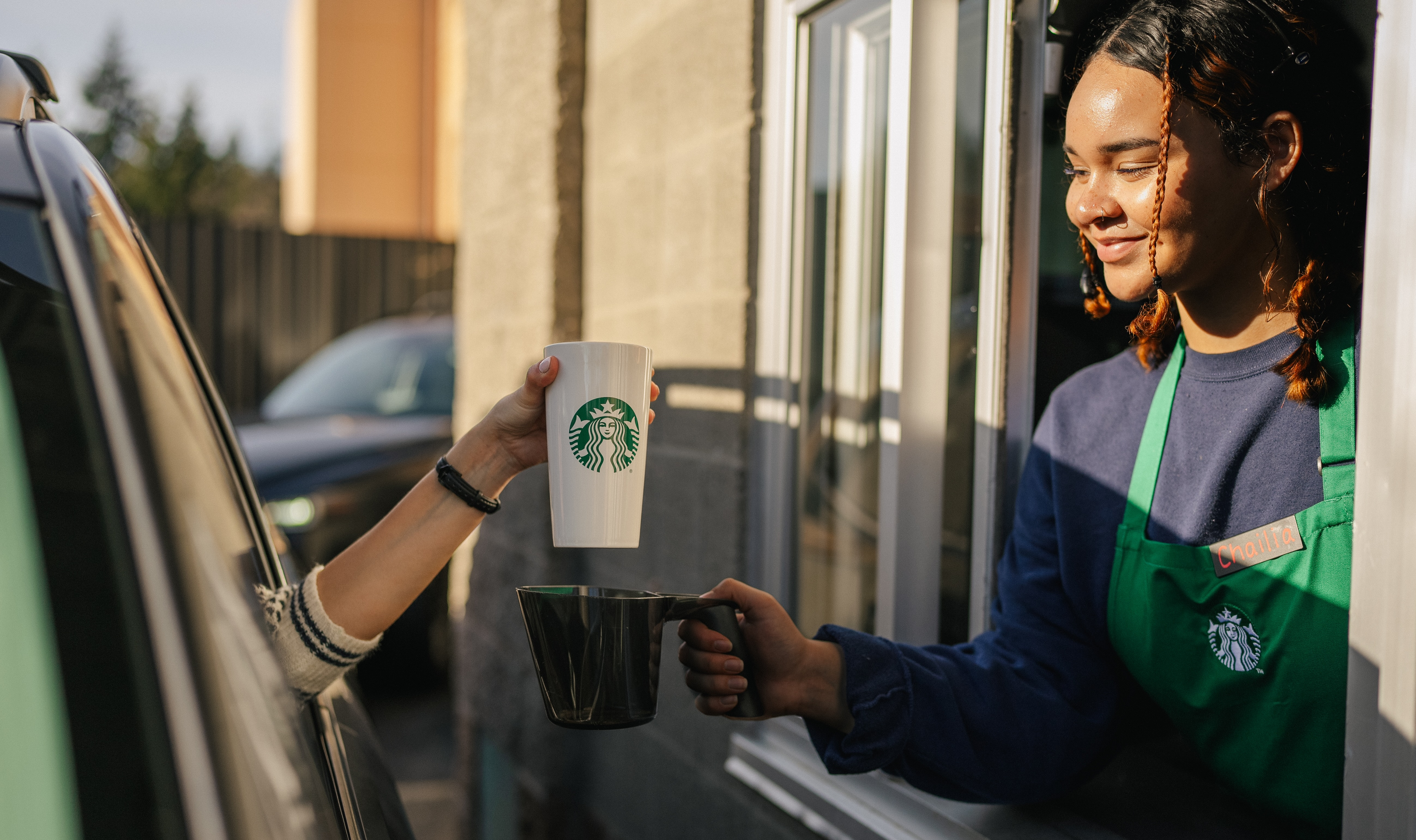
Locating in exurbs gives Starbucks room to build drive-thru coffee shops. Photo courtesy of Starbucks/Business Wire
Starbucks and Academy are following in the footsteps of brands like Cava, Costco and Dutch Bros Coffee, which, according to Placer.ai’s Retail Trends to Watch in 2026, traditionally set up shop in suburban and exurban communities.
EastBanc Names Philippe Lanier CEO
Real estate investment firm EastBanc has named Philippe Lanier its new CEO. Lanier succeeds his father, EastBanc founder Anthony Lanier, who remains aboard as president. As CEO, the younger Lanier, who joined EastBanc in 2007, oversees the firm’s North American portfolio. EastBanc, with more than $4 billion in assets under management, specializes in high-street retail, mixed-use, luxury residential, luxury hospitality and trophy office properties.
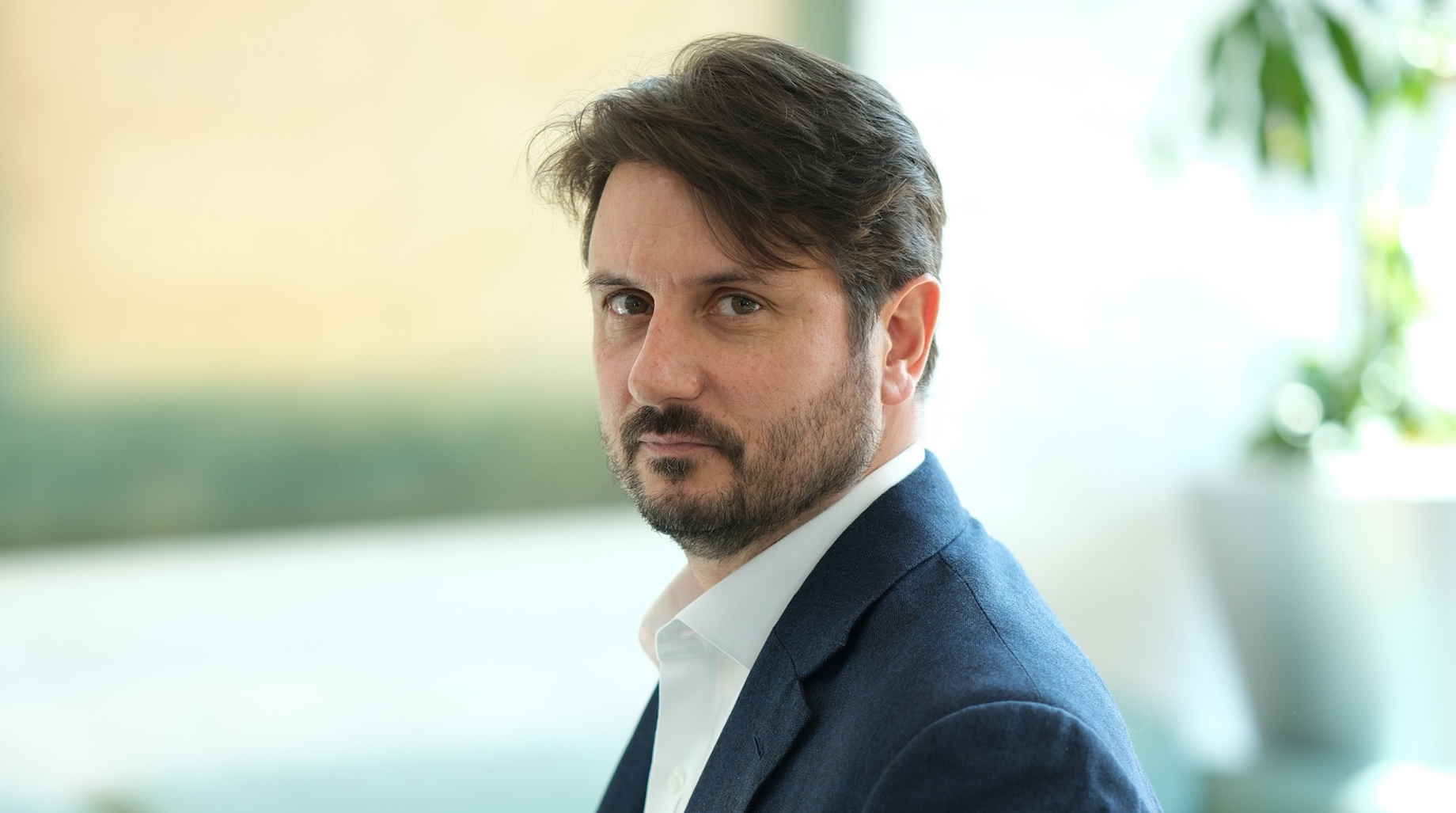
Philippe Lanier succeeds his father, Anthony Lanier, as CEO at EastBanc. Photo courtesy of EastBanc/Business Wire
By John Egan
Contributor, Commerce + Communities Today