Jump to …
Curbline Raises 2026 Acquisition Target to $1B, Plus Tanger, Simon and CBL Updates
Leasing Leads: 5 Retailers Looking for Space
Retail Fit-Out Costs Vary Widely Across U.S. Markets
Retail Rents Run 46% Higher in Lifestyle Districts
Grocery Watch: Focus on Anchor Lease Expirations, Not Just Loan Maturities
Curbline Raises 2026 Acquisition Target to $1B, Plus Tanger, Simon and CBL Updates
Curbline — which owns and operates unanchored, convenience-oriented shopping centers — just bumped up its acquisition target for 2026 from $850 million to $1 billion. The $850 million figure increased from an earlier projection of $750 million in acquisitions. In the first half of this year, the REIT scooped up nearly 50 properties in deals valued at $563.7 million. As of June 30, the company owned 220 centers spanning 5.7 million square feet of gross leasable area.
Tanger and Simon Find New Opportunities in Saks Off 5th Vacancies
As it embraces lifestyle and full-price retail, Tanger is tweaking its portfolio by acquiring space vacated by off-price retailer Saks Off 5th, which is winding down operations. On Aug. 3, it bought five Saks Off 5th leases at its properties for $5.6 million. This gives Tanger about 150,000 square feet for new single-use and multiuse tenants, potentially yielding two to four times more rent, senior vice president Doug McDonald said on the REIT’s second-quarter earnings call. Temporary tenants occupy three of the five Saks Off 5th stores. And three months ago, Tanger paid $4.3 million for five Saks Off 5th leases totaling 140,000 square feet. Forbes reported Tanger has pivoted toward acquiring open-air lifestyle centers — the company owns four — and leasing space at its outlet properties to full-price retailers.
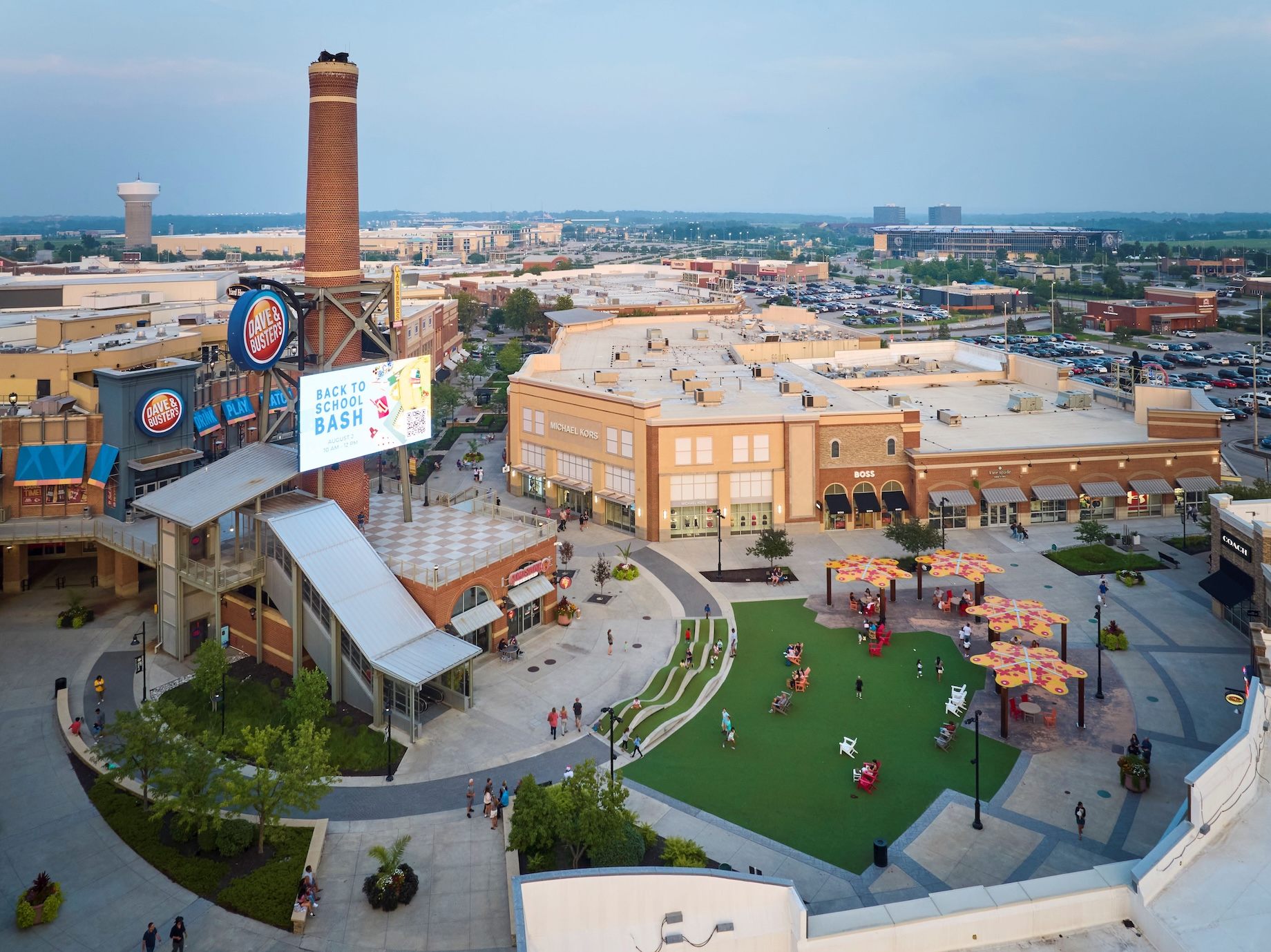
Tanger acquired this open-air property, now called Tanger Kansas City at Legends, for $130 million in 2025. Photo above and at top courtesy of Alex Arnett/Tanger
New tenants already have leased about half the Simon-owned space vacated by Saks Off 5th, and those tenants are collectively paying higher rent, president, CEO and COO Eli Simon said on the REIT’s second-quarter earnings call. He said Saks Off 5th space at Simon properties had fetched $18 million in annual rent. The remaining space is “under discussions and near final deals, but we’ll basically take the $18 million and turn it into $44 million,” Simon said. In the second quarter, the REIT absorbed about 1 million square feet of bankruptcy-related space, with Saks Off 5th accounting for the vast majority.
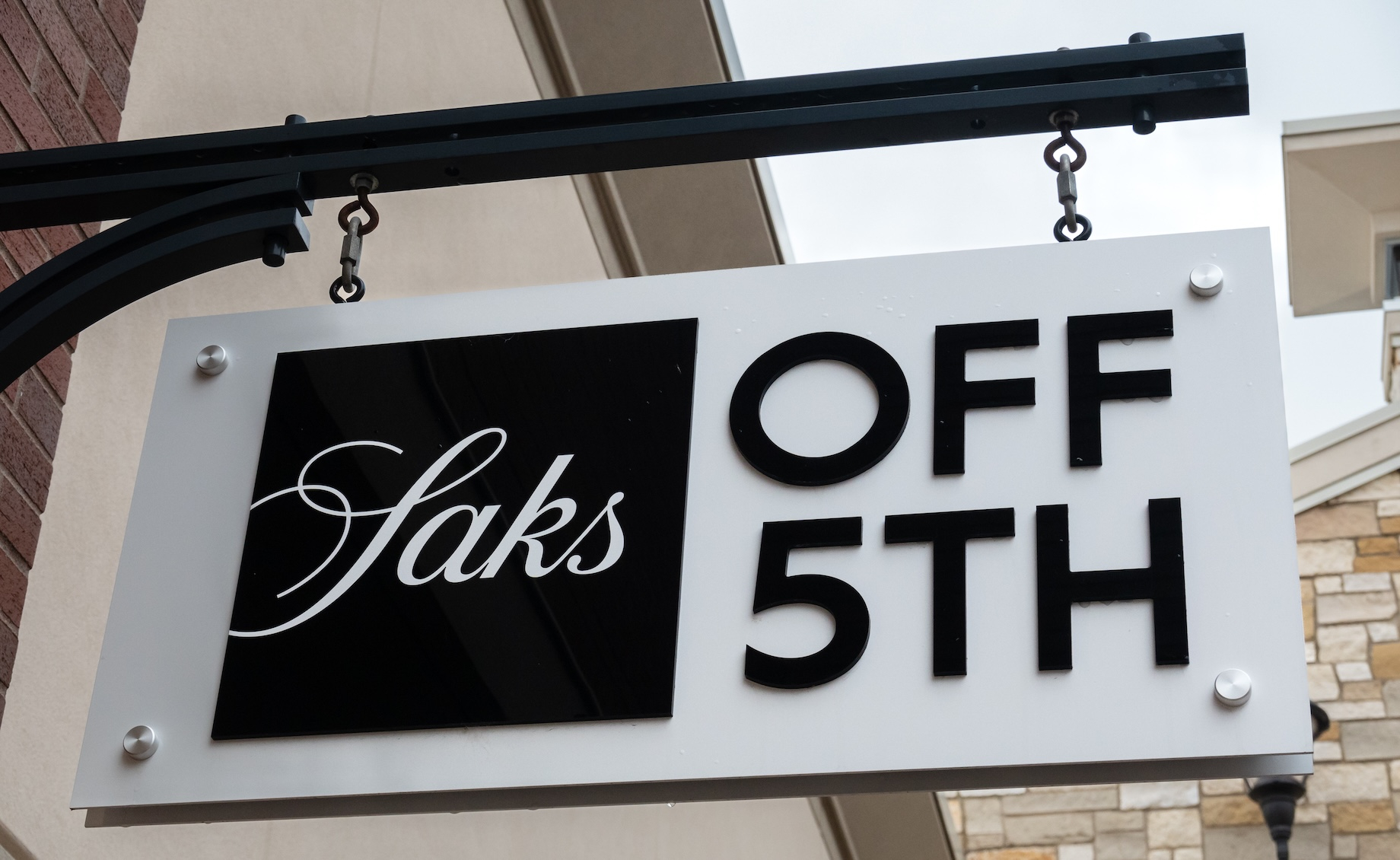
The now-shuttered Saks Off 5th location at Simon’s Twin Cities Premium Outlet Mall in Eagan, Minnesota, pictured in 2025. Both Tanger and Simon are benefiting from Saks Off 5th vacancies. Photo credit: wolterke - stock.adobe.com
CBL Unlocks Value From Underused Parking Lots and Undeveloped Land
CBL is capitalizing on its underused and undeveloped retail property. During the second quarter, the REIT generated $19.2 million in gross proceeds from the sale of six parcels and other outparcels. This included the sale of more than 15 acres at CoolSprings Galleria in Franklin, Tennessee, and Harford Mall in Bel Air, Maryland, to multifamily developers. CBL said offloading underused parking lots and undeveloped parcels enables it to “add density to its market-dominant mall properties and realize the embedded value of land across its portfolio.” As of June 30, the REIT owned land valued at $601.5 million.
Leasing Leads: 5 Retailers Looking for Space
Church’s Texas Chicken is spreading its wings in the U.S. The quick-service chain sees the potential for another 2,000 restaurants across the country, a spokesperson told C+CT. It’s on track to open 25 to 30 this year and aims for at least 50 in 2027, “continuing to ramp up from there,” the spokesperson said. At the end of 2025, Church’s had 885 restaurants in the U.S., with 722 being franchised and 163 being company-owned. All told, the chain operates over 1,500 restaurants in the U.S. and more than 25 other countries. Church’s recently received an undisclosed amount of equity from Golub Capital to fuel growth under its new CEO, Roland Gonzalez. In 2025, the chain’s systemwide sales exceeded $1.6 billion.
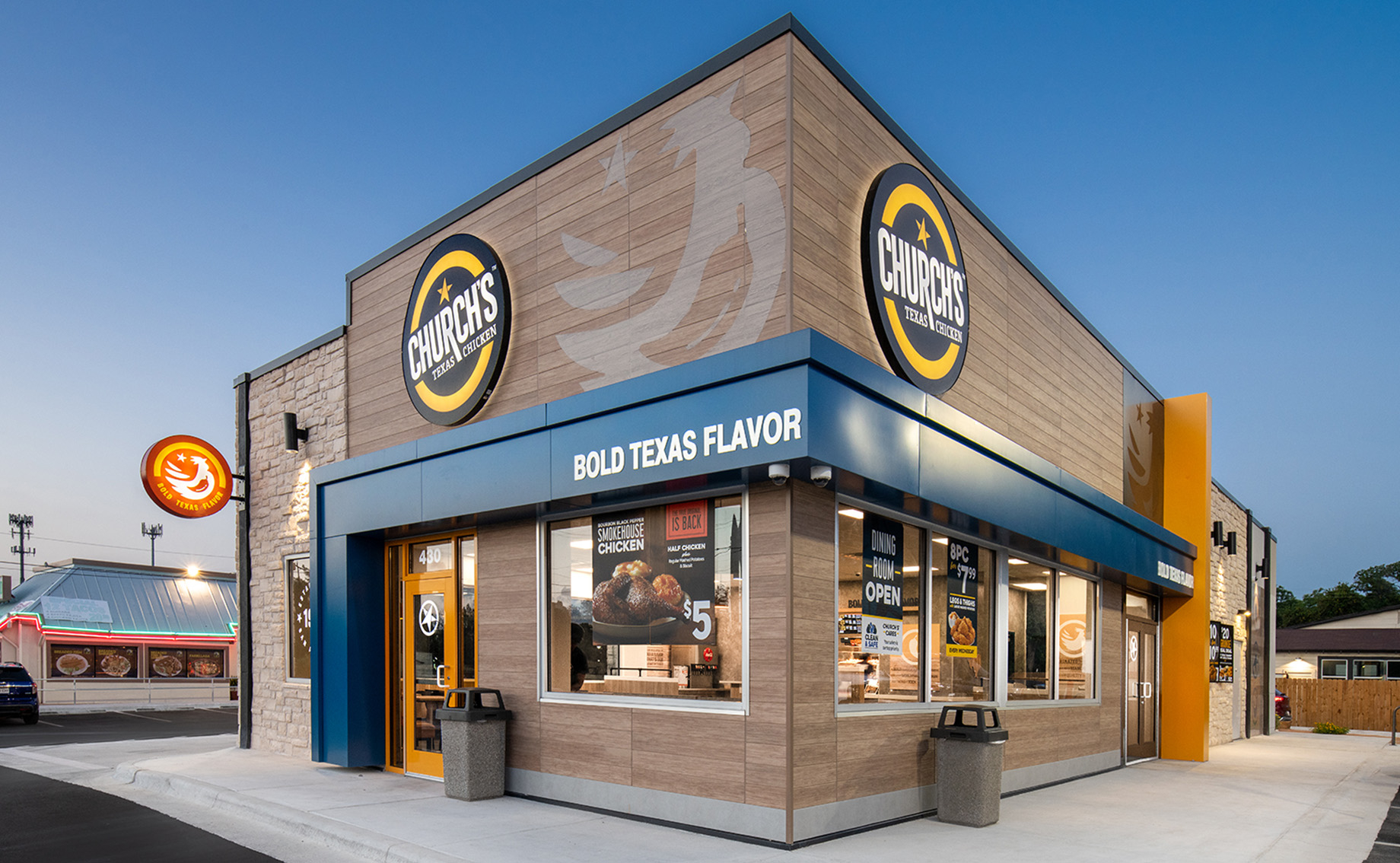
A San Antonio location of Church’s Texas Chicken, which sees the potential for another 2,000 restaurants in the U.S. Image courtesy of Church’s Texas Chicken
As it prepares to set a quarterly record with at least 15 stores opening in the third quarter, Sprouts Farmers Market can tap into a robust pipeline for expansion. On its second-quarter earnings call, CEO Jack Sinclair said the grocer should end fiscal year 2026 with 42 net new stores and has a pipeline of more than 110 signed leases and 155 approved new stores. The pipeline gives the company “confidence in our ability to continue expanding access to Sprouts over the long term,” said Sinclair. At the close of the second quarter on June 28, Sprouts operated 490 stores in 25 states.
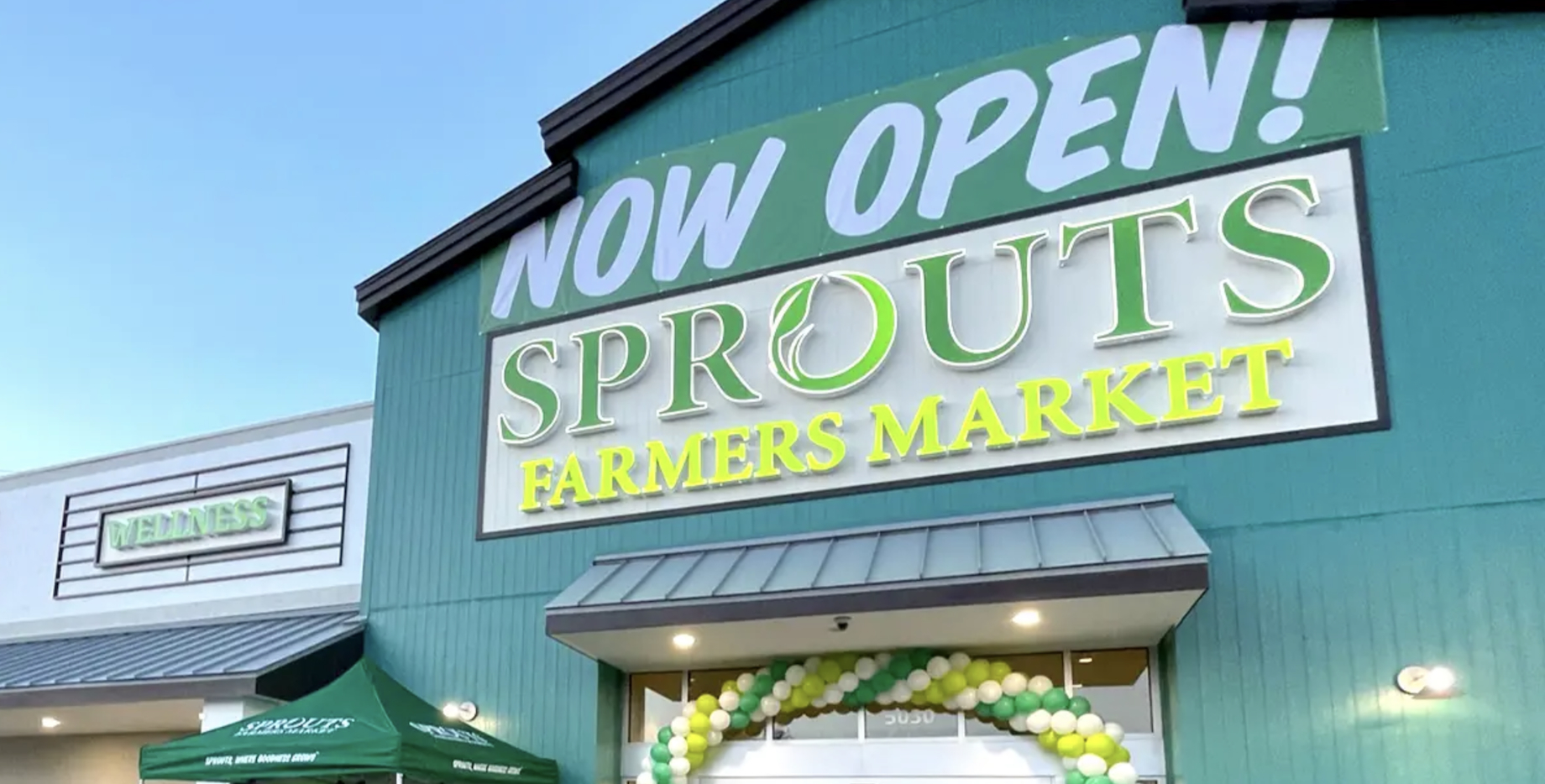
Sprouts Farmers Market’s pipeline contains 155 approved stores. Image courtesy of Sprouts Farmers Market
Fresh off America’s frenzy over FIFA World Cup 2026, British soccer team Liverpool FC, one of the world’s most popular sports franchises, is kicking around the idea of opening standalone retail stores in the U.S., Sportico reported. “Much of the process still needs to be sorted out, including what locations Liverpool would target and whether the club would run these businesses itself or license the operations to a third-party partner,” said Sportico. The franchise’s retail team already has scouted several unnamed U.S. cities, Liverpool chief commercial officer Ben Latty said. The team recently concluded a two-week preseason tour in the U.S. Liverpool has 26 stores around the world and is targeting 40 locations by 2030, according to Sportico.
The franchisor of six fast-casual restaurant brands is employing bounty fees for real estate brokers as a magnet to recruit franchisees. WOWorks — parent company of Saladworks, Barberitos, Garbanzo Mediterranean Fresh, Zoup Eatery, The Simple Greek and Frutta Bowls — said it will give a $5,000 cash bonus to a broker or other industry contact who refers a qualified franchisee that ultimately signs a development deal. “Real estate brokers are among the most connected people in any community. They know the operators, the landlords, the traffic patterns and the entrepreneurs looking for their next move,” chief growth officer James Walker told C+CT. CEO Kelly Roddy said the company expects to open roughly 30 restaurants this year and has another 90 locations under development. He thinks WOWorks could reach 50 openings next year if permitting and real estate timelines continue improving. WOWorks operates 240 restaurants nationwide.
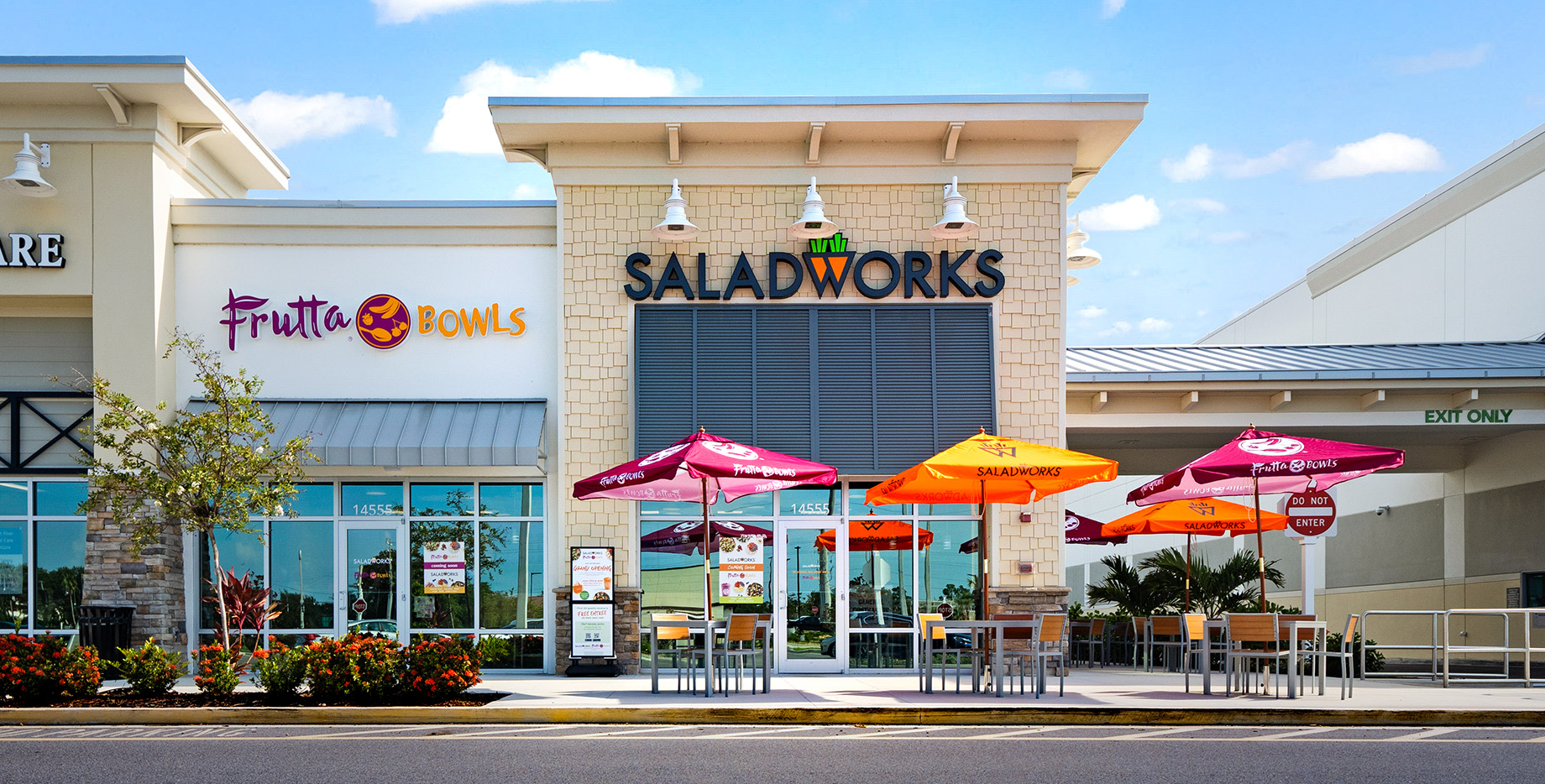
WOWorks’ concepts include Saladworks and Frutta Bowls. Photo courtesy of WOWorks
Best Buy is leaning into smaller-format stores to drive growth. For example, the electronics retailer recently opened an 18,000-square-foot store in Jonesboro, Arkansas, a city whose population of 80,000-plus residents might not support a bigger store, according to CNBC. “What we’re finding is that there are markets that we just can’t be in with a traditional-size Best Buy store, but they’re markets that absolutely make sense for Best Buy from a reach perspective,” incoming CEO Jason Bonfig told CNBC. Best Buy’s small-format stores typically range from 12,000 to 15,000 square feet, CNBC said, while its medium-format stores are 20,000 to 25,000 square feet and its large-format stores might exceed 40,000 square feet. Bonfig — currently Best Buy senior executive vice president and chief customer, product and fulfillment officer — will assume the CEO role effective Nov. 1. As of July 26, Best Buy operated 1,061 stores in the U.S., according to data provider ScrapeHero.
Retail Fit-Out Costs Vary Widely Across U.S. Markets
Once leases are signed, it’s time to transform spaces from shell to shopper-ready. Retailers are finding, though, that fit-out costs are all over the map, according to Cushman & Wakefield’s 2026 U.S. Retail Fit-Out Cost Guide. The guide showed a great divide in costs among different regions. The average nationwide year-over-year increase in fit-out costs stood at 1.4%, but they jumped 9% in the Pacific Northwest while dropping 7% year-over-year in the Mountain region, excluding Denver, and 5% in the South and Midwest. Cushman & Wakefield chalked up the regional differences to local factors like labor availability, unionized workforces, regulatory requirements and minimum-wage policies.
The company based its analysis on the fit-out of a standard 2,500-square-foot inline store in a central business district that features customer-facing space, back-of-house operations and two Americans with Disabilities Act-compliant restrooms.
Comparing construction costs across 15 major U.S. markets and regions, the guide shows that while the nationwide average was $157 per square foot, Northern California recorded the highest costs per square foot, at $217 per square foot, followed by the Pacific Northwest at $202 and New York City at $181. The cheapest region? The Midwest, at $120 per square foot.
How U.S. Retail Fit-Out Costs Vary by Market
Retail Rents Run 46% Higher in Lifestyle Districts
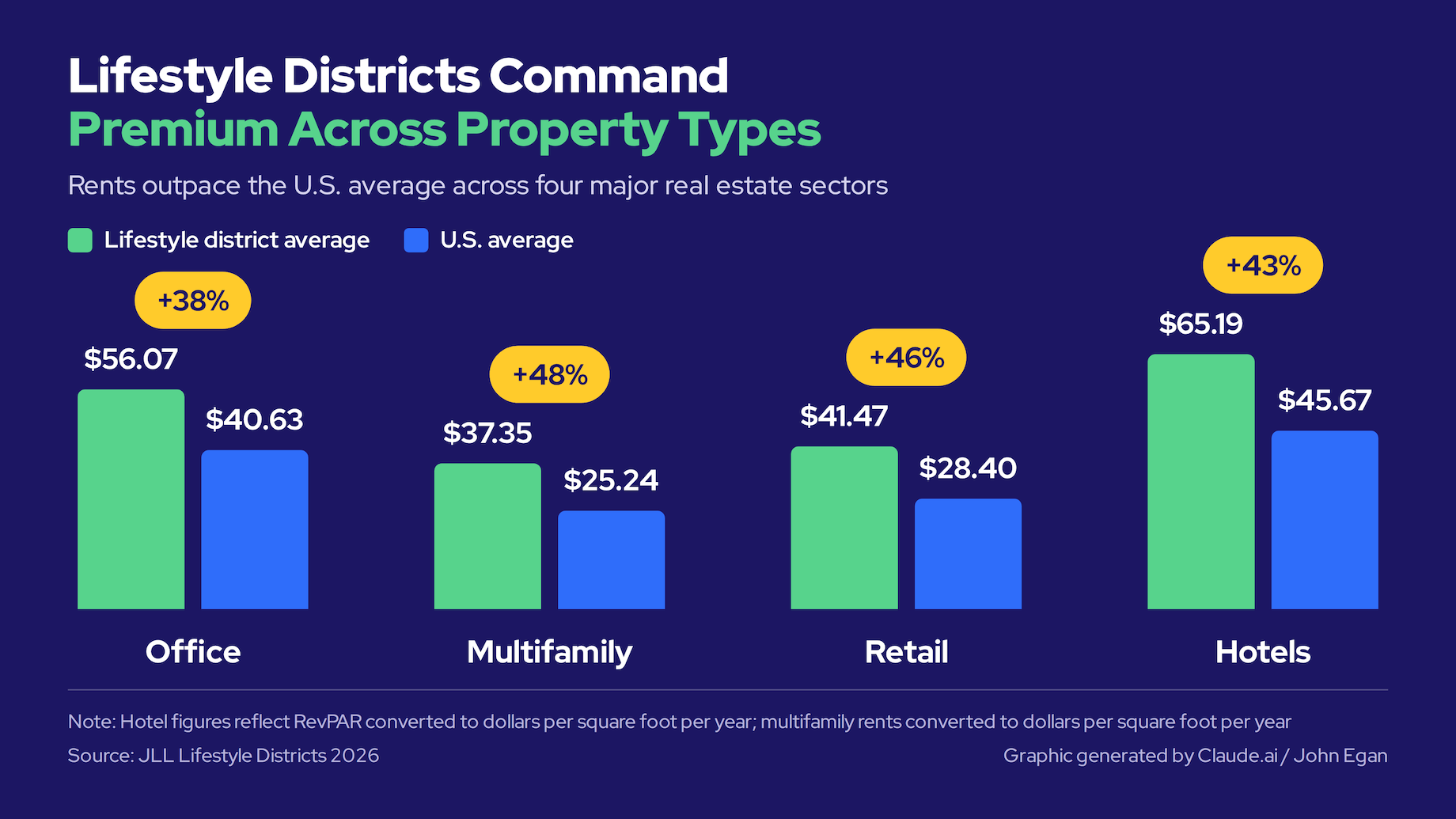
A new JLL report indicates mixed-use projects like Maryland’s Viva White Oak and The Shops at North Bridge in Chicago may be able to generate attractive rental rates. JLL’s Lifestyle Districts 2026 report said mixed-use “lifestyle districts” in the U.S. charged asking rents from retail tenants that ran 46% above properties like shopping centers, power centers, malls and standalone stores. June retail rents were $41.47 per square foot at lifestyle districts versus $28.40 at other properties, according to the report, which JLL research director Jacob Rowden noted compared retail rents at lifestyle districts with rents at other retail properties.
JLL described lifestyle districts as “vibrant mixed-use regions where the built environment aligns with users’ aspirational lifestyles” and categorizes these districts as organic, master-planned and sports-anchored. More than 1 billion square feet of lifestyle developments exist today, according to JLL. Based on planned projects, that total could surpass 1.5 billion square feet by the end of the 2030s.
2 Major Projects Illustrate the Lifestyle District Trend
With a funding mechanism in place, investor and developer MCB plans to break ground this fall on a $2.7 billion mixed-use project in White Oak, Maryland, a Washington, D.C., suburb. The Montgomery County Council recently authorized up to $420 million in tax increment financing bonds for the 280-acre Viva White Oak development, which is approved for as much as 12 million square feet. The development will include 470,000 square feet of retail — including a 162,000-square-foot Costco — along with homes and a 30-acre life sciences and biotech campus.
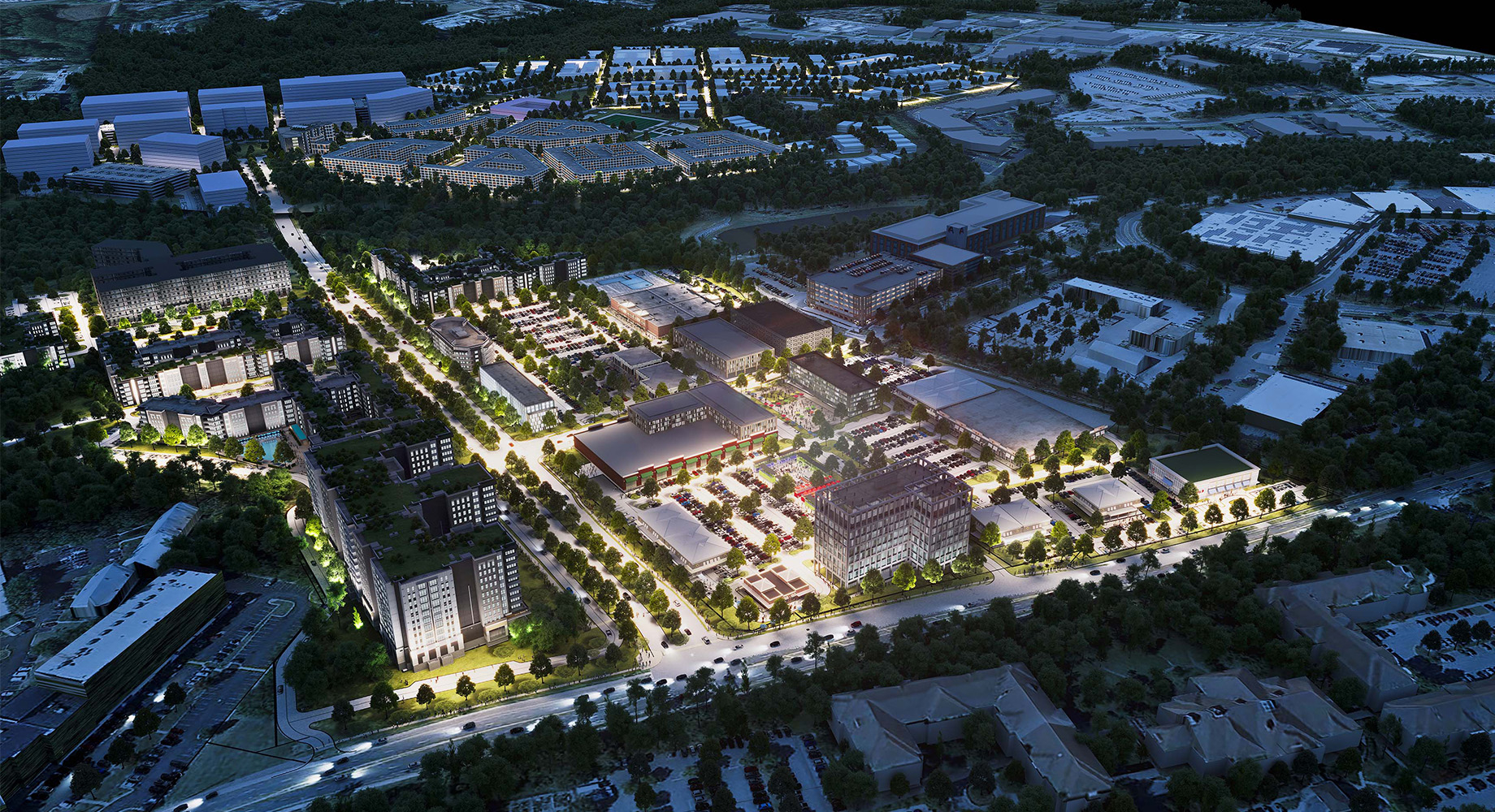
Maryland’s Viva White Oak mixed-use development eventually could span 12 million square feet. Image courtesy of MCB Real Estate
The first two phases of Viva White Oak are set to encompass nearly 8.7 million square feet. The first phase, which will include the retail, is expected to deliver 13 buildings totaling 4.3 million square feet by the end of 2033, the Washington Business Journal reported, and the second phase would deliver 17 buildings totaling almost 4.4 million square feet. The site is adjacent to the U.S. Food and Drug Administration’s campus in White Oak and a hospital in neighboring Silver Spring.
Roughly 700 miles to the west, a multimillion-dollar project is kicking off this month to reposition The Shops at North Bridge retail, restaurant and office district along Chicago’s Magnificent Mile. The project involves a new focus on experiential retailers, flagship concepts, emerging brands and entertainment tenants “that align with shifting consumer expectations and the continued evolution of urban retail,” said Centennial, which manages the six-block, 26-year-old development.
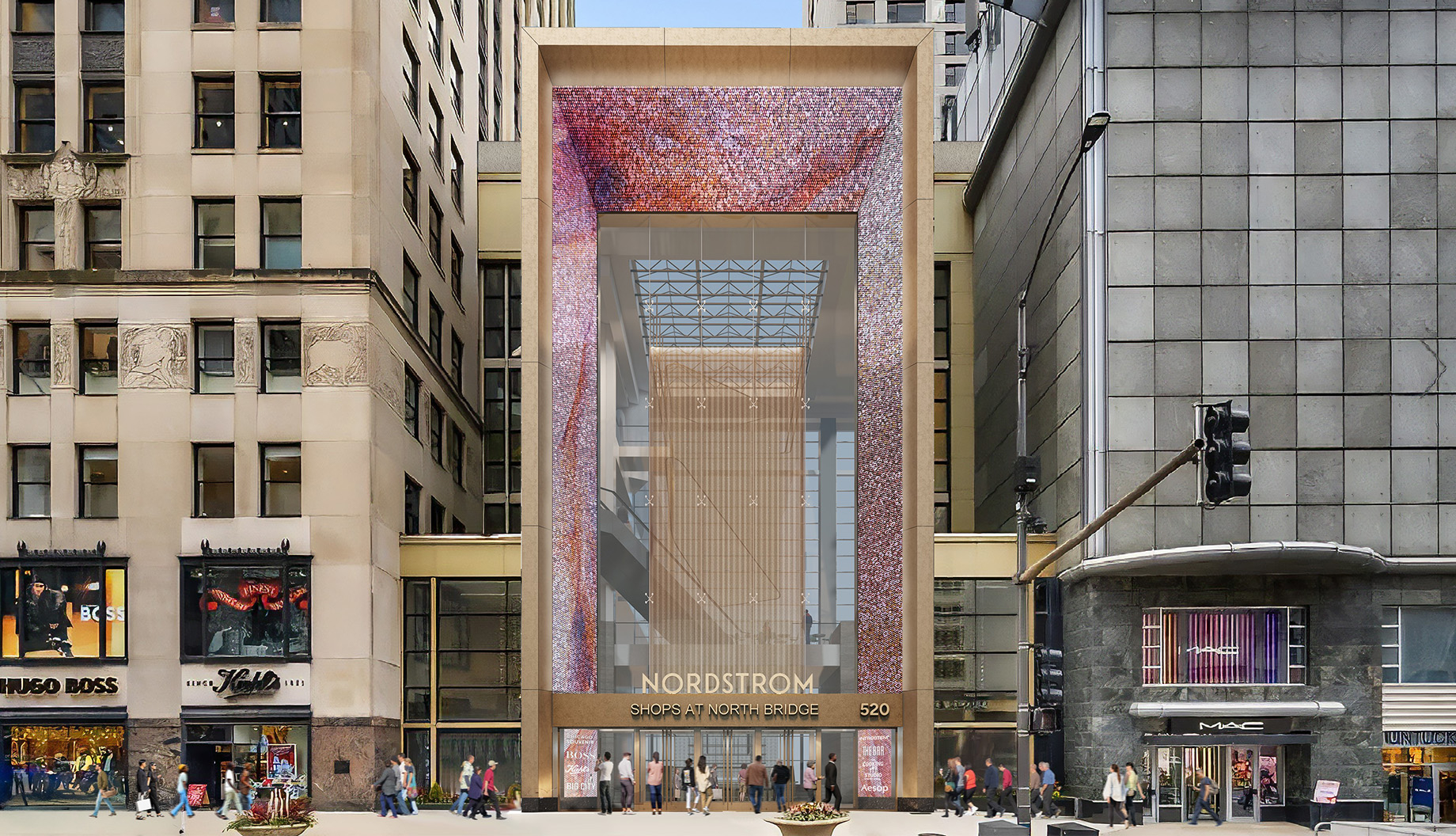
Pacific Life owns the 670,000-square-foot Shops at North Bridge in Chicago. Its repositioning includes a transformation of the property’s Michigan Avenue entrance, designed by ParkFowler Plus, with a new glass façade and a large-format, backlit LED archway display that will create a digital art installation along the corridor. Rendering courtesy of The Shops at North Bridge
The 670,000-square-foot property, owned by Pacific Life, also will undergo interior and exterior updates. Retail tenants include Nordstrom, Kiehl’s, White House Black Market, Eataly, Shake Shack and Doc B’s. CBRE senior vice president Luke Molloy, a member of the property’s leasing team, said The Shops at North Bridge “is poised to become one of the greatest comeback stories in Chicago retail history.”
Grocery Watch: Focus on Anchor Lease Expirations, Not Just Loan Maturities
An estimated $11.4 billion in securitized grocery-anchored debt will mature from 2027 to 2029, including $4.2 billion next year alone, according to Trepp senior manager of research Thomas Taylor. Generally, the credit quality of these loans is strong, he wrote, so the key factor to watch is anchor leases that expire before property debts mature. That’s the case with $2.6 billion, or nearly one-fourth, of the $11.4 billion of debt maturing from 2027 to 2029. According to Trepp, the lease-before-maturity risk is concentrated in conventional multitenant formats — $1.3 billion in community centers and $900 million in neighborhood centers. Among maturing loans backed by properties with discount grocery anchors, roughly 31% carry this lease-timing risk compared with about 9% for premium-grocer-anchored properties, Trepp said.
By John Egan
Contributor, Commerce + Communities Today