Sixteen states have measures on the 2024 ballot related to tax policy, with proposals ranging from adding new taxes to repealing controversial ones and everything in between.
Oregon Measure 118
In Oregon, voters will decide whether to add a 3% gross receipts tax on state sales over $25 million (in addition to currently levied taxes). The funds generated by the new taxes would be distributed to all Oregon residents as a “universal basic income” program, which its proponents call the "Oregon Rebate." Legislative leaders of both parties and Governor Tina Kotek (D) have all opposed the measure.
North Dakota Measure 4
North Dakotans will see the option to repeal the property tax this November. While no replacement revenue is contained within the measure's language, the state will be required to replace local government revenue, with a projected cost of $3.15 billion over the next biennium. If the measure passes this fall, lawmakers will need to address this significant gap, likely indicating a rise in another tax.
Washington Initiatives 2109, 2117, and 2124
Washington voters will decide on three ballot measures that could reverse controversial taxes passed by the state legislature within the past five years. First, Initiative 2109 would repeal the state's capital gains tax, passed in 2021. Income taxes are constitutionally prohibited in Washington. However, last year, the state Supreme Court ruled that the capital gains tax is not an income tax but an excise tax and permitted it to stay in effect. Initiative 2117 would repeal the state's Climate Commitment Act, passed in 2021, which institutes a cap-and-trade system that aims to reduce greenhouse gas emissions. While polling has been mixed this year, voters have rejected climate taxes twice recently, in 2016 and 2018. And finally, Initiative 2124 aims to allow employees and self-employed persons to opt out of paying the payroll tax for and collecting benefits from WA Cares, the state's long-term care program. WA Cares and the associated payroll tax were passed into law in 2019.
Property Taxes
In Florida, voters will determine whether to tie their homestead exemption to inflation. Two measures in Georgia would increase the tangible personal property tax exemption to $20,000 and add a new homestead exemption, from which localities could opt out. Finally, in Wyoming, an additional category would be proposed for the state's property tax, giving the legislature the ability to tax owner-occupied primary residences at a lower rate than other residential properties, important to the residents of a state where second homes and vacation rentals have increased in recent years.
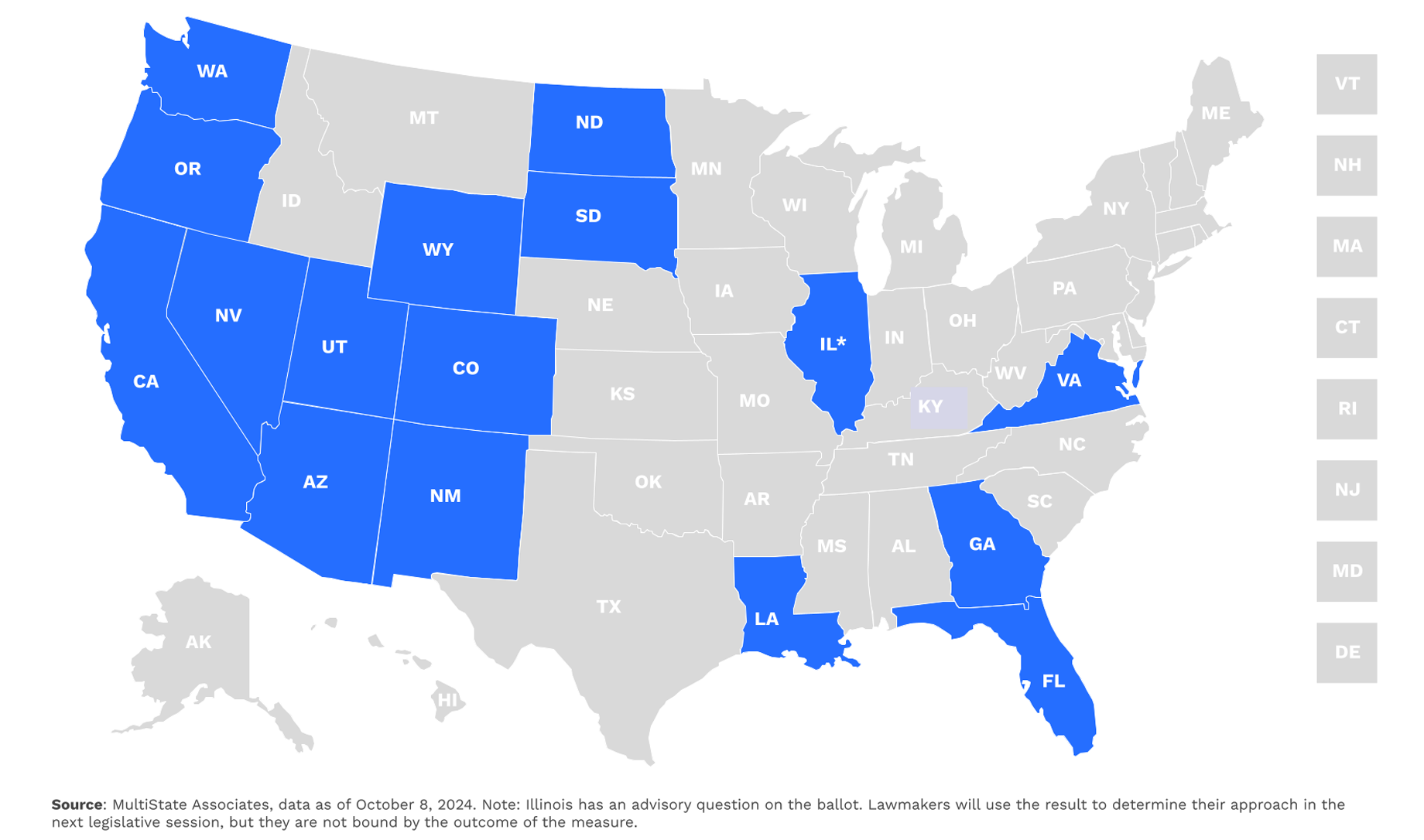
States with Tax Policies on the Ballot in 2024