The Short Version
- AI dominated proptech discussions at ICSC NEW YORK, with retailers emerging as a primary target market for new technology.
- One speaker emphasized AI as a decision-support tool that complements — rather than replaces — human judgment.
- Retailers are adopting AI agents in marketing and operations, often starting with narrow, measurable use cases.
- Health-and-wellness retail is poised for more AI-driven personalization, even as the sector faces consolidation.
- Investors increasingly are backing AI-enabled proptech platforms, with funding momentum expected to build into 2026.
AI Takes Center Stage in Proptech Conversations at ICSC NEW YORK
Attendees got a healthy dose of information about property technology at ICSC NEW YORK. Many of the industry’s most-talked-about trends center on the growing adoption of artificial intelligence by retailers and retail landlords, with start-ups lining up to meet the retail sector’s growing proptech demand. That momentum is reflected in the Mid-Year 2025 Global Proptech Confidence Index from proptech investment firm MetaProp and professional services firm PwC, which found that 29% of proptech start-ups were targeting retail as the primary market for commercial sales of their software while 39% were targeting mixed-use.
ICSC+PROPTECH: Las Vegas, May 18-20
Discover innovative property technology, join curated one-to-one meetings, and get direct access to creators powering smarter spaces at ICSC+PROPTECH.
Learn more and registerAI Should Support — Not Replace — Retail Decisionmaking
Data pro Stephen Polanski urged retailers and retail landlords to view AI not as a lower-cost substitute for workers but rather as a valued assistant that yields smarter decisions. Speaking during an AI-focused session on Dec. 11 at ICSC NEW YORK, he emphasized that as retail businesses elevate AI-informed decisionmaking, humans still must interpret data. “AI is all about speed and efficiency, but it’s never going to replace the human component,” said Polanski, managing director of global business development at Kalibrate, a company that helps retailers and retail landlords manage complex data to support better decisions.
Polanski also explained that predictive modeling in retail is not getting better with AI. Rather, he said, it’s evolving into a “disruptor” by delivering insights about issues like site selection more quickly and efficiently. In other words, AI juices up predictive modeling for players in the retail sector, providing a clearer picture of “what’s moving the needle one way or the other,” said Polanski.
Starting Small With AI Adoption in Retail
Wondering where to direct AI resources if you’re involved in the retail universe? During the same session, Coresight Research founder and CEO Deborah Weinswig recommended marketing as “a very easy place to start” because it is “very measurable and visible.” She said her retail and tech data and research firm incorporates AI agents into its marketing efforts. As Microsoft explains on its website, AI agents are autonomous software systems that observe their environments and interpret data as they work toward achieving specific goals — often by automating routine tasks and surfacing insights for human decisionmakers.
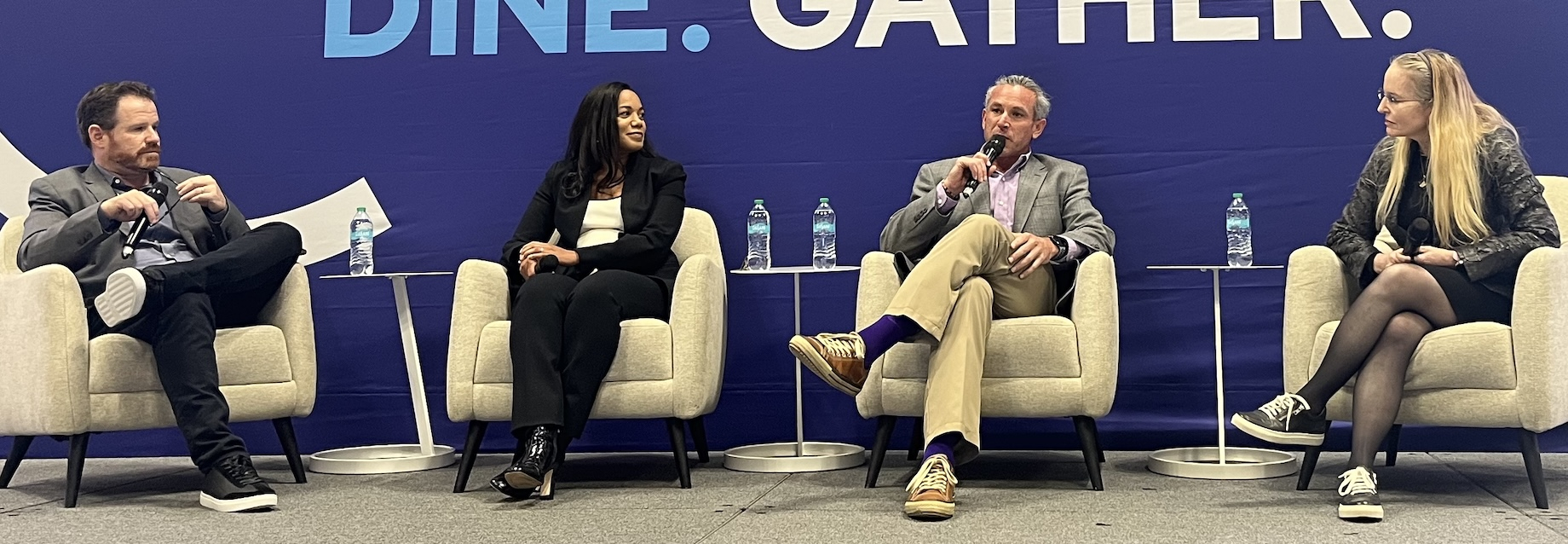
NextRivet’s David Blumenfeld, Mall Maverick and EMDigital’s Yvette Elliott, Kalibrate’s Stephen Polanski and Coresight Research’s Deborah Weinswig spoke on an ICSC NEW YORK session called AI 101 — Understanding Artificial Intelligence for Today’s Market.
AI Agents Are Already Powering Retail Marketing
At Coresight, AI agents comb through research and pinpoint which daily insights are most pertinent. That research may then find its way into Coresight social media posts that AI agents publish automatically. “That’s all being done by an agent now,” Weinswig said, “and we are working with some of our clients who are doing the same thing.” Coresight’s digital assistants don’t go rogue, though, as at least one person remains involved to oversee them, she said.
Weinswig said initially focusing on a single AI-driven task, such as posting on social media, helps address one facet of a business rather than attempting to tackle organization-wide needs. If AI capabilities are rolled out across an organization over a compressed period, she said, it can complicate adoption, “and people can get AI-exhausted, too.”
How AI Is Reshaping Health-and-Wellness Retail
AI is making the health-and-wellness slice of the retail sector even healthier. That’s according to Asana Partners leasing strategy managing director Clare Walsh, who spoke Dec. 10 at an ICSC NEW YORK session. Personalization and customization of products and services for health-and-wellness consumers will accelerate thanks to greater adoption of AI, said Walsh. Increasing use of AI in health-and-wellness dovetails with the U.S. sector’s evolution into a $2 trillion industry, according to the Global Wellness Institute. At a separate ICSC NEW YORK session, Avison Young principal and director of retail market intelligence Meghann Martindale identified health-and-wellness as one of the three retail categories to watch in 2026.
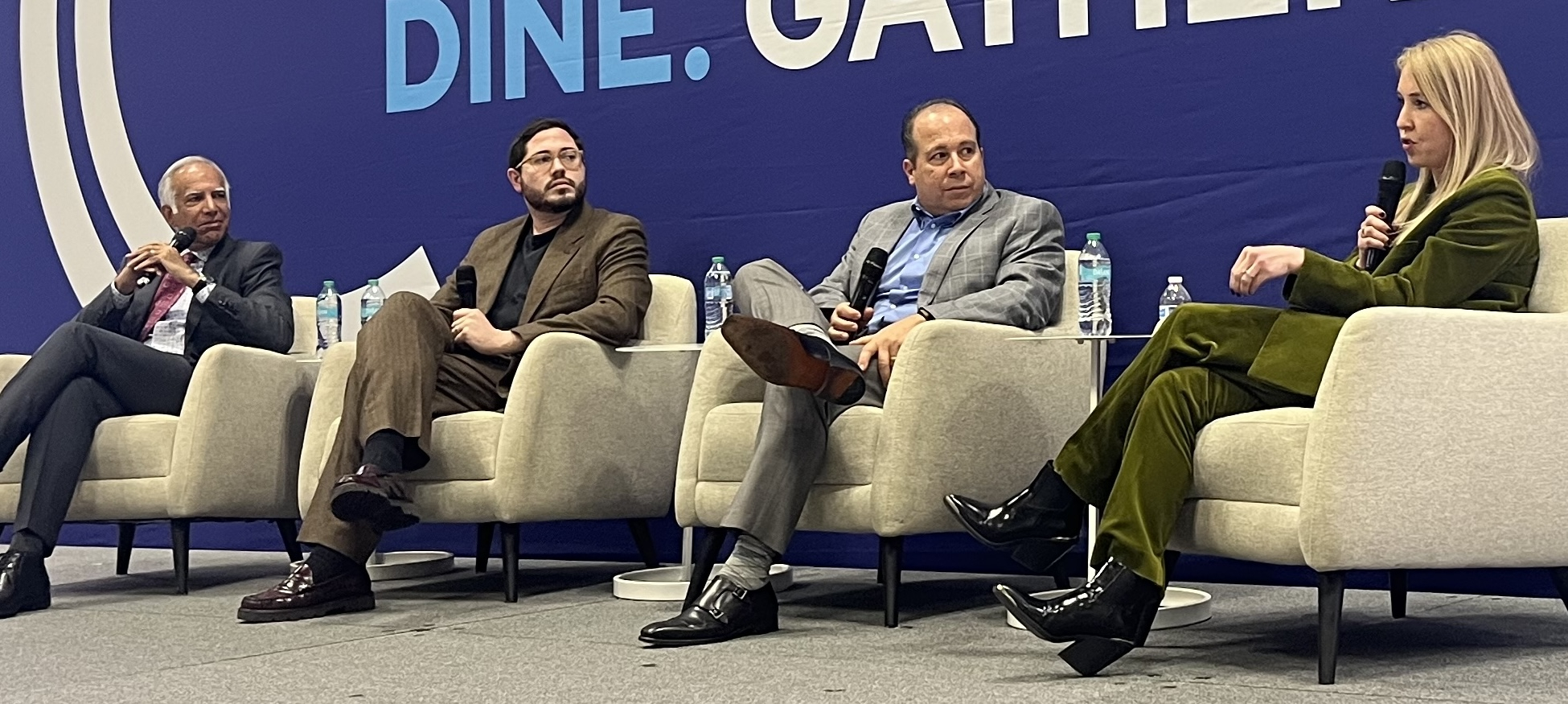
JLL’s Naveen Jaggi, James Cregan of Bloomingdale’s, Sprouts Farmers Market’s Dan Croce and Asana Partners’ Clare Walsh spoke on an ICSC NEW YORK panel called The Great Re-Sort: Winning in a Market of Scarcity and Division.
Although AI will fuel health-and-wellness retail, Walsh said a shakeout in the sector is inevitable, in part because these businesses “are starting to cannibalize each other.” In addition, some brands are still figuring out whether to head down the “small and niche” path or take a wider approach with larger footprints that accommodate a higher volume of customers who might linger for hours, according to Walsh. Whatever the case, she noted, the health-and-wellness macrotrend, including medtail, will continue because consumers are clamoring for the industry’s products and services.
Bonside Uses AI To Rethink Credit Risk in Brick-and-Mortar Retail
Neha Govindraj’s Bonside challenges the flawed physical-retail-is-dead narrative. Bonside, which blurs the lines between proptech and fintech, extends credit to small, fast-growing brick-and-mortar retail businesses like restaurants, cafes, fitness centers and entertainment venues that operate at least three locations. The company’s proprietary AI-enabled Bonside Scorecard underwriting tool not only drives its credit decisions but also helps landlords judge the creditworthiness and risks of new and current non-credit tenants.
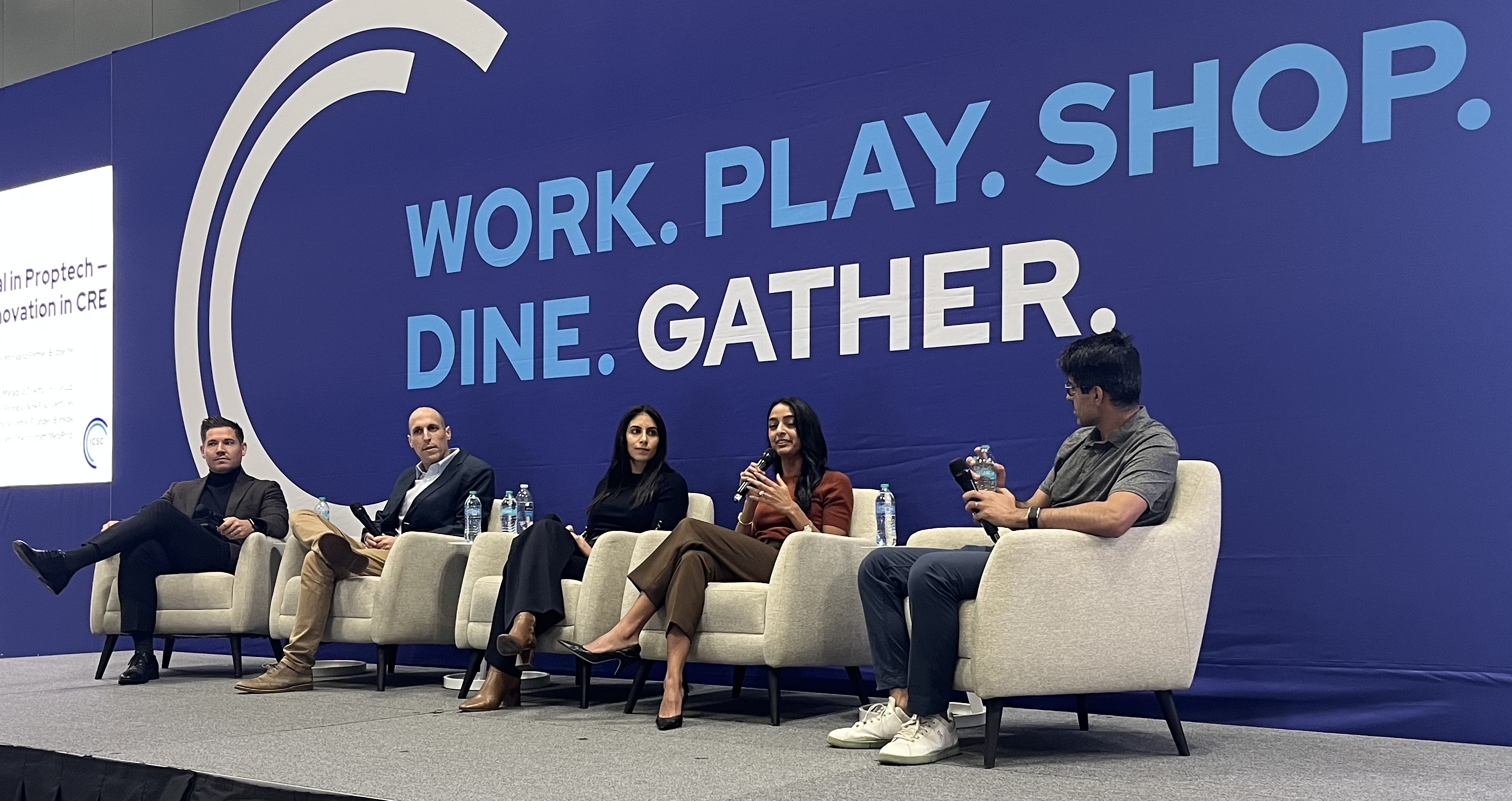
Bridgeline’s Lee Jackson, i80 Group’s Peter Frank, Nine Four Ventures’ Sophia Ghadamian Kier, Bonside’s Neha Govindraj and MetaProp’s Jay Sehgal spoke on an ICSC NEW YORK session called Capital in Proptech — Funding Innovation in CRE.
During a proptech session at ICSC NEW YORK, Govindraj, Bonside’s founder and CEO, said the company must overcome misperceptions among some venture capitalists and other potential investors that small brick-and-mortar retailers are inherently risky. Govindraj said skeptical investors learn through Bonside that brick-and-mortar retailers’ tech-heavy operations — point-of-sale, accounting, banking and scheduling systems — generate data that Bonside analyzes to conduct its AI-aided due diligence. That due diligence, in turn, supports Bonside’s decisionmaking, informs retail landlords and, perhaps most important, minimizes credit risks.
Aside from AI fueling Bonside’s underwriting, Govindraj said the technology boosts the go-to-market side of her business by simplifying outbound lead-generation campaigns. “AI has completely unlocked the ability for one person to target thousands of businesses on a weekly basis in a very personalized way,” she said.
Major Investors Back AI-Driven Retail Underwriting
While Bonside may need to persuade some investors on the value of its AI-enhanced underwriting tool, several have already bought in. Earlier this year, Kimco Realty, which owns and operates grocery-anchored and mixed-use properties, and Nuveen Real Estate, whose investment portfolio includes retail centers, invested in Bonside and became early adopters of the technology. Months later, in November, investment firm i80 Group committed $100 million to the start-up, bringing its total available capital to more than $130 million, Bonside said.
Proptech Funding Momentum Builds as AI Becomes Core Infrastructure
Bonside is among hundreds of proptech start-ups that have reeled in billions in venture capital this year. According to the Center for Real Estate Technology & Innovation, proptech investments totaled nearly $8.7 billion worldwide in the first nine months of 2025. In its 2026 Proptech Venture Capital Outlook report, CRETI noted that “investor sentiment entering 2026 reflects a proptech sector transitioning from caution to disciplined acceleration.” The report added that AI has shifted from an “emerging technology” to must-have operational infrastructure for the real estate industry.
In 2026, venture capitalists will look to vertical-specific AI models in proptech for underwriting, rent rolls, inspections, insurance risk and financial reconciliation, CRETI predicted. “Investors no longer ask whether AI matters; they ask how deeply a start-up’s AI is embedded into the value chain,” the organization said.
Retail Leads AI Adoption Across Commercial Real Estate
One day after the conclusion of ICSC NEW YORK, Diana Perry, founder, president and CEO of commercial real estate-focused Rumphius Marketing, published an installment of her LinkedIn newsletter, AI in CRE Fridays, that spotlighted retail. In it, Perry identified the retail sector as CRE’s front-runner in AI adoption, noting that retailers already employ AI to understand customer behavior, personalize marketing, refine loyalty programs and predict buying patterns. “By 2026, that intelligence will only get sharper,” Perry predicted. “I think for retail real estate owners and developers, this really matters. Stronger retailer data leads to stronger brands and increased sales. And maybe more intentional tenant mixes? The connection between customer insight and physical place will keep tightening.”
By John Egan
Contributor, Commerce + Communities Today