Omnichannel retail has reshaped how consumers shop. Now, it’s reconfiguring the physical infrastructure that serves them, and retail landlords are at the center of this transformation. Panelists at an ICSC LAS VEGAS session titled Designing for Fulfillment: How To Adapt Retail Spaces for Omnichannel Demand dove into the new omnichannel reality for retail properties.
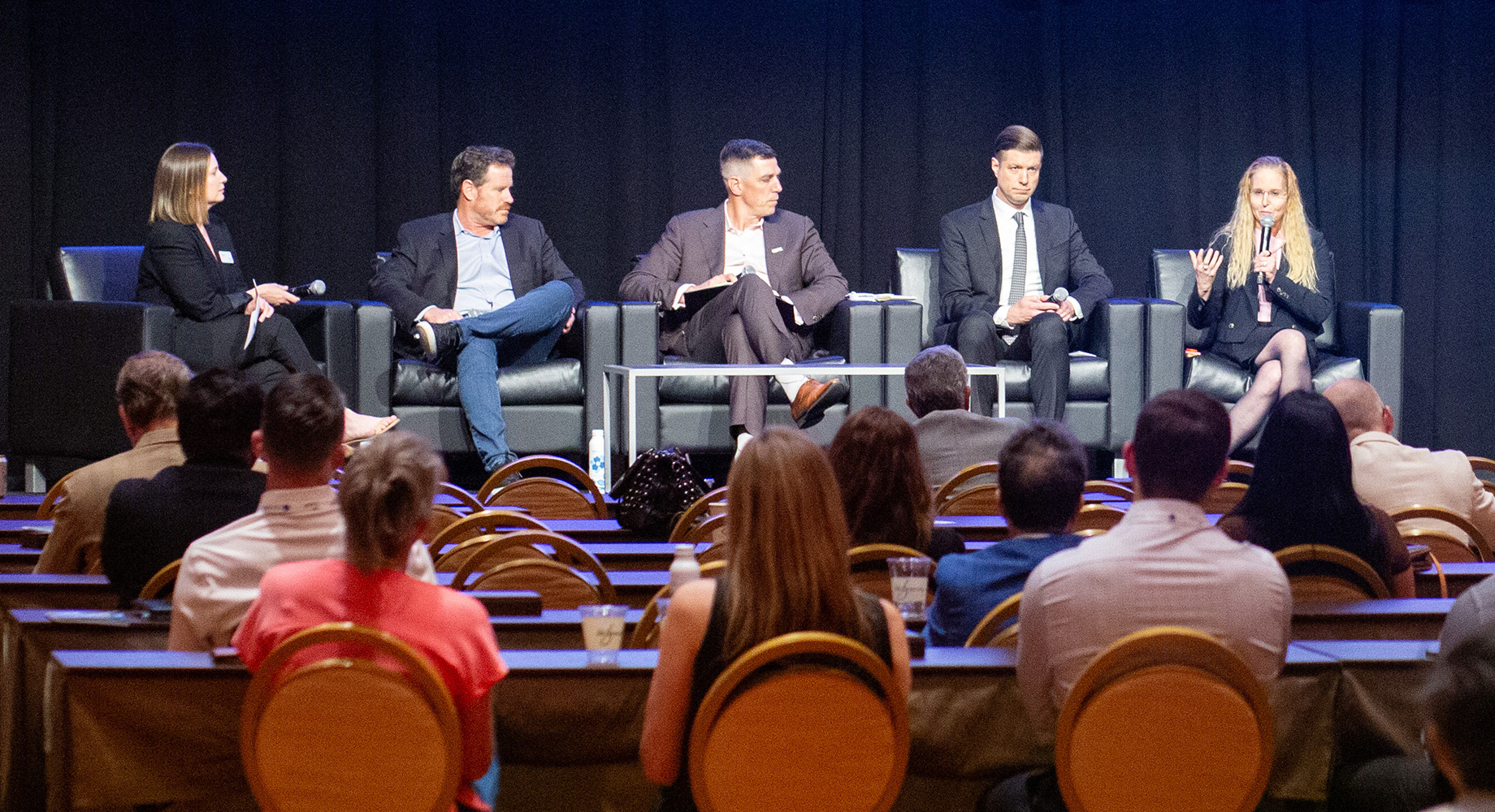
Commerce + Communities Today managing editor Katie Kervin moderated the Designing for Fulfillment panel at ICSC LAS VEGAS with NextRivet’s David Blumenfeld, CBRE’s John Kirkman, Petsmart’s Ryan O’Sullivan and Coresight Research’s Deborah Weinswig.
Shopping Centers Are Becoming Last-Mile Fulfillment Nodes
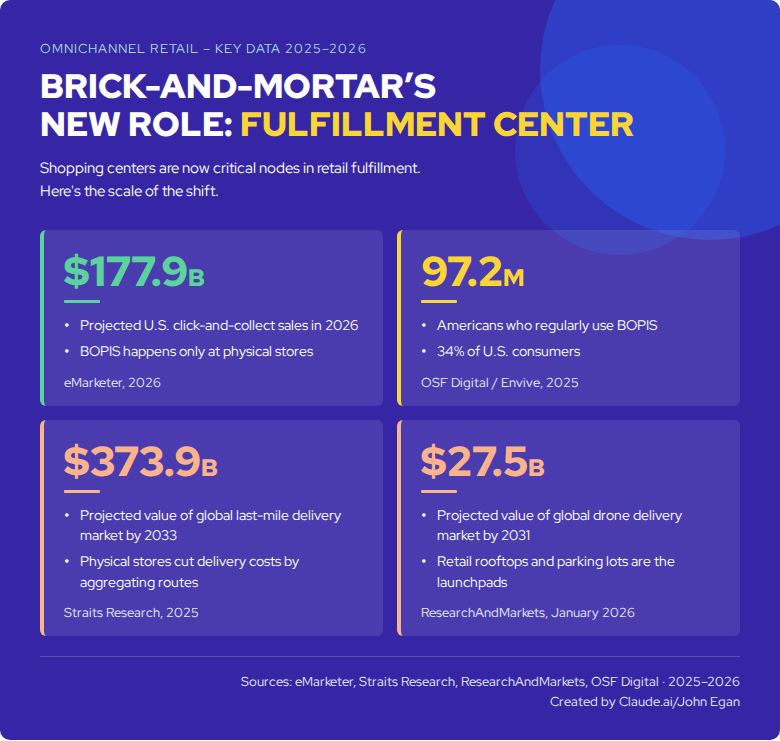
A shopping center is no longer just a place to shop, dine and enjoy experiences. Now, more than ever, it plays a critical role in the retail supply chain. “If I’m a retailer who sends out five or 10 parcels a day on a one-off basis, that’s a pretty expensive cost for you or the consumer,” NextRivet co-founder David Blumenfeld said. “If you can aggregate packages on a single route, obviously unit economics go down and that benefits everybody,” he said. Blumenfeld added that shopping centers play an aggregation role not just as a physical space but in completing the last mile at a lower cost.
To aid last-mile fulfillment, panelists said, retail landlords need to rethink what they control: dock capacity, power infrastructure, parking lot design and even lease language. “Dock capacity is critical. … Where a store does bidirectional activity, having dock capacity is often underlooked,” noted CBRE senior managing director and Supply Chain Advisory leader John Kirkman.
Lease Language Hasn’t Caught Up to BOPIS and Returns
Lease structures arise as another issue. According to Blumenfeld, lease language hasn’t kept up with omnichannel retail. One flaw: Buy-online-pick-up-in-store sales often don’t count toward a store’s productivity measures, he said, but returns from those same online orders do, making stores that embrace omnichannel appear to underperform on paper. “Until that’s really worked out, we’re always going to have tension between landlord and tenant,” Blumenfeld said.
Curbside Pickup Is Creating New Pressure Points
“Dwell times at [curbside] pickup areas matter enormously. If you’ve made a five-minute promise and it becomes 15 or 20 minutes, that consumer experience erodes dramatically,” Kirkman said. Blumenfeld also pointed out that conflicts arise at multitenant properties over who controls outdoor spaces for BOPIS pickups.
Coresight Research founder and CEO Deborah Weinswig cited another complication: Nontraditional visitors like gig shoppers and delivery drivers from the likes of DoorDash and Instacart and pickup-only customers cause friction with everyday shoppers. “Parking spots are being taken right near the door by pickup customers, so core shoppers are having to walk farther,” she said. “And once a store starts to see a significant number of these professional shoppers, making room for your core customers becomes an increasing challenge.”
Autonomous Vehicles and Drones Could Redefine Last-Mile Delivery
Landlords also must wrestle with the growing presence of self-driving cars and drones. “You start to think about what happens when I send my car to the mall or the store and it doesn't even have a person in it,” Blumenfeld said. “You’re creating a whole new set of circumstances.” Another emerging concern involves drone pickups and deliveries as a roof or parking lot becomes “a landing pad” for drones. On the plus side, autonomous cars and drones hold the potential “to really change the last-mile game,” he said.
MORE FROM C+CT: Ancillary Income Advances Thanks to Proptech: Driverless Car Pickup Spots, Drone Nests and More
Retail Site Plans Must Account for New Shopper and Delivery Patterns
Omnichannel complexities are prompting a reexamination of how traffic moves in and around a shopping center, Weinswig said. One idea popping up: creating one entrance for traditional shoppers and another for order pickups. “That’s still really early thinking, but this whole change in terms of how centers are laid out — how you optimize for autonomous vehicles — is coming up more frequently than it ever has before,” she said. “This idea of meeting the customer where they want to be and making it seamless is really driving people to think differently.”
By John Egan
Contributor, Commerce + Communities Today