The Short Version
- Dark movie theaters are difficult to backfill, making rapid stabilization critical for maintaining shopping center traffic and revenue.
- Phoenix Theatres Entertainment steps into distressed or vacant cinemas to restore operations quickly on behalf of landlords, lenders and public entities.
- Speed, standardized processes and targeted capital improvements allow theaters to reopen quickly, preserving asset value.
Preventing Dark Movie Theaters at Your Property
Movie theater vacancies are hard to backfill. Replacing them — whether with other theater operators or with different uses — is capital intensive. Phoenix Theatres Entertainment steps in as a third party on behalf of landlords, lenders and government entities to get such facilities operating quickly and thus keep revenue flowing, according to president and CEO Phil Zacheretti, who founded the company with his wife Tammie Zacheretti in 2001.
EPR Properties is among the landlords whose portfolio includes Phoenix-managed theaters. EPR senior vice president of asset management Gwen Johnson said: “Phil has built a strong operations and accounting team that understands how to step into a distressed or transitioning asset without disruption.”
Zacheretti has spent 50 years in the movie theater business, starting as an usher as teenager at the now closed Central Cine in Murray, Kentucky, and rising through leadership roles at chains like AMC Theatres, Cinemark and Regal. He spoke with C+CT contributing editor Rebecca Meiser.

Phoenix Theatres Entertainment’s Phil Zacheretti Photo courtesy of Phoenix Theatres Entertainment
Why does a functioning theater matter so much to a shopping center’s overall performance?
A theater is still one of the strongest traffic drivers you can have. We’re looking at a center right now where the seats and equipment are gone. It’s basically just the shell of a building, and within five months we’ll have it fully operational again. It’s part of a shopping center that went through bankruptcy but is now coming back to life with new restaurants and businesses. The owner understands that reviving the theater matters because it can bring in as many as 180,000 people a year. Those customers aren’t just coming from down the street. They’re traveling from a five- to eight-mile radius. [The theater is] reaching people who might not otherwise visit the center. A movie theater is a driving force to get bodies into a shopping center.
What typically happens after a theater operator leaves a property?
In many cases, the location itself is still strong but if the highest and best use remains a theater, the next operator has to overcome deferred maintenance and the cost of replacing projection, sound, seating, HVAC, [point-of-sale] systems and foodservice equipment. Those capital hurdles slow transitions and immediately limit the pool of viable operators.
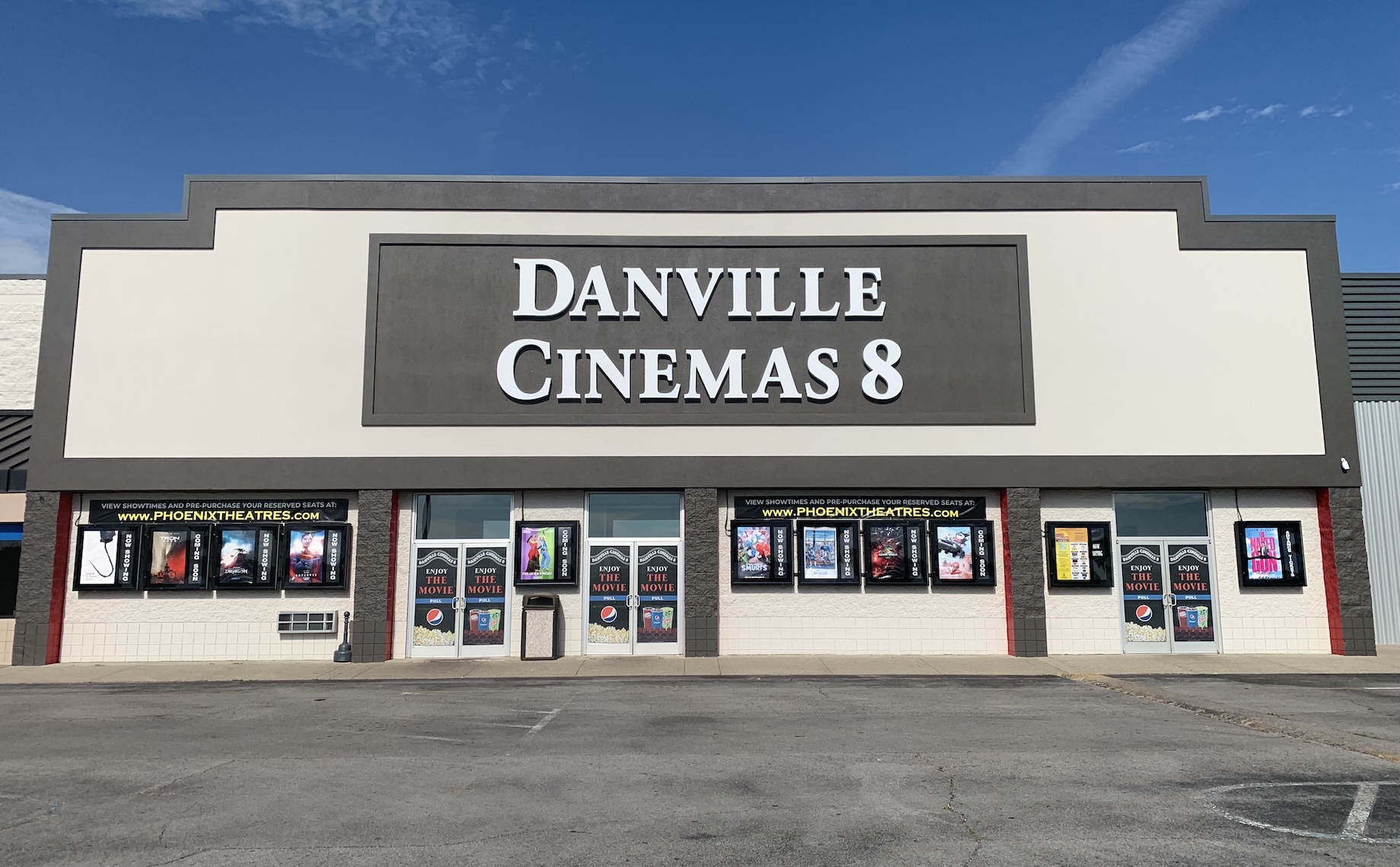
At Kentucky’s Danville Cinemas 8, Phoenix Theatres streamlined food-and-beverage offerings to control operating costs and implemented customer-friendly pricing to drive repeat attendance. Photo courtesy of Phoenix Theatres Entertainment
What is Phoenix’s value proposition for landlords?
Phoenix was built specifically as a third-party management company. Our initial contract is for three years but has a termination clause if the owner needs. We have managed sites for as little as nine months and as long as 15 years and counting. We operate the theater as if we owned it but on behalf of the owner. We handle everything: facility management, accounting, marketing, IT, purchasing, film booking, foodservice and capital planning. Owners receive monthly financials, and we coordinate repairs and upgrades as needed. That’s why owners use us as a backstop when a lease ends, a bankruptcy happens or a space goes dark unexpectedly. [When Phoenix’s management term ends], the building is used for other purposes, the owner has secured a lease with another movie theater operator or we have entered into a lease.
“When you give people a clean, comfortable environment and treat them right, they come back. It’s not complicated, but it’s a lot of work.”
EPR Properties points to your company’s sense of urgency and smooth transitions. What does that look like in practice?
Many operators couldn’t survive the last five years, while rents and costs climbed and new theater construction slowed. That creates opportunities for us to step in, stabilize and keep these properties alive. Once we get the green light, we move fast. We have a standardized task list of about 100 items covering everything from IT and uniforms to film booking and food distributors. If it’s an operating theater, we can usually stabilize it within two weeks. Speed matters because every dark day hurts the center.
Everything starts with attendance. When more people come in, box office and food-and-beverage go up while expenses stay relatively steady. We keep the message simple and get it out through social media: What’s playing and why it’s worth coming. That includes value plays like $5 Tuesdays, refillable popcorn buckets and free summer movies for families. You get people into a clean, comfortable building, treat them right and the word spreads.
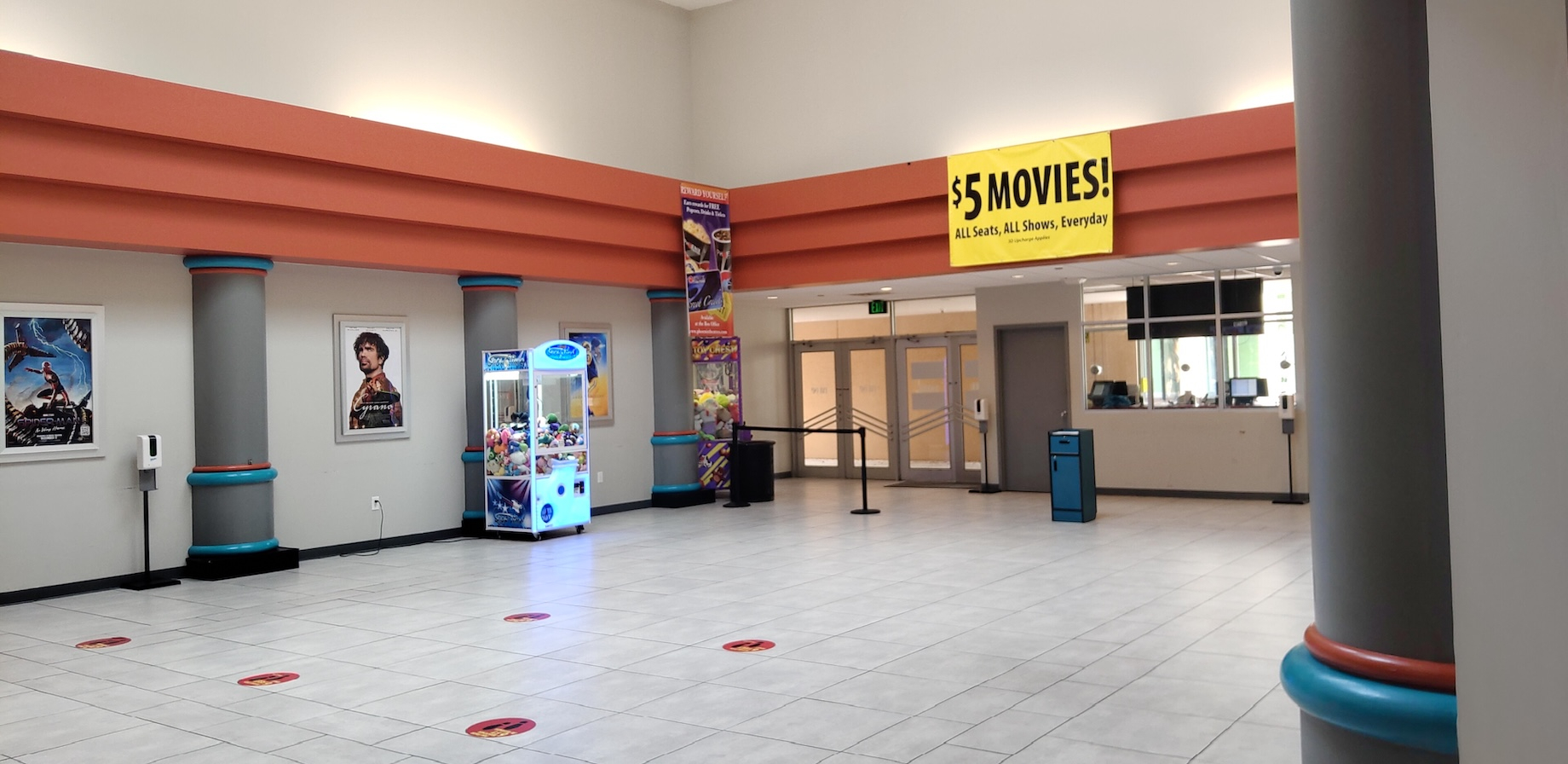
Phoenix Theatres began managing Lakeworth 8 Cinemas in Greenacres, Florida, in 2001 and signed a lease there in 2013 after its host shopping center sold. It recently upgraded some of the auditoriums with laser projectors, and it promotes $5 movie nights to compete with newer, amenity-rich theaters in the area. Phoenix Theatres Entertainment
Can you walk us through a particularly difficult takeover?
We recently took over a 16-screen theater outside Memphis, [Tennessee] that was in the worst condition I’ve seen in my career. When we walked in, only seven auditoriums were operating. Half the HVAC units weren’t working, and projector parts were being pulled from one auditorium to keep another running. The building was in rough shape. The screens were stained, the floors were sticky and the women’s restroom had maybe two working light bulbs. We had crews in the building 14 to 16 hours a day, cleaning and fixing everything: screens, seats, floors, HVAC, projection, concessions. In just over three weeks, we reopened all 16 auditoriums. The community response was immediate. People told us they didn’t have to wear a coat in the winter anymore or sit through 100-degree auditoriums. When you give people a clean, comfortable environment and treat them right, they come back. It’s not complicated, but it’s a lot of work.
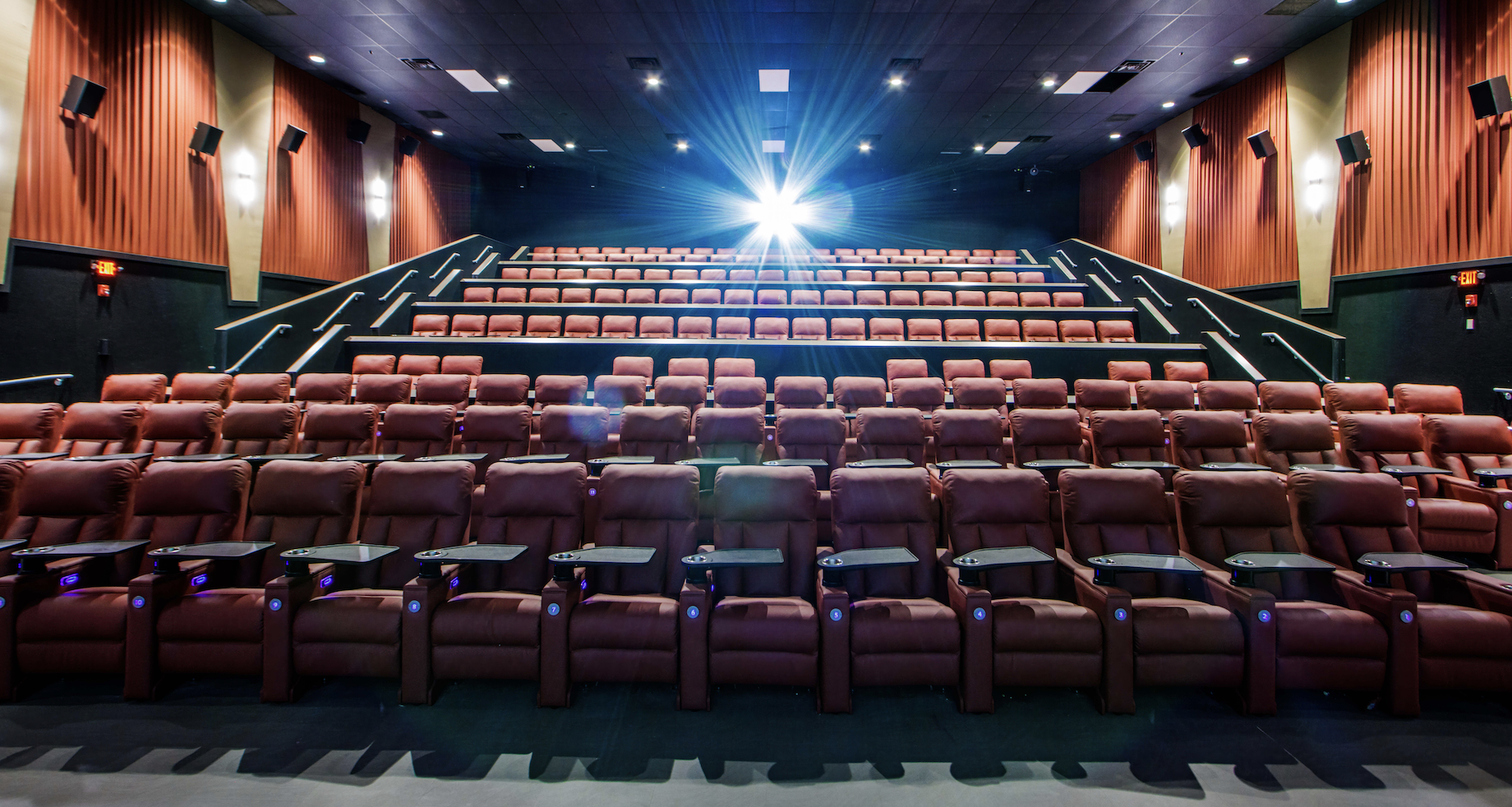
At Chartiers Valley Luxury 14 + PTX in Bridgeville, Pennsylvania, south of Pittsburgh, Phoenix Theatres added tiered, recliner seating; upgraded concessions; an arcade and a full bar. The project began in 2019, paused for about a year during COVID and finished in 2021. Photo above and at top courtesy of Phoenix Theatres Entertainment
You’ve been in this business for decades. Do you have a story that illustrates how unpredictable these transitions can be?
I almost got arrested once! We took over a theater in California where the prior operator had been locked out for nonpayment. We were inside on Day 1, training staff, when the sheriff showed up and told us to leave the premises. We had a court order allowing us to be there, but it took a minute to sort out. I remember handing my rental car keys to my associate and saying: “You might have to come get me later.” Eventually they reviewed the paperwork and cleared us to stay.
When does Phoenix say no to a project?
We do a full pro forma and cost analysis before taking anything on. We’re never going to suggest someone spend the money to open a theater if the numbers don’t work. It doesn’t help the owner, and it doesn’t help our reputation.
What do you say to investors who question the long-term viability of movie theaters in a streaming era?
A movie theater is a communal experience. I love movies. I even have a theater in my home, but it’s not the same. At home, you pause it, your phone goes off, something distracts you. In a theater, you shut everything off and completely escape. You also can’t re-create the experience. Nobody has a two-story screen or a Dolby Atmos sound system in their living room. Theatrical releases create excitement, conversation and word-of-mouth in a way streaming doesn’t, and the studios know that. After the pandemic, they went right back to releasing movies in theaters first because that’s where they reach the most people and build the strongest audience.
The reason the industry hasn’t fully bounced back yet isn’t demand; it’s timing. Production stopped during COVID, and then the strikes delayed things even more. That pipeline is finally full again, and now we’re seeing steady releases week after week. We expect this year to be very close to pre-pandemic levels, probably around 90% in terms of domestic box office revenues. We have been stagnant the last three years at around $9 billion, compared to an average of $11 billion pre-pandemic. Ninety percent of that $11B would be $9.9B, and the highest estimates for this year are very close to that. 2018 to 2019, there were close to 41,000 screens, compared to between 35,000 and 36,000 today. That may be the new normal, and it works. People still want the theater experience.