The Short Version
- JFK Terminal 8’s redesigned food-and-beverage and retail program spans more than 60 concepts across roughly 100,000 square feet, built around an analysis of passenger demographics, spending and behavior.
- Full-service restaurant anchors Eataly, Bowery Meat Company and Peach Palace by Momofuku form the backbone of the merchandising strategy, providing the scale and brand recognition to navigate the complex airport retail environment.
- A centrally located food hall featuring New York City-based vendors pulls passengers into the terminal’s retail core and creates a stronger connection to New York City.
- Turnkey kiosks and short-term leases lower barriers for smaller local retailers, allowing the terminal to refresh its mix continually.
- The reconceived program serves as a replicable model for airport retail, showing how disciplined merchandising and passenger-focused planning can differentiate terminals and drive performance.
JFK’s New Lineup Reflects a More Disciplined and Creative Approach to Airport Merchandising
Tomorrow, a reimagined concessions and retail program spanning more than 60 concepts across roughly 100,000 square feet will open officially. It offers a case study in new, more nuanced ways airport retail can serve the people moving through the bustling corridors.
The food, drink, shopping and services available to travelers in John F. Kennedy International Airport’s Terminal 8 once looked like so many other airport lineups: national quick-service restaurants like Subway and Dunkin and standardized grab-and-go formats. Little there reflected either the passenger or New York City.
In July 2023, the Port Authority of New York and New Jersey and American Airlines announced a $125 million redevelopment of the terminal’s concessions program, led by Unibail-Rodamco-Westfield Airports — the longtime operator of Terminal 8’s retail and dining. The effort aimed to rebuild the program around a defined traveler profile and a more disciplined merchandising strategy, with an emphasis on local New York City businesses, a broader mix of food and retail and flexible ordering formats from digital preorder to traditional counter service.
ASUR Airports acquired URW Airports in December, and director of leasing Ashley Hari transitioned to the new company, which carried forward with URW Airports’ strategy. Hari had helped shape the program from its earliest days at URW. “Airports don’t have to be old, boring concepts that you’ve always seen. We have a captive audience 24/7, and businesses are paying zero marketing dollars to bring people into our space. We believe airports are worthy of the same brands we see on the streets of the city.”
Terminal 8’s new retail program demonstrates that passenger-first programming takes operational discipline: Define the consumers who are in the space, build the merchandising plan around those travelers, secure anchors that can absorb airport complexity and then create entry points for smaller local brands. It’s a replicable process, and as more terminals look to differentiate, it may be a necessary one.
Define the Passenger Before Signing the First Lease
Before approaching a single operator, the leasing team examined the foot traffic already moving through the building. Terminal 8 serves American Airlines’ most lucrative routes, among them transcontinental flights where premium cabin seats command top dollar, along with eight to 10 international carrier partners like British Airways. The terminal is home to one of American’s five Flagship Lounges, a signal of the caliber of traveler the terminal regularly sees. The household income of the terminal’s passenger base long has ranked among the highest at JFK. “Enplanements drive everything,” Hari said. “We cannot change who comes into that building.”
The team analyzed spending patterns, traveler behavior and demographic data to build a clearer profile of the terminal’s travelers: tech-forward, brand-conscious customers who are willing to pay for quality and expect elevated experiences, from the quality of the food to the ordering process to the brands available to browse.
That insight shaped a leasing strategy built on range. The mix spans high-end, full-service concepts alongside more accessible options like Shake Shack and grab-and-go options. “Instead of doing a Chick-fil-A or McDonald’s, we’re talking about doing a Black Tap Craft Burgers & Beer and Tender Crush,” Hari said. “Instead of Sbarro, we’re doing Eataly.”
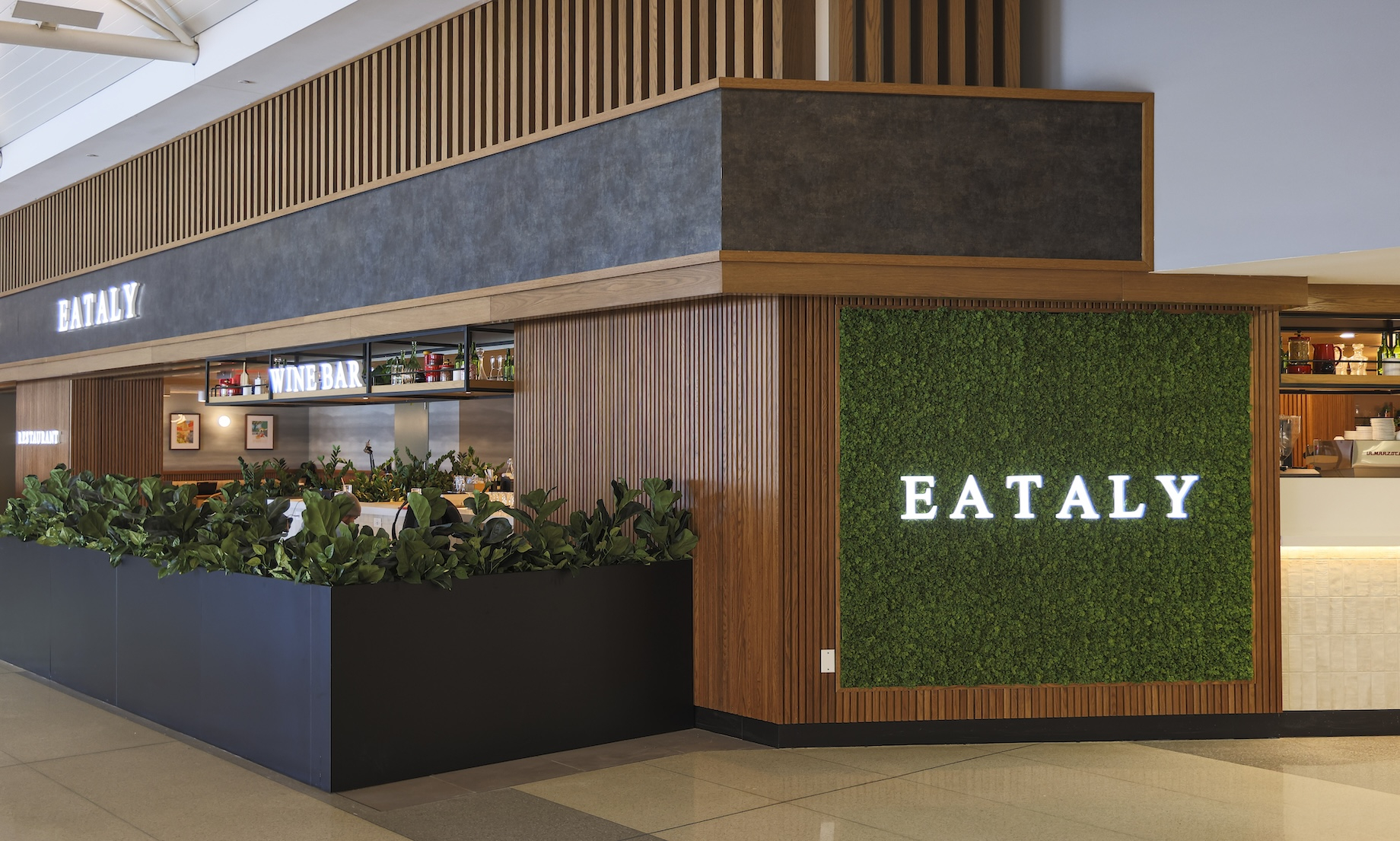
Eataly at JFK Terminal 8, the brand’s first North American airport location, was an early priority for the terminal’s leasing team. Eataly’s Rome Fiumicino Airport outpost ranks among the concept’s highest-grossing stores, proving the brand could perform in an international terminal. With a full-service restaurant, a wine bar, a cafe and grab-and-go, Eataly at JFK Terminal 8 serves both the unhurried diner and the traveler racing to a gate. Photos above and at top courtesy of Eataly
Airports offer room to take creative food-and-beverage swings. “Everybody’s got to eat,” Hari said. “You can expose them to different things, but if you’re trying to bring somebody in to buy something, it’s really got to be the right customer. We’re much more specific with retail.”
Anchor F&B Concepts Set the Foundation for the Retail Mix
ASUR organized Terminal 8’s food-and-beverage merchandising plan around anchor concepts that have the scale, brand recognition and infrastructure to handle the complexities and higher costs of operating at airports.
Eataly was an early priority. The brand already had demonstrated it could perform in an international airport; its Rome Fiumicino Airport location is among the concept’s highest-grossing stores. The JFK unit, the concept’s first North American airport location, spans 5,526 square feet, including a full-service restaurant seating more than 130 guests, a wine bar seating 45, a cafe and grab-and-go options. It opened in January, ahead of the terminal’s broader concessions program. Ahead of tomorrow’s official opening, about three-quarters of the new spaces already are open, said Hari. “We have to stagger things for continuity of service for passengers.”
Nearly every tenant in the terminal is new; only Starbucks and Dunkin carried over from the previous lineup. Shake Shack, Pret, Black Tap and Neir’s Tavern, a Queens, New York, institution dating to 1829, followed Eataly. New York City steakhouse Bowery Meat Company took the lineup’s second full-service anchor spot. An older steakhouse’s long tenure in Terminal 8 had proved that such a restaurant works at Terminal 8. “We just replaced it with a more modern version,” Hari said.
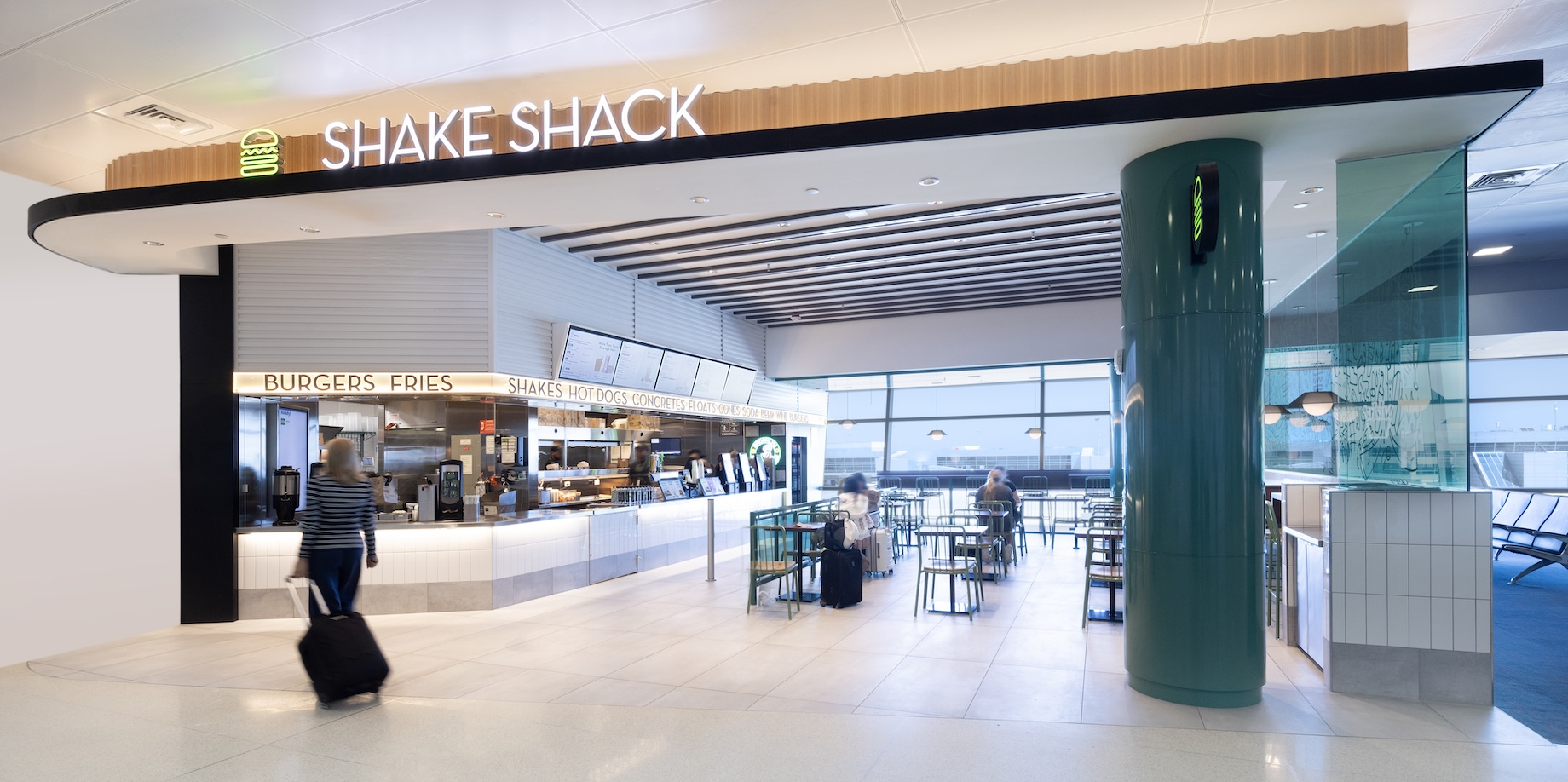
ASUR Airport’s Terminal 8 leasing team didn’t eliminate quick-service dining. Rather, it installed elevated options, such as Shake Shack. Photo courtesy of ASUR Airports
The team had a clear goal for the third food anchor: an internationally recognized brand with a format that would resonate with younger travelers and the terminal’s substantial base of international flyers. Terminal 8’s carrier mix includes Cathay Pacific, Japan Airlines and China Southern Airlines, pointing toward Asian cuisine as an underserved category with a built-in audience. “We knew we wanted David Chang and Momofuku,” Hari said. Thus, Peach Palace by Momofuku joined the crew.
A Food Hall Pulls Passengers Into Terminal 8’s Retail Core
Once those anchors were in place, the leasing team conceived of The Boroughs Foodhall to draw passengers from the gates toward the terminal’s retail offerings. It features New York City–based concepts like Bagel Boss, Brooklyn Blend juice bar, Mito Japanese restaurant, Naya and Black Star Bakery & Cafe.
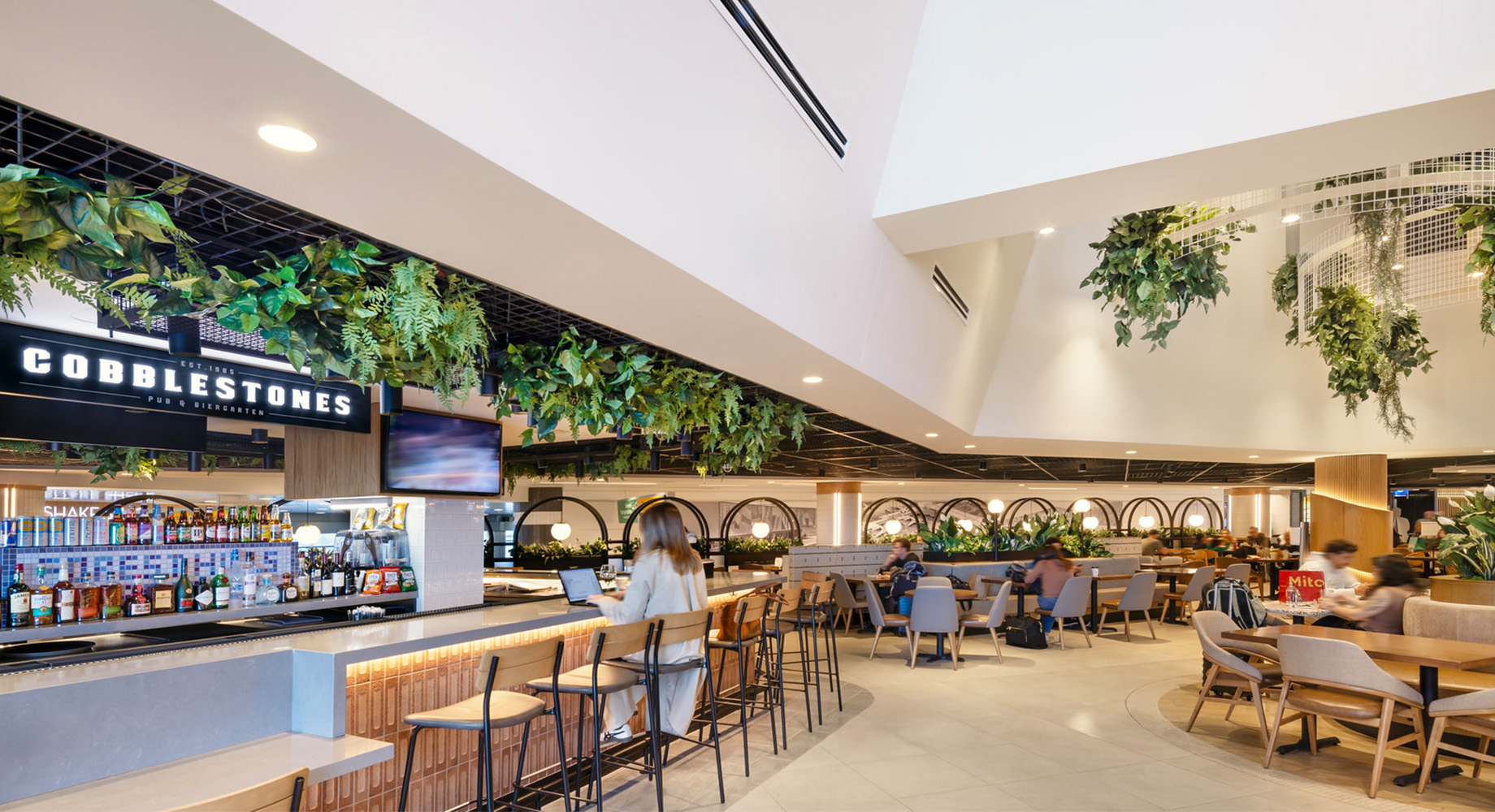
The Boroughs Foodhall anchors Terminal 8’s retail core with a mix of New York City-based concepts. The premise is that a terminal serving one of the world’s most recognizable cities should offer food that reflects the city. Photo courtesy of ASUR Airports
Turnkey Spaces Create On-Ramps for Local Businesses
Also serving the disposable-income passengers traversing the terminal will be luxury retailers like Breitling, Montblanc, TAG Heuer, Longchamp, Marc Jacobs and Lacoste, alongside travel essentials and experiential concepts like Gameway video game lounge and Lego. But a merchandising mix that accurately reflects New York City also required smaller businesses, which typically would be priced out of airports where store buildouts range from $500,000 to $700,000, said Hari.
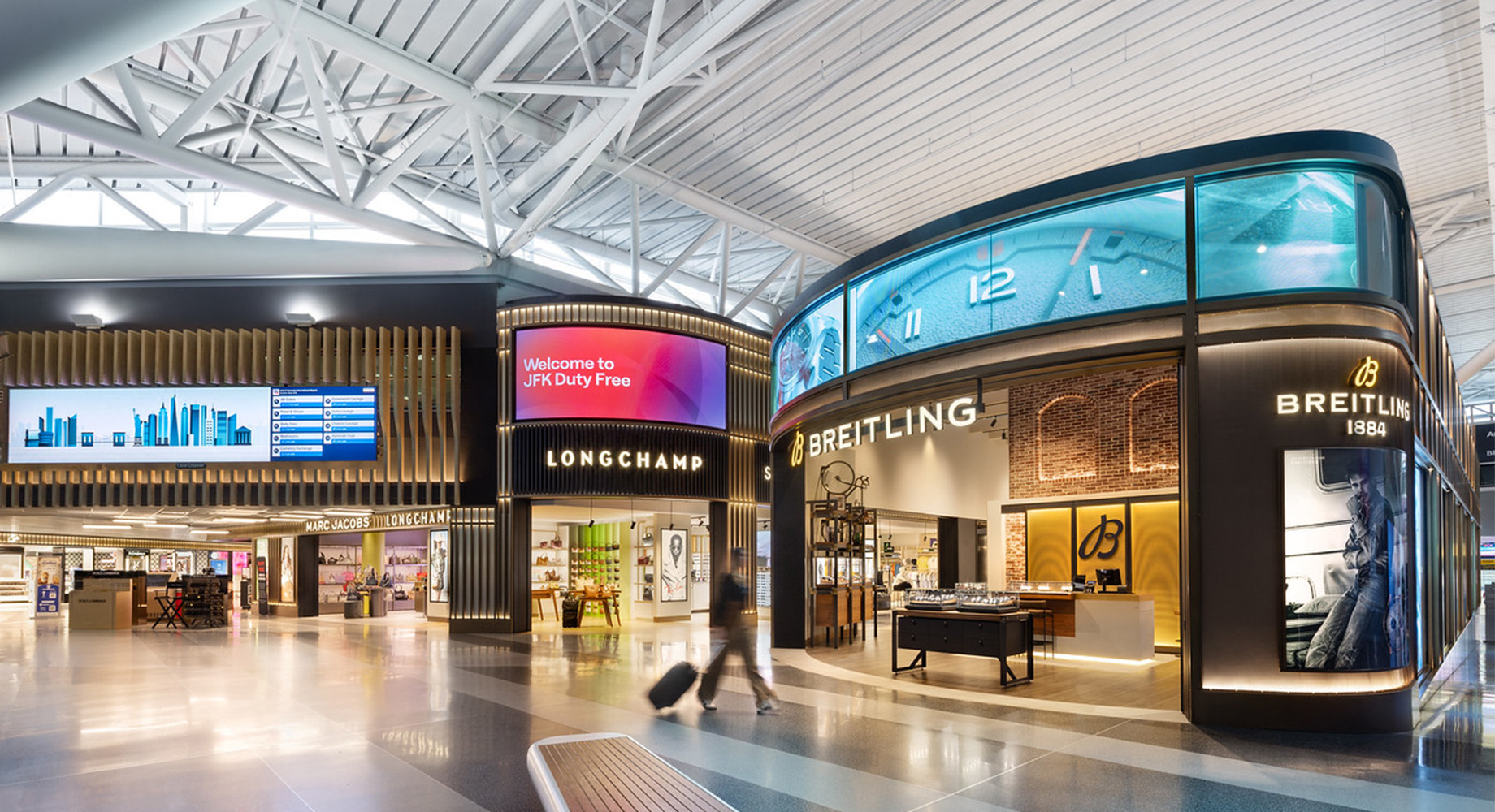
The leasing team built the terminal’s retail program around the passengers already walking through. Luxury brands like Breitling, Longchamp, Montblanc and TAG Heuer, for example target the disposable-income traveler. Photo courtesy of ASUR Airports
ASUR invested roughly $1 million on four turnkey kiosks and two 175-square-foot inline spaces so retailers could move in without fronting major capital. Lease terms of 12 to 24 months for these spaces create a rotation of local brands that keep the terminal experience fresh. “We’re able to give local small businesses the ability to trial the airport without having to spend $700,000,” Hari said. “It’s about creating different levels and layers of participation. You can come to New York, and it’s truly a melting pot. [The specialty leasing opportunities allow passengers to] see some local artisans, like a flea market vibe almost.” Current and incoming tenants in these spots are Natchie, which offers hand-drawn art, clothing and accessories; Alchemy, which makes handmade candles and jewelry; and Snow Milk, which sells upcycled streetwear.
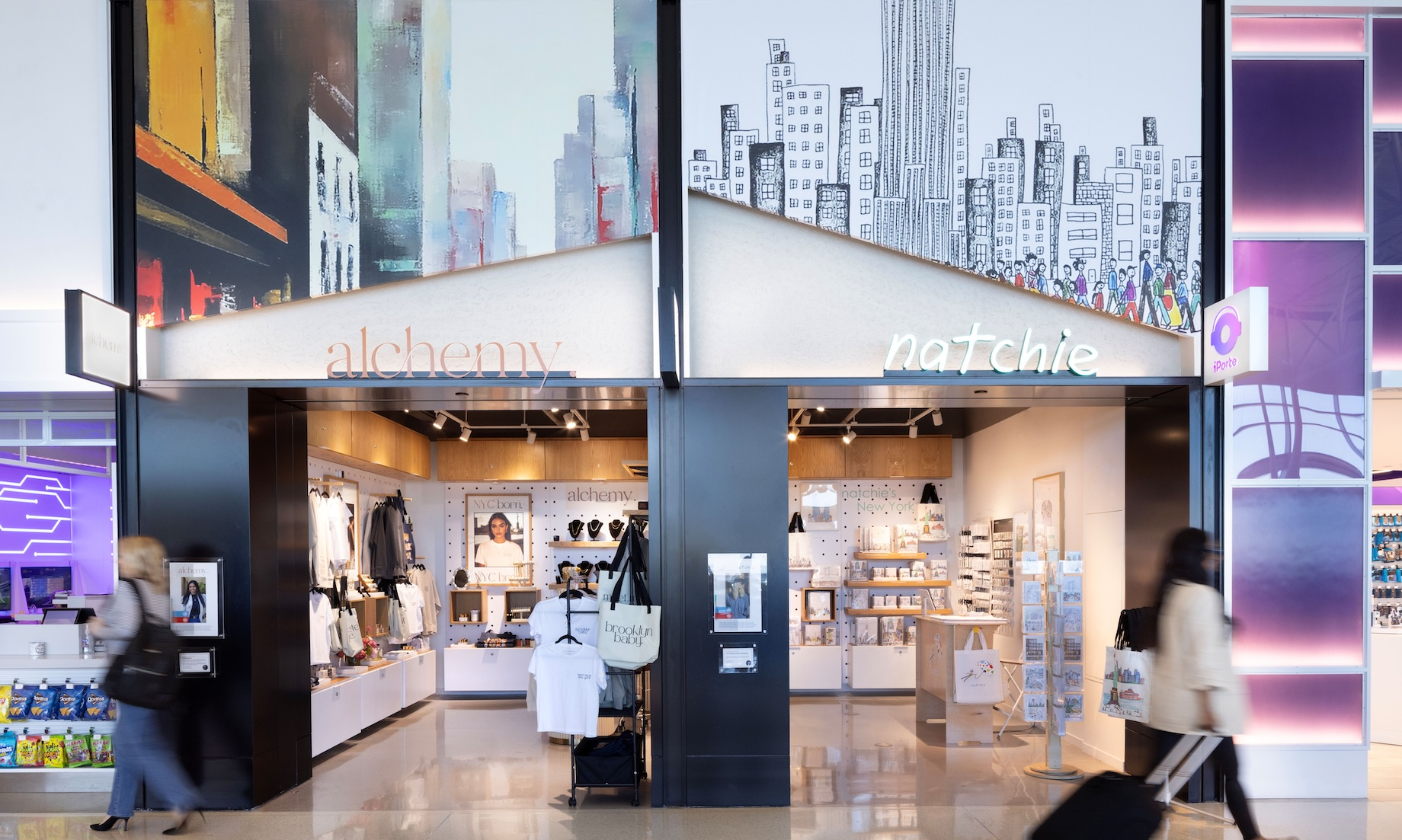
ASUR Airports invested roughly $1 million to develop turnkey kiosks and small-format inline spaces in Terminal 8 at John F. Kennedy International Airport. The effort enables local New York City brands to operate at the airport and localizes the airport retail experience for passengers. Photo courtesy of ASUR Airports
How the Leasing Team Will Measure Success
To understand whether its plan is working, the leasing team is watching consumer behavior as much as it’s monitoring sales, primarily whether passengers are moving into the retail core and how the food hall performs, Hari said. After more than a decade managing the terminal, the leasing team has a baseline for traffic concentrations and traffic breakdowns. She said: “If things aren’t looking right to us within the first two or three months, we have the ability to quickly get in and figure out where the deficits are.”
By Rebecca Meiser
Contributor, Commerce + Communities Today