The Short Version
- The city of New Haven, Connecticut, turned an underused parking garage tied to a distressed multifamily property in the city’s downtown into public parking serving the Ninth Square neighborhood.
- The move helped the city address a troubled property while predictable access to parking for downtown retailers, restaurants, residents and commuters.
- After taking possession of State Street Garage, New Haven invested in maintenance and improvements, then began generating revenue from the facility.
- The garage now supports local businesses through validation and voucher programs and is positioned to serve additional residential development in the neighborhood.
A Downtown Parking Solution Emerged From a Distressed Multifamily Property
Walkable downtowns are all the rage, but consumers need places to park their cars so they can get out and get to walking. Seventy years ago, that need drove the birth of enclosed malls, built to mimic city centers. Now, New Haven, Connecticut, is applying that wisdom to reinvigorate its own city center, particularly its Ninth Square neighborhood.
Parking may not be glamorous, but it is pivotal to many downtowns’ retail success. “No one wakes up in the morning and says: ‘I can’t wait to go to a parking garage,’” said New Haven Parking Authority executive director Doug Hausladen, who has played a pivotal role in increasing public parking downtown. “We’re not the main show. Ideally, we have transportation options where you can choose not to drive, but for a lot of America, cars are an integral part of their lives, so parking in downtown shopping districts is invaluable.”
The Ninth Square takes its name from the town’s layout by Puritans who arrived in 1638. Surveyor John Brockett had created a tic-tac-toe grid of nine large squares and designated the center square as green space. But then, the decay and blight common to downtowns in the mid-20th century befell New Haven, as well. To draw attention for redevelopment from city and state officials, urban-renewal promoters denoted the southeastern square as the Ninth Square, according to Diffuse Aspirations: Mixed-Income Housing in the Context of For-Profit Urban Revitalization, a 2011 research paper written by Christopher Miller. Then a student at the nearby Yale Law School, Miller was studying the impact of one particular urban-renewal project, Residences at Ninth Square, which rose in the 1990s.
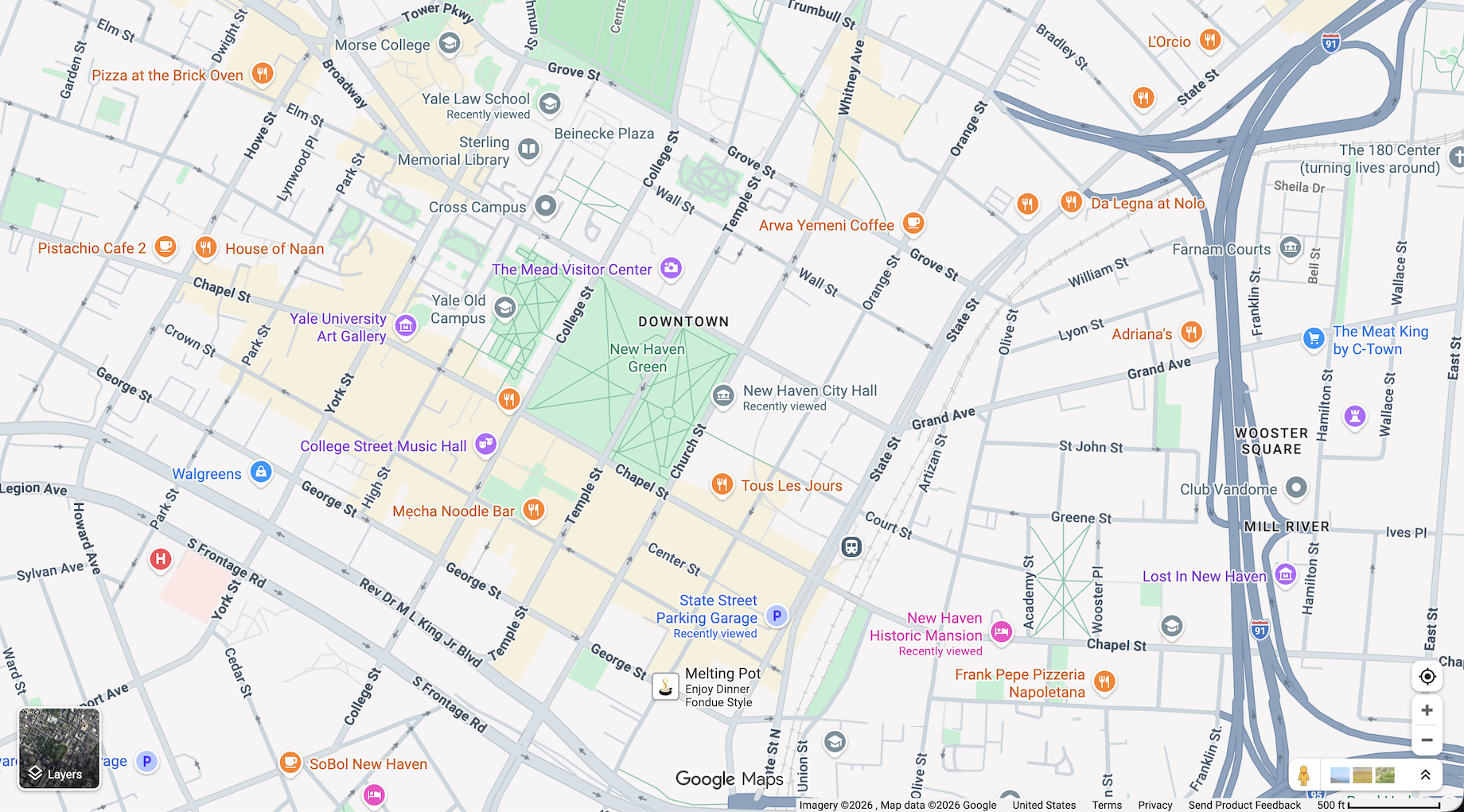
An early Puritan surveyor laid out New Haven, Connecticut, in a grid of nine squares. Urban-renewal promoters later started calling the southeastern block the Ninth Square to create a sense of community and garner redevelopment attention from city and state officials.
A New Urbanism Project Became Financially Strained
McCormack Baron & Associates and Related Cos. developed the Residences at Ninth Square, which encompassed 335 apartments and 50,000 square feet of retail across four buildings, both converted and new, plus two parking garages. Financing for the $86 million project included $14.8 million in equity from low-income housing and historic preservation tax credits, $67 million in bonds issued by various city and state agencies, and a 15-year property tax abatement, Miller reported.
While the project was a New Urbanism success, said Hausladen — who served as a city alder from 2012 to 2014 — it bled cash after the tax abatement ended. In 2013, the developers sought new financing to renovate the property. Among other requests, they wanted another 15-year tax abatement and the forgiveness of unpaid interest on its debts, including $10 million owed to the city. But New Haven was hesitant to grant tax incentives at the time, Hausladen explained.
FROM THE C+CT ARCHIVE: New Urbanism in Oklahoma
Meanwhile, the city was modernizing its 1960s-era parking requirements for residential projects, Hausladen said, aiming to spark residential conversions and new construction downtown. As a result of the zoning change, the Residences at Ninth Square no longer needed two garages serving the property’s residents, he added.
A Sale Created an Opportunity for Public Parking
Ultimately, Hausladen said, McCormack Baron and Related didn’t get the deal they sought and the unpaid debt and taxes they owed to the city grew to around $27 million. The city leveraged the threat of foreclosure to instigate a sale, and in 2019, Beacon Communities won a competitive bidding process for the property, in part because Beacon promised to maintain 56% of the units for renters earning less than 60% of the area median income. Similarly, the city saw an opportunity to take possession of the project’s 266-space State Street Garage for back taxes. “The garage is in a very vibrant part of downtown,” Hausladen said, “and we saw an opportunity to turn it into shared parking and leverage its benefit for more than just one development.”
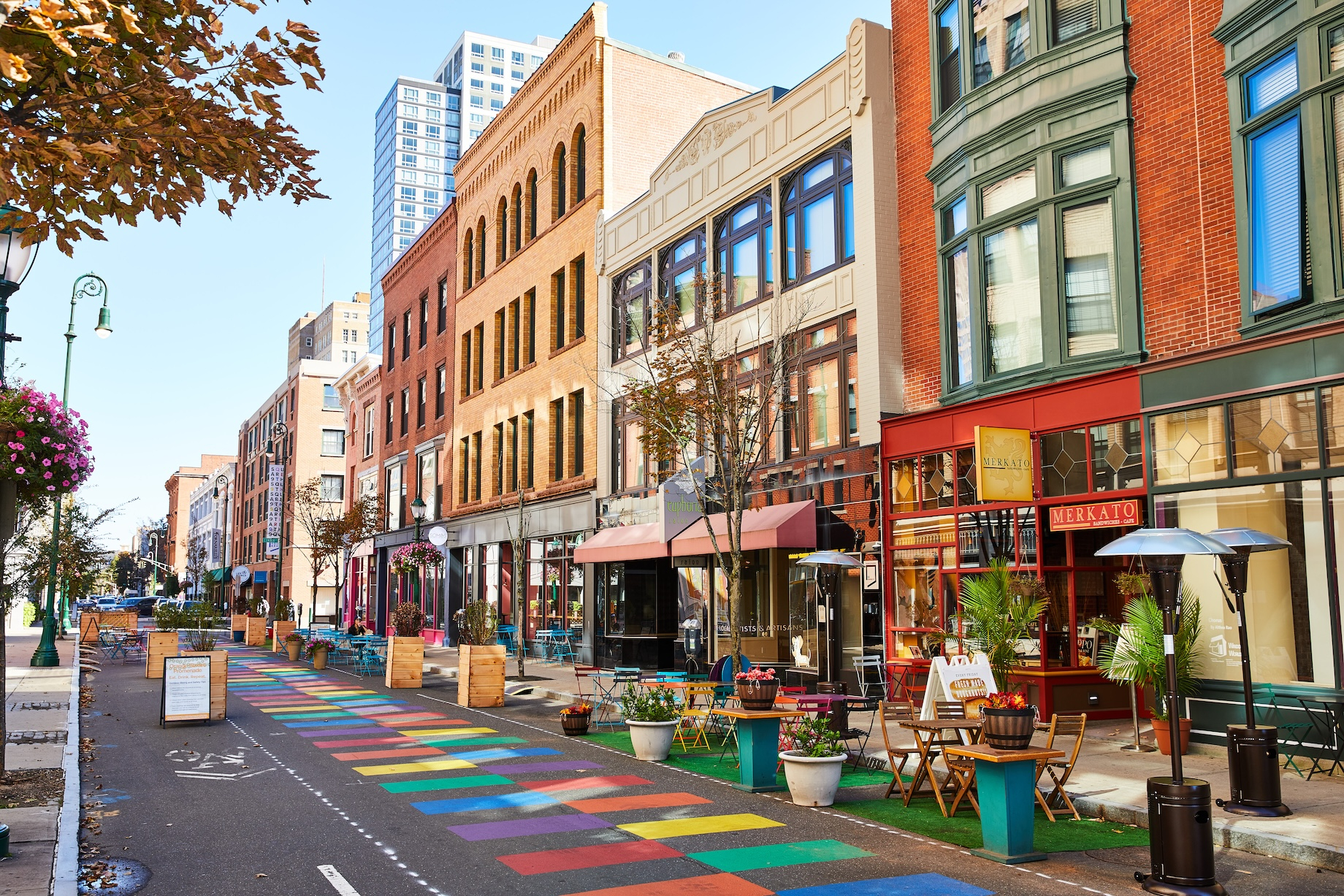
The development in the 1990s of the mixed-income Residences at Ninth Square played a key role in the revitalization of downtown New Haven. The apartments, now known as Ninth Square Apartments, occupy three plots, including the residences above the Orange Street retail in the foreground above. Financial difficulties and changes in parking requirements more than a decade later provided an opportunity for the city to turn State Steet Garage, one of the project's two garages, into a public parking. Photo above and at top courtesy of Beacon Communities
Amid negotiations to finalize the property’s sale, however, the city agreed to pay Beacon $3.6 million for the garage – $120,000 annually for 30 years – and a nominal amount for two small surface lots, he added. That made the deal more palatable to Beacon and its lenders. “We broke all the easements that were tying the garage to the project,” Hausladen said, “but we wanted the transaction to go forward and the underwriters needed some contribution from the garage.” The city immediately converted the garage to public use and began charging parkers, including Beacon, for any State Street Garage spaces used by its residents in the property, which was renamed Ninth Square Apartments. That incentivized the new owner to consolidate the parking included in residents’ leases into the complex’s other garage, he said.
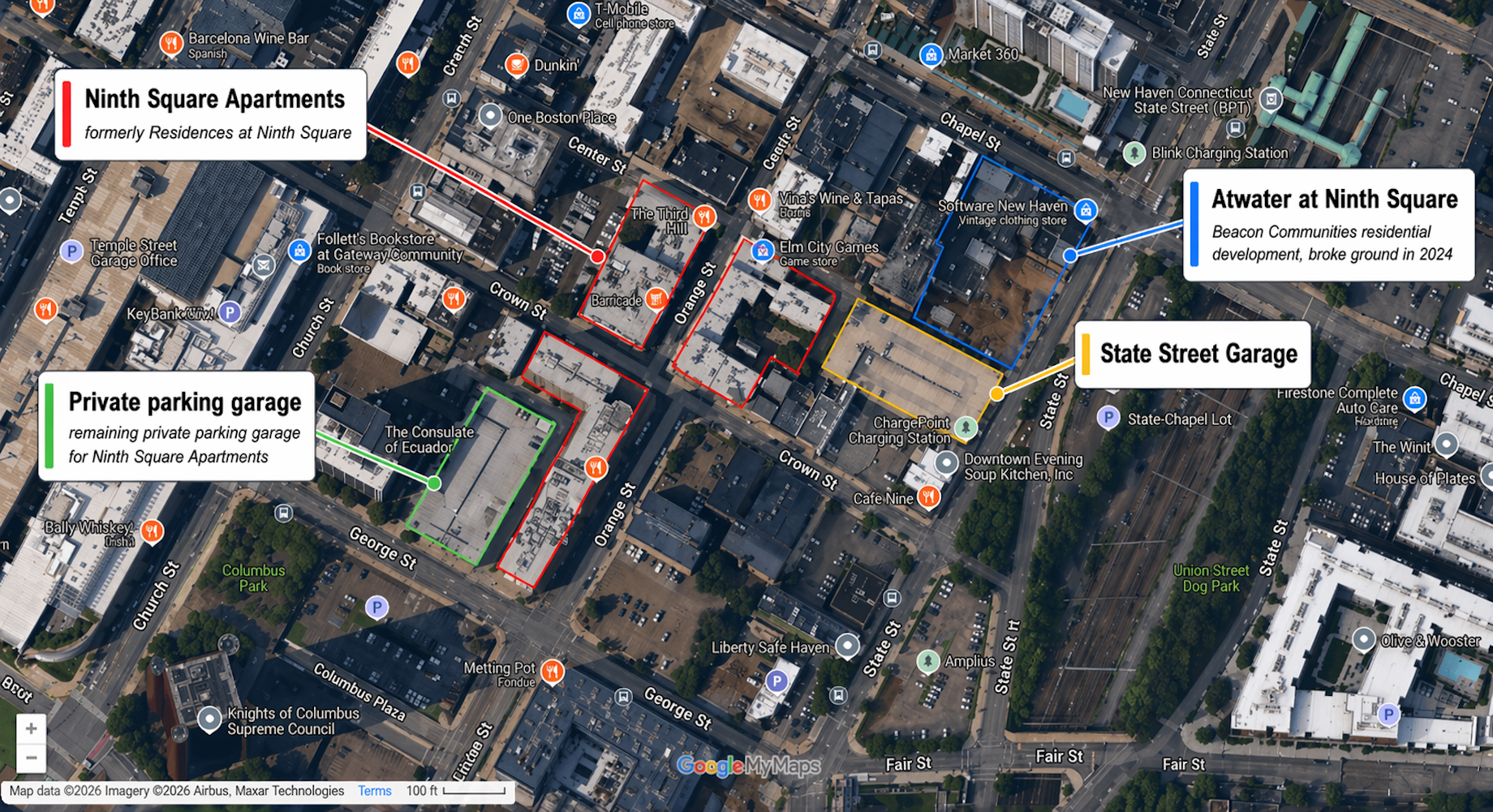
The map above shows State Street Garage in yellow; the Residences at Ninth Square, renamed Ninth Square Apartments, in red; Ninth Square Apartments’ remaining private parking garage in green; and Beacon Communities’ Atwater at Ninth Square residential development, which broke ground in 2024, in blue.
The City Invested in the Garage, Then Saw the Payoff
In the five years after the city took possession of State Street Garage, New Haven spent $6 million on deferred maintenance and other capital improvements for the garage, and then the city began reaping a profit, Hausladen said. That revenue and the garage’s positive impact on the district have validated the city’s decision to pursue the deal. While bidders for the Ninth Square project had balked at New Haven’s intent to separate the garage from the rest of the complex, the city had seen a way to clean up bad parking policy, Hausladen said. Parking had been built into apartment rental rates, so residents had essentially received parking for free, he said, and while the original developers made parking available to the public for a fee, that was limited to daytime hours. Most residents of the Residences at Ninth Square treated State Street Garage as storage for their cars while restaurant employees and other workers took up much of the limited street parking in the evenings, he added.
“Our downtown is extremely walkable and very transit rich with train stations two blocks to the north and south of the garage and major bus lines next to it,” he observed. “But the retail in the area previously didn’t have much access to parking garages, and to make the Ninth Square a viable place for retail, you need garage options.”
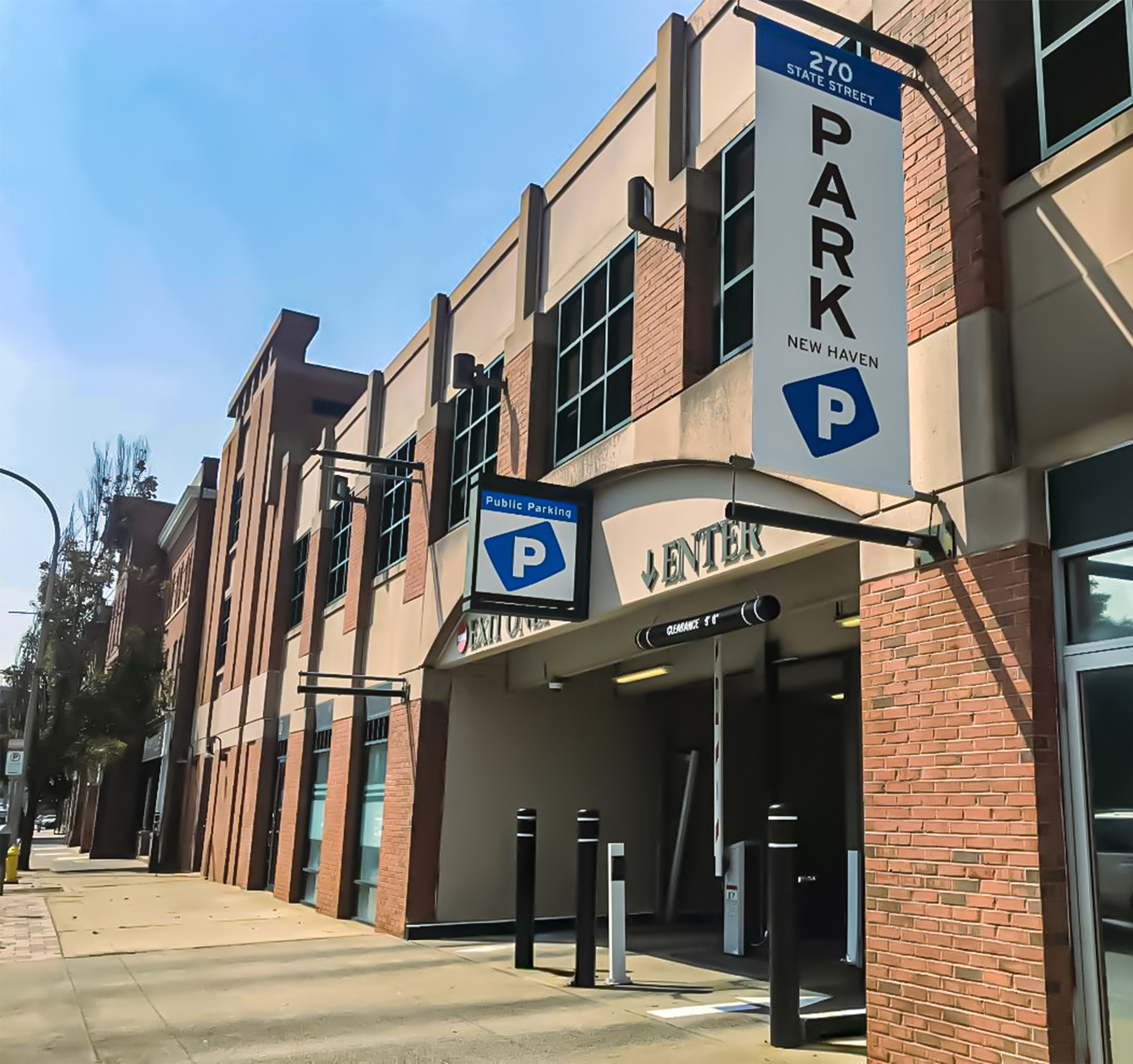
Parking to serve retail in downtown New Haven, Connecticut’s Ninth Square improved when 2019 zoning changes and the sale of a distressed apartment complex enabled the New Haven Parking Authority to take possession of a parking garage and convert it to public use. Photo courtesy of the New Haven Parking Authority
How Shared Parking Is Supporting Retail and Residential Growth
The State Street Garage is one of seven downtown garages the parking authority now owns, and fees across its fleet generally range from $3 an hour to $140 for a monthly pass. The State Street Garage now serves residents of other properties nearby who need overnight parking. Because of its proximity to Union Station, it provides a monthly discount to train commuters, Hausladen said, and like other garages, it provides a discount for renters of affordable units and discounts to customers who validate their parking at local businesses, many of which occupy the ground-floor retail under the Ninth Street Apartments.

Elm City Games buys State Street Garage vouchers in bulk. Those vouchers allow its customers to park from 3 p.m. through the rest of the day for $3. The 10-year-old business occupies almost 5,000 square feet in the Ninth Square and sells board games and memberships that provide access to a library of some 1,500 games for in-store play. Photos courtesy of Elm City Games
Elm City Games is one of those businesses that once was part of the same complex as State Street Garage. Though the retail and the garage now have different owners, the separation of the properties has produced a positive experience for the local business. Elm City Games buys State Street Garage vouchers for $3 each and offers them to its patrons for the same price, said Matt Fantastic, co-owner of the shop, which sells board games and memberships to play games within the store. The program allows Elm City Games customers to park in the garage from 3 p.m. through the rest of the day. “Anywhere from 100 to 200 of our members park in the garage in a given week, so we buy the vouchers in bulk,” Fantastic said. “The program is geared more toward restaurants in the evenings and on weekends, but it actually works great for us, as well.”
Occupancy at State Street Garage ranges throughout the day from 80 to 180 cars, Hausladen said, and plenty of availability still exists for area residents at night. He expects overnight use to grow, as the city’s relaxed parking requirements for residential development fuel new projects. In fact, Beacon broke ground in 2024 on The Atwater at Ninth Square, a 76-unit mixed-income apartment complex in new and renovated buildings that will include 19,000 square feet of ground-floor retail. And an additional 171 residential units are planned for the neighborhood.
“The State Street Garage has benefited the neighborhood tremendously by giving a lot more residents, customers and businesses predictable parking,” Hausladen said. “Because it’s on the periphery of our downtown, we thought that it might not perform as well as our other downtown garages, but what we’ve discovered with its usage is that our downtown is stronger than we thought.”
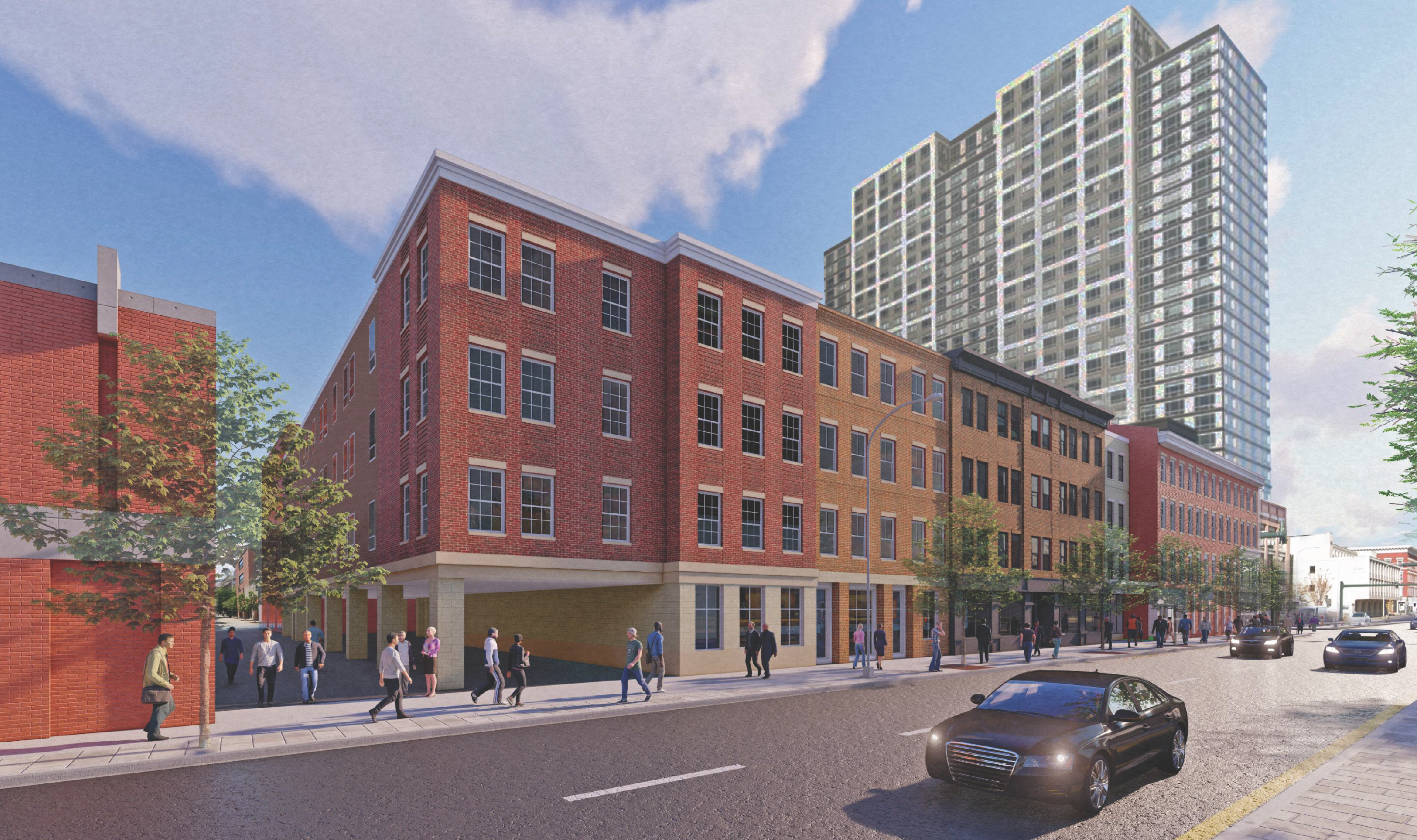
Beacon Communities is nearing completion of The Atwater at Ninth Square, a 72-unit mixed-income apartment project that includes 19,000 square feet of ground-floor retail. Image above and at top courtesy of The Architectural Team
By Joe Gose
Contributor, Commerce + Communities Today