Ovenbird Bakery — known for artisan breads, pastries and Turkish-inspired deli items — has grown from a home kitchen experiment into a beloved Baltimore staple with three locations. It opened in Little Italy in 2020, in Highlandtown in 2021 and in Hampden’s Rotunda in July 2025. Behind the ovens is Keiller Kyle, whose unlikely journey from bird biologist to baker shows that curiosity, persistence and a love of craft can turn a hobby into a full-fledged bakery. ICSC Small Business Center contributing editor Rebecca Meiser spoke with Kyle.
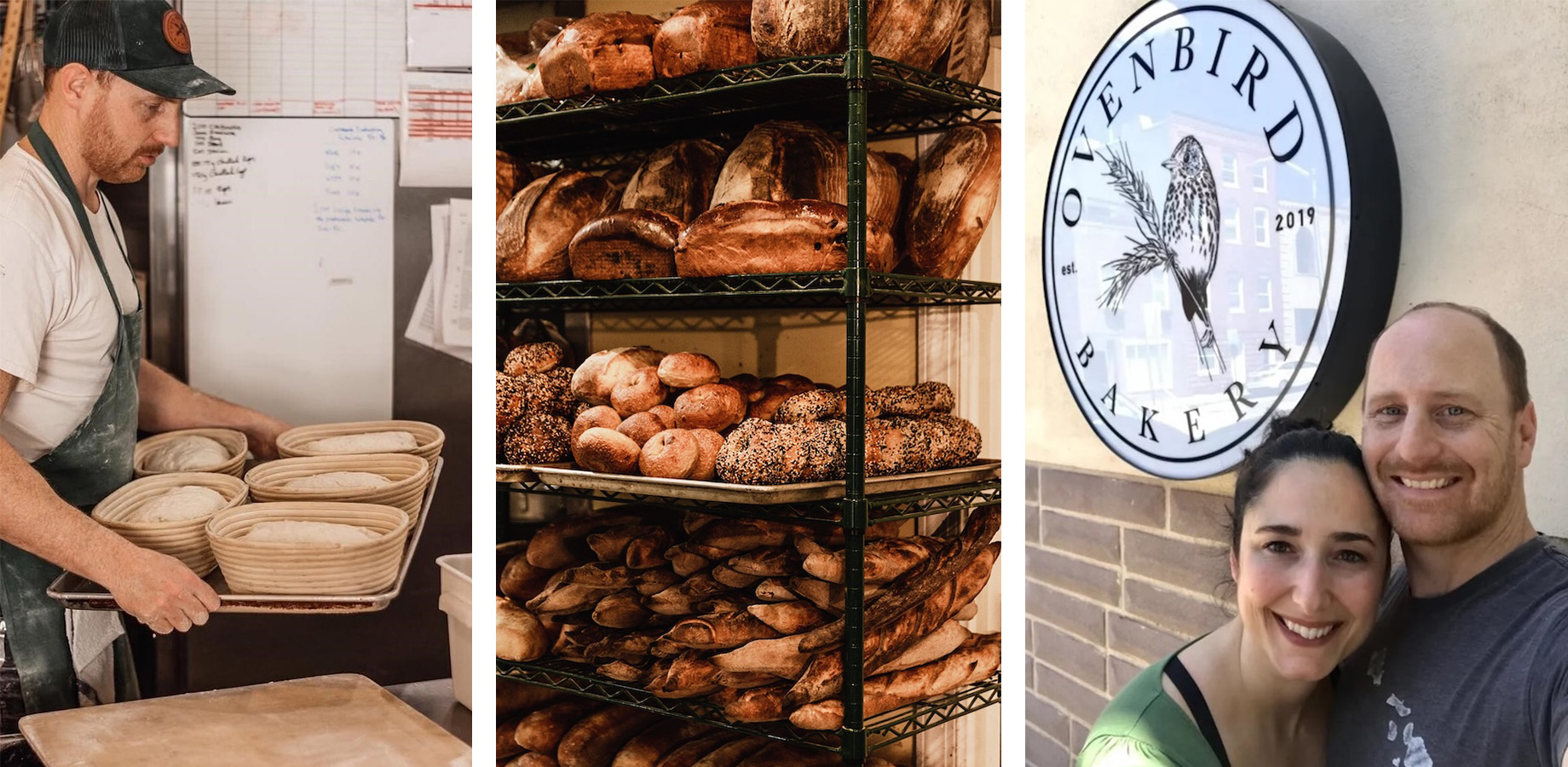
What started as a home-baking hobby for Keiller Kyle, left, has grown to three locations. Kyle’s wife, Nadire Duru, pictured with Kyle at right, is from Turkey, which tops the world in bread consumption. Duru’s dissatisfaction with bread in the U.S. drove Kyle to bake something better. Photos courtesy of Ovenbird Bakery
Did you always plan to become a baker?
I actually started out as a bird biologist. I have a master’s degree in ecology from Purdue University and spent the first part of my career working for conservation nonprofits, including the National Audubon Society in California and The Nature Conservancy here in Maryland. Like anyone, I had hobbies outside of work. Back in 2016, while at The Nature Conservancy, I’d come home, have a drink and watch “The Great British Bake Off.” That show, especially with Mary Berry, was calming. I found it a good endorphin release.
I’d always been a home baker and cooker, but the baking style that was being done on the show really spoke to me. I started experimenting with European-style pastries and eventually bread. My mom used to bake bread at home, and it was just not great. I was always intimidated by bread, but my wife is from Turkey and her culture is completely surrounded in bread. Per capita, Turkey eats more bread than France. Since she came to the U.S., she’s been constantly saying: “Oh, the bread here is very unappetizing and very uninspiring.” I had it in the back of my head that maybe if I make good bread, that would make her happy. I gave it a shot.
The first few loaves were just OK, but I found a lot of joy and relaxation in the making of the bread. I kept going. I got serious about it, started a sourdough culture in 2017 and began sharing loaves with friends. The friends got sick of the bread and started sharing with their friends because they couldn’t eat it all. Soon, friends of friends were asking for bread. I saw it as an opportunity to have a little side hustle outside of my house, where they could help me fund my flour addiction.
When did you start thinking it could become a real business?
I finally decided after many compliments from friends, family and strangers saying: “This is fantastic bread. I wish we had more options like this in Baltimore.” I couldn’t bake any more at home if I wanted to expand. It was taking forever; I needed a bigger oven. So I could either keep it as a hobby or jump into a small neighborhood bakery where I’d have more space to make more bread and pastries. A big push came from a restaurant owner I’d given bread to one night. He makes his own focaccia, [and] we started talking bread. This led to a nice casual friendship. A while later, he said: “I’ve been thinking about your bread and I’ve been thinking about you. I would like to give some money to help you start a bakery.” He offered $20,000 to help me start the bakery. Nothing crazy, just a straight loan from friend to friend, but it was the spark that really started the whole thing. I left The Nature Conservancy in 2019 to build a brick-and-mortar store in Little Italy.
What other funds did you use?
Friends and family invested about $125,000, which covered renovating a 900-square-foot space and buying equipment. I did most of the work myself. We opened in June 2020, right after COVID lockdowns lifted.
Opening during the pandemic sounds tough. How did you manage?
I had no choice. I was like: “What am I going to do?” We started with no employees, grew to three, then 10, and found we were very busy. We sold bread, pastries, coffee and sandwiches out the door — no one allowed inside — and people lined up on the sidewalk in masks, six feet apart. By summer 2020, we were thriving. Work was still shut down for a lot of them, and we gave them a sense of normalcy, a community that was lacking over the last six months. But we ran out of room fast. What I thought would be a two-year transition to a quiet, homestyle bakery turned into something completely different. Honestly, I’ve been pivoting and re-pivoting for the past five years to understand what the best business model is, what the community wants the business to be.
How has the business evolved since that first store?
In addition to multiple retail locations, we now have a robust wholesale program that feeds into other coffee shops, cafes and small local grocery stores. Nothing is corporate. We don’t have any barcodes or anything yet. Our current kitchen [Ovenbird’s 9,100-square-foot Highlandtown location includes a production bakery] can support about eight locations.
What advice would you give founders looking to fund their first businesses?
Talk about your idea with everyone: on a plane, at a restaurant, at a farmers market. Feedback helps refine your concept and focus on what’s important. And don’t try to do everything at once. For me, the first step was just having space to bake bread at a manageable scale.
How did you come up with the name Ovenbird?
Everyone assumes it’s a pun, but ovenbird is an actual songbird that lives on the East Coast. It builds a dome-shaped nest that looks like a little brick oven. There is no other name I could possibly come up with that would be any better. It perfectly marries what I was doing before and what I am doing now.
By Rebecca Meiser
Contributor, Commerce + Communities Today