At 24, Victor Albisu left behind a marriage engagement, a job and even a newly purchased apartment to study cooking in Paris. Today, he is the chef behind the growing Taco Bamba —which has 16 locations across Washington, D.C.; Virginia; Maryland; North Carolina; and Tennessee — and he’s on the verge of opening Electric Bull, a steakhouse featuring various cuts that will open in early 2026 in Virginia’s Vienna Shopping Center. Albisu spoke with ICSC Small Business Center contributing editor Rebecca Meiser.
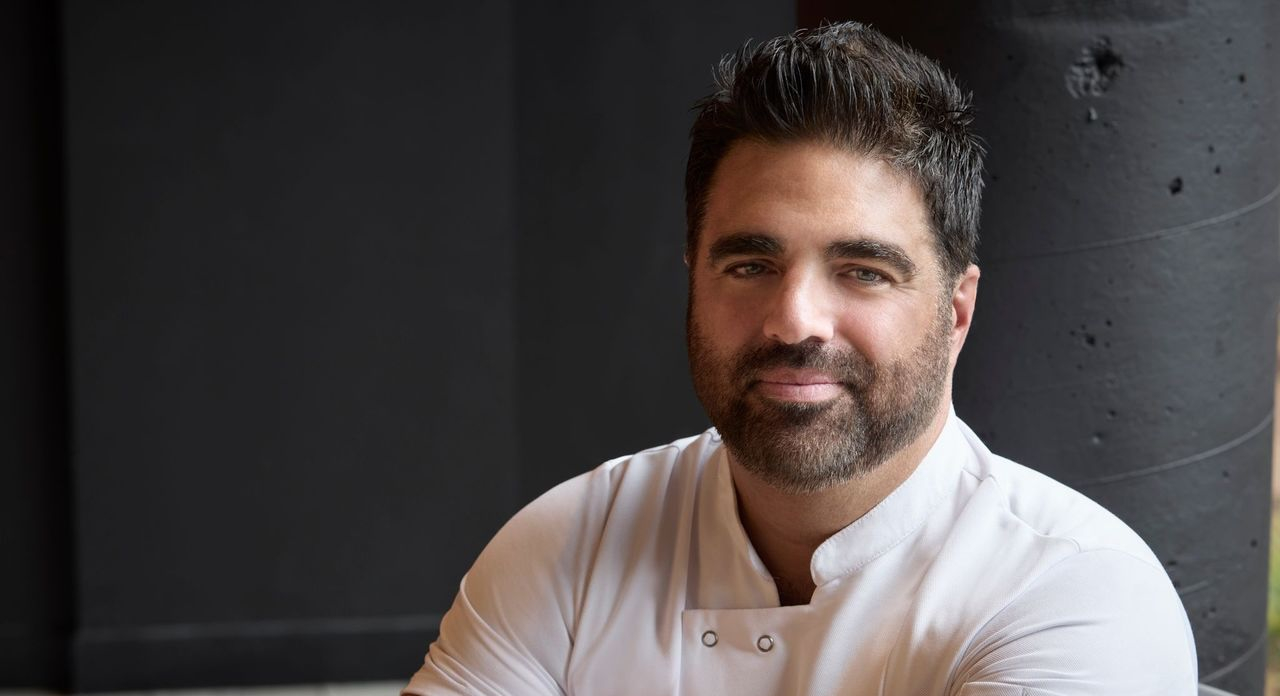
Victor Albisu, who founded the Taco Bamba chain, will open Electric Bull in early 2026. The new concept is a butcher shop and cafe by day and a steakhouse by night. Photo courtesy of Victor Albisu
You started with a steakhouse in April 2013 and followed that with Taco Bamba two months later. What was your vision, and how did you decide on each concept?
Del Campo was a steakhouse with Latin influences and upscale touches. Everything on the menu was kissed with smoke, charred or burnt. I don’t remember people smoking cocktails before we did or celebrating char and fire the way we did. It was big — 6,000 square feet, 180 seats — in downtown D.C., and it was heartfelt. Almost simultaneously, we opened Taco Bamba, an artisan taqueria, so I started [in restaurant ownership] with two different angles. One idea was fine dining; one was fast-casual. One lasted; one didn’t. And that taught me a lot. At Del Campo, I was very attached to the art form. If something was off on the plate or a critic didn’t have the best experience, it was very detrimental to me. I really saw my reflection in the plate. That’s not sustainable. At Taco Bamba, we serve food on paper plates, and it taught me that creativity doesn’t have to be tortured. You can still have a great time and make great food.
Did you always plan for Taco Bamba to become a chain?
I just wanted a small carryout where people could eat tacos and go. But from Day 1, we had lines out the door, hundreds of people. When I started, most taquerias around here made you order three of the same tacos with rice and beans. You couldn’t mix and match. I thought that was crazy, so we did 20 a la carte tacos — half traditional, half totally new combinations — no rules. People loved it. I never wanted to scale one menu. I wanted to scale creativity. Every location is different. Sometimes people get mad because their favorite taco isn’t at the new spot, but that’s part of the fun.
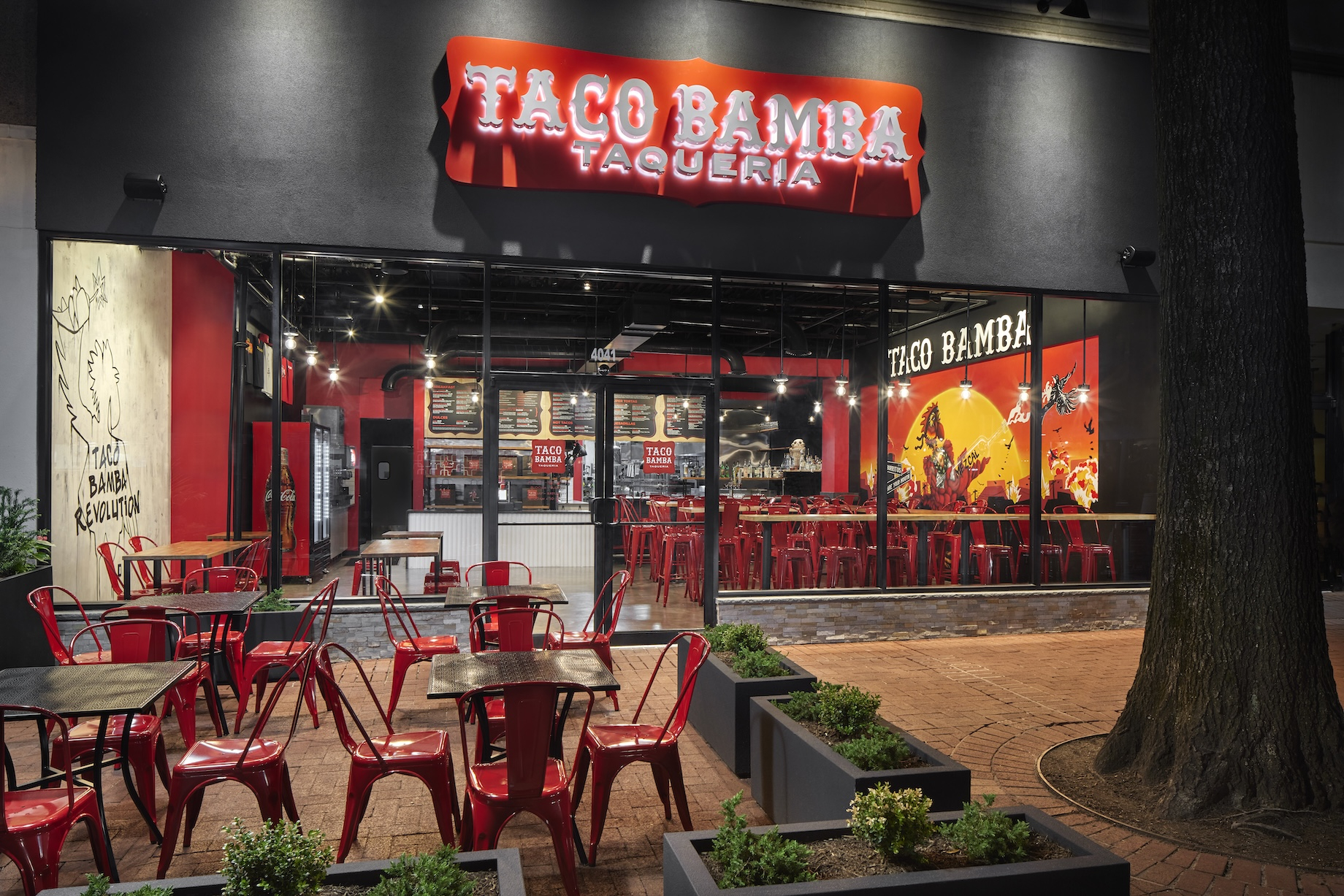
Taco Bamba allows diners to mix and match tacos, and no location’s menu is the same. Above and at top is the Shirlington, Virginia, location. Photos above and at top courtesy of Victor Albisu
What inspired Electric Bull?
I’ve always wanted to do a small butcher shop/boutique steakhouse. I grew up in a butcher shop. Meat has always been part of my story. With Electric Bull, I want to make steak approachable again. You can still order a big rib-eye, but we’re also featuring cuts I personally love: flank, skirt, teres major, hanger. Somewhere along the line, steak became about how soft and buttery it could be. That’s not me. I want people to taste texture, flavor, personality. Electric Bull is simple, energetic, neighborhood driven. During the day it’s a butcher shop and cafe; you can grab a sandwich or take steaks home. At night, the lights drop and it becomes a lively steakhouse.
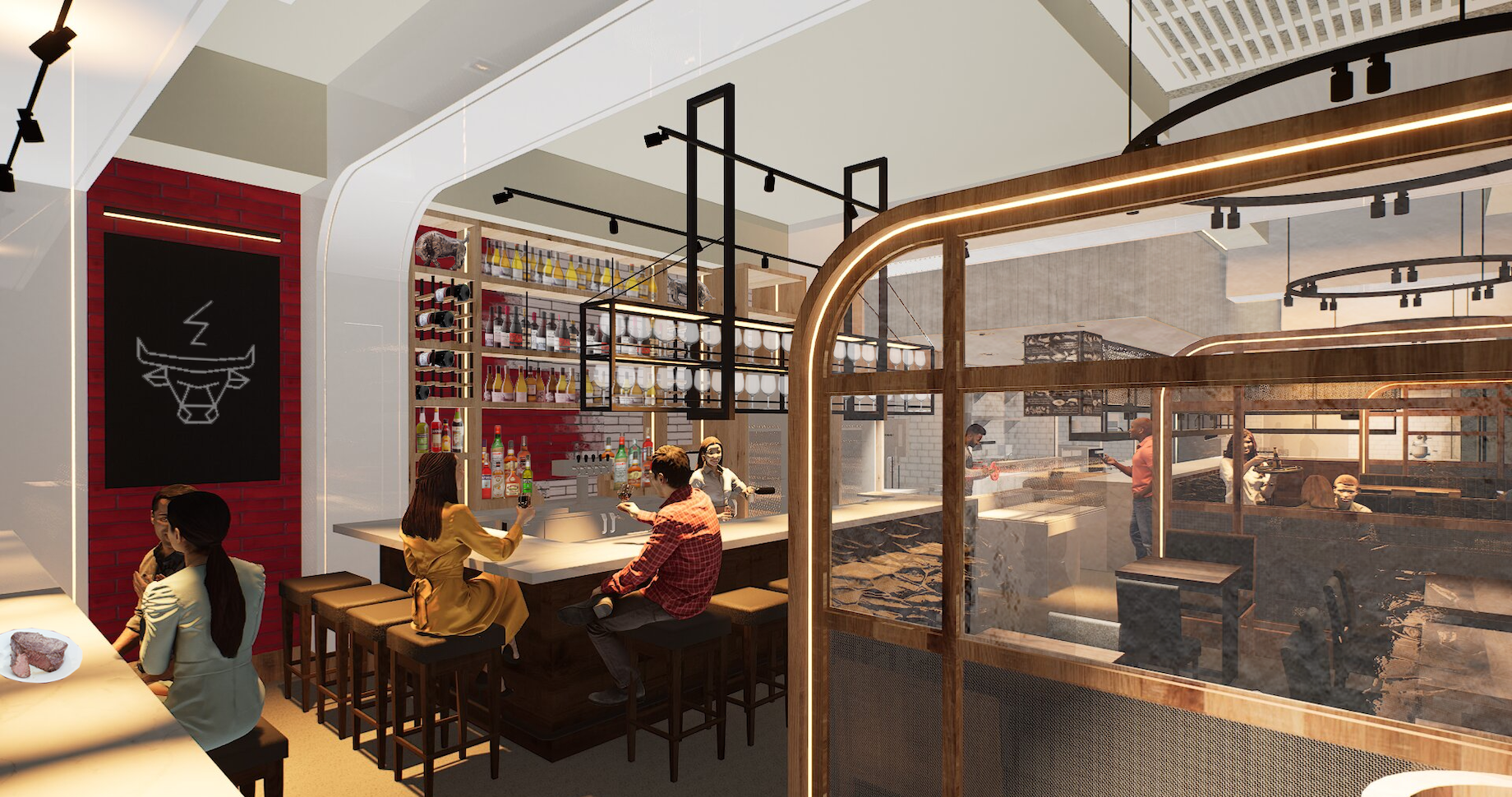
Rendering of Electric Bull, Albisu’s forthcoming butcher shop, cafe and steakhouse, is set to open in early 2026 in Virginia’s Vienna Shopping Center. Image credit: HapstakDemetriou+
You’ve said the lunch culture in Washington, D.C., has completely changed. How did that affect your earlier restaurants, and what did it teach you?
I came up in a different era. I was the chef at restaurants that did real power-lunch numbers: 300, 400 covers in the middle of the day. That world is gone. It hasn’t existed for a decade. Maybe a few legacy spots still do it, but most of that crowd moved on to food trucks, fast-casual, all of it. So when we opened Del Campo, we expected lunch to be a real revenue stream, and it just wasn’t. We had to pivot. That’s when I learned: You have to build in flexibility. Coffee, takeout, an all-day counter, something that keeps the space working at least 12 hours a day. That’s part of why Electric Bull has the butcher shop and cafe built into it. If the dining room is quiet at noon, maybe someone’s buying steaks for the grill at home. I’ve learned you have to be multifaceted in this business. You need more than one reason for people to walk through the door.
By Rebecca Meiser
Contributor, Commerce + Communities Today