The Short Version
- Dog Haus, which has more than 60 locations open in 13 states and Washington, D.C., aims to grow to 300 to 350 locations within the next three years.
- The fast-casual chain’s model combines counter service with a sports bar element, and it’s ideal is a 2,000- to 2,500-square foot end cap that would allow for an outdoor patio and sits near entertainment.
- Franchise agreements are fueling growth across the U.S. and abroad, while Dog Haus also is using new real estate leadership and site-selection tools to support expansion.
The Growing Chain Combines Fast-Casual Service With a Sports-Bar Format
Dog Haus is proving that consumers’ appetite for hot dogs goes well beyond sporting events and backyard barbecues.
The gourmet hot dog, sausage and burger concept is ramping up its expansion across the U.S. —and beyond — thanks to a growing pipeline of franchise agreements. “2026 is going to be a really exciting year,” said Dog Haus CEO Michael Montagano. The franchise has more than 60 units open in 13 states and Washington D.C., and it aims to scale to between 300 and 350 within the next three years.
The company had strong momentum coming into the year, having sold the franchise rights for 15 U.S. regions. Those agreements could add up to 1,000 new locations for the brand. “The sheer numbers from 2025 were the largest that we've ever had in terms of the amount of franchisee interest and the amount of regions that were ultimately sold,” said Montagano.

Dog Haus CEO Michael Montagano Photo courtesy of Dog Haus
Dog Haus also has been putting infrastructure in place to support its growth, including expanding its management team and using site selection tools like Sitewise and Placer.ai. “We’re really moving into what I would call Dog Haus 2.0 with the growth and sophistication that we’re bringing to the development side of the business,” said Montagano.
Market Planning and Site Selection Support Growth
One new management addition is former Jersey Mike’s Subs and Cava veteran Natalie Pebbles, who joined Dog Haus last year as the fractional vice president of real estate. She also is principal at Pulse Real Estate Strategies, an outsourced real estate department for retail and restaurant brands. Pebbles is leading Dog Haus’ growth strategy, market planning and real estate site selection strategy. “Landlords have been really receptive,” said Pebbles. “It’s not a competitor to a lot of concepts; it’s more complementary.” The Dog Haus model combines fast-casual counter service and a casual-dining sports bar that serves craft beer and cocktails.
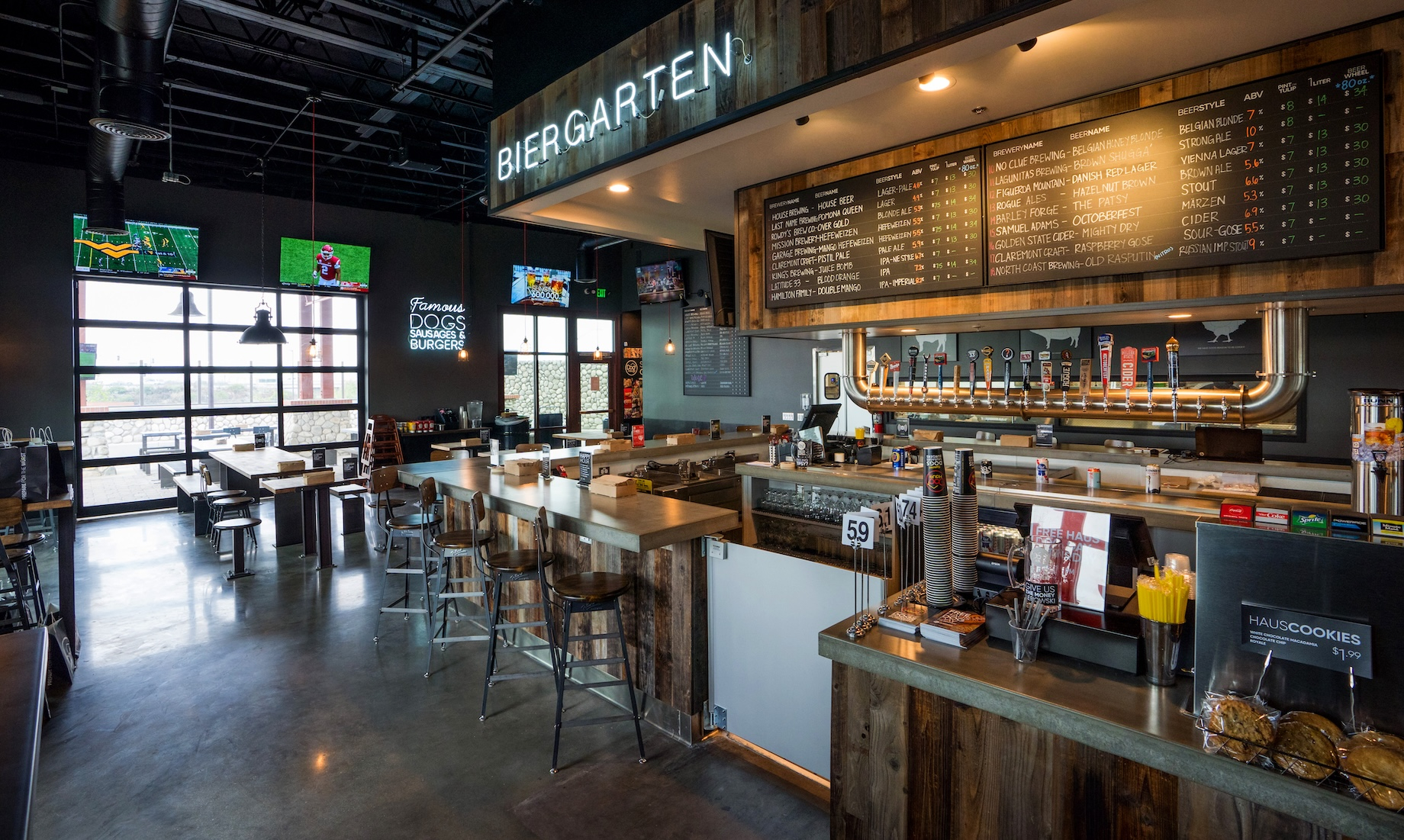
The Dog Haus model combines fast-casual counter service and a casual-dining sports bar that serves craft beer and cocktails. It has more than 60 units in 13 states and Washington, D.C., and aims to scale to between 300 and 350 within three years. Photos above and at top courtesy of Dog Haus
A Chef-Driven Menu Supports Brand Differentiation
One look at the menu and it’s clear that Dog Haus goes well beyond the typical ketchup and mustard condiments. The concept is built on a culinary approach: creating unique and creative flavor combos like its Sooo Cali, a hot dog topped with arugula, avocado, tomato, crispy onions and spicy basil aioli.
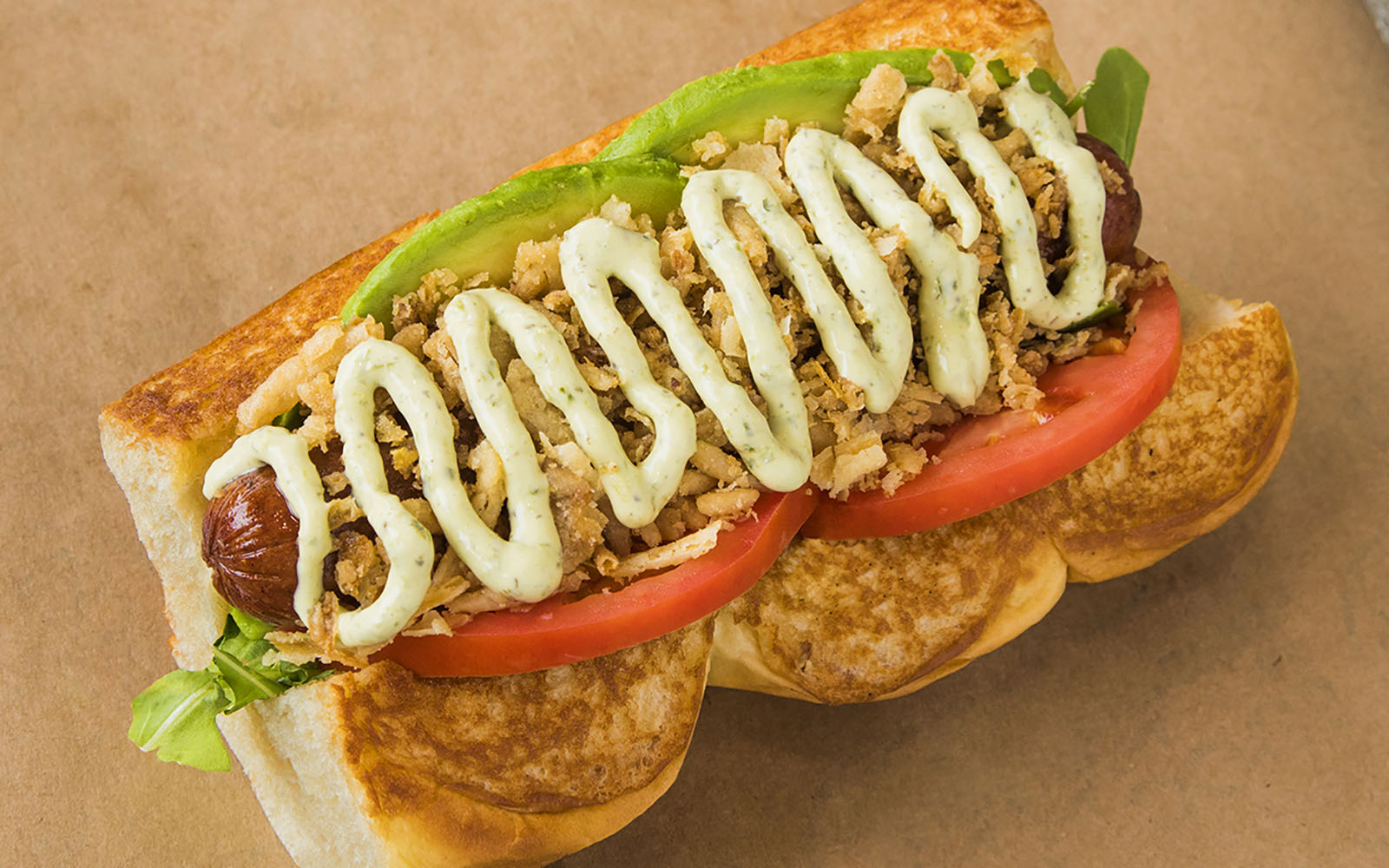
Dog Haus’s Sooo Cali: a hot dog topped with arugula, avocado, tomato, crispy onions and spicy basil aioli Photo courtesy of Dog Haus
Last year, the brand collaborated with celebrity chef Josh Elkin to create a series of limited-time menu items, such as the Hot-N–Ranchy Corndog and Oktoberfest offerings like Bratzel Sliders and Bratchos. “We are constantly on trend on new, innovative things that we’re adding to our menu but still staying core and not compromising the basics of serving high-quality proteins and meats in a unique and elevated way,” said Montagano. The brand prides itself on serving proteins that are hormone free, antibiotic free and responsibly raised.
Hagop Giragossian, Quasim Riaz and Andre Vener founded Dog Haus in Pasadena, California, in 2010. Though dogs and sausages are still the stars, the menu has expanded to include burgers, chicken tenders and wings. Dog Haus also added breakfast burritos, which now represent about 20% of sales, according to Montagano.
Franchisee Andi Ott said: “What initially drew us to Dog Haus was how clearly the brand stood apart from traditional fast-casual concepts. The food is elevated, the ingredients are all high quality and the brand has a distinct and edgy personality that resonates with guests.” Ott and her husband, Damon, opened their first Dog Haus in 2019 and currently operate four franchise locations in the Phoenix metro.
Each location also can maintain a local neighborhood feel, including a menu of local craft beers. “That balance between a strong national brand and a local vibe is something I really love about the concept,” said Ott.
Franchise Agreements Fuel Expansion
Last year, Dog Haus inked its largest franchise agreement to date, a 50-unit franchisee that will emphasize growth across the Midwest. “What was so exciting about last year is not only the sheer number of regions that we’ve opened up through really quality partnerships but also the quality of the franchisees that we’re partnering with for this next evolution of growth for the brand,” said Montagano.
Although hot dogs are traditional American fare, Dog Haus believes the concept has growth potential internationally. “It plays well in both urban and suburban parts of the U.S., and we think that profile will work really well overseas, as well,” said Montagano.
The company signed its first international agreement last year with a franchisee in Mexico. The franchise partner will open four stores over the next two years, and the first will open in Mexico City in the third quarter. Following a successful pop-up in Saudi Arabia in late 2024, Dog Haus also has its eye on expansion opportunities in the Middle East. “It was extremely well received, with lines out the door for the three months we were open,” said Montagano. “We are using that as an early bellwether to continue to do diligence and explore the possibility of expanding into the Middle East.”
What Dog Haus Looks for in New Restaurant Spaces
Dog Haus is taking a disciplined approach to finding the right markets and locations, which include high-quality trade areas with strong visibility, consistent traffic, and locations that support multiple dayparts, including breakfast, lunch, happy hour, dinner and late night. Ideally, the company is looking for end caps between 2,000 and 2,500 square feet, with outdoor patio opportunities and proximity to entertainment.
Company leaders believe that the people and technology Dog Haus now has in place create an important foundation to support its next wave of growth. “Having all those tools upfront to kick-start that strategy is super important,” said Pebbles. “With as fast as we’re going to roll out, I really want to be precise because that’s what’s going to give us the longevity.”
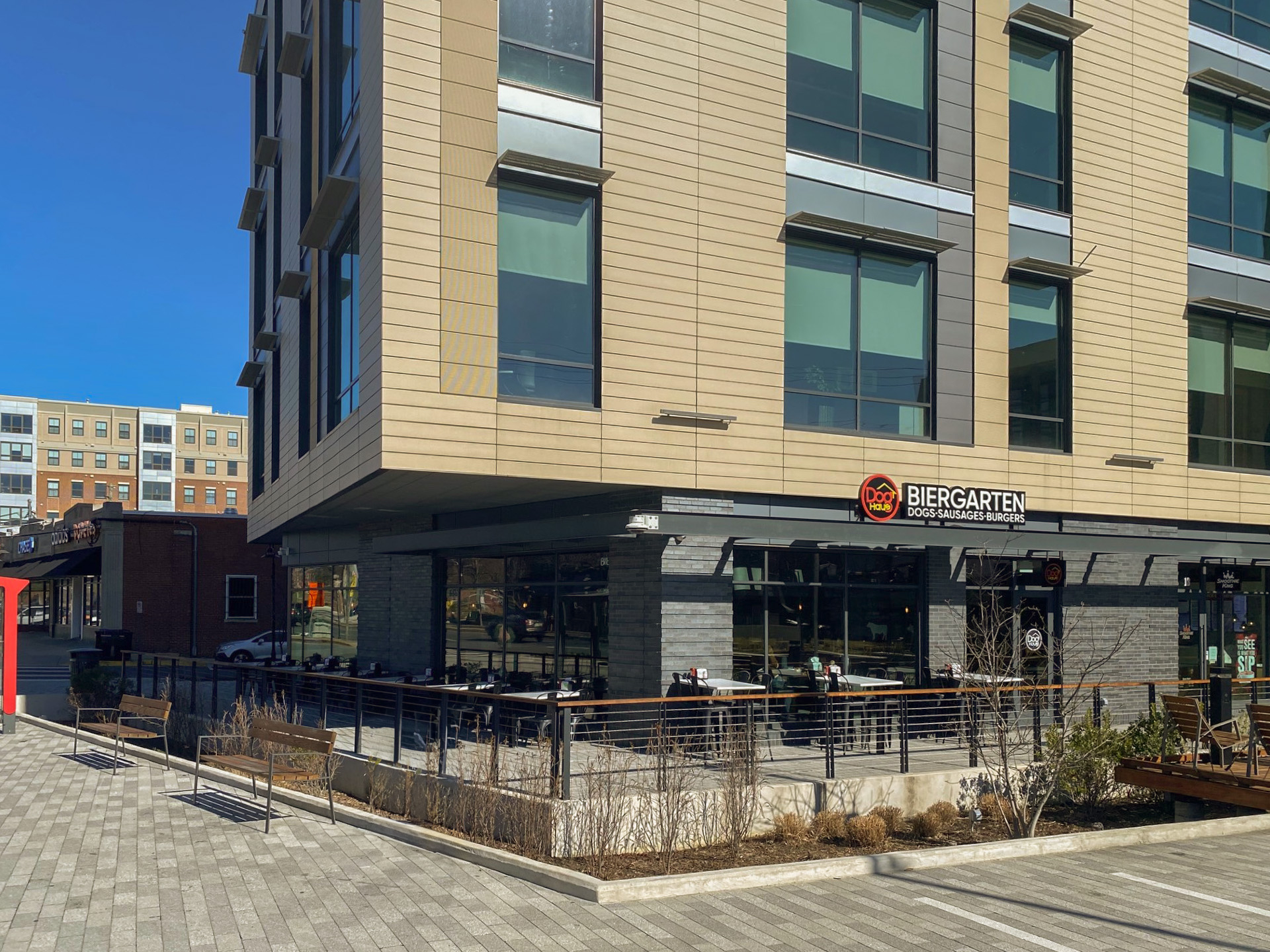
Ideally, Dog Haus is looking for end caps between 2,000 and 2,500 square feet, with outdoor patio opportunities and proximity to entertainment. Photo courtesy of Dog Haus
By Beth Mattson-Teig
Contributor, Commerce + Communities Today