The Short Version
- Chicago TREND plans a $20 million redevelopment of Mount Vernon Plaza in Columbus, Ohio, including new retail space and 57 units of affordable housing.
- More than 70 investors, including some local residents, have invested in the project through a regulated crowdfunding offering, allowing investors with ties to the community to own a stake in the neighborhood shopping center.
- The redevelopment uses Chicago TREND’s community investment model, which pairs property revitalization with local ownership and service-oriented tenants.
- Supporters say the approach could help attract retailers and investment to urban neighborhoods that have population density but lack access to capital.
Community Investors Back a New Ownership Model for a Columbus Retail Hub
The redevelopment of the almost 50-year-old Mount Vernon Plaza is giving residents of Columbus, Ohio’s Near East Side the chance to own a piece of the neighborhood center and to invest in the revival of their community.
A Historic Neighborhood Hub Anchored the Community
After Mount Vernon Plaza opened in 1978, it became the kind of place where lives happened: first haircuts, Friday night dinners, prescription pickups, neighbors running into neighbors. “It was the center and the focal point of the Black community,” recalled Michael Coleman, former Columbus mayor, who remembers eating dinner every Friday night at Marble Gang restaurant. The modest shopping center sits along Mount Vernon Avenue in King-Lincoln Bronzeville, the historical center of Black life in Columbus.
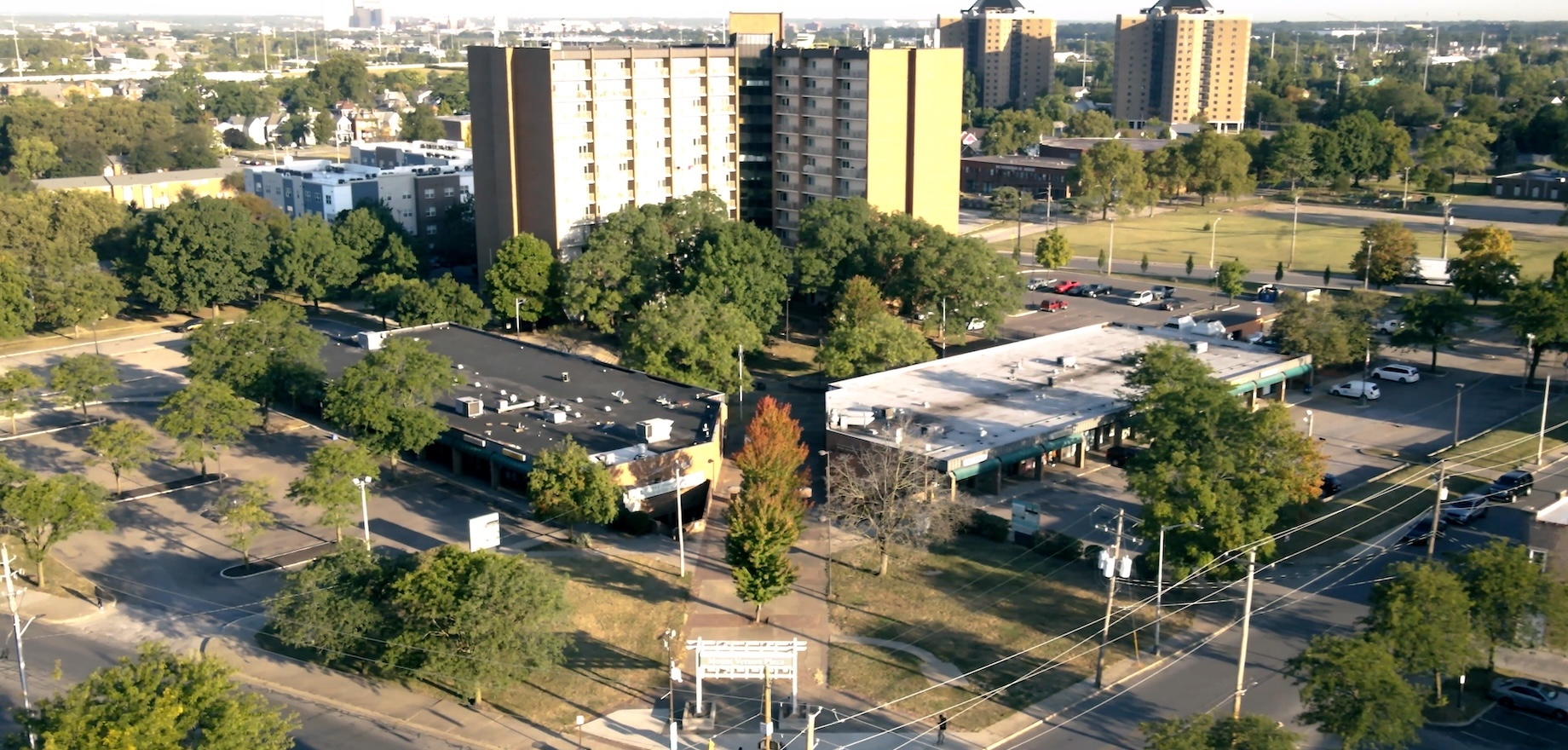
Built in 1978 as part of a major redevelopment effort on Columbus, Ohio’s Near East Side, Mount Vernon Plaza once served as a neighborhood hub. Photo courtesy of Chicago TREND
Suburban Migration and Disinvestment Took a Toll
Meanwhile, impacts of the construction of Interstate 71 the previous decade were starting to play out in the community. The interstate cut through the Near East Side, separating King-Lincoln Bronzeville from downtown Columbus and accelerating the flow of residents and businesses to the expanding suburbs. That migration would continue through the ’80s. As residents and the retail offerings that served them shifted to suburban malls and newer shopping centers, older neighborhood retail like Mount Vernon Plaza struggled to compete, said Coleman.
Vacancies crept across the property through the 1990s and early 2000s. “Over the years, it declined and, frankly, failed — and along with it, some of the dreams and hopes of the Black community in Columbus,” Coleman said. By the time developer Lyneir Richardson, co-founder of Chicago TREND, first walked the property in 2024, nearly 70% of the center sat vacant.
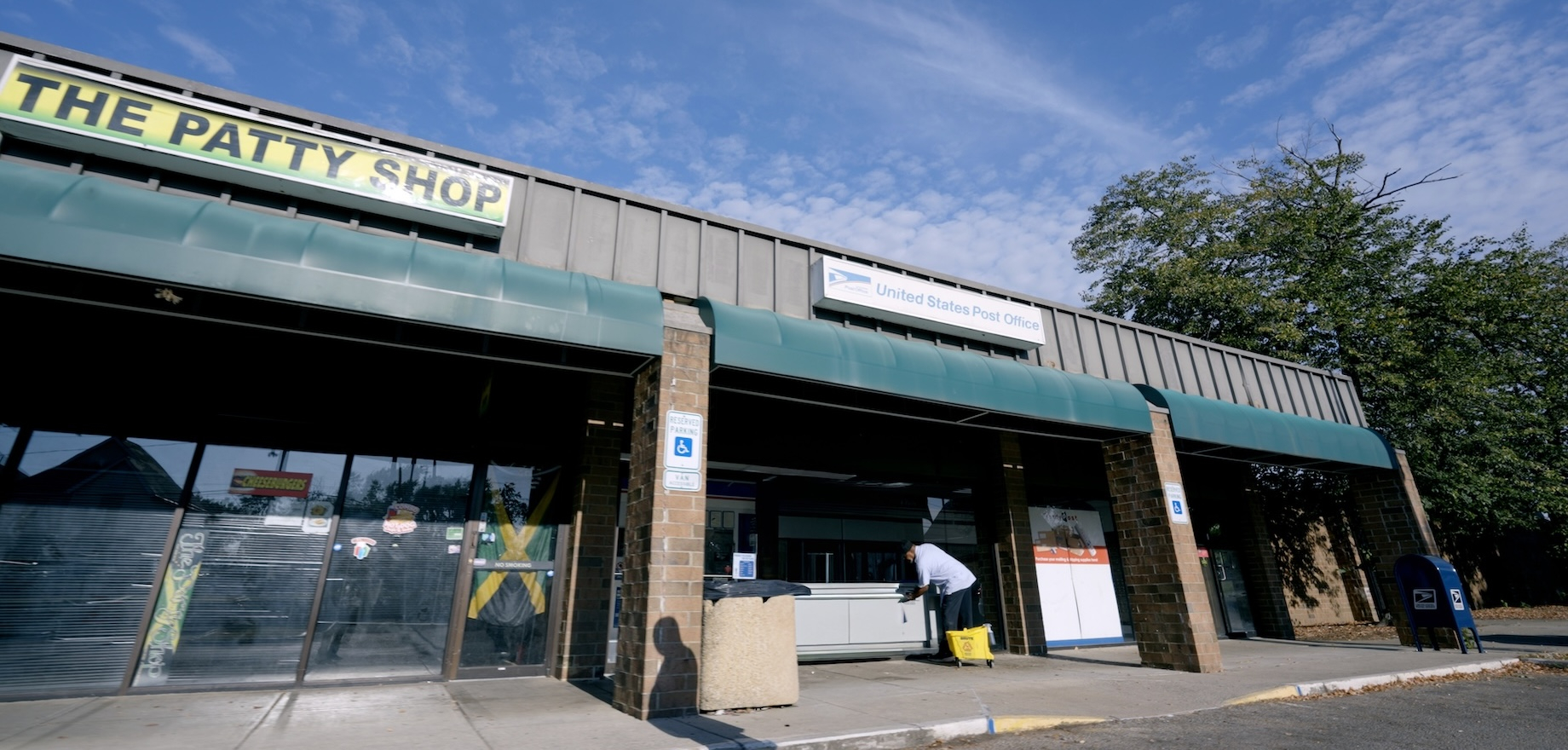
A post office and a few small storefronts remain at Mount Vernon Plaza, but more than 70 local investors have bought stakes and will participate with Chicago TREND in the property’s redevelopment and re-leasing. Photo courtesy of Chicago TREND
A $20 Million Plan To Revitalize Mount Vernon Plaza
Now, Mount Vernon Plaza is poised for a second life. Chicago TREND, working with architecture firm Moody Nolan, plans a $20 million redevelopment that will modernize and expand the property, including the addition of 12,000 square feet of retail and 57 units of affordable housing. Chicago Trend expects renovations to begin this spring and targets completion in 2028, the center’s 50th anniversary.
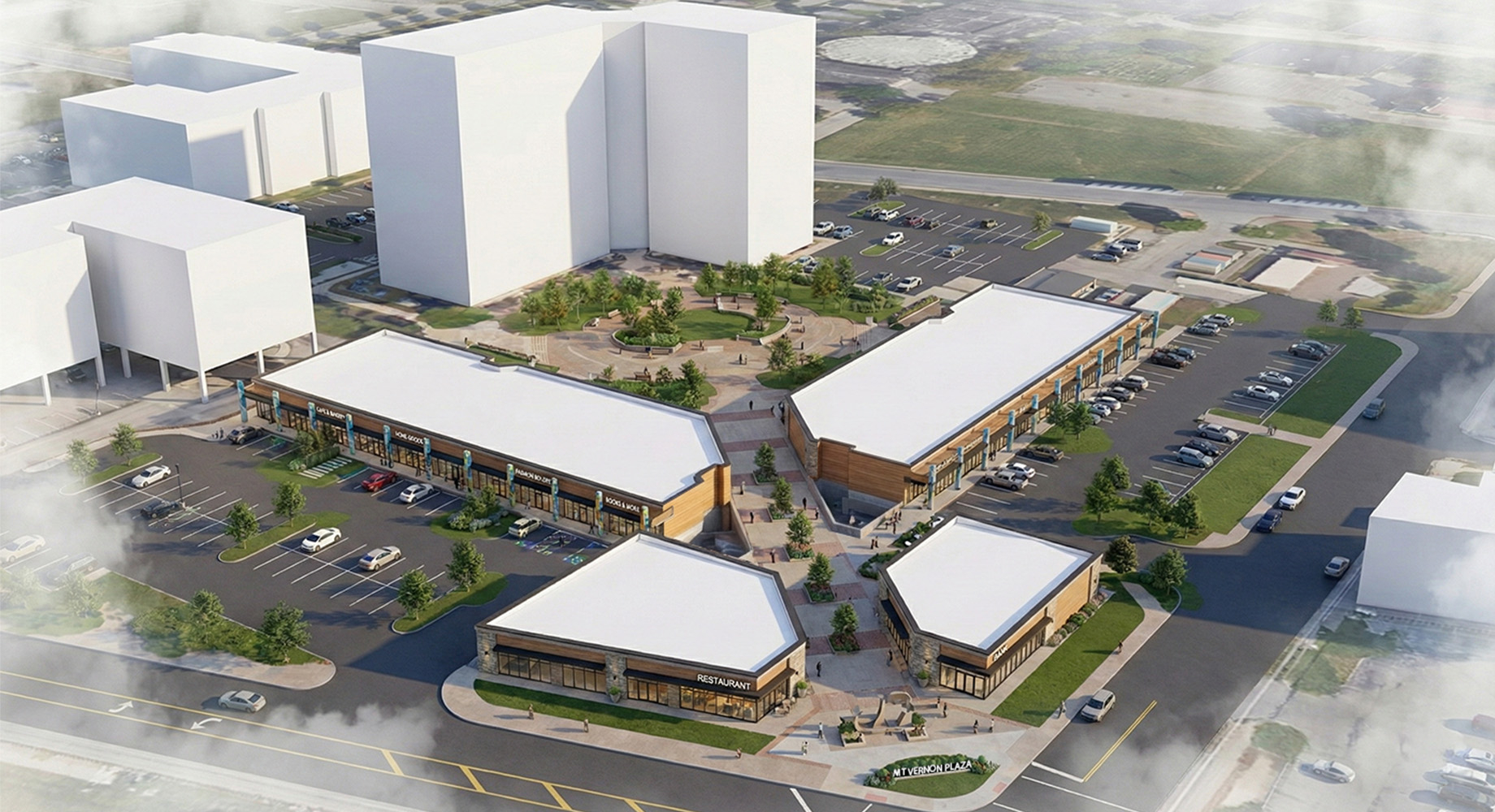
The planned redevelopment of Mount Vernon Plaza includes renovation of the existing buildings, the longer buildings above; the addition of 12,000 square feet of retail, the pair of smaller buildings in the foreground; and densification of the parking lot with 57 units of affordable housing, the structure rendered in white at the far left. Renderings above and at top courtesy of Chicago TREND
But it’s not just the physical plan that will change the property and the neighborhood. The ownership structure behind the building and its redevelopment also will influence its future. Mount Vernon Plaza will become Chicago TREND’s first community-owned project in Ohio. Through a regulated crowdfunding offering, more than 70 investors with ties to the community have bought in, with the smallest investment at $1,000.
Al Johnson, a barber and president of a local business association whose shop sits across the street from the plaza, was among them. “I grew up here,” he said. “I saw when this place was full. I want to see it come back, and I want the people who live here to benefit when it does.” He deemed the investment to be accessible and noted the long-term value, as well: “People spend $1,000 on a prom dress that gets worn once; this is something that comes back to you.”
Coleman had tried for years during his time in office to spur redevelopment of the property and said financial participation from community members is what will make the effort work this time: “You need the private sector to lead, but when the people who live there put their own money in, that’s powerful.”
Local Investors Buy Stakes in the Center’s Future
Among the local investors are eight men who competed alongside and against each other on various sports teams for years in parks, high school gyms and college arenas across northern Ohio. In July 2023, they teamed to create SOWCL Enterprise & Investments to pursue real estate and other ventures. One partner, Rodney Palmer, grew up less than a minute from Mount Vernon Plaza.
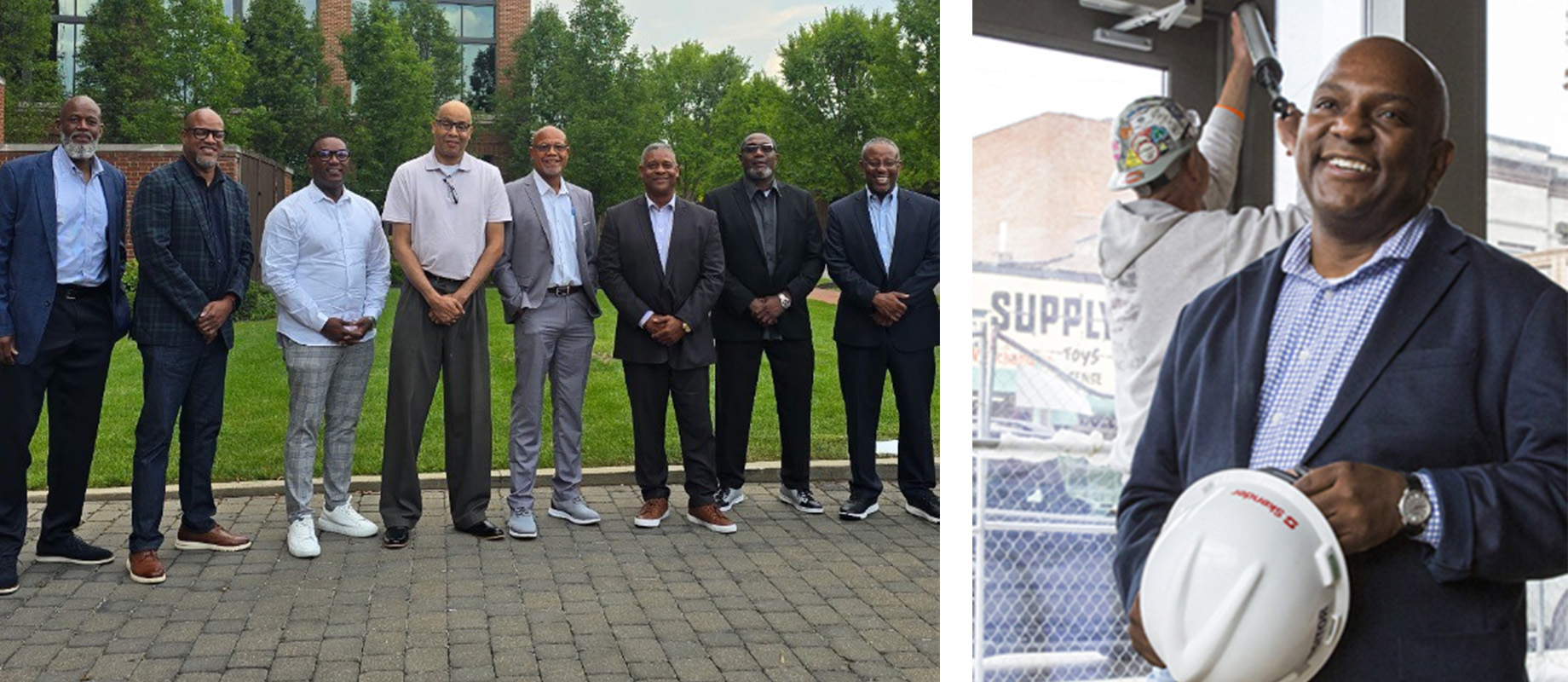
A group of former athletes turned real estate investors from northern Ohio formed SOWCL Enterprise & Investments, which is among the more than 70 investors who acquired stakes in Mount Vernon Plaza. From left, they are Rodney Palmer, Darrell Wilson, Brandon Bromley, Paul Wilson, Ronnie Williams, Gary Patton, Frank Owens Jr. and Milton Anderson. Chicago TREND, founded and headed by Lyneir Richardson, at right, will lead the property’s redevelopment. Photos courtesy of SOWCL Enterprise & Investments and Chicago TREND
Palmer remained in Columbus after college, and SOWCL partner Paul Wilson later moved there after attending Bradley University in Illinois. In fact, Wilson met Richardson in college and after learning about the opportunity to invest alongside Chicago TREND, Wilson brought the rest of the SOWCL partners into the project.
The group uses what it calls an RMP framework — relationships, metrics and purpose — to guide its investments. “The purpose has to be rooted in some type of community revitalization or uplift, ideally in communities similar to or the same as the ones where we grew up,” SOWCL partner Milton Anderson said. Mount Vernon Plaza fit that philosophy. “When we think about investing where we grew up, Rodney knows that plaza well. He couldn’t be more proud to be part of giving back to that community,” Anderson explained.
The partners also see the investment as an opportunity to introduce the next generation to conversations about ownership and financial literacy. “We didn’t grow up hearing those conversations,” Wilson said. “Now our kids are hearing them at 18 or 19. That matters.”
Chicago TREND Brings Its Community Investment Model to Columbus
Richardson had come to believe many urban neighborhoods have the population density retailers want but lack the capital investment needed to attract them. He founded Chicago TREND in 2016 to address that gap. The firm acquires distressed neighborhood shopping centers, renovates them and recruits service-oriented tenants while inviting local residents to become co-owners. In West Baltimore, for instance, Chicago TREND is developing the downtrodden Edmondson Village Shopping Center. Richardson’s team repaired the roof, rebuilt the parking lot, hired a new property management company and is now returning the center to full occupancy via leasing that prioritizes community-serving tenants like Aldi, Dunkin, DTLR and health care services. And after renovating Chicago’s Chatham Plaza, Chicago TREND sold it last year, delivering investors a 20% return, Richardson said.
FROM THE C+CT ARCHIVE: Uplifting Black Neighborhoods: Many Focus on Black Tenants, but Lyneir Richardson Focuses on Black Property Owners
The plan to reposition Mount Vernon Plaza similarly prioritizes daily-needs retail — including health care providers, financial services and food, plus new housing to increase density and support long-term neighborhood stability. The model both serves the community and is solid business. “This isn’t a nonprofit experiment,” Richardson said. “Investors are expected to earn a return, but the return comes from making the neighborhood stronger, not extracting from it.”
If the redevelopment succeeds, Mount Vernon Plaza again will function as the community hub it once was, a place to access everyday services, to gather and to engage in commerce. For supporters of the project, the business model provides not only a redeveloped property but also a new model for who benefits from the value that property delivers.
CORRECTION: A previous version of this story reported that Chicago TREND redeveloped Baltimore’s Northwood Commons. Chicago TREND was not involved with that property. C+CT regrets the error.
By Rebecca Meiser
Contributor, Commerce + Communities Today