Jump To …
Two Texas Mixed-Use Projects Take Shape in Austin and Metro Houston
Men’s Wearhouse Parent and Wayfair Expand Their Store Footprints
U.S. Retail Leasing Rebounds as Vacancy Remains Tight
Ares Completes $1.7B Acquisition of Whitestone REIT
Palisades Village Will Reopen After $100M-Plus Post-Fire Renovation
US$6.9B Retail Deal Highlights Canada’s Scarcity-Driven Market
Two Texas Mixed-Use Projects Take Shape in Austin and Metro Houston
Two mixed-use developments are in the works in Texas, including a proposed $6.3 billion megaproject in Austin and a 55-acre, H-E-B-anchored district near Houston. Together, the plans call for substantial commercial space, new housing and significant retail development.
Proposed $6.3B Austin Megaproject Could Include 2.5M SF of Retail
A preliminary plan from Austin-based master developer Endeavor Real Estate Group envisions an estimated $6.3 billion mixed-use development in Austin, Texas, with 9 million square feet of commercial space — which would make the project substantially larger than the mammoth Pentagon. The Austin Business Journal reported the site is a contender for an advanced manufacturing plant from an unidentified Fortune 100 company. From 2030 to 2057, the megaproject would rise on a nearly 2,650-acre, mostly undeveloped site in southeast Austin known as Dog’s Head, a name derived from its distinctive shape. Details about the project appeared in a draft agenda for the Austin City Council’s June 23 meeting. As sketched out now, the development would include 2.5 million square feet of retail space, as well as 1 million square feet of hospitality space, 1.5 million square feet of office space, 4 million square feet of industrial space, 6,200 apartments and almost 6,200 single-family homes. The former sand and gravel quarry is located near Austin-Bergstrom International Airport and a massive Tesla manufacturing plant.
To move forward, the project would require the city to establish a tax increment reinvestment zone, enabling master developer Endeavor Real Estate Group to build infrastructure and receive reimbursements from property tax revenue generated within Dog’s Head, according to Austin Current. The project could be valued at nearly $27 billion three decades from now.
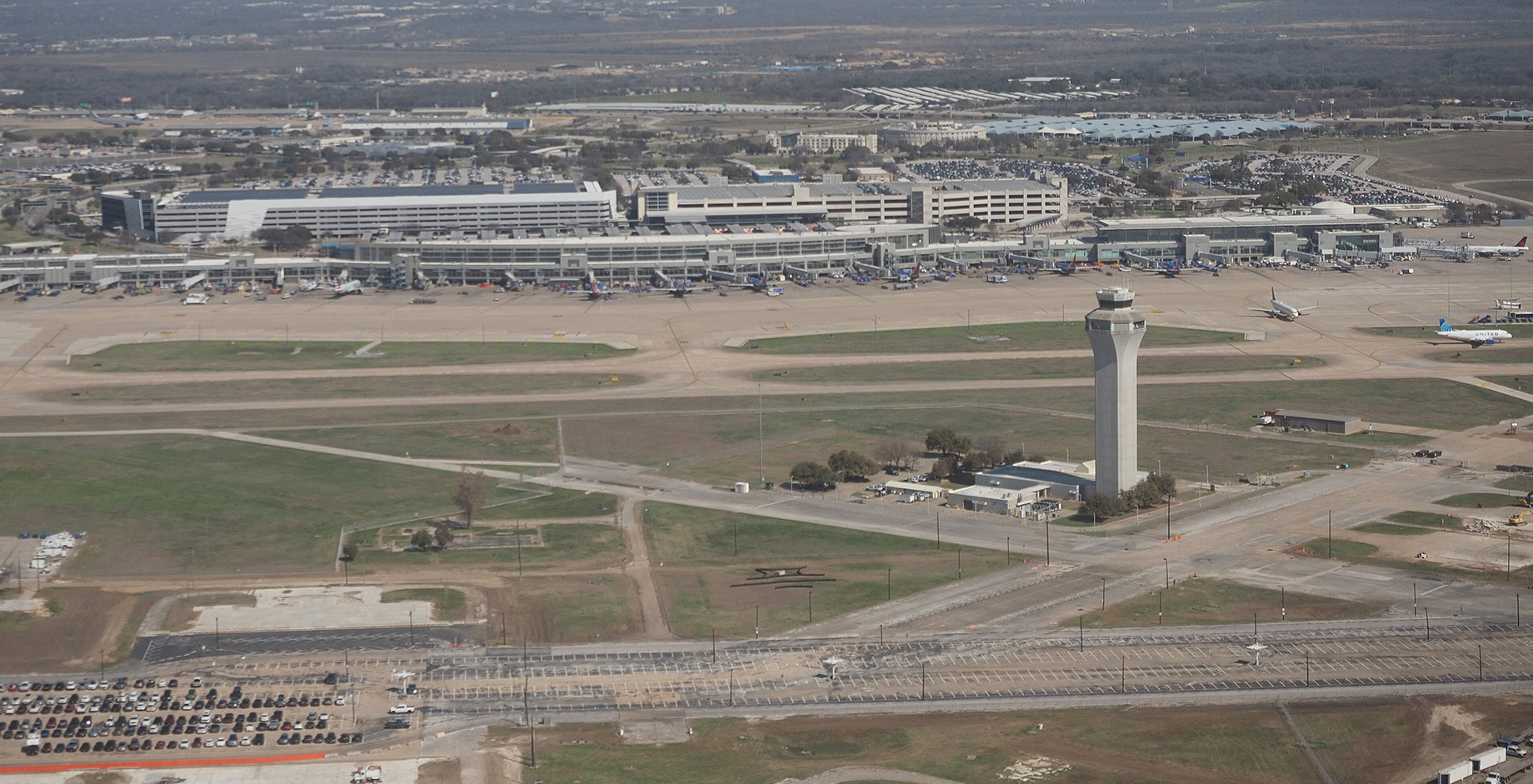
A nearly 2,650-acre mixed-use project in early planning near Austin-Bergstrom International Airport, pictured here in 2025, could include 2.5 million square feet of retail space. Photo credit: Insightwm - Aerial view of Austin–Bergstrom International Airport, CC-BY-SA-4.0
Signorelli Unveils H-E-B-Anchored Mixed-Use District Near Houston
Real estate developer Signorelli has announced Commerce District at Valley Ranch a 55-acre mixed-use destination within the 1,400-acre Valley Ranch master-planned community in New Caney, Texas, near Houston. Planned in two phases, the district ultimately will include approximately 400,000 square feet of commercial development and a 600-unit luxury multifamily community. Construction is scheduled to begin in late July.
The first phase, Commerce West, will be anchored by a 120,000-square-foot H-E-B supermarket expected to open in fall 2027. The grocer’s first New Caney location and 11th store in Montgomery County also will include curbside pickup, a fuel station and a car wash. Commerce West will feature an additional 19,500 square feet of retail space and two outparcels for restaurants, retailers and service businesses. The second phase, Commerce East, will feature additional retail space, restaurants, multifamily, office, public gatherings spaces and landscaped plazas.
Altogether, Valley Ranch encompasses 2.55 million square feet of retail, office, entertainment, restaurant and mixed-use development, along with more than 2,000 single-family homes and 1,000 multifamily residences.
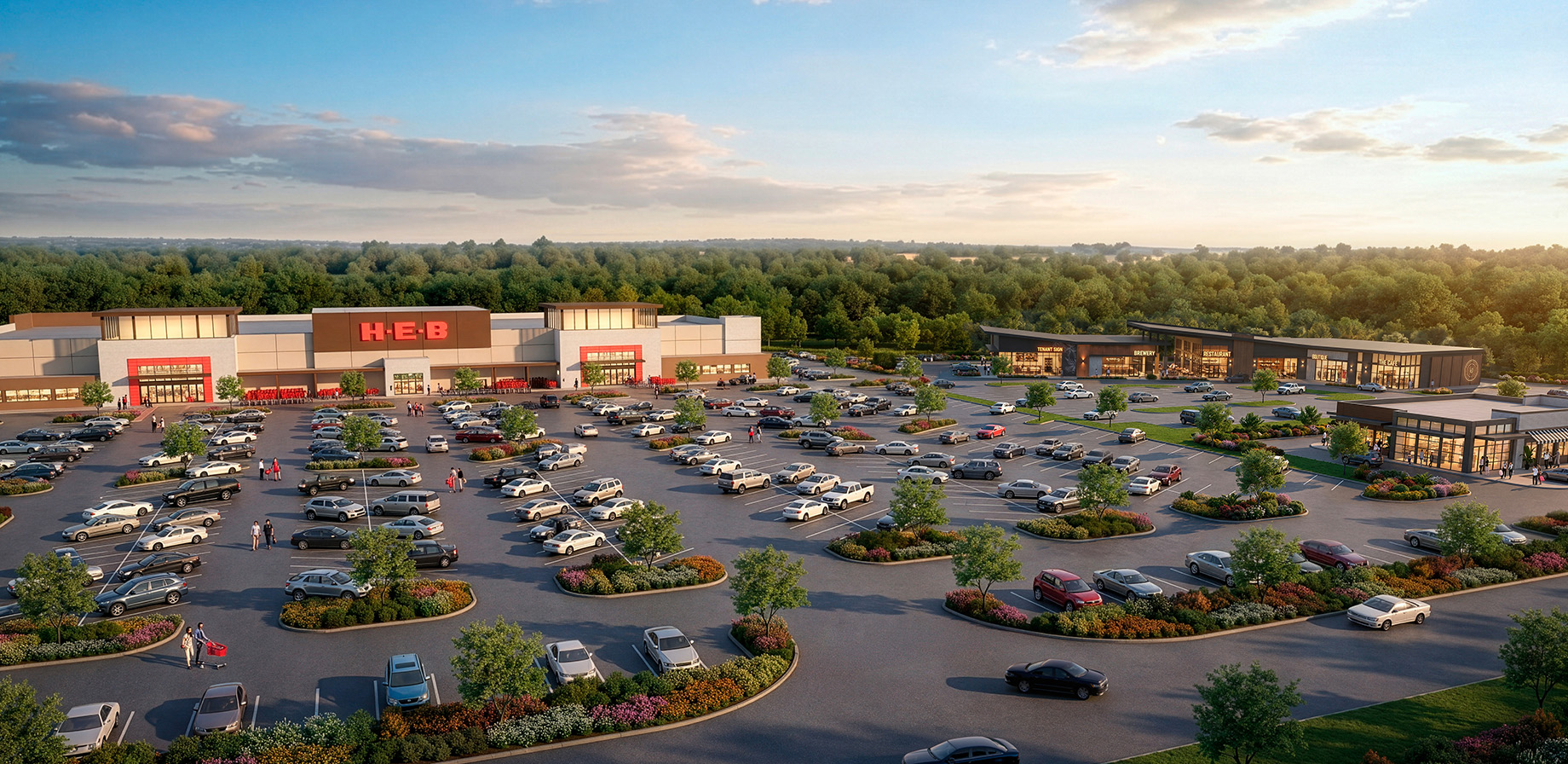
A 120,000-square-foot H-E-B grocery store, slated to open next fall, will anchor Commerce West, the first phase of the Commerce District at Valley Ranch in New Caney, Texas. Rendering above and at top courtesy of The Signorelli Co.
Men’s Wearhouse Parent and Wayfair Expand Their Store Footprints
Two U.S. retailers are beefing up their brick-and-mortar presence. IPO-bound Tailored Brands plans to add more than 500 stores over 10 years across its Men’s Wearhouse, Jos. A. Bank and K&G banners, while online furniture seller Wayfair is opening five more massive stores in a bet on in-person shopping.
Tailored Brands Targets 500-Store Expansion as It Prepares for IPO
The parent company of men’s formal apparel retailer Men’s Wearhouse is targeting a 10-year expansion that would add more than 500 stores. In paperwork filed with the U.S. Securities and Exchange Commission for an initial public offering, Tailored Brands said about 250 of those stores would be under the Men’s Wearhouse banner, 200 under the Jos. A. Bank and 50 under the K&G Fashion Superstore brand, which sells discounted men’s, women’s and children’s apparel and accessories. The retailer plans to open more than 20 new locations in fiscal year 2026, which ends on Jan. 30, 2027; more than 35 in fiscal year 2027; and more than 50 stores per year starting in fiscal year 2028. Across all brands, Tailored Brands operates more than 1,000 stores. The company emerged from Chapter 11 bankruptcy protection in 2020.
As part of the expansion, Tailored Brands said it would introduce a new design for Men’s Wearhouse and Jos. A. Bank stores. New Men’s Wearhouse locations will feature flexible layouts, dedicated “experience areas” and an event-focused format, Tailored Brands said. Meanwhile, new Jos. A. Bank locations will offer an “enhanced” design, centralized merchandising of “core” apparel selections and a “layout that highlights fit, brand and lifestyle in a more elevated and intuitive shopping experience.”
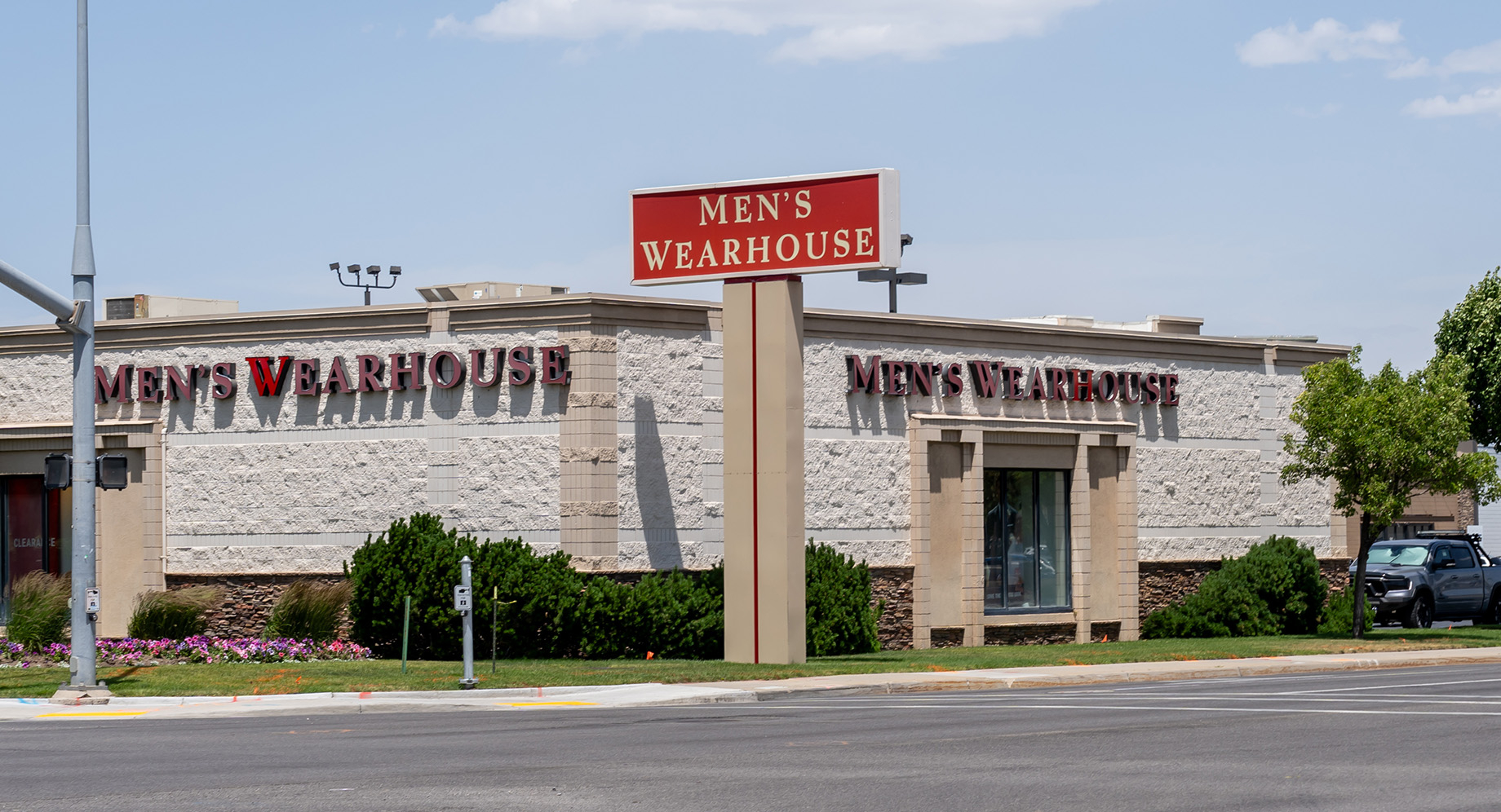
Tailored Brands plans to open 250 Men’s Wearhouse stores over 10 years. A Salt Lake City location is pictured here in 2023. Photo credit: JHVEPhoto - stock.adobe.com
Wayfair Plans 5 More Stores as It Tests Formats
Online home furnishings retailer Wayfair is betting big on brick-and-mortar stores. Bloomberg said Wayfair plans to open five stores this year and next year in Denver; Cincinnati; Fort Lauderdale, Florida; Princeton, New Jersey; and Yonkers, New York. The new stores will range from 70,000 to 140,000 square feet. “I think we’ll find that the ideal store is probably somewhere in the middle there, but that gives us … the bookends of where we might want to be,” Wayfair CFO and chief administrative officer Kate Gulliver said at the recent JPMorgan Chase 54th Annual Global Technology, Media and Communications Conference. Today, Wayfair operates one store each in Atlanta; Columbus, Ohio; and Wilmette, Illinois.
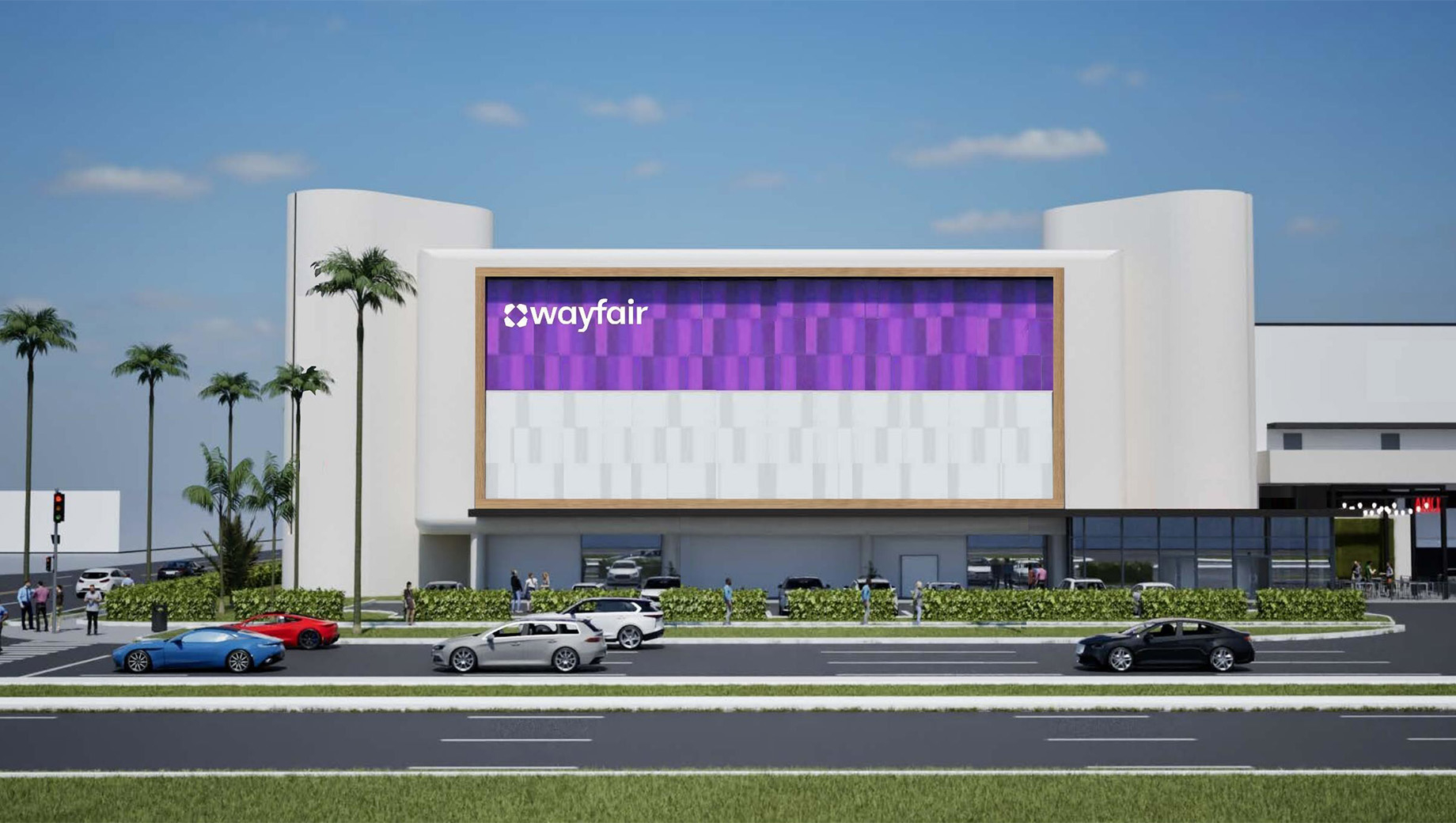
Wayfair’s first Florida location will be a 94,000-square-foot store in Fort Lauderdale, set to open in 2027. Rendering courtesy of Wayfair/PR Newswire
“As we scale our retail strategy, we are focused on both expansion and experimentation,” Wayfair vice president of curation, brands and stores Liza Lefkowski said last year. Wayfair’s experimentation includes the 70,000-square-foot, smaller-format store in Columbus. Aside from Wayfair stores, parent company Wayfair Inc. operated a total of 11 stores under the AllModern, Birch Lane, Joss & Main and Perigold banners as of May. Those stores range from 8,000 to 30,000 square feet, Gulliver said.
U.S. Retail Leasing Rebounds as Vacancy Remains Tight
U.S. retail fundamentals strengthened in the second quarter as resilient consumer demand and historically limited new supply continued to support the market, according to Colliers’ U.S. Retail Market Statistics 2026 Q2 report. National vacancy held steady at 4.4%, while open-air shopping centers remained the strongest-performing retail format, with vacancy unchanged at 5.5%. Mall vacancy improved by 30 basis points from the previous quarter to 8.5%, and small-format space remained particularly constrained.
Net absorption of retail space rebounded to 10.2 million square feet during the quarter, reversing softness seen earlier in the year. At 7 million square feet, general retail accounted for the largest share of demand, followed by shopping centers at 1.7 million square feet and malls at 1.6 million square feet. Included in the statistics are standalone big-box stores, freestanding retail buildings, grocery stores, banks and drugstores, “highlighting continued demand for flexible retail formats and single-tenant assets,” the report said.
Ares Completes $1.7B Acquisition of Whitestone REIT
Investment manager Ares has wrapped up its $1.7 billion go-private acquisition of Whitestone REIT. The deal expands Ares’ portfolio with 54 convenience-focused retail properties totaling about 4.8 million square feet in the Phoenix market and in Texas’ Austin, Dallas-Fort Worth, Houston and San Antonio markets.
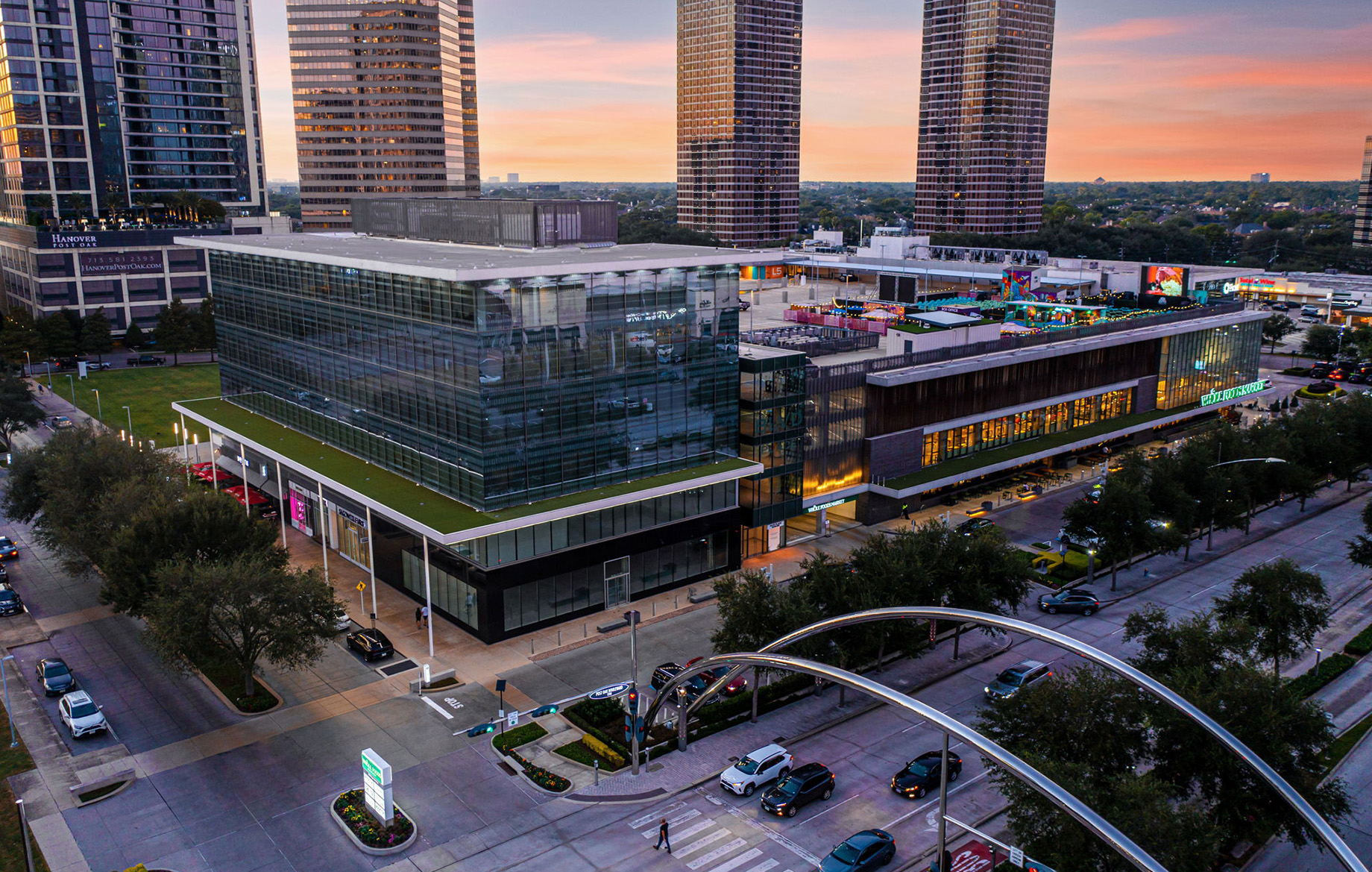
Whitestone REIT acquired Houston’s Whole Foods-anchored BLVD Place in 2017. Photo courtesy of Whitestone REIT/GlobeNewswire
Palisades Village Will Reopen After $100M-Plus Post-Fire Renovation
A high-end retail center in Los Angeles’ affluent Pacific Palisades neighborhood that was impacted by a massive wildfire in January 2025 is reopening Aug. 15. According to the Los Angeles Times, the open-air Palisades Village survived the fire but required more than $100 million in renovations to remove contaminants that the blaze may have spread. Jackie Levy, chief financial and revenue officer of real estate firm Caruso, which owns the 125,000-square-foot property, told the Times that Palisades Village is 99% leased, with most of its pre-fire tenants returning. Nearly one-third of the stores and restaurants are new tenants at the property, which opened in 2018.
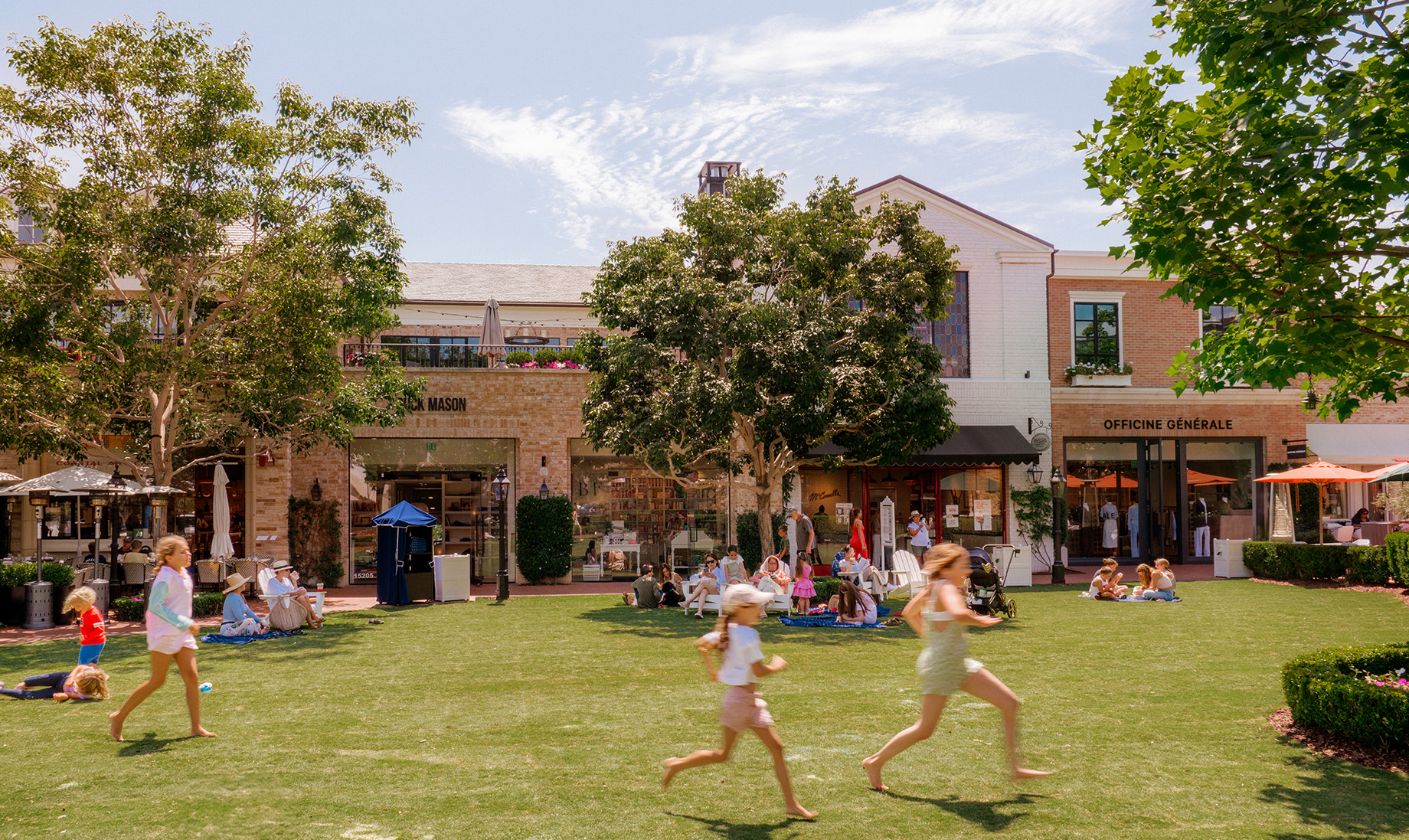
Palisades Village in Los Angeles, pictured here in 2024, was severely damaged by last year’s Palisades fire. It is set to reopen Aug. 15 following extensive renovations. Photo courtesy of Connie & Stewart Photography
US$6.9B Retail Deal Highlights Canada’s Scarcity-Driven Market
KingSett Capital and Choice Properties REIT have closed their purchase of grocery-anchored specialist First Capital REIT for roughly $9.4 billion Canadian dollars, or nearly $6.9 billion in U.S. currency, splitting a portfolio that’s more than 97% occupied. The deal comes as a new Retail Insider report says Canada’s retail real estate market has entered a “scarcity-driven phase,” with tight supply, strong demand and rising rents for prime assets — grocery-anchored properties chief among them.
KingSett and Choice Properties Split First Capital’s Grocery-Anchored Portfolio
Real estate investment firm KingSett Capital and real estate owner, operator and developer Choice Properties REIT completed their acquisition of First Capital REIT, which specializes in grocery-anchored properties, in a deal valued at $9.4 billion Canadian dollars. KingSett now owns about 4.4 billion Canadian dollars’ worth of First Capital assets, and Choice Properties owns about 5 billion Canadian dollars’ worth of assets. The acquisition “comes at a time when we are seeing renewed optimism and positive momentum in Canadian real estate,” KingSett CEO Rob Kumer said. Tenants across the 21.8 million-square-foot First Capital portfolio include Dollarama, Home Depot, Loblaws, PetSmart, Starbucks, Tim Hortons, Walmart and Whole Foods. As of March 31, the Toronto- and Montreal-dominated portfolio boasted a 97.2% occupancy rate. First Capital owns interests in 135 “neighborhoods,” the company’s term for the retail assets in its portfolio.
Tight Supply Pushes Canadian Retail Real Estate Into a “Scarcity-Driven Phase”
Benefiting from a tight supply and robust demand, Canada’s retail real estate market “has entered a scarcity-driven phase,” according to a new Retail Insider report. “Prime urban, open-air, necessity-based and top regional assets continue to show strong leasing demand, limited vacancy and rising rents, while many secondary malls face more difficult decisions around vacancies, legacy anchor space, capital requirements and redevelopment timelines,” said the Q2 2026 Real Estate & Leasing Retail Report. Despite economic uncertainty, retailers continue to invest in brick-and-mortar stores “when they can secure productive locations, reinforcing the enduring appeal of high-quality Canadian retail real estate,” it added. As in the U.S., grocery-anchored properties in Canada remain attractive to institutional investors due to their consistent foot traffic and boost of neighboring tenants.
By John Egan
Contributor, Commerce + Communities Today