The Short Version
- Zero Empty Spaces has activated 34 vacant commercial spaces across five states, primarily as affordable working-artist studios.
- The company works with property owners to temporarily occupy vacant space while permanent leasing efforts continue.
- Zero Empty Spaces is expanding its model to include marketplaces and small business incubation and is preparing to open its first California location in Berkeley.
- The founders discuss the company’s operating model, pipeline and plans to build the infrastructure needed for further growth.
Turning Vacant Commercial Space Into Creative Hubs
Where property owners see vacant spaces, lost revenue and foot traffic, Evan Snow and Andrew Martineau see opportunity to create community-focused destinations for local artists, makers, chefs and mixologists. “Vacancy is often treated as a passive condition: Everyone waits for the next conventional tenant while the space remains dark,” Martineau said. “We believe vacancy can be an active phase in the life of a property. A vacant storefront can support an artist, help a small business test a concept, generate meaningful community activity, improve a district’s image and make the property more attractive to its eventual permanent tenant.”
The pair’s company, Fort Lauderdale, Florida-based Zero Empty Spaces, has activated 34 vacant spaces across five states and is preparing to open its first California location — in a former Half Price Books in Downtown Berkeley. Commerce + Communities Today talked with Snow and Martineau about the firm’s business model and growth plans.
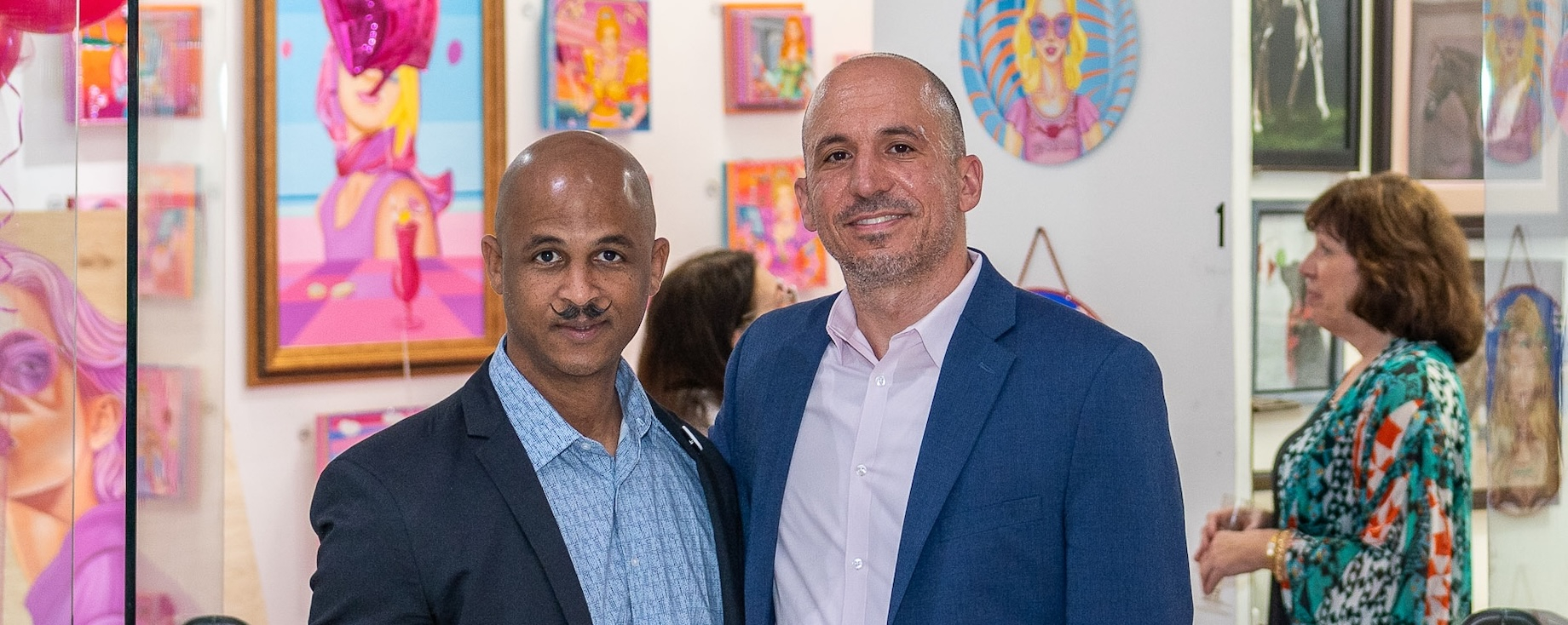
Zero Empty Spaces’ Andrew Martineau and Evan Snow Photo credit above and at top: Omar Sader
What was the catalyst behind Zero Empty Spaces?
Evan Snow: Andrew previously served in marketing and regional roles with Westfield. His work focused on using programming, placemaking and temporary activations to increase foot traffic, sales, extend dwell time, generate positive media attention and improve the overall visitor experience. My background included residential real estate, arts advocacy and community-building initiatives in South Florida. Before launching Zero Empty Spaces, we produced art fairs inside vacant luxury homes. Those projects attracted significant attention and led commercial brokers, developers and property managers to ask whether we could bring art into their vacant commercial spaces. We brought our concept to Fort Lauderdale’s mayor, who encouraged us to launch it along the city’s main downtown corridor. Our first three activations opened in 2019. Those early spaces generated strong attendance, media coverage and leasing interest, proving that vacancy could be transformed from a liability into a productive community asset while a property remained on the market.
How are the collaborations structured? Is Zero Empty Spaces for-profit, nonprofit, fee-based or equity-based?
Andrew Martineau: Zero Empty Spaces is a for-profit social-impact company. Artists and participating businesses pay Zero Empty Spaces a flat monthly occupancy fee that includes their space and utilities. We take no commission from artwork sales. On the property side, we generally operate through a master lease or license-style structure. We ask the property owner to provide the vacant space at a deeply reduced rate, often with no base rent, because we are taking responsibility for activating and operating a space that would otherwise remain vacant. Zero Empty Spaces carries liability insurance, pays utilities, manages the day-to-day relationship, recruits and supports occupants, maintains the activation and provides marketing, public relations and community programming. We typically request an initial six-month runway before transitioning to a flexible month-to-month arrangement. Shopping center agreements are sometimes structured as 13-month terms because Zero Empty Spaces qualifies as an occupying tenant within the center. Some spaces have been short-term because permanent tenants were secured, while others have operated for several years or evolved into ongoing amenities for the property.
Snow: Our minimum space size requirement is 3,000 square feet, but we can go as big as they have available and as big as we feel like the market can bear.
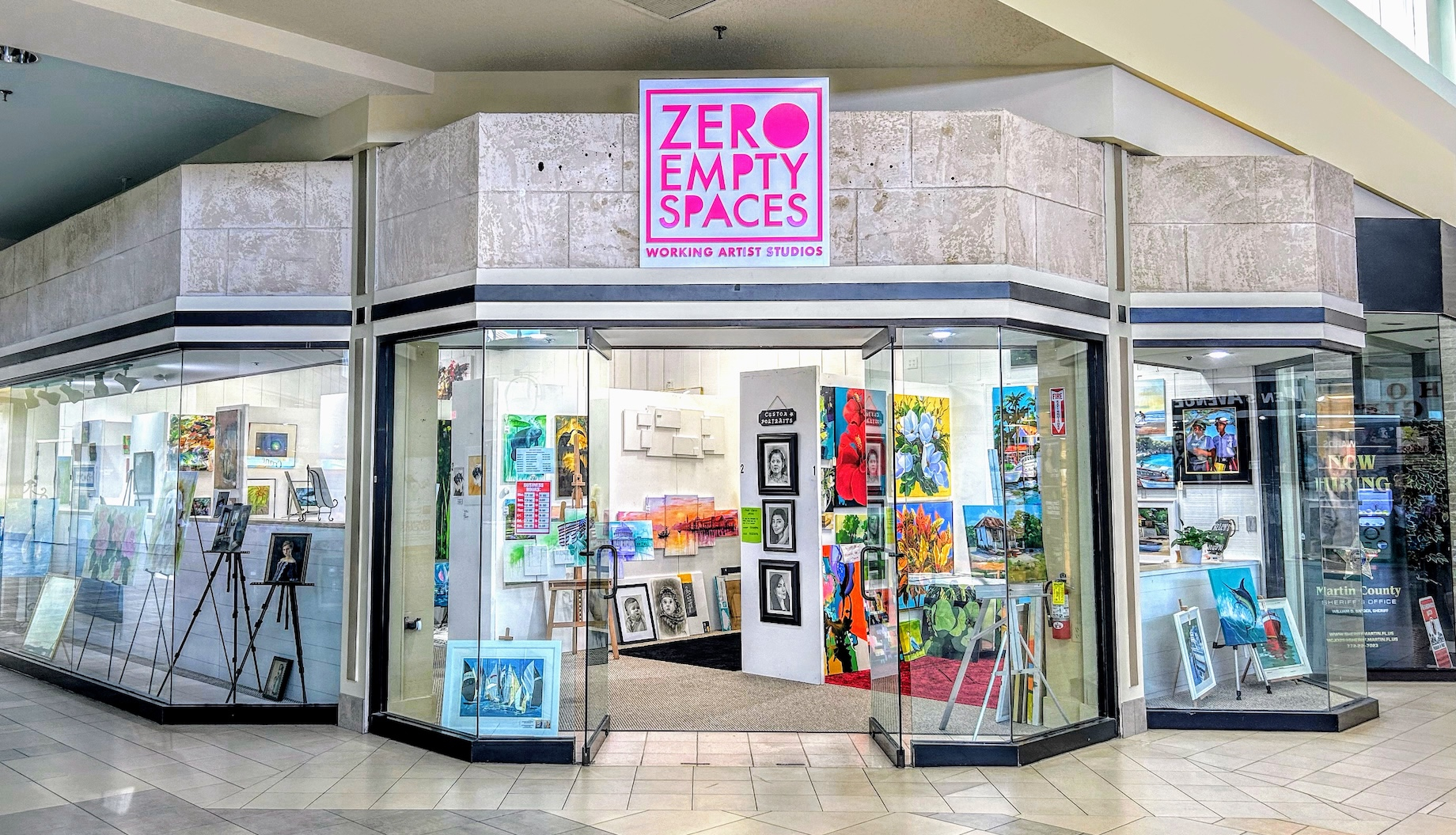
Zero Empty Spaces at Treasure Coast Square in Jensen Beach, Florida, provides affordable studios for local artists. The activation opened in 2024. Photo courtesy of Zero Empty Spaces
What are the key ingredients for a successful activation?
Martineau: The owner or leasing team needs to understand that “meanwhile” use is not competing with permanent leasing; it is improving the property while permanent leasing continues. We need enough time to invest in the buildout, recruit participants, market the location and allow the activation to establish itself. We look for communities with a meaningful population of artists, makers, creative entrepreneurs or small businesses that need affordable, public-facing space. In downtown environments, the strongest projects generally involve cooperation among the property owner, municipality, downtown organization, economic development team, tourism organization, arts community and nearby businesses. Ground-floor space, walkability, strong frontage and proximity to complementary businesses all strengthen the likelihood of success. Finally, local trust matters. Before entering a new market, we make a point of connecting with the people and organizations already doing the work. We do not want to arrive with a generic, one-size-fits-all program. We want the activation to reflect and support the community in which it operates.
Can you share a success story?
Martineau: One strong example is our former Legacy Place activation in Palm Beach Gardens, Florida. We opened that location in August 2020 inside a former Woodhouse Day Spa at a shopping center that was underperforming and experiencing significant vacancy. We transformed the space into studios for more than 20 artists. The artists hosted events, collaborated with nonprofits, regularly shared their work and the property through social media and created a consistent reason for people to visit the center. The activation generated extensive earned media coverage across television, radio, print and digital outlets, including NPR, PBS and local arts programming. We remained at Legacy Place for more than five years, demonstrating that temporary or meanwhile use can create sustained value when a location benefits from the activation. Now the center is 93% occupied and sold in May 2026 for $101.66 million.
New this year! ICSC+SPECIALTY at ICSC@FLORIDA
An exclusive gathering of marketers, retailers, and operators to explore the dynamic world of specialty leasing and marketing. To sign up, select the ICSC+SPECIALTY box during registration for ICSC@FLORIDA.
Learn more and registerWhere are new business opportunities coming from these days?
Snow: When we started, we were primarily conducting outbound outreach and introducing property owners to an unfamiliar concept. Today, the majority of opportunities are inbound. They come from shopping center owners, developers, leasing teams, office property operators, cities, downtown development authorities, business improvement districts, economic development offices and tourism organizations.
We easily have over 500 properties in the pipeline that are just kind of waiting for us to activate, and we’re working to scale our ability to do them quicker. Our pipeline includes opportunities across shopping centers, former drugstore locations, downtown corridors, mixed-use developments and office properties. For example, we have been working with Simon Property Group across multiple properties, and multiple spaces with Simon Property Group and other institutional landlords have been identified for potential future activation. We also have access to more than 300 former CVS locations that could support artist studios, marketplaces, small business incubation or other community-responsive models.
Near-term geographic opportunities include continued growth in California, Minnesota, Illinois, Virginia and additional markets where cities or property owners have invited us to evaluate specific vacant spaces. Our Downtown Berkeley project is our first California activation. We also recently opened at 815 Nicollet Mall in Minneapolis inside a former Walgreens, and we see meaningful potential for continued expansion in the Minneapolis market.
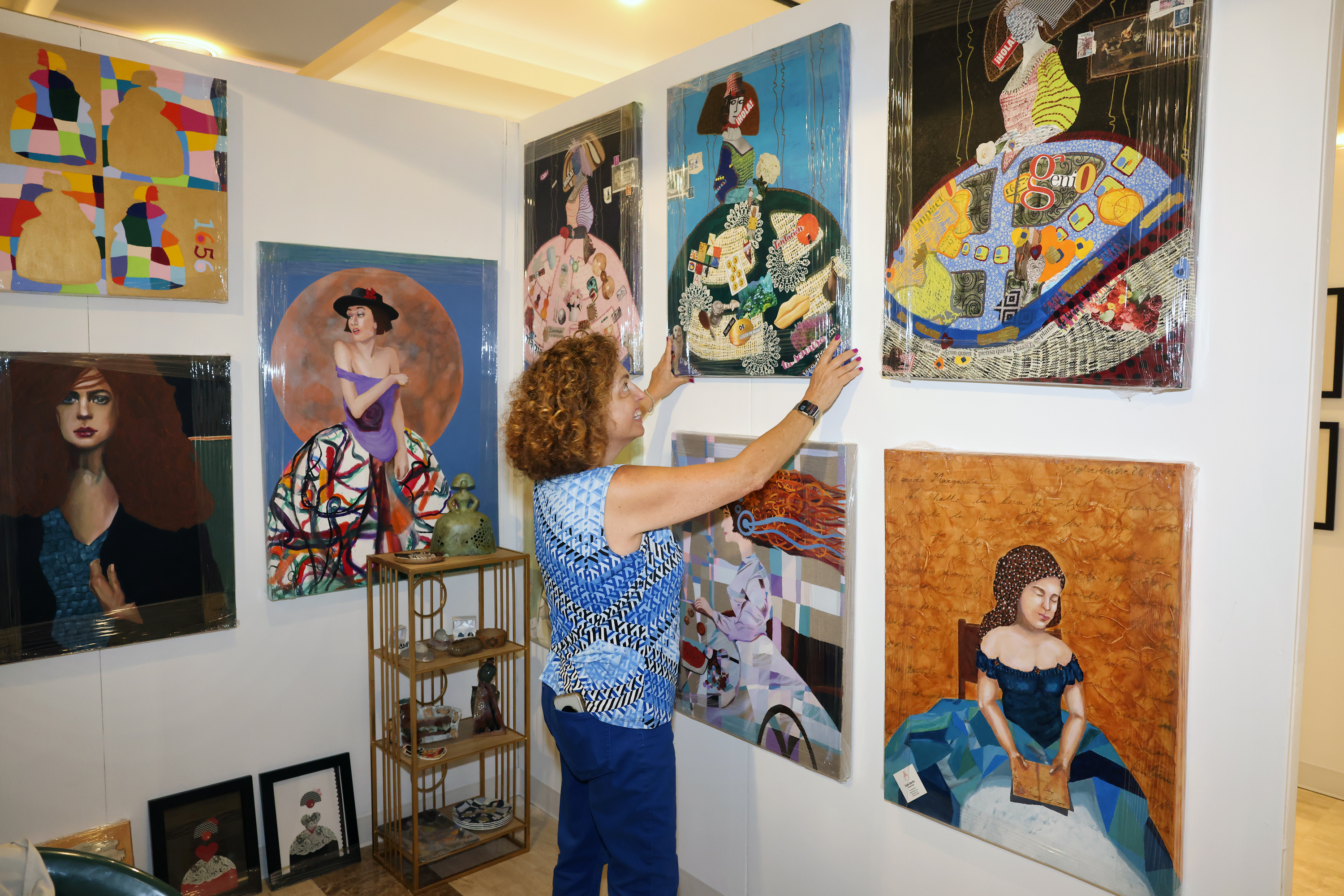
Zero Empty Spaces has provided space for more than 900 artists over the past seven years. Photo courtesy of Zero Empty Spaces
How has the model evolved since you started?
Martineau: Our original and still primary model is affordable working-artist studios inside vacant commercial real estate. Over time, we developed a modular wall system that allows us to subdivide large vacant spaces into smaller, flexible studios or microretail environments. That system enables us to build out and remove an activation quickly, often within a day, depending on the size and configuration of the property. We are now expanding beyond creation-first artist studios into marketplace and small business-incubation models. These can serve artists, makers, Etsy sellers, farmers-market vendors and emerging consumer brands that want to test brick-and-mortar retail in spaces as small as approximately 100 square feet.
Snow: Berkeley is being designed as a marketplace-first environment where collaboration, discovery, entrepreneurship and direct sales are more central to the visitor experience. Artists and creative entrepreneurs will have their own affordable, modular spaces where they can display and sell original art, creative products and merchandise while still demonstrating aspects of their creative process.
Martineau: Longer term, we envision connecting these physical marketplaces through an e-commerce platform so participating creators can sell both online and offline. In that sense, we are working toward becoming a brick-and-mortar version of an online marketplace such as Etsy, while also delivering measurable benefits to properties and surrounding communities. We are also being approached about additional applications, including culinary concepts, mixology, wellness, dance, ghost kitchens and other forms of small business incubation.
What are your plans for continuing to grow?
Snow: Our immediate priority is strengthening the operating infrastructure required to scale. That includes expanding our team, standardizing systems, increasing our inventory of modular walls, improving logistics, building regional operating capacity and developing technology that can support recruitment, occupancy management, marketing and sales across multiple locations. We are also preparing to raise outside capital to accelerate expansion into the portfolio opportunities already available to us.
Longer term, we want Zero Empty Spaces to become the leading national platform for productive meanwhile use. The physical marketplace and future e-commerce platform are central to that growth. Together, they would allow creators and emerging businesses to build audiences locally while participating in a larger national marketplace.
By Beth Mattson-Teig
Contributor, Commerce + Communities Today