The Short Version
- Chicago’s diverse consumer base, range of trade areas and costs lower than New York and Los Angeles make it attractive for retailers trying out new concepts and formats.
- Wayfair opened its first large-format brick-and-mortar store in suburban Wilmette in 2024 and has since expanded to additional markets.
- Amazon plans large-format stores in Orland Park and Oak Brook, while Ikea is preparing a smaller-format location in suburban Gurnee.
- Newer concepts and brands including The Cube, Live Launch and Cozey also are using Chicago to gauge consumer response and explore U.S. expansion or brick-and-mortar growth.
- Established retailers including Nike, American Eagle, Uniqlo and Mango also are updating or expanding their Chicago-area presences.
Chicago’s Diverse Consumer Base and Trade Areas Make It a Natural Retail Test Market
Chicago is having a retail moment. Rebounding from the aftereffects of the 2020 pandemic, the Windy City has become a testing ground for retailers who feel if they can make it there, they can make it anywhere. The area today is awash in big and small retailers reimagining existing stores or debuting new concepts, convinced that Chicagoland offers an ideal U.S. consumer base to test their ideas before expanding into other locations and cities.
“Chicago is the dominant city in the Midwest,” said John Vance, principal at Stone Real Estate, which counts Gap, J.Crew, Apple, Aritzia, Warby Parker and Madewell as clients. “If you are a retailer and you come to Chicago and can excel, that is a great barometer of the Midwest. There are several trade areas where retailers can experiment if that is what they are truly doing — because that is what you have to do if you are carefully starting to plan for a rollout.”
Retailers, analysts and commercial real estate brokers describe Chicago as a natural site for testing concepts due to its central Midwest location, rents that are cheaper than in New York and Los Angeles and the diverse demographic mix necessary to take the temperature of a new idea. “Illinois is a microcosm of the United States,” said Josh Lowitz, co-founder of Consumer Intelligence Retail Partners, which weekly tracks news of both Amazon and Apple through a paid subscriber base on Substack. “Within a very small radius, you have urban, suburban and rural communities, along with an economically and ethnically diverse population. That makes it a good market for testing concepts with varied or especially broad potential appeal.”
“Illinois is a microcosm of the United States. Within a very small radius, you have urban, suburban and rural communities, along with an economically and ethnically diverse population. That makes it a good market for testing concepts with varied or especially broad potential appeal.”
Wayfair’s Large-Format Experiment Launched in Chicagoland
The poster child for Chicago retail experimentation may be Wayfair, the direct-to-consumer home goods brand that launched its first large-format brick-and-mortar location in suburban Wilmette. Opened in 2024, the 150,000-square-foot store has proven a hit with the region’s consumer base. “The Chicagoland area was a natural choice for our first large-format store,” vice president of merchandising and stores Liza Lefkowski told C+CT. “It’s a strong market for Wayfair with a large and engaged customer base, and in Wilmette, we found the right location: a space that offered the size, accessibility and convenience we were looking for. It was the right opportunity to bring the Wayfair shopping experience to customers in the region.”
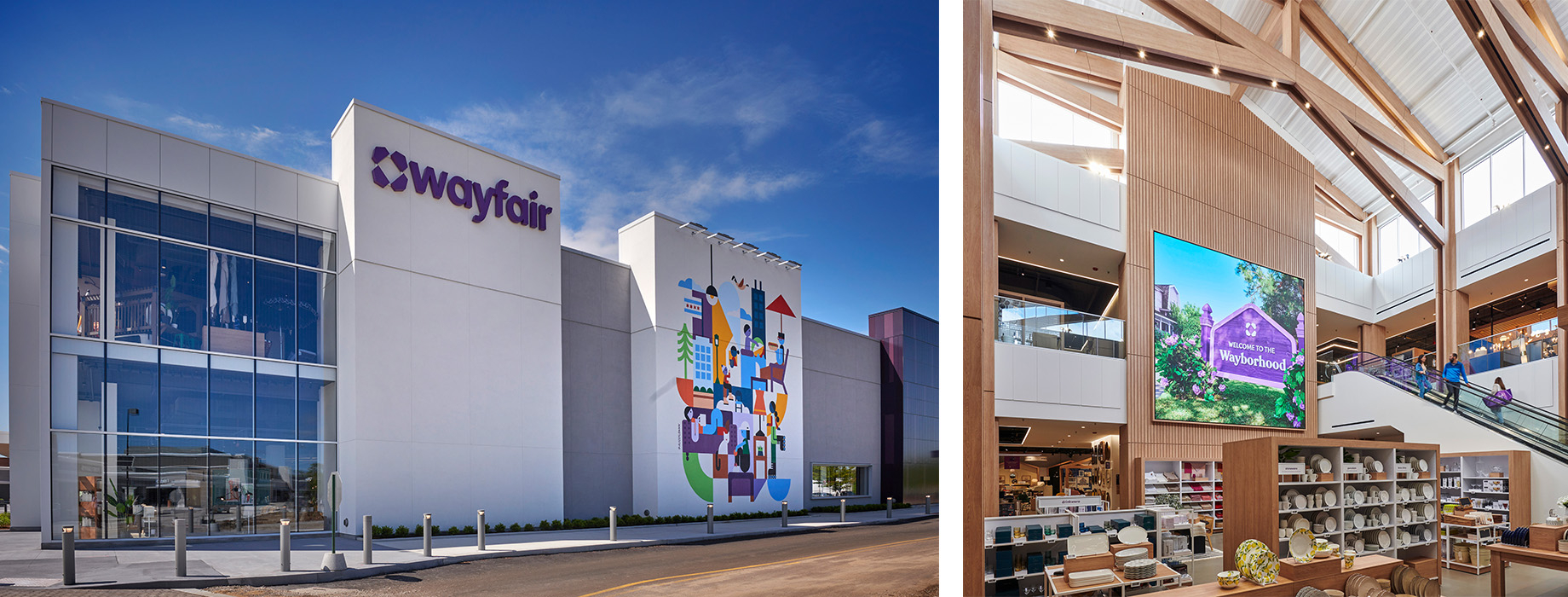
Wayfair opened its first-ever brick and mortar store in 2024 in suburban Chicago. Photos above and at top courtesy of Wayfair
Wayfair since has expanded the format, opening locations in Atlanta and Columbus, Ohio, with Denver coming this fall and new stores next year in Cincinnati; Fort Lauderdale, Florida; Pittsburgh; Westchester, New York; and Princeton, New Jersey. Wayfair credited its brick-and-mortar stores, among several factors, with contributing to its strong second-quarter earnings this year. It was the retailer’s strongest second-quarter revenue growth since COVID.
MORE FROM C+CT ON WAYFAIR’s DENVER HOME: Denver Retail Center Shifts From Regional Draw to Urban Lifestyle Center
Amazon Is Testing a New Kind of Big-Box Store
While there has been a recent trend for retailers to shrink brick-and-mortar footprints, a few, such as internet giant Amazon, have the financial muscle to test large-format stores. Having experimented with the digitally driven Amazon Go and specialty grocer Amazon Fresh, the online retailer is set to launch a 229,000-square-foot, full-service location in Chicago’s Orland Park next year and a similarly sized store in Oak Brook in 2028. Stores will carry both grocery and general merchandise. Experimentation is part of the brand’s DNA, according to Amazon spokesperson Griffin Buch. “We regularly test new experiences designed to make customers’ lives better and easier every day, including physical stores,” he said. “The sites in question are our planned locations for a new concept that we think customers will be excited about.”
“At this stage, the store feels more experimental than anything else,” said GlobalData managing director of retail Neil Saunders. “However, Amazon has two primary aims. The first is to try and deepen its share of wallet with existing customers and draw in new shoppers. In areas like Chicago, where Amazon is already heavily penetrated, that makes this especially important. As Amazon already has spaces to fulfill online orders, it’s logical to see if these can also be used to service in-person shoppers.”
Chicago’s Demographics Appeal to Brands Big and Small
According to JLL senior managing director of retail corporate services and Midwest retail lead Walter Wahlfeldt, Chicago represents an ideal central and diverse consumer base for brands of all sizes to test new concepts. Among his company’s clients is Ikea, which is set to open a 66,000-square-foot version of its normally massive footprint in the Chicago suburb of Gurnee. As it’s a fraction of the size of the retailer’s traditional U.S. locations, the brand’s third area store “is definitely without a doubt a test,” said Wahlfeldt.
Other recently launched retail concepts in Chicago are banking on that diversity to help propel their fledgling brands. Among them is The Cube, a 25,000-square-foot entertainment and retail experience located on Michigan Avenue and based on the former British TV show featuring adult contestants playing games inside big glass cubes.
British owner Edward Mellors runs two Cubes, in Manchester and London, and opened his first U.S. location in Chicago last month after a nationwide search. One reason he liked the city was his hope to involve former NBA star and Chicago native Dwyane Wade, who hosted the game show’s U.S. adaptation, but Mellors also found that the area shared demographic traits with his U.K. locations.
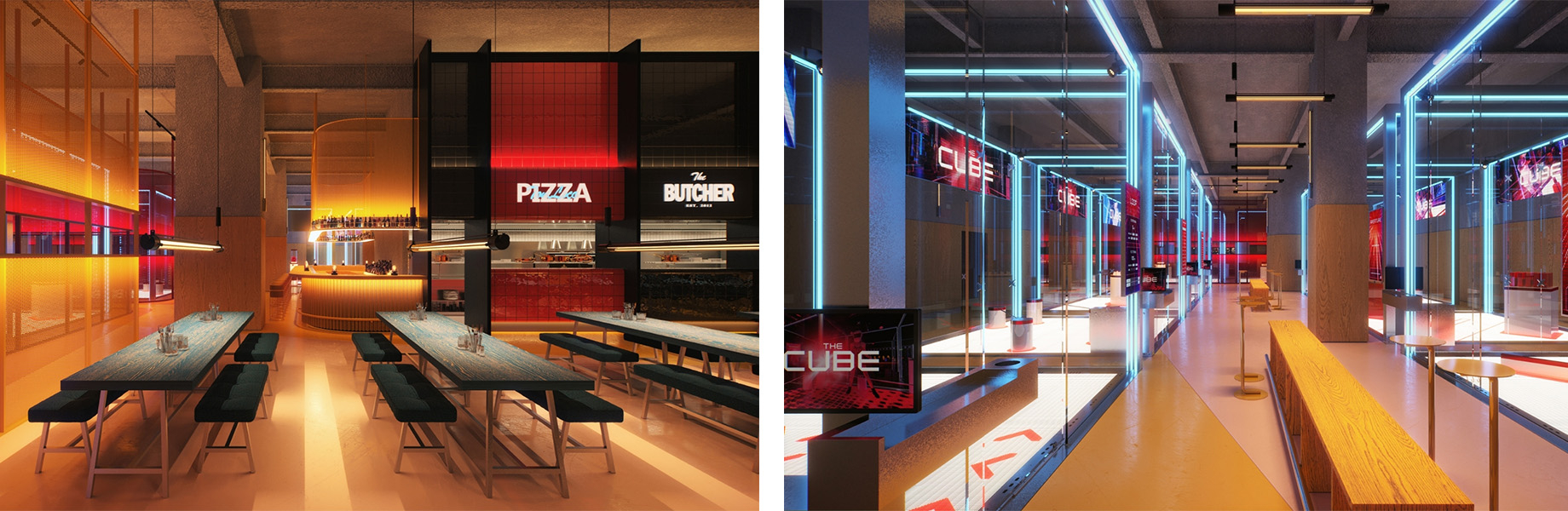
The Cube is testing the U.S. market with a 25,000-square-foot entertainment venue in Chicago. Renderings courtesy of Baranowitz + Kronenberg
Wade ultimately said no to Mellors because the collaboration would conflict with his involvement in a California winery he owns. Mellors was undeterred. “When I looked at Chicago,” he said, “it had a good corporate presence, was typically central American and the demographic here wasn’t that dissimilar to what I would expect to find in London. And by comparison with New York, it was much lower risk, the cost of building and rents there being astronomical. And so, all roads ended up pointing to Chicago.”
Mellors said it took time for his Manchester site to connect with an audience before he decided to open in London, where he experienced a similar ramp-up period. “I would never come to America with the view to open just one unit in Chicago,” he said. “I need to see it working and people’s reactions. It might be three months, six months or nine months.”
Emerging Brands Use Chicago To Explore Brick-and-Mortar
Chicago native AJ Weinberg recently opened Live Launch, an open-concept retail space that features 200- to 400-square-foot pop-ups from different direct-to-consumer companies on short-term rentals. Located in Chicago’s Fulton Market District, the 7,136-square-foot flagship is anchored by Loop Coffee, with space for as many as 11 tenants. Current occupants include the WNBA’s Chicago Sky merchandise store, fitness tech brand Surreal Cycling, Beltshazzar Jewels and clothing from Project Runway alum Michael Drummond.
Live Launch handles the space, staff, marketing and technology, allowing the brands to focus on building their businesses. “We’re trying to find those DTC brands that want to become the next Warby Parker or Bonobos at its peak,” said Weinberg. “It’s a chance for the brands to test whether in-person is necessary for them without having to pay rent for 12 months.”
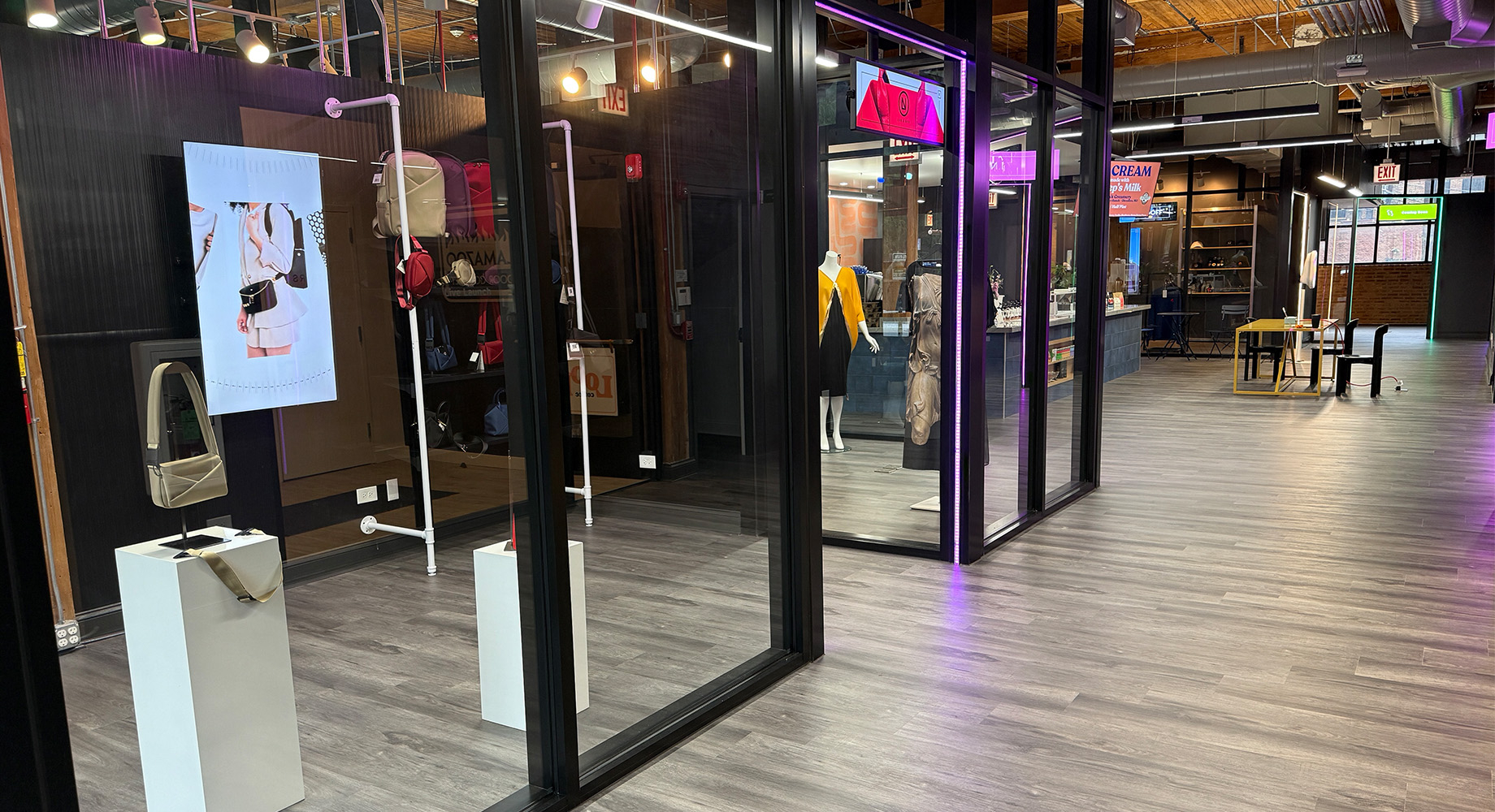
Anchored by Loop Coffee roasters, Live Launch invites an immersive and communal shopping experience in Chicago’s West Loop neighborhood. Photo courtesy of Live Launch
DTC Canadian home furniture brand Cozey also is testing the waters in Chicago, launching its first Midwest pop-up in June on Rush Street in the Gold Coast area. The 5,345-square-foot space allows customers to test the brand’s signature line of modular couches and washable rugs in a real, lived-in environment.
The city’s appeal isn’t limited to newer brands testing the market. Several prominent retailers — including Nike, American Eagle and Uniqlo — are reimagining their Chicago presences with new locations and merchandising features. American Eagle’s 14,182-square-foot Michigan Avenue location to open next year will carry three of its brands, each with separate entrances but all connected internally. And Mango brought its first Illinois store in — an 11,000-square-foot, two-level fashion boutique — to Michigan Avenue last December.
By Howard Ruben
Contributor, Commerce + Communities Today