By Alexandre Lemieux, Creos
In the commercial real estate world, the term experiential is now widely used. Yet behind this word lies very different realities. For property managers, a true experiential partner is not simply one that delivers an eye-catching activation. It’s about working with an ally who understands real estate challenges, responds to them in concrete ways, elevates the guest experience and delivers reliable, visible and seamlessly integrated activations into the daily life of a place.
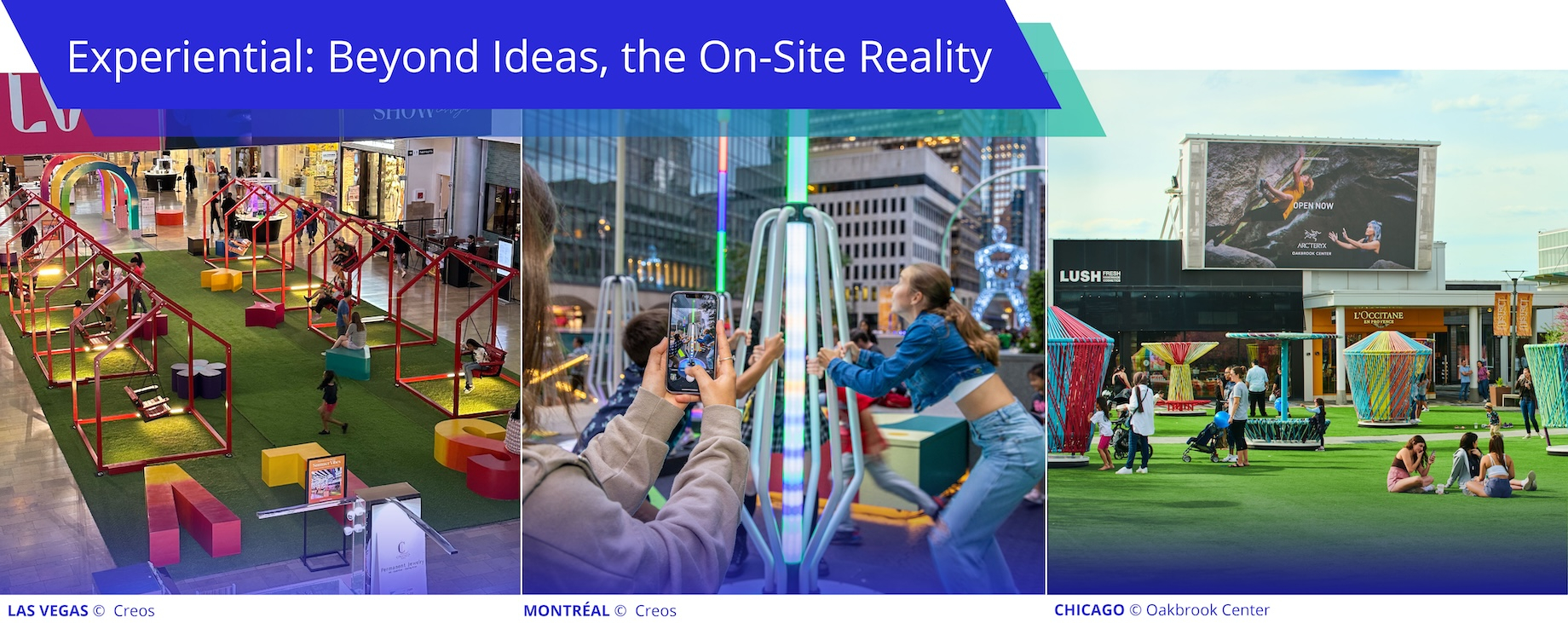
The first expectation relates to visible impact and the quality of the activation.
In high-traffic environments, an experience must be immediately understandable, accessible and engaging. Design quality, material durability and integration into the site play a decisive role in the overall perception of a project. Well-executed interactive installations quickly become landmarks, encouraging people to stop, interact and share spontaneously.
As Tavida Rice, General Manager of Ballston Quarter in Arlington, Virginia, points out:

But impact alone is not enough.
A credible experiential partner must also deliver true operational simplicity.
Property teams operate in complex environments, where any additional initiative can become a burden if it is not properly managed. From planning and installation to activation and dismantling, a partner’s ability to take full ownership of the project is a key success factor.
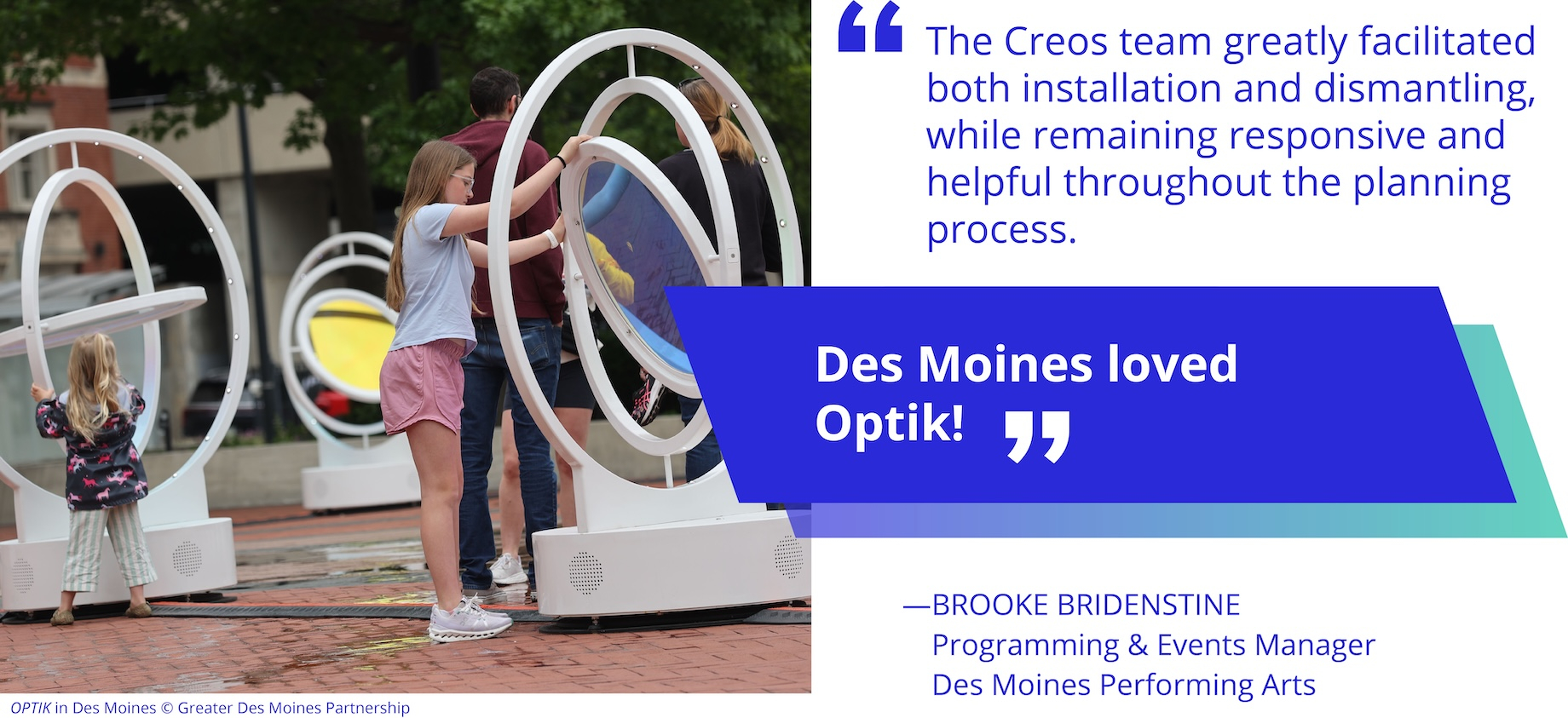
This simplicity allows internal teams to remain focused on their day-to-day operations, while still integrating high-impact experiences into their programming.
Risk management is another major expectation.
In a constantly evolving context, managers favor temporary, modular and flexible solutions that allow them to innovate without long-term commitments. Temporary installations thus become a true strategic lever: They enable testing new uses, marking key periods and renewing interest in a site throughout the seasons.
Of course, this approach only works when projects are delivered by reliable partners — those capable of providing proven, safe installations adapted to a variety of real estate contexts. International experience and execution quality become essential trust factors.
Finally, managers expect concrete proof, not promises.
Solid references, documented projects and observable impact indicators help justify decisions to various stakeholders — whether leadership teams, tenants or investors.
Ultimately, the role of a partner like Creos is to sustainably support the attractiveness and value of your real estate assets by combining creativity, rigor and a deep understanding of on-the-ground realities.
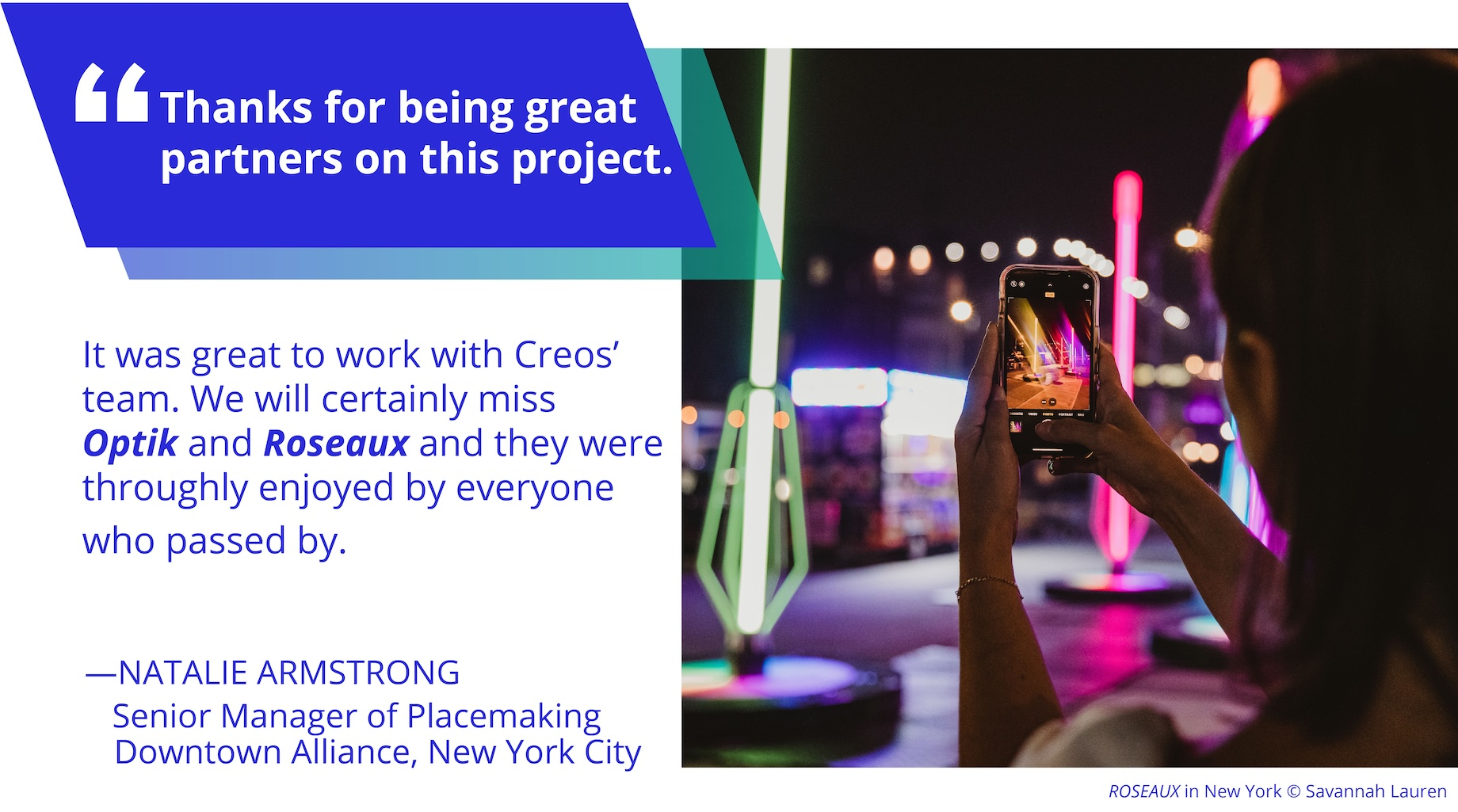
It is in this spirit of dialogue and collaboration that Creos works alongside property managers. Discover how Creos can become a strategic ally for your next activations.
Contact: Alexandre.Lemieux@creos.io
Photo at top: Los Trompos, courtesy of Fashion Show Las Vegas