The Short Version
- Long-term restaurant success depends on more than food, with operators emphasizing clear concepts, strong teams, adaptable spaces and durable landlord relationships.
- Restaurants are looking for ways to extend dwell time and capture sales across more dayparts, from morning coffee through dinner and brunch.
- Design is shifting toward warmer, more distinctive environments, with patios and shareable visual moments playing a bigger role in the restaurant experience.
- Operators are balancing changing consumer expectations with rising costs and the need to create spaces that can adapt over time.
- Landlords, meanwhile, are weighing restaurants’ ability to drive traffic and sales against the cost and flexibility of highly specialized buildouts.
Restaurant Operators and Designers Share What Helps Concepts Endure and Grow
Running a restaurant is a tough business, and failure rates are notoriously high. But successful eateries can be a triple win: for the operator, landlord and the neighborhood. So what does it take to position a restaurant for long-term success in today’s competitive market?
All restaurant operators face ups and downs, but some weather them better than others, said Chris Himmel, president of Himmel Hospitality Group, proprietors of Boston restaurants Grill 23 & Bar, Harvest, Bistro du Midi and The Banks Seafood and Steak. “It comes down to capital, to commitment, and it comes down to people,” he added.
During a recent ICSC@NEW ENGLAND panel discussion — Restaurants That Work: Concept, Design & Culinary Identity — Himmel and company COO Jaime Campos shared factors that have helped the businesses endure and grow. Grill 23, for example, is an independent steakhouse that has operated for more than 43 years and has expanded from about 85 seats to over 400.
Himmel credits the firm’s success to its investment in people, its maintenance of local roots and the fact that it has stayed true to each restaurant’s concept. He also emphasized the importance of creating a neighborhood environment and clear brand identity. “The biggest thing you need to be in this business is clear with people about what you are,” he said. “If I can’t tell what a concept is in the first five seconds, then you’ve already lost me.”
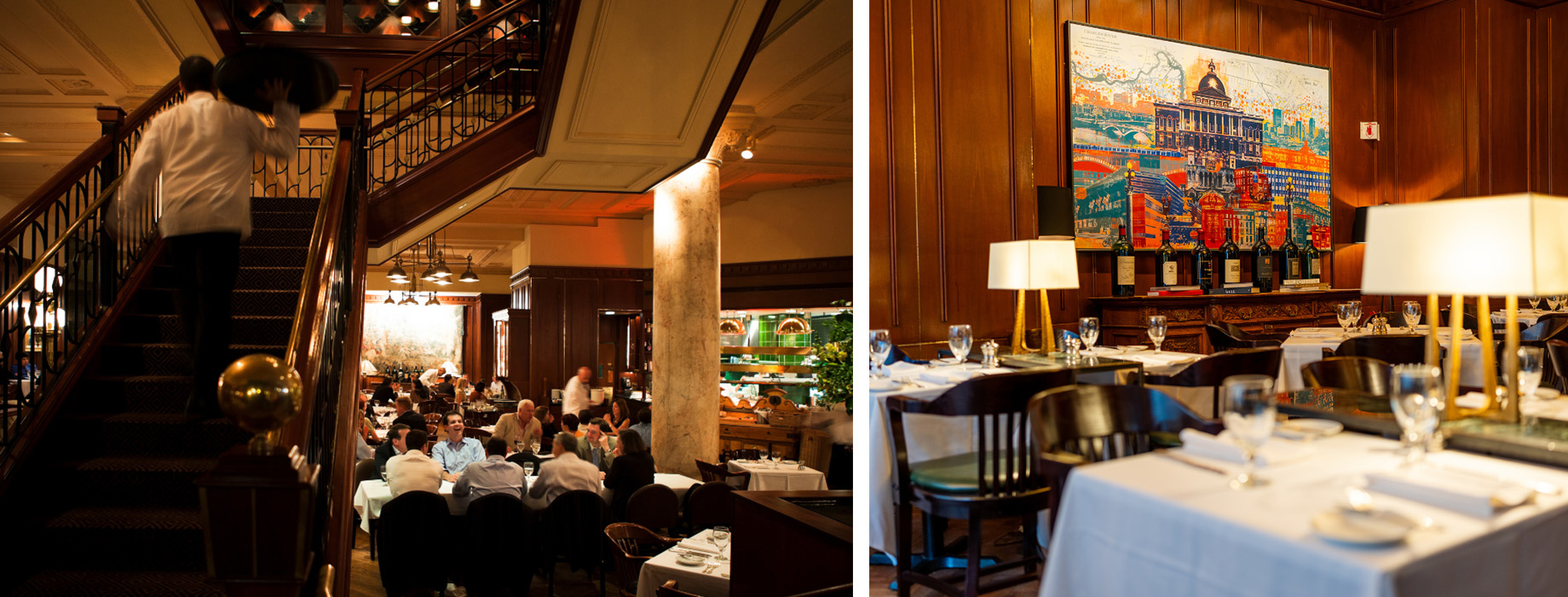
Himmel Hospitality Group’s Boston steakhouse Grill 23 & Bar has operated since 1983. Photos courtesy of Grill 23 & Bar
Extending the Restaurant Day
Restaurants have become an important anchor for retail and mixed-use centers, and many serve as vibrant hubs for neighborhoods and town centers. “In a lot of places, restaurants are more than a place to eat,” said Pierina Benvenuto, North America restaurants principal for global architecture firm Norr. And like landlords, restaurants are looking to extend that dwell time so people consume more. “For that, they need to provide a different experience for the guests to stay longer and have other things to do within the concept,” added Benvenuto.
Operators from national chains to small restaurants are focusing more on flexible use to drive sales across different dayparts. “Everyone is trying to see how they can stay full throughout the day and maybe have only two or three hours of closing,” said Benvenuto. For example, a coffee shop that has a light menu in the morning might dim the lighting and add drapery that subtly shifts the decor as it switches to an evening menu. On the other end of the spectrum, some restaurants that have traditionally offered dinner service are adding daily or weekend brunch.
Designing for Today’s Diners
People are dining out more often. OpenTable’s 2026 Dining Trends Report found an 8% increase in dining out year over year on its U.S. platform, while Americans surveyed expected to dine out an average of 10 times per month in 2026. Meanwhile, a February report from the National Restaurant Association forecast that restaurant and food service sales will reach a record $1.55 trillion this year.
Capturing that demand in a competitive market is the tricky part. Operators also face significant challenges, with costs rising on everything from construction and wages to food, insurance and utilities. Restaurants also need to adapt to a constantly changing consumer appetite. “The customer that we were designing for 15 and 20 years ago is not the same customer we’re designing for now,” said Benvenuto. Demographics and expectations are different. People want everything to move at a faster pace, but service is not instantaneous, even at quick-service restaurants and fast-casual concepts. “Besides the food, what do you build within that experience for that waiting to be worth it?” she said.
Consumers also want to feel comfortable. The industrial, minimalist aesthetic that has been popular in recent years is shifting to softer, homey environments, said Emily Durham, senior vice president of JLL’s food-and-beverage advisory. “We’re seeing trees inside of restaurants more often, and just a softer design that feels like you’re walking into somebody’s living room,” she said.
Demand for outdoor patios is also here to stay. “The bigger the patio, the more staying power there’s going to be because it’s almost like its own meal occasion,” said Durham. In some cases, people are choosing a restaurant because it has a nice patio for dinner or a leisurely brunch, particularly if they’re seeking a place they can bring their children, their dog or a big group of friends. “They’re not talking about the kind of food they want; they’re talking about the patio,” she added.
Creating Spaces People Want To Share
Social media marketing and in-person engagement followed rising food costs among the top trends expected to affect restaurant operations this year, according to the 2026 Independent Restaurant Industry Report. The report, published by the James Beard Foundation in collaboration with Deloitte, surveyed independent restaurant chefs, owners and operators. Many chefs noted tension between social media-shaped expectations and the realities of operating a restaurant. As one chef explained: “As soon as experience slips below the customer expectation, you’re getting a bad review — even if it’s 99.9% consistent and good quality, that 0.1% you will hear about.”
Consumers want restaurants that feel distinctive. “Obviously, food is No. 1, but you can’t serve it in a space that has no personality,” said Benvenuto. Diners increasingly are pushing back on bland, cookie-cutter environments in favor of spaces with stronger identities and details that feel worth sharing. “We do a lot of space planning and seating planning, and during that phase is where clients ask: ‘Where is my Instagram moment?’” she said. That might be a backdrop where guests will take a photo, post it and tag the restaurant, making visually distinctive, shareable features a more intentional part of restaurant design, from lobbies and patios to restrooms.
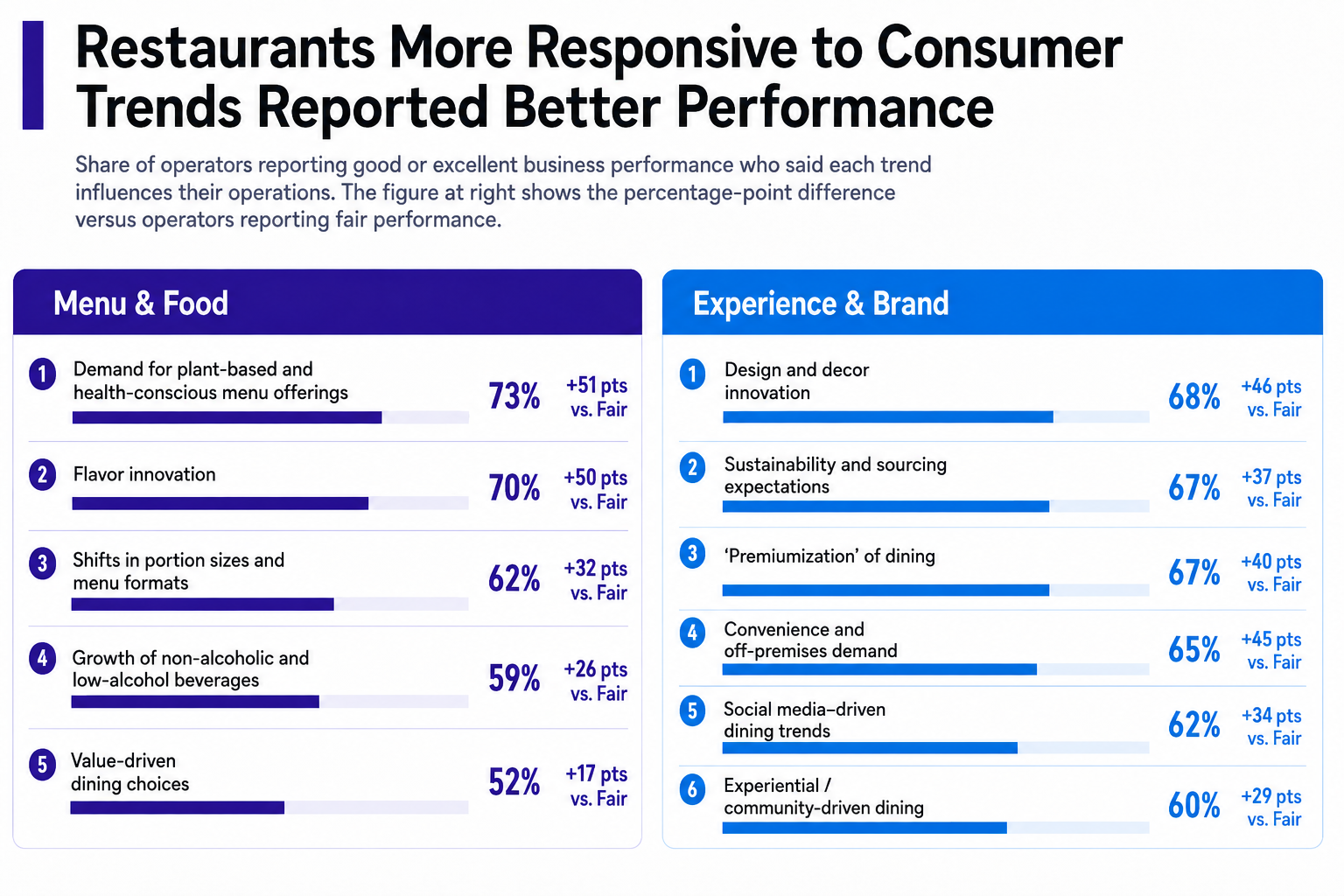
Source: James Beard Foundation 2026 Independent Restaurant Industry Report | Graphic: ICSC Commerce + Communities Today
Building Successful Restaurant-Landlord Partnerships
Landlords want restaurants that can drive traffic and sales, as well as elevate the guest experience, but they also need to manage the risk of investing in costly tenant improvements for restaurants that may not succeed. “What landlords are looking for might sometimes be counter to what the latest trends are,” said Durham. For example, some restaurants want large wood-fired brick ovens, conveyor belts that deliver sushi, or other signature design features. Those elements might be eye-catching, but they also can be expensive and more difficult to re-tenant, she said.
It’s easier to re-lease a space that has the same basic components all restaurants want. “If it gets more complicated, it may give some landlords pause, and they have to ask themselves if it makes sense to do that,” said Durham.
A good relationship with a landlord that understands the importance of investing in the business is key for operators, added Campos. “If your landlord is focused on only getting the top retail dollar they can get per square foot and is not investing, that’s not the landlord you want to be with,” he said.
He credits Himmel Hospitality Group’s success over the years to the mutually beneficial partnerships it has built with landlords. “We’re going to improve their asset so that it is leasable for them,” he added, “and we’re going to create a neighborhood feeling that they need in order to help their asset continue to grow.”
By Beth Mattson-Teig
Contributor, Commerce + Communities Today