At some Tanger retail centers, high-performing food-and-beverage tenants are drawing shoppers roughly 10 times more frequently than before. This stat exemplifies the growing importance of F&B concepts to retail and mixed-use properties. Entertainment, F&B’s natural partner in retail, is just as vital. A recent JLL report, Game On! Location-Based Entertainment’s 16.5 Million-Square-Foot Pipeline, said 721 such U.S. locations are in the works to meet increased demand.
MORE FROM C+CT: Experiential Retail Expands as Tight Supply and Investor Demand Shape the Market
During an ICSC LAS VEGAS session titled F&B and Experience-Driven Assets: Strategies for Managing the Operational Complexity, executives explained what it takes to attract the right concepts, structure deals that work for both sides and stay engaged long after the ink dries.
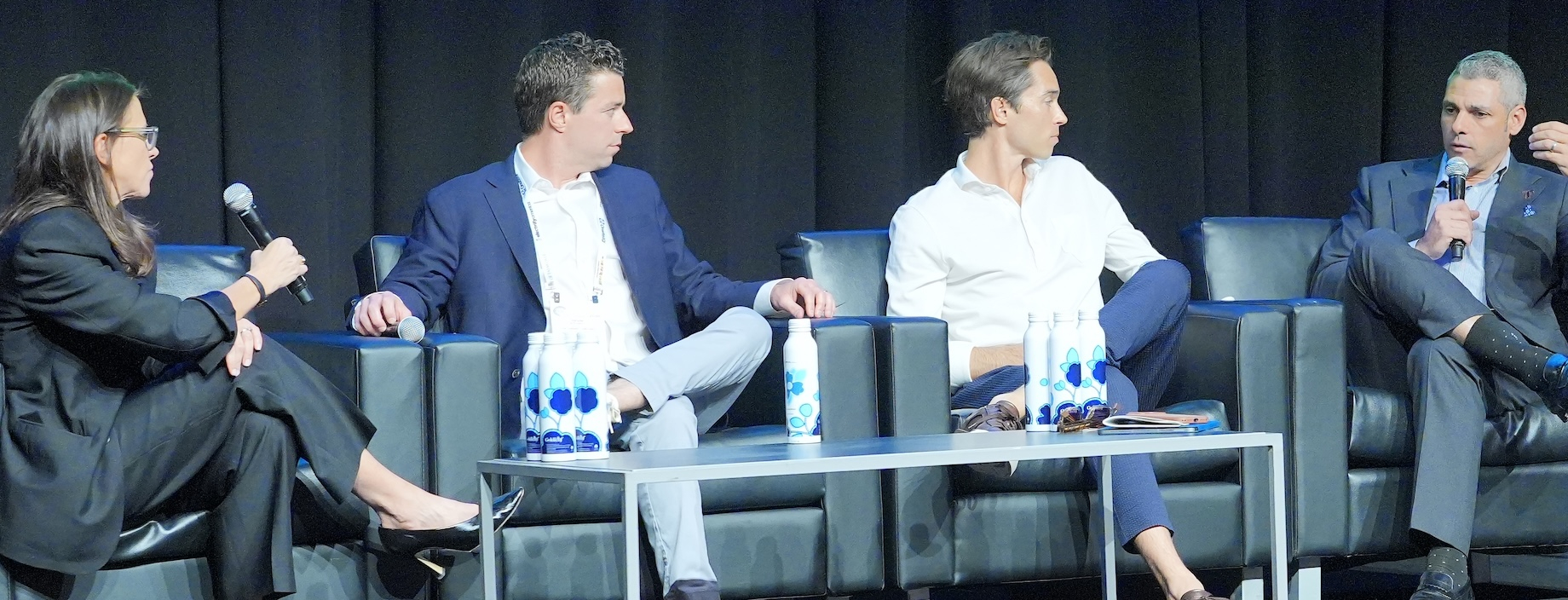
Bond RP’s Jessica Bruner moderated the F&B and Experience-Driven Assets panel with Emerging Concepts’ Robert Johnson, The Cordish Cos.’ Devin Kitchelt and Tanger’s Justin Stein
Landlords Can’t Just Sign F&B Leases and Step Back
Justin Stein believes a retail landlord should avoid a sign-and-forget approach to F&B tenants. The executive vice president and chief revenue officer of outlet and lifestyle center operator Tanger illustrated this point with a tale about a current F&B tenant. The tenant generates $13 million in annual sales at one of Tanger’s 41 properties, but Stein thinks the business could boost sales by $5 million to $7 million a year with better performance, starting with proper use of its outdoor patio. Thus, Tanger is working with the tenant to lift sales, said Stein. “The brands that are winning are the brands that are evolving — evolving their menus, their drink offerings, reinvesting in their own fleet,” he said. “The ones that are not reinvesting after 10 years are becoming stale, and those are the ones losing traction against the competition.”
For its part, Tanger has allocated roughly $1 billion over the past three-and-a-half to four years toward portfolio reinvestment and expansion, Stein said, signaling to tenants that the REIT is committed to its properties. He added that when Tanger believes a brand’s sales potential exceeds the brand’s own projections, the company will structure a lease to bet on that upside.
The Cordish Cos. vice president of leasing Devin Kitchelt concurred with Stein’s views about a landlord’s working relationship with its tenants. “You’ve got to hold hands and jump in the pool together,” he said. “That’s the only way to do it.”
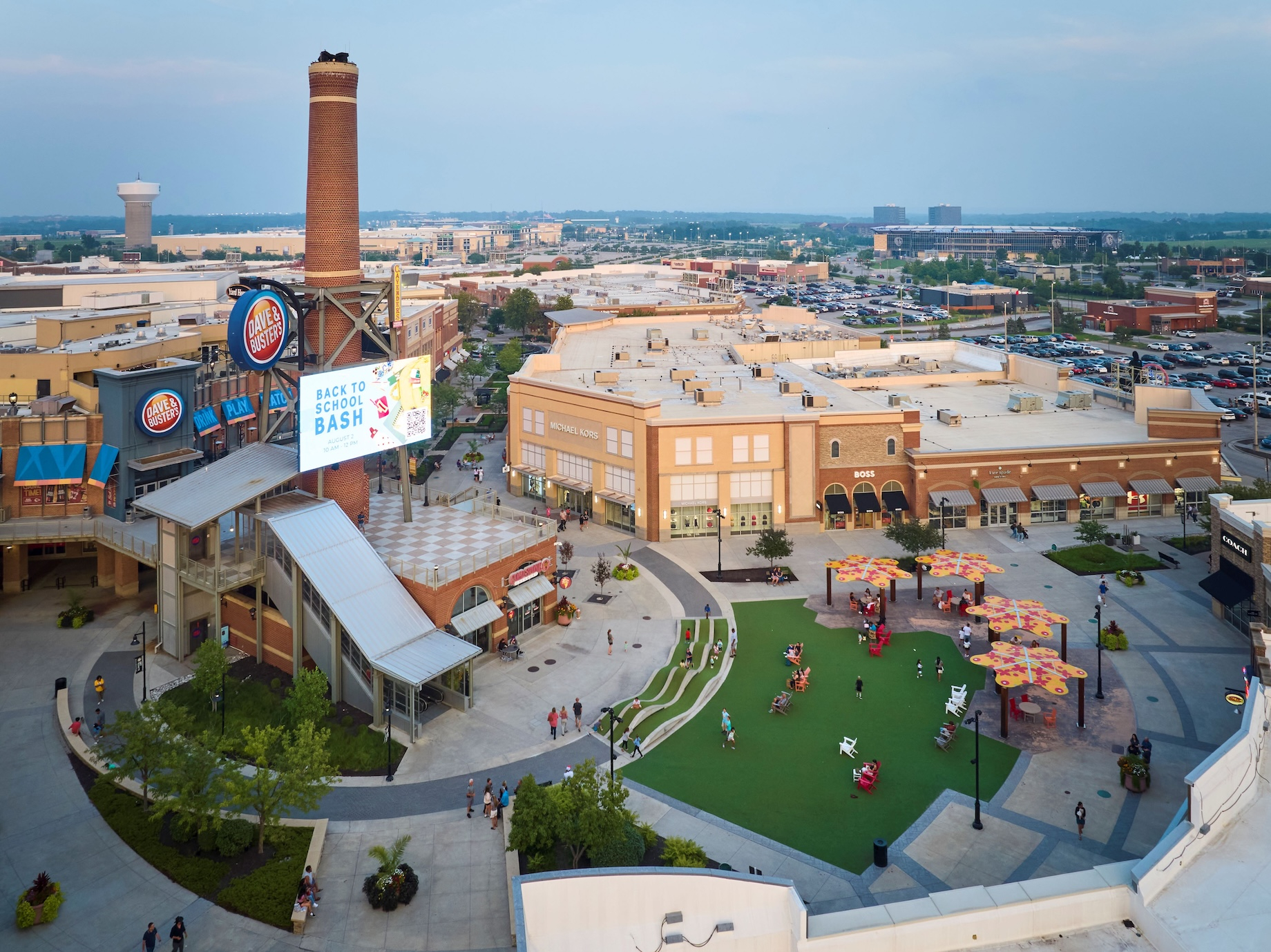
Tanger acquired this property, now called Tanger Kansas City at Legends, for $130 million in 2025. Photo above and at top courtesy of Alex Arnett/Tanger
Tanger’s F&B Strategy Is Turning Occasional Shoppers Into Regulars
Following the pandemic, Tanger executives came to a realization: Their properties lacked strong F&B components that today drive more foot traffic and longer stays. Tanger responded to this revelation by forming an F&B team whose four members focus on bringing F&B and entertainment options to the company’s centers and the land around them. That effort appears to be paying off. In outlet center trade areas where Tanger maintains a healthy F&B presence, it’s seen the frequency of guest visits jump from roughly three or four times a year to three or four times a month, said Stein. Plus, sales and traffic in the first quarter rose the most at Tanger centers offering a robust F&B mix. Not only are those metrics moving in the right direction, but Tanger is “definitely seeing our retail sales increase, as well,” he said.
Experiential Concepts Need Data, Not Just a Strong Pitch
Sure, retail landlords market their properties, but Emerging Concepts managing partner Rob Johnson urged landlords to let the data do the talking. He noted that in one Museum of Ice Cream location’s first year at a solidly performing development, the immersive experience attracted roughly 250,000 visitors, 200,000 of whom were first-time visitors to the shopping center. Numbers like that speak for themselves, according to Johnson. If a concept instead requires a hardcore pitch to compensate for little proof, “that’s kind of a red flag to us,” he said.
Although Johnson said repeat business at Museum of Ice Cream runs around 20%, a lower rate than some concepts, he emphasized that the museum’s customer base refreshes itself. “Ice cream never goes out of style,” said Johnson, “and there’s always a new group of 5-, 6-, 7- and 8-year-olds who want to go to a Museum of Ice Cream.” The concept operates six locations in the U.S. and one in Singapore.
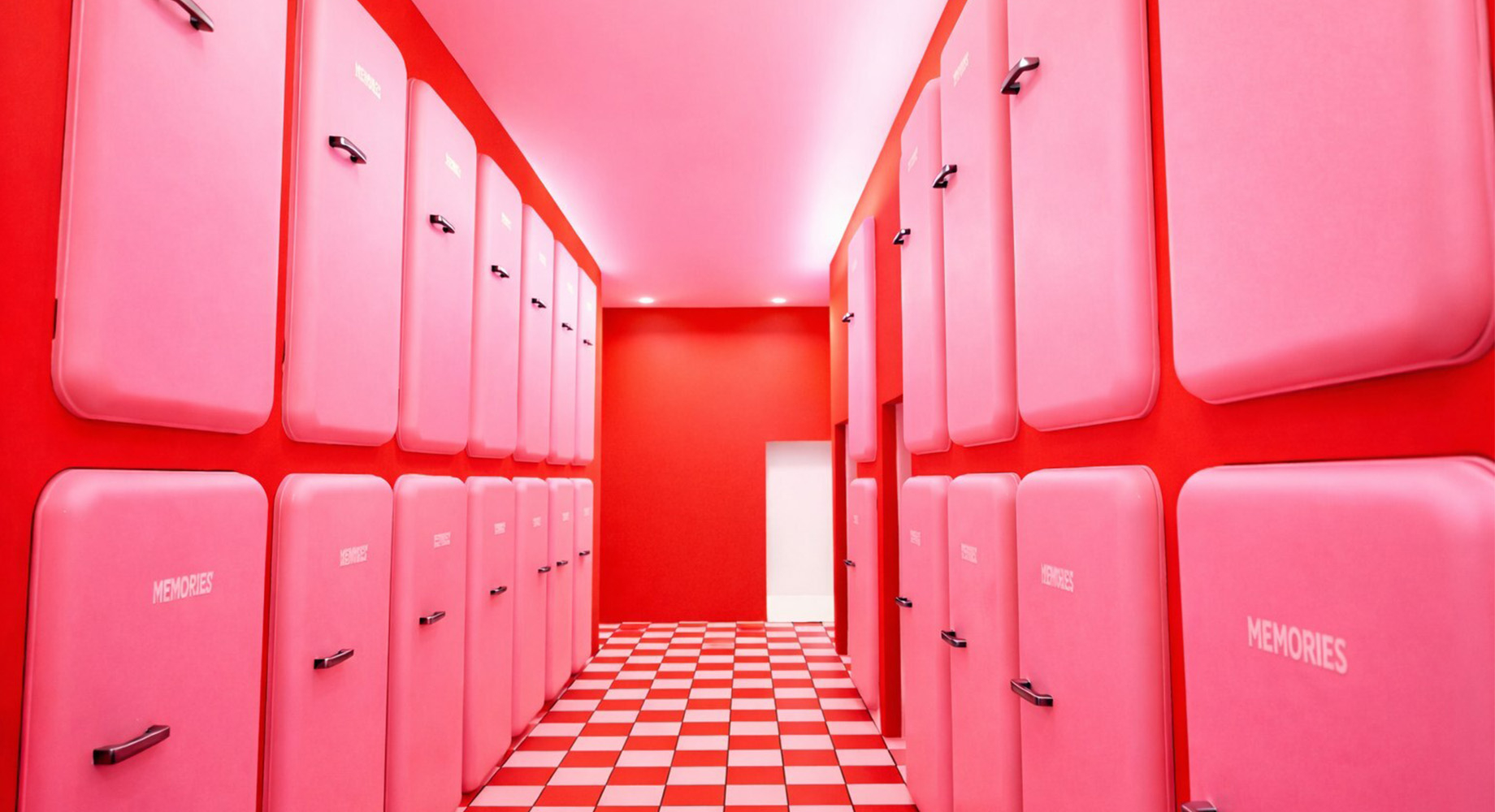
The Hall of Freezers at Museum of Ice Cream’s relaunched flagship location in New York City’s SoHo Photo courtesy of Museum of Ice Cream/PR Newswire
The Most Durable Experiences Feel Familiar and Approachable
With experiential retail dominating the conversation, which concepts have real staying power? Johnson said they’re the ones built around activities that people already relate to, such as darts, pool or miniature golf. “The activity can’t be too daunting. It shouldn’t be something that’s intimidating. People don’t want to feel embarrassed in front of others, especially at corporate events,” said Johnson, adding that people also “don’t want to be sweating while ordering a margarita.”
By John Egan
Contributor, Commerce + Communities Today