As state lawmakers convene sessions this month, several big issues are expected to cast a large shadow over legislative work for the coming year. For many states, even-numbered election years are primarily dedicated to passing budgets and attending to essential functions that keep states operating. Over 6,000 state lawmakers will be on the ballot in November, and while many bills will be introduced on trending topics like affordability, energy, housing and AI, the following factors could play an outsized role in shaping what lawmakers focus on this year and beyond.
Governors’ races present unknowns for the balance of power in states
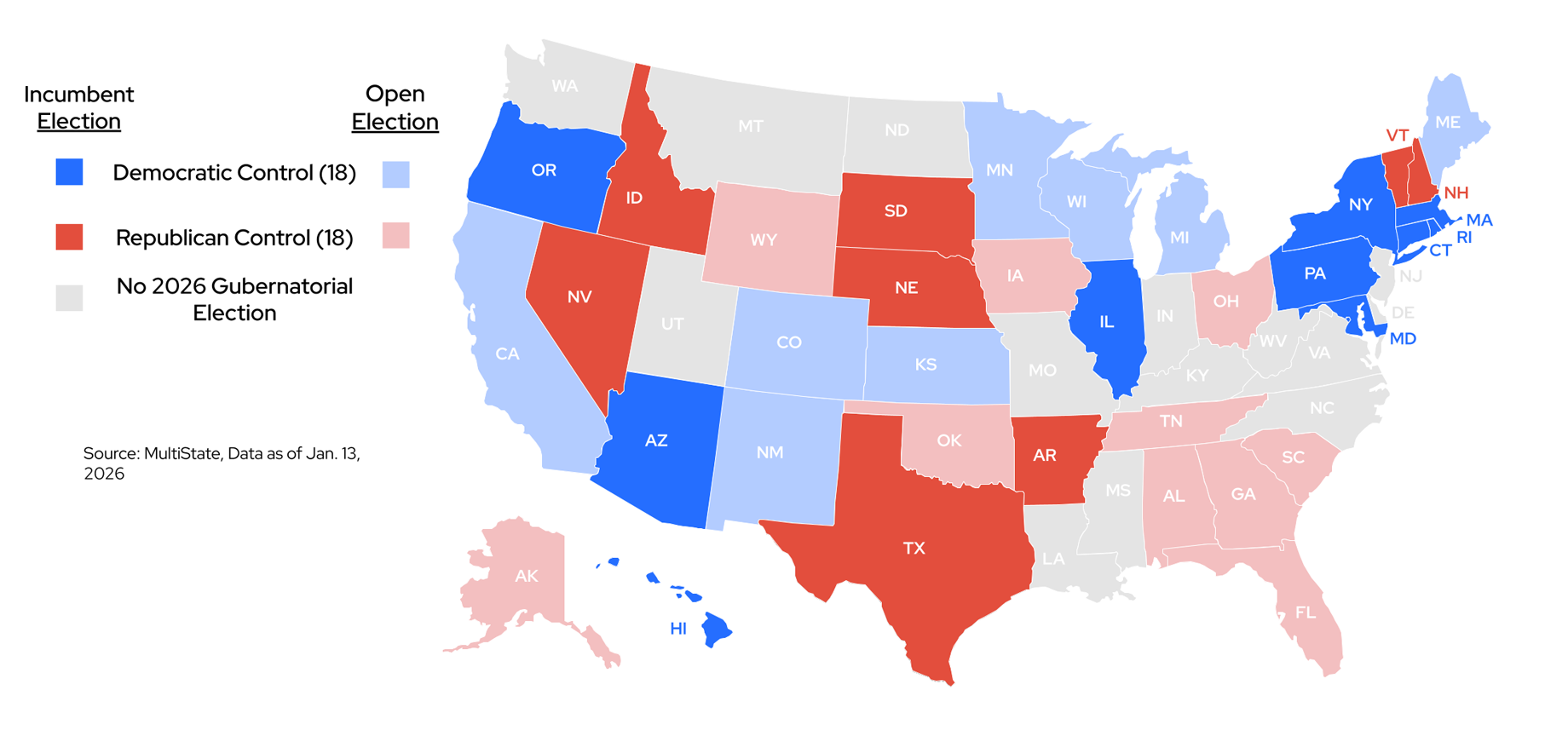
Governors play a pivotal role in state governments, particularly when it comes to setting policy for their state when it comes to the environment, energy, transportation and economic development. Half of the 36 states electing a governor this year will have open seats. Minnesota Governor Tim Walz (D) and Iowa Gov. Kim Reynolds (R) are the only incumbent governors, not term-limited, to announce that they will not run again. As of now, that means there will be 19 states with incumbent governors running for reelection in 2026, 15 states where the current governor is term-limited, and two states where the incumbent governor is eligible for reelection but has opted to retire instead. To put this number into perspective, during the last midterm election in 2022, only eight gubernatorial elections were for open seats.
Accessing the fiscal impact of federal tax changes
The One Big Beautiful Bill Act (OBBBA) contains hundreds of provisions on healthcare, tax and spending priorities. Many of these provisions, which go into effect this year and beyond, will impact how states make spending decisions and plan for the future. The impact of each federal tax change on states depends on conformity, or how states choose to piggyback off the federal Internal Revenue Code (IRC). States differ in their conformity approaches. Some automatically adopt new federal changes without the legislature having to pass a bill, while others have a static conformity date and must proactively pass legislation updating the version of the IRC they conform to. While there are many tax policy changes in the bill at the federal level, most of those changes would require states to proactively conform to the updated Internal Revenue Code (IRC) provisions, so they will not experience “automatic” revenue losses.
The larger impacts on state budgets, however, come not from tax policy changes, but changes to the way the federal government contributes to SNAP benefits and Medicaid costs. Beginning this year, states will begin paying 75% of administrative costs for SNPS benefits, and, in 2027, states will be responsible for a portion of the benefit costs, up to 15% for some states.
More states will have a perceived need for revenue in 2026
During the pandemic, state revenues surged, with many states seeing increases of almost 50%. States often used this revenue for new program spending or tax cuts, and for several years, legislators enjoyed breathing room in the budget process. Beginning in 2024, a few states saw large deficits, although this was mostly limited to states with expensive spending programs instituted in the wake of the pandemic.
This year, however, more states are beginning to face revenue pressure as expenses outpace revenue growth and the economy slows. As of December, 10 states will likely face a challenging fiscal outlook in the short term, according to a recent study by MultiState Associates. An additional 13 states are in a conditional status – meaning things could easily change, or the projected deficits don’t begin for a few years. Business leaders should keep a careful eye on those states facing challenging or conditional revenue environments, as their deficits could make them more likely to pursue tax increases.