By Alexandre Lemieux, Creos
Today, mixed-use and retail destinations have access to an unprecedented level of insight — from foot traffic patterns to visitor behavior and preferences.
Across the industry, there is a growing emphasis on personalization, data-driven strategies and mixed-use environments designed around user behavior, as highlighted in a recent piece from ICSC’s Commerce + Communities Today. But translating these insights into something that people can actually experience on-site remains a distinct challenge.
Making Strategy Tangible
While strategies are becoming more sophisticated, bringing them to life on the ground requires balancing multiple realities:
- maintaining a sense of renewal over time, within operational constraints
- working with solutions that can adapt and remain easy to deploy
- ensuring a coherent experience across evolving needs, moments and activations over time
Creos contributes by translating strategic intent into tangible installations designed to adapt over time and integrate seamlessly into the evolving life of a place. In its experience, the challenge is rarely about identifying opportunities but more about bringing them to life in a way that remains visible, engaging and easy to sustain over time.
These types of interventions are most effective when they are simple to implement, easy to integrate into existing operations and flexible enough to align with evolving programming and marketing needs.
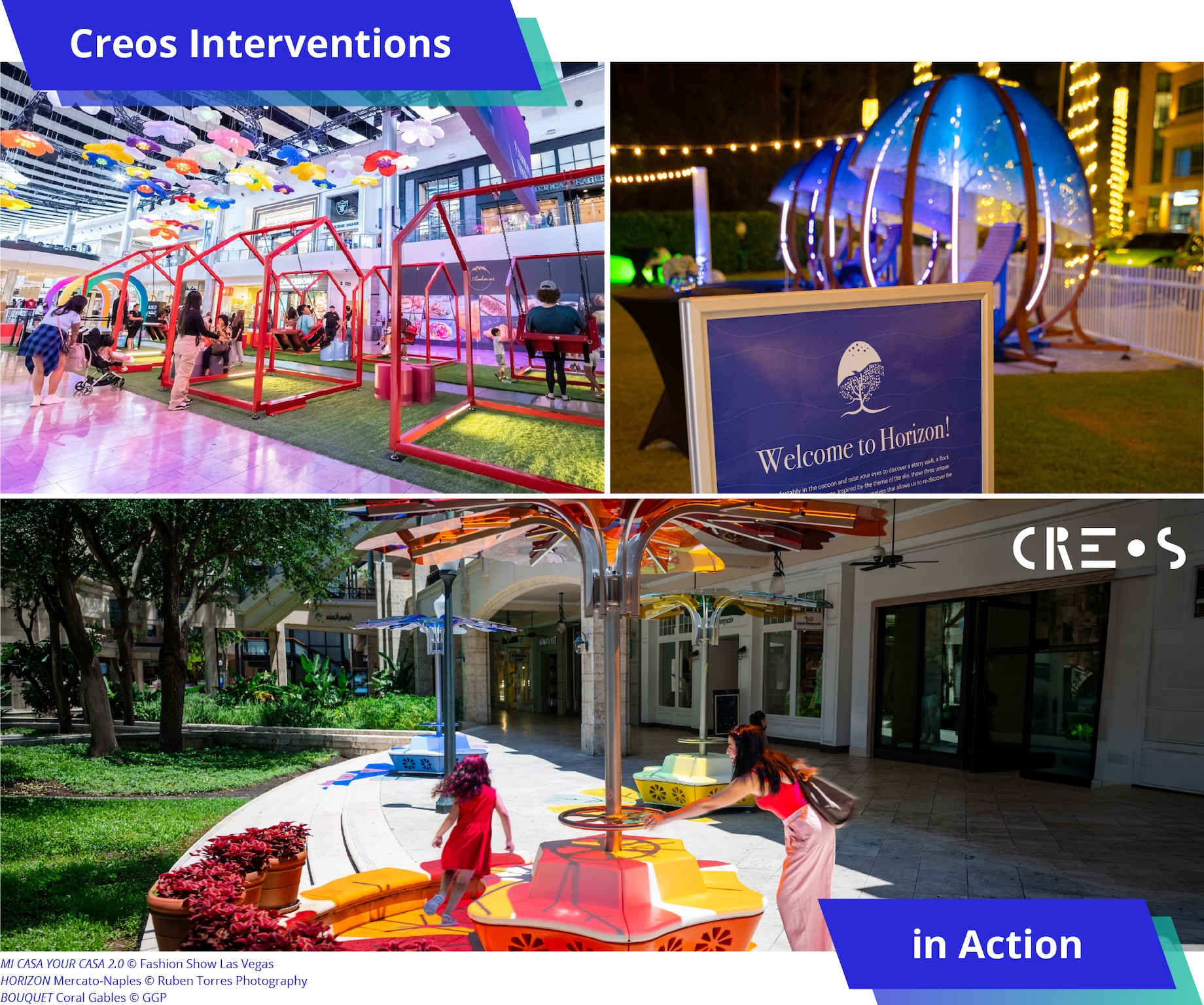
What It Looks Like in Practice
This is where physical interventions begin to make a measurable difference.
Downtown Detroit Partnership, a long-standing partner, noted a 9.1% year-over-year increase in visitors at Beacon Park during the presentation of the interactive Optik installation, recording more than 19,000 attendees.
While multiple factors can influence attendance, the installation became an integral part of the experience — introducing a sense of invitation, visibility and shared interaction within the space. But what stands out on-site is that it created moments where people chose to pause, engage and naturally capture and share their experience.
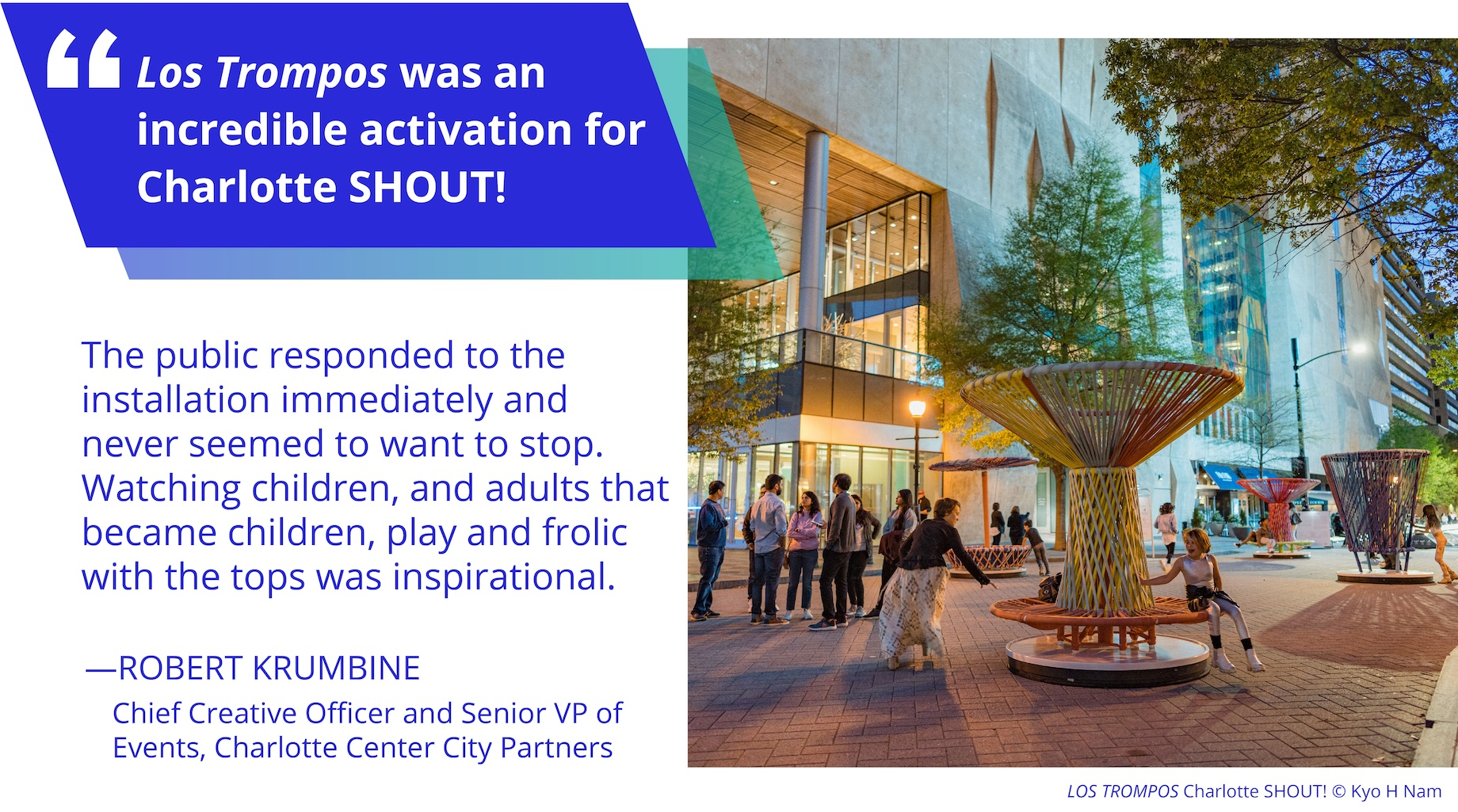
These types of observations point to a broader reality: The most effective places are not only informed by data but also shaped by how people use them and what they remember from the experience.
Similar observations have been made in other contexts:
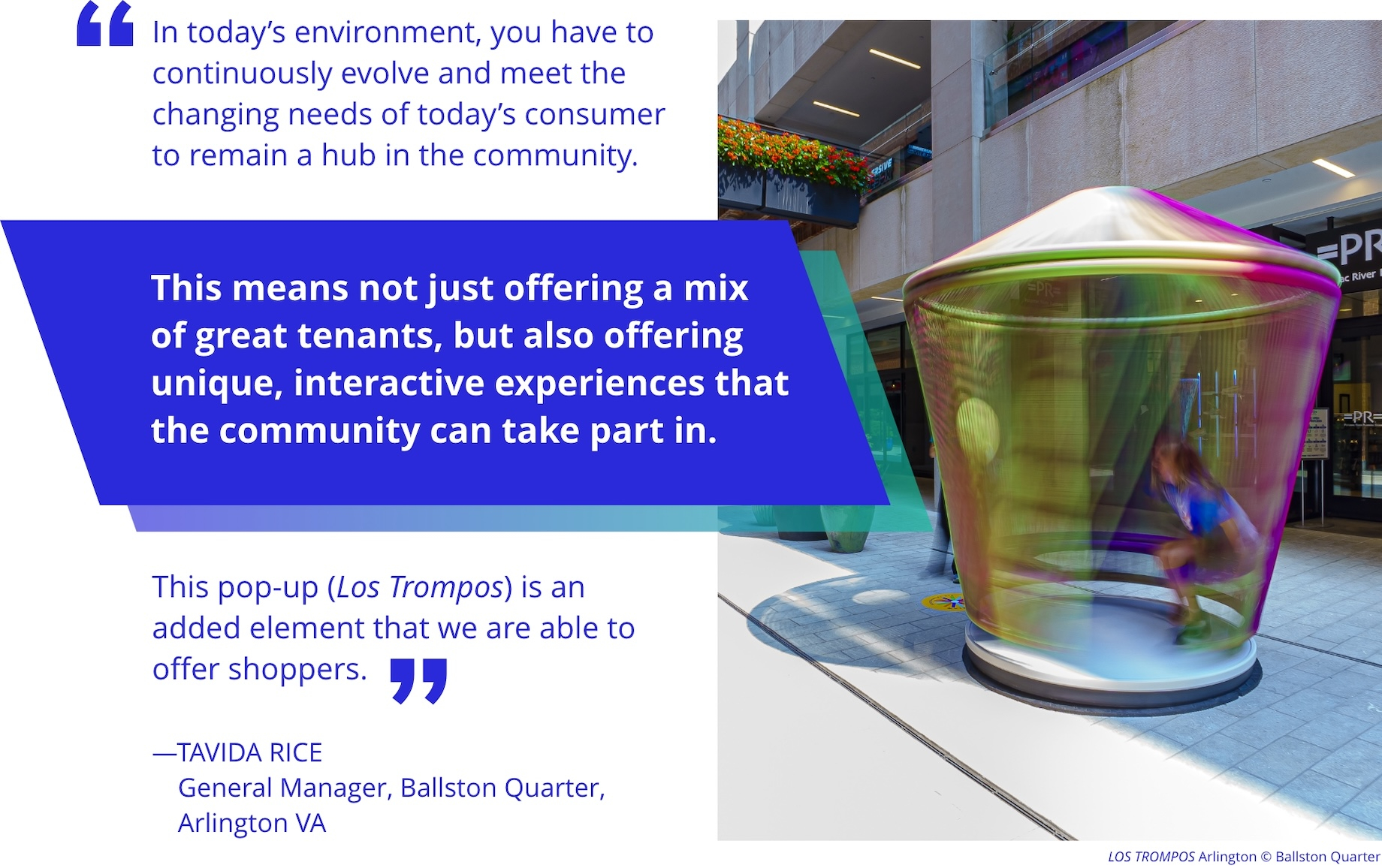
In this context, installations are not just standalone attractions — they become part of a broader strategy, supporting tenant visibility, enhancing the overall experience of the place and contributing to the site’s commercial vitality.
What if data were used not only to optimize performance but also to shape how places evolve and stay relevant over time?
Beyond performance metrics, what defines a successful place is its ability to remain meaningful to the people who use it — while staying visible, distinctive and valuable within its ecosystem over time.
Contact: Alexandre Lemieux