The Short Version
- After the 2023 earthquakes in Turkey, the relatively undamaged Kahramanmaraş Piazza shopping center served as an emergency recovery hub in the heavily affected city.
- The Rönesans Holding-owned mall later created the Women’s Labor Shopping Festival, giving women entrepreneurs from earthquake-affected areas free space to sell products and reconnect with customers.
- The festival grew from 38 participants in 2024 to 150 in 2026, when it drew 97,000 visitors. Its 2025 iteration earned Gold in the 2026 ICSC MAXI Awards.
- According to Piazza marketing manager Dilşad Leblebici, about 40 participants eventually opened businesses or began employing others, and the team is exploring ways to expand the program beyond Kahramanmaraş.
Kahramanmaraş Piazza Has Helped Women Rebuild Livelihoods After the 2023 Earthquakes
When the February 2023 earthquakes struck southern and central Turkey, the Rönesans Holding-owned Kahramanmaraş Piazza mall became something more than a shopping center.
Because the 530,000-square-foot building escaped significant damage amid widespread destruction in the city of Kahramanmaraş, the mall remained open and served as an emergency recovery area, providing access to services and coordinating with government officials and other organizations during the response.
The earthquakes killed more than 50,000 people in Turkey and affected 11 provinces that were home to roughly 14 million people. For the people working at Piazza, the disaster was deeply personal. Two members of the shopping center team passed away in the earthquakes. “It was really difficult,” said Dilşad Leblebici, Kahramanmaraş Piazza’s marketing manager. “So many friends also died.”
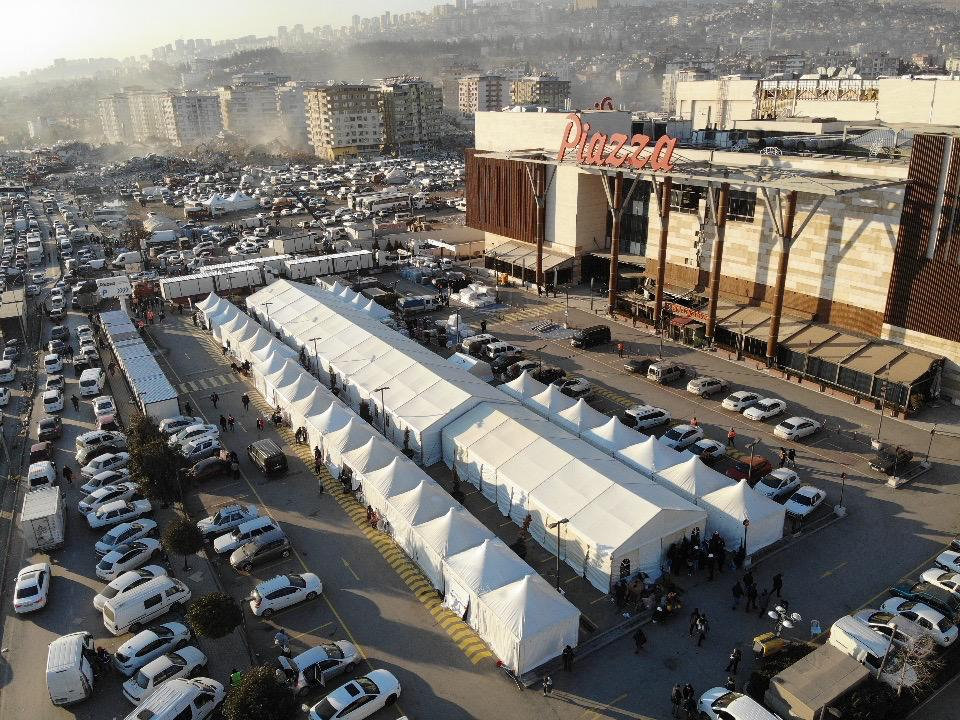
In the aftermath of the February 2023 earthquakes in Turkey, Kahramanmaraş Piazza shopping center was relatively undamaged. The mall worked with government agencies to offer emergency relief in a tented community hub in the parking lot. These efforts later evolved into the Women’s Labor Shopping Festival. Photo courtesy of Kahramanmaraş Piazza
Even before the disaster, women in the area had fewer income-generating opportunities and carried a disproportionate share of unpaid caregiving responsibilities. Some earned money from home by making food, candles or other handmade products to sell. Many women in the region had lost not only their homes and loved ones but also their businesses and the ability to earn a living. Among women entrepreneurs surveyed by UN Women and the Women Entrepreneurs Association of Turkey, 88% said their businesses remained interrupted a month after the earthquake, while 70% said their caregiving responsibilities had increased.
“They lost everything,” said Leblebici. “They don’t just need money thrown at them. They need jobs. They need confidence, especially for getting their life on their own.” The disaster drove the Piazza team to create the Women’s Labor Shopping Festival, a three-day marketplace where women from earthquake-affected areas could sell their wares without having to rent space.
From Emergency Relief to Economic Recovery
The festival transformed the mall’s role once again, from an emergency gathering place into a platform for economic recovery. Rönesans Holding, which owns Kahramanmaraş Piazza, documented the initiative in the video below. It became an annual event and won Gold in the 2026 ICSC MAXI Awards for its second iteration, held in 2025.
A 2026 promotional video for the Women’s Labor Shopping Festival. The first identified speaker is Ebru Aksoy, marketing executive at Kahramanmaraş Piazza. The second is Hakan Kaan Avcı, mall manager at Kahramanmaraş Piazza. Video courtesy of Kahramanmaraş Piazza
As the most urgent phase of the crisis passed, Leblebici and her colleagues began asking what the shopping center could do next. The answer was not simply to provide financial assistance.
The team began working with local partners, including the TOBB Kahramanmaraş Women Entrepreneurs Board — akin to a women’s chamber of commerce — to develop a festival for women whose livelihoods were disrupted by the earthquakes.
The concept was straightforward. Women could bring products they had made themselves and sell them in the main event area. Each seller had her own stall alongside other participants. Piazza provided space and promotion at no cost for three days, while concerts and other entertainment helped bring shoppers through the doors.
Participants had to be women from an earthquake-affected region who were selling products they had made themselves. The approach addressed a problem that traditional disaster relief could not necessarily solve: giving entrepreneurs a way to reconnect with customers and rebuild their livelihoods.
The mall advertised the festival through on-site channels like digital screens, as well as via TV ads and on social media platforms with influencer collaborations throughout Turkey. The 2026 event also featured a guest appearance by Turkish celebrity TV presenter and actor Derya Baykal.
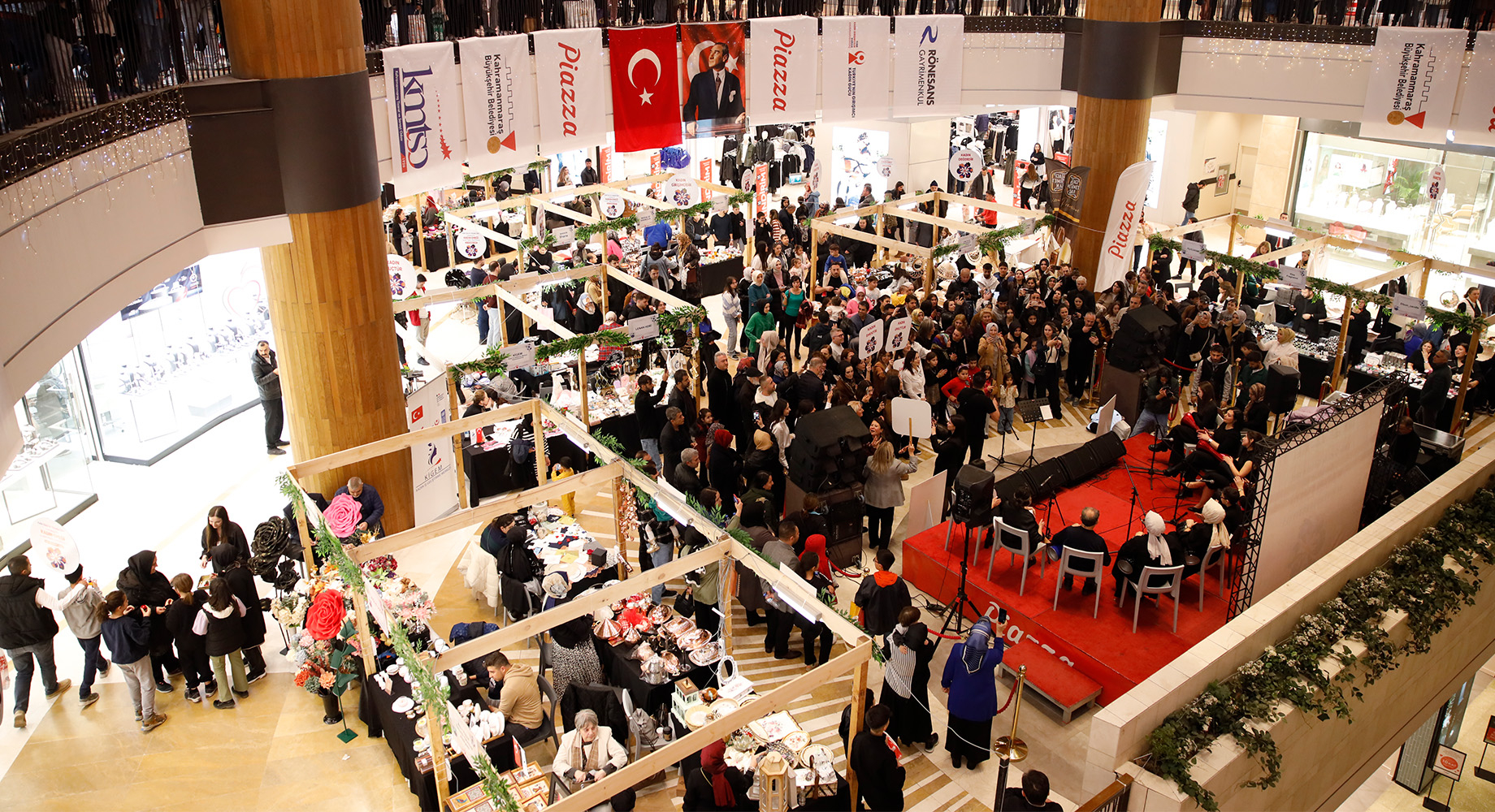
The 2025 Women’s Labor Festival at Kahramanmaraş Piazza, which won Gold in the ICSC MAXI Awards, provided free stalls to 102 women entrepreneurs affected by the 2023 earthquakes in central and southern Turkey. Photo above and at top courtesy of Kahramanmaraş Piazza
In the beginning, some participants were skeptical that shoppers would buy their products. Leblebici remembers women questioning whether anyone would come to their booths. Then the shoppers arrived. The March 2024 event drew 80,000 visitors. In 2025, about 91,000 visitors attended over two days in February, while the 2026 event attracted 97,000 over three days in June. The festival also expanded this year to two floors.
The first festival featured 38 women. The following year, most of those women returned, joined by 64 additional sellers. By 2026, participation had grown to 150 women. “When we saw all the women in our shopping mall and their smiling faces, everything changed,” said Leblebici. “I think the best word is hope.”
Women Entrepreneurs Build Businesses and Connections
The festival also helped strengthen a network of local women entrepreneurs. According to Leblebici, about 40 participants eventually opened their own businesses or began employing others. “The women are very collaborative,” Leblebici said. “They are sharing everything — not only for their jobs, their ideas and their business, but their private lives, everything.”
Kahramanmaraş resident Beyza Uysal lost both her husband and her only child in the earthquakes. She has since written a book called “The Last Supper” detailing her experience, which she sells at the festival. “Through the venture I started, I’m trying to begin again in my own way,” said Uysal in an interview conducted by the Kahramanmaraş Piazza marketing team. “I’m doing my best to hold onto life again.”
Before the earthquakes, Kahramanmaraş resident Gülsüm Arslanbas made dried fruits and vegetables, including grapes and banana peppers, in her kitchen. She had to relocate after the disaster and eventually brought her products to the festival to sell. One visitor tasted her products, saw potential beyond the event and invested nearly $100,000 in the business, according to Leblebici. Arslanbas subsequently launched a company that now employs 13 people and sells products across Turkey. “Being [at the festival] has allowed me to connect with fellow women entrepreneurs,” said Arslanbas in an interview with the Piazza marketing team.
“The women pay nothing for it, they have some friends come, their friends call their friends — and they can … talk about their story and their dreams,” said Leblebici.
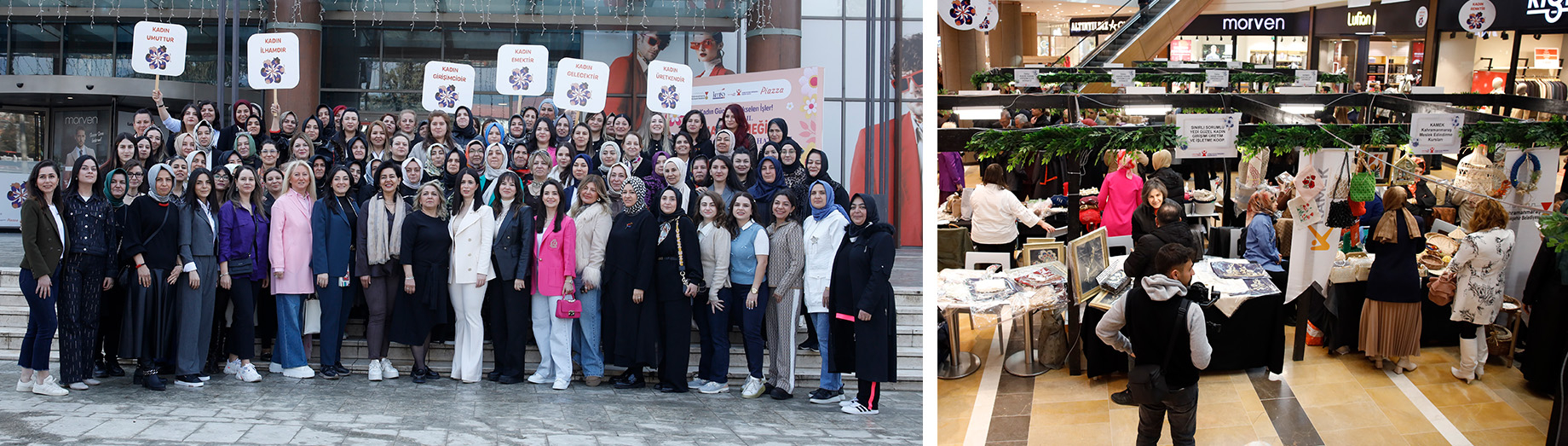
At left, participants in the 2025 Women’s Labor Shopping Festival gathered outside Kahramanmaraş Piazza. At right are entrepreneurs selling handcrafted goods during the 2025 festival. Photos courtesy of Kahramanmaraş Piazza
Taking the Festival Beyond Kahramanmaraş
“The next festival will be the best one,” said Leblebici. “It’s an opportunity that’s only growing.” Piazza’s team is exploring a roadshow, including a potential event at one of its Istanbul properties, where women entrepreneurs from the earthquake-affected region could reach new customers.
The Women’s Labor Shopping Festival is no longer simply an earthquake-recovery program. It has become an example of how a shopping center can use its physical space, customer base, marketing capabilities and community relationships to support economic development.
The mall first became a hub for emergency relief because its building survived the earthquakes. It then became a place where people could begin putting their lives back together. That may be the festival’s most lasting measure of success: not only bringing shoppers into a mall but giving women who lost nearly everything a place to begin again.
By Halley Bondy
Contributor, Commerce + Communities Today