The Short Version
- Restaurant chains are embracing nostalgia through retro designs, throwback menus and brand refreshes to reconnect with longtime customers and attract younger diners.
- Nostalgia-driven marketing can increase purchasing intent by as much as 50%, according to foodservice research firm Technomic.
- Pizza Hut has remodeled 155 restaurants into Pizza Hut Classic locations, reviving familiar design elements that have found an enthusiastic audience among younger consumers on social media.
- Chili’s, Red Lobster and Domino’s are blending elements of their brands’ pasts with modern features and updated experiences.
Restaurant Chains Tap Nostalgia To Connect With Customers
There’s a good reason a growing number of chain restaurants are leaning heavily into nostalgia themes to attract new customers: It works.
While sales growth among fast-casual chains slowed to 6% in 2025 from an average of nearly 9% over the previous three years, the nostalgia trend continues to gain steam. According to recent data from food service research firm Technomic, nostalgia-driven marketing can boost purchasing intent by as much as 50%.
Legacy retail brands increasingly are investing in store designs and menu updates that appeal to consumers young and old, seeking a modern-day version of experiences they think of or remember as simpler, unique or exciting.
Among the chains taking a ride down nostalgia lane to lure in young consumers and bring back older clientele are Pizza Hut, Domino’s, Chili’s, Red Lobster, McDonald’s and Buffalo Wild Wings. Buffalo Wild Wings, for example, is banking on a new throwback menu that includes items like Beef on Weck Sliders, Buffalo Chips, Garlic Mushrooms, Mini Corn Dogs and Hot BBQ sauce.
“Nostalgia works because restaurants sell much more than food,” said Phil Kafarakis, CEO of the International Food Manufacturers Association. “They sell experiences, connections, traditions and memories. Over the past decade, the industry became intensely focused on modernization, convenience, technology and operational efficiency. All those investments were important, but in some cases, restaurants lost a degree of their personality along the way. What I believe we’re witnessing today is an effort to recover that emotional connection.”
“Over the past decade, the industry became intensely focused on modernization, convenience, technology and operational efficiency. … What I believe we’re witnessing today is an effort to recover that emotional connection.”
Pizza Hut Classic Finds New Fans Among Younger Diners
Legacy brand Pizza Hut is rediscovering its roots through Pizza Hut Classic locations that look and operate like the chain’s early days. So far, 155 existing locations have been revamped, and more are underway. The brand’s Classic Remodel Playbook dictates that all such locations must be in towns with no more than 7,000 residents and feature its iconic red roof, red-and-white-checked tablecloths, stained-glass lamps, salad bars and signature red plastic cups. Locations also may feature Pac-Man machines, either upright or tabletop, depending on available space. The first such Classic remodel came in 2019 in Ashdown, Arkansas.
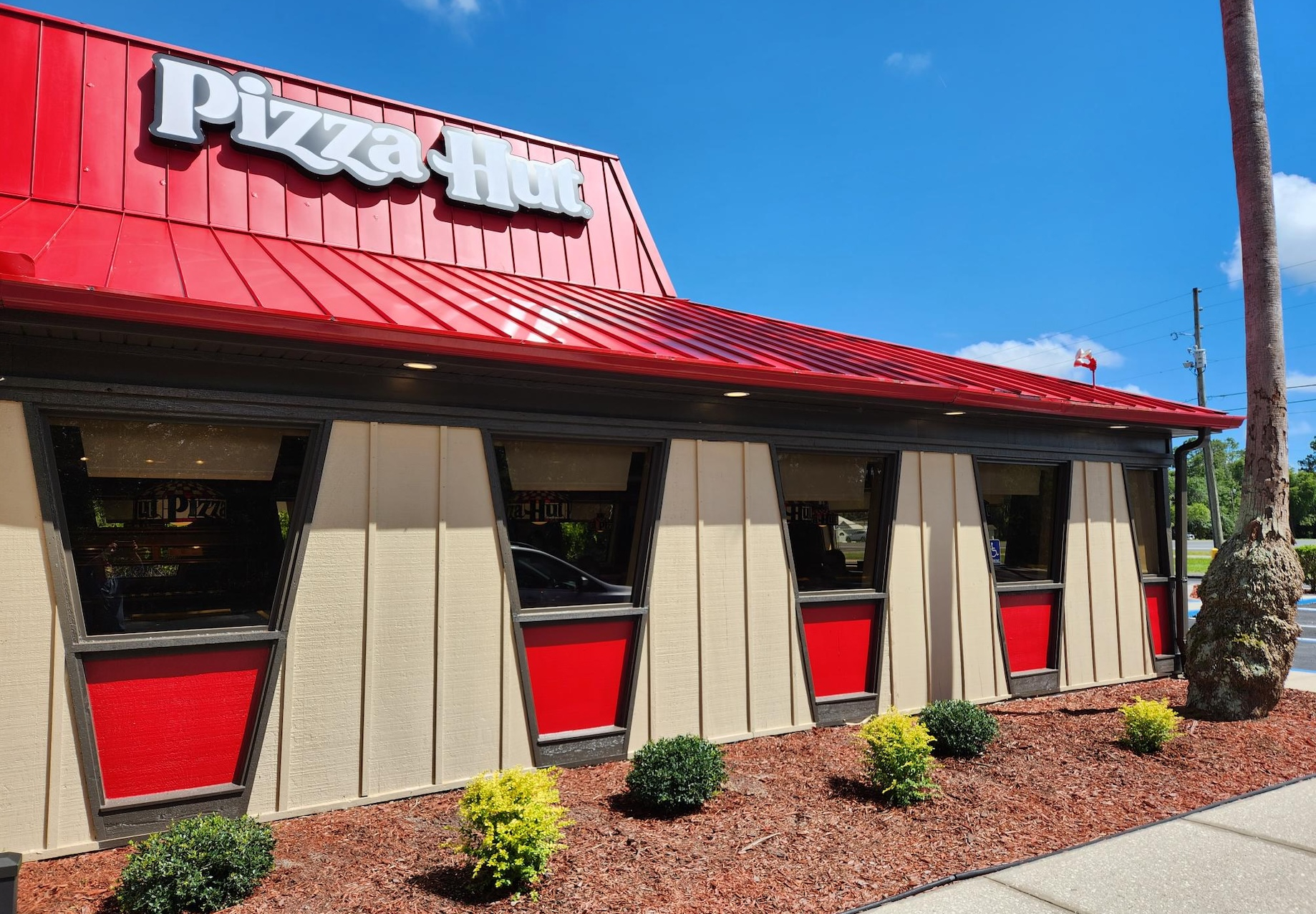
Franchisee Tim Sparks owns 92 Pizza Hut restaurants, 39 of which are Pizza Hut Classic locations, including this restaurant in Homosassa Springs, Florida. Photo above and at top courtesy of Tim Sparks
While familiar sights, sounds, decor and food strike a chord with older customers, much of the public’s awareness has come via social media videos created by Millennial and Gen Z consumers, according to Tim Sparks, who owns 39 Pizza Hut Classic restaurants. TikToks created at several Pizza Hut Classic locations prompted extensive media attention in print, on TV and online, resulting in an advertising equivalent value of about $35 million, he said.
“Our [corporate] brand gets so nervous that [the Classic model] is hitting the wrong person,” said Sparks, president of Daland Corporation and owner of 92 Pizza Hut franchise units including the throwback Classic versions. “I am trying to get them to understand that, no, the TikToks were all made by these young people that we’re trying to go after now. They are eating this up!”
Nostalgia Offers an Emotional Connection as Consumers Watch Spending
The lure of nostalgia has found its way into several industries, including fashion, where styles tend to be cyclical in nature. Similarly, what’s old is new again in the restaurant business, where brands are looking for ways to entice customers who may be cutting their dining purchases amid inflation and rising food costs.
“Nostalgia is absolutely a reality,” said Jessica Gidari, founder of hospitality and culinary development agency Porcelain Collective. “In the past five to 10 years, there’s been this focus on theater and theatrics and maximalism. Design just got so oversaturated. When you think about how tech and social have played a part in all of this, we’re starting to see this pull back to this identity of what’s real. That bigger thought of less performative and more of an emotional connection.”
Chili’s, Red Lobster and Domino’s Blend Old and New
Chili’s is refreshing its restaurants by combining the old with the new. The brand plans to update 10% of its locations every year until all 1,200 U.S. stores are updated. The goal, according to Brinker International CEO and president Kevin Hochman, who is also president of Chili’s, is to “make Chili’s more Chili’s” by bringing back original elements like its red booths, Southwest-inspired tiles, and playful chalk artwork by Sean McAfee, who created hand-drawn artwork for the chain during the 1990s and 2000s. Chili’s also is minding modern diner demands, adding such touches as horseshoe-shaped bars and more TVs for sports.
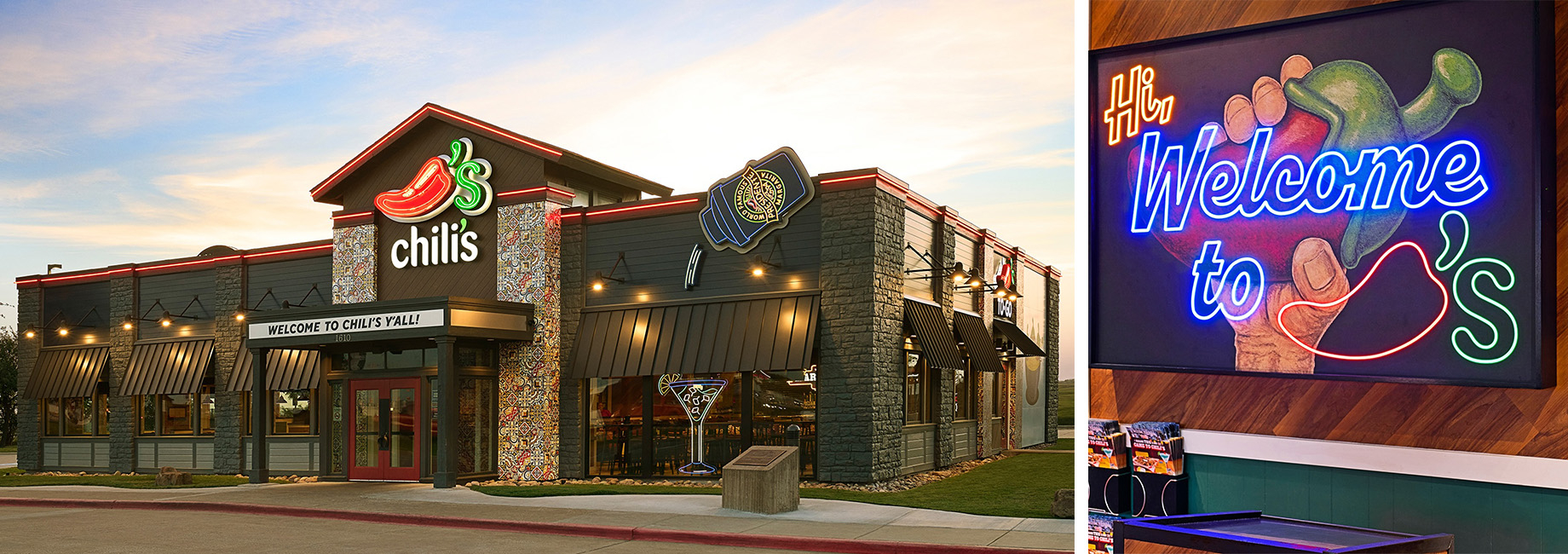
An updated look for Chili’s leans into the heritage, celebrates its personality and brings character into the restaurants. Photos courtesy of Chili’s
Red Lobster, which filed for Chapter 11 bankruptcy in 2024, is seeking to refresh its roughly 500-unit operation by testing out a few locations with bright interior lighting and upscale seating designs coupled with nostalgic features like live lobster tanks and nautical decor. “Internally, we’re calling it ‘new-stalgia’ — respecting our heritage while thoughtfully evolving the experience for today’s guests,” Red Lobster chief global development officer Kristen Briede told Restaurant Business.
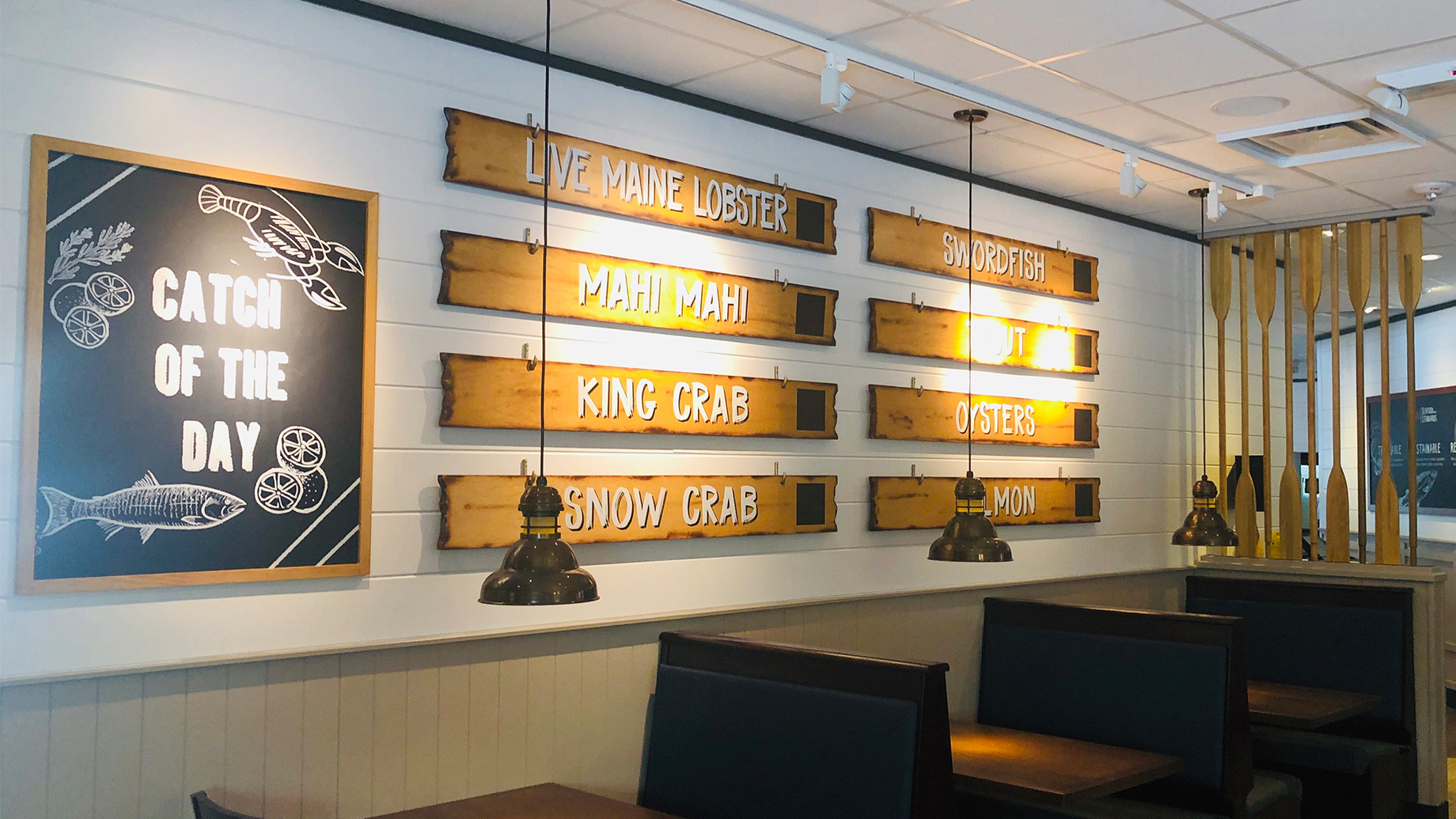
Red Lobster’s refresh includes nostalgic features like nautical decor. Photo courtesy of Red Lobster
Here’s another buzzword: fauxstalgia. It refers to young consumers latching onto nostalgic touchpoints they never experienced personally. “A distinctive retro restaurant provides a setting worth sharing, photographing and talking about,” said Kafarakis. “That can generate attention beyond the brand’s traditional customer base.”
Domino’s, which dominates as the country’s top-selling pizza establishment with $9.5 billion in sales in 2024, according to a report from PMQ Pizza, is undertaking its first brand refresh in 13 years. Announced in 2025, the refresh blends elements of the brand’s heritage with a more playful, modern look, according to Domino’s.
“There is a general macro trend of nostalgia which consumers are buying into,” said GlobalData managing director of retail Neil Saunders. “This is mainly because the past is seen to be more interesting and exciting and perhaps safer than the present. While this doesn’t work as a standalone commercial strategy, if blended with other things like sharp prices or great products, it can help move the dial.”
The whole idea of reaching back to an earlier time for comfort is not lost on Sparks, who grew up in the 1980s. “When I was in the ’80s, I was thinking about the ’60s and always thought it was such a simpler time that my parents grew up in. And now I see my daughter looking back at the ’80s, thinking, ‘Gosh, back then, it was simpler than it is today.’ And you know what? She’s right!”
The very first Pizza Hut television ad was created in 1965 and aired on ABC in November 1966 during a college football game between Notre Dame and Michigan State.
By Howard Ruben
Contributor, Commerce + Communities Today