The Short Version
- Retailers are expanding into campus-adjacent districts and on-campus developments to reach Gen Z consumers and build long-term brand loyalty.
- Colleges and universities are increasingly developing mixed-use projects that combine retail, housing, entertainment and services to enhance the student experience and generate revenue from excess campus land.
- Strong year-round populations — including nearby residents, faculty and medical workers — help campus retail centers manage seasonal dips in student traffic.
- Tenant mixes are becoming more curated, with national brands, small-format grocers and experiential concepts like gaming and social entertainment reflecting changing student preferences.
- Density, consistent enrollment and surrounding residential communities remain key factors determining where campus retail and mixed-use development can succeed.
Campus Districts Are Emerging as Strategic Retail and Mixed-Use Destinations
Buoyed by the increased spending power of Gen Z — those born roughly between 1997 and 2012 — and the chance to create lifelong brand loyalties among young adults, retailers are gravitating to colleges and universities to find customers. Thus food, fun, fashion and service retail offerings are appearing in settings like campus-adjacent mixed-use districts and the ground floors of on-campus dorms. These shops must appeal to a convenience-minded and digitally native generation whose spending power is expected to grow to a record $12 trillion by 2030, according to a 2024 report by NIQ and GfK in collaboration with World Data Lab.
MORE FROM ICSC: The Rise of the Gen Z Consumer
NEW THIS YEAR! ICSC+WOMEN IN CRE at ICSC LAS VEGAS.
Build Community With The Women Transforming CRE
Learn MoreSteiner + Associates senior vice president of leasing Spencer Jordan talked with C+CT contributing editor Steve McLinden about the changing dynamic of college campus retail and a pair of signature projects it leases in Columbus, Ohio’s University District on behalf of Ohio State University’s 30-year-old, nonprofit development arm, Campus Partners:
- The 7.5-acre Gateway – University District on North High Street, along the southern edge of the 55,000-student OSU campus, launched in 2005 as South Campus Gateway. It has evolved into 225,000 square feet of retail, entertainment and restaurants, plus office space, student residences and a 1,200-space parking garage. Tenants include indie movie theater Gateway Film Center; national retailers and restaurants like Barnes & Noble, Pitaya, First Watch and Raising Cane’s; and 13 other local, regional and national leaseholders.
- The 9-acre University Square at 15th Avenue and North High Street, an intersection long considered the university’s front door, is 5 years old and still growing. It features dining like Smashburger and Roots Natural Kitchen, plus retail, office and residential. Campus Partners plans to break ground late this year on a 145-room hotel with ground-floor dining options and a rooftop bar and 120 apartments.

Steiner + Associates’ Spencer Jordan Photo courtesy of Steiner + Associates
What’s driving colleges and universities to pursue increasingly complex developments to capture retail demand from students and surrounding communities?
Universities typically run these projects, and they’re behaving more like builders of cities as they do. They’re monetizing excess land, modernizing the student experience and creating attractive campus “front doors” to help recruit students, faculty and staff, plus to impress parents and alumni. Gateway and University Square are good examples; they’re destinations that have become big parts of the OSU experience package.
FROM THE C+CT ARCHIVE: How Liberty University Bought and Reinvigorated River Ridge Mall
How do today’s campus retail environments differ from the more limited offerings of the past?
The bar has been set a little higher these days. A lot of student-housing developments have shifted to a mix of uses on their ground floors, including food, coffee, fitness and convenience tenants. Students today have come to expect real brands on campus and things such as concierge services and food operations that seamlessly blend with pickup and delivery options. Campus retail, including at Ohio State, is becoming a year-round ecosystem compared to the old piecemeal, seasonal-leasing approach.
FROM THE C+CT ARCHIVE: Big Demand: Loads of Projects in College and University Markets
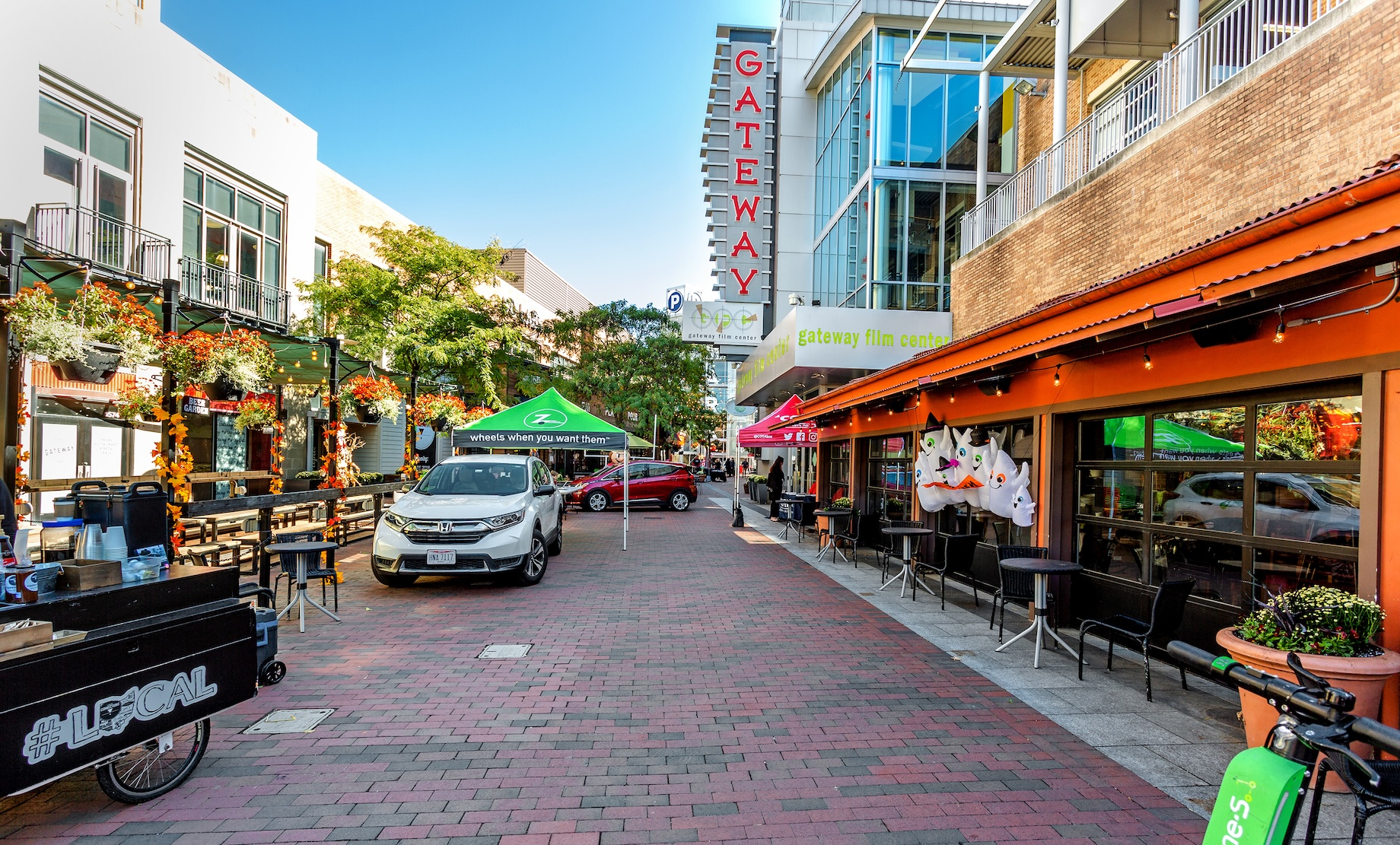
Gateway Film Center, anchor of the Steiner + Associates-leased Gateway – University District development in Columbus, is steps from the Ohio State University campus. The 17-year-old theater has been a boon for retail retenanting. Photo courtesy of Steiner + Associates
How do retailers manage seasonal traffic swings when many students leave campus, and how important is the surrounding community to maintaining year-round sales?
The good thing about the college summer break, where you typically see a temporary 25% reduction in retail traffic at campus retail around the country, is that it isn’t a surprise. Seasonality gets factored into the center’s [12-month lease] underwriting. However, if all you can offer in the summer is a services-only center, that can make your center fragile and tougher to finance. At Ohio State, we’re fortunate to have a very strong, established residential community adjacent to Gateway and to University Square, plus a year-round faculty population, a large medical-[employment] community, plus a strong regional market. We can fill in a bit, too, with camps, conferences and orientations during summers.
Are landlords becoming more strategic in tenant curation at college- and university-serving retail and mixed-use centers?
Landlords and retailers have become much more aware of day-parting, or parts of the day or week where they can best target their captive audiences, whether it’s a quick lunch with fellow professors at a place like First Watch, a short afternoon stop for a smoothie or for a little banking or a meetup with friends at an arcade, a happy hour or a nightclub.
How do campus landlords implement new leasing strategies while maintaining existing tenant relationships and long-term stability?
Customers vote with their wallets, especially in the university environment, so you need to have the ability to optimize the highest and best uses, but at the same time, you don’t want spaces to go just to the highest bidder. You need to protect the campus DNA and make sure a tenant feels right.
Some local favorites can be moved successfully to a different part of campus if need be. We had to play a lot of musical chairs with spaces in the first phase of University Square. It included property swaps, the purchasing of private buildings and the combining of various parcels.
MORE FROM STEINER ON TENANT CURATION: Reinvention at Easton Town Center: Significant Rollover and Population Surge Coincide
Are lenders more comfortable financing campus retail and mixed-use developments today than they were, say, a decade ago?
They are. No one is underwriting on optimism anymore. The capital conversation around campus retail has matured over the past decade. At the same time, project risks have evolved, including a higher lending tolerance for mixed-use developments, as schools [and lenders] understand that campus retail is demand driven and needs a long-term horizon. In the case of Ohio State, there’s a very strong annual enrollment and strong fundamentals in place to support these developments.
We’re seeing concepts like Trader Joe’s, small-format Target stores, national coffee chains and select discounters locating in campus areas. What’s driving that shift?
Over the years, we find the campus retail-center market behaving more like an urban-retail consumer versus traditional strip retail. More students are in apartments, they’re more health conscious than ever, cooking more and picking up quick-and-healthy prepared meals. The small-format campus-area grocers today are less about traditional expansion and more about the type of customization we see at urban grocers, [selling curated] products that fit their markets. Nationally, I think we’ll see more of these specialty grocers [around] campuses.
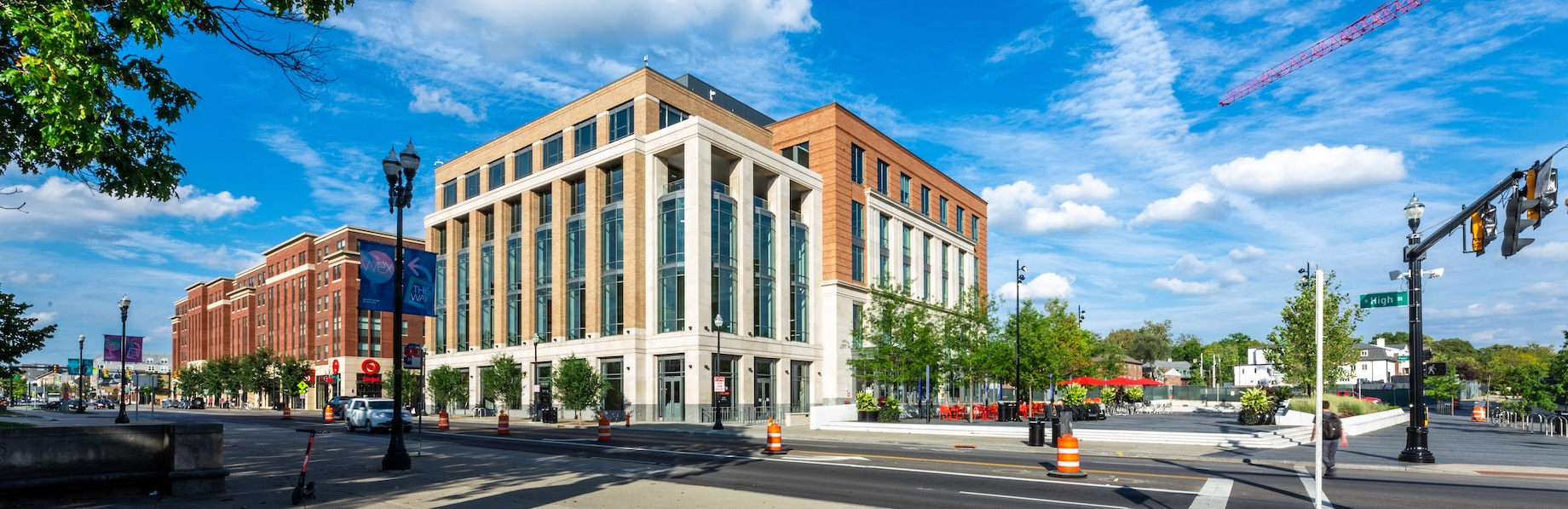
A small-format Target opened on North High Street near the OSU campus in 2018. Photo courtesy of Steiner + Associates
What role do entertainment and experiential concepts play in today’s campus retail mix?
This is also about curation, or more specifically, curating an experience. Today, college students are into what’s called competitive socializing, with things like pickleball, karaoke and immersive gaming. At Gateway, we have an entertainment and restaurant/bar concept called Game Arena with the latest multiplayer games on 40 high-end PCs and consoles, as well as Eupouria, which features a self-serve draft-beer wall and such things as darts, cornhole, ping-pong and old-school video games. These aren’t your dark bars of yesteryear. They’re activated spaces.
Are there still opportunities for local and independent businesses in these campus developments?
There are, especially for mom-and-pops that have withstood the test of time and have a niche in a college market, such as that signature pizza place, doughnut shop, late-night burrito place or all-day breakfast haunt. They can compete if they can adapt to the changing tastes of incoming classes and are disciplined in how they operate. These businesses already have the emotional loyalty of alumni.
What types of daily-use retailers are performing well on college campuses today?
Students are drawn to fast-casual restaurants that prove they can handle a daily lunch rush and to operations such as convenience stores that offer both a brick-and-mortar experience and delivery apps.
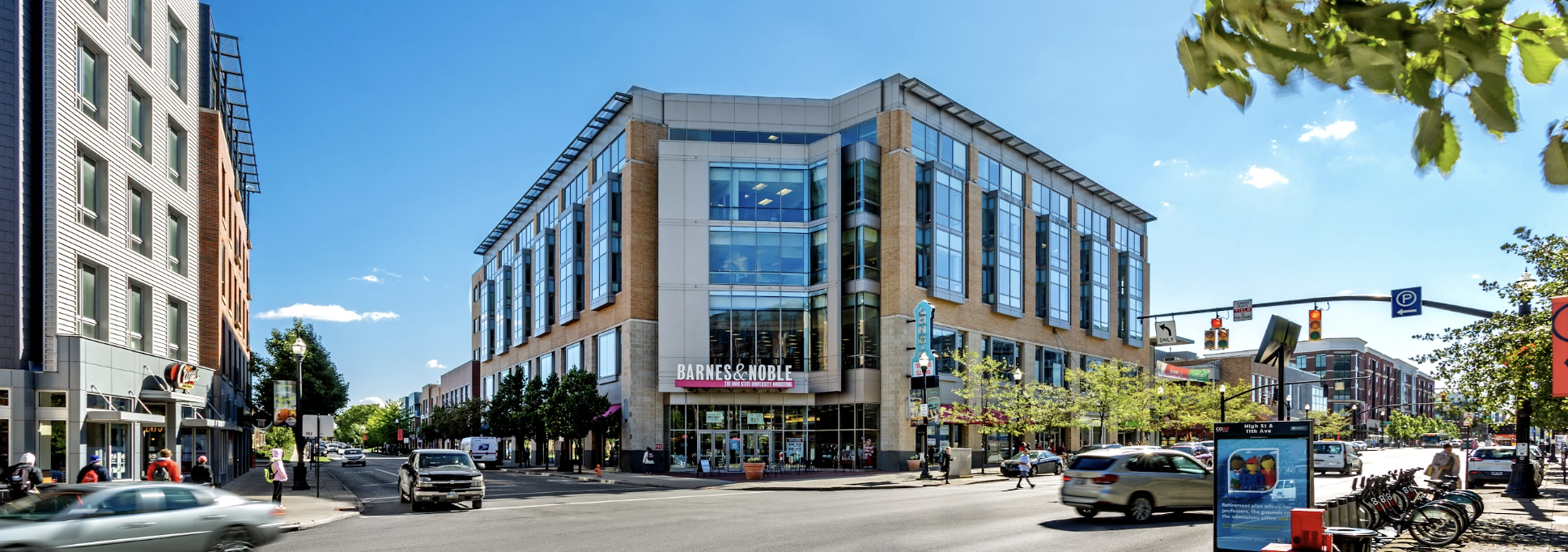
Barnes & Noble The Ohio State University Bookstore and Raising Cane’s, pictured on the left, are among the ground-floor tenants in the mixed-use Gateway, which includes entertainment, student apartments and office along the OSU campus entryway. Photo above and at top courtesy of Steiner + Associates
Where are the strongest opportunities for new campus retail and mixed-use development?
There’s no particular area. The biggest determining factor is density and year-round populations. It’s hard to develop retail on small or remote campuses. You need some affluent suburbs and a large student population to support them. As far as format goes, the integration of various retail functions, especially at these gateways, is clearly more effective when they’re pulled together in a district.
By Steve McLinden
Contributor, Commerce + Communities Today