The Short Version
- Retail real estate marketers are getting involved earlier in development, repositioning plans and investment decisions.
- Regency Centers, for instance, began integrating marketing into the development process about a decade ago.
- In one example, Greenberg Gibbons’ marketing team flagged site constraints that would inhibit the company’s vision for a property. The company took the team’s recommendation not to acquire the property.
- And First Washington Realty’s marketing team contributed to the redesign of a shopping center courtyard based on how families and community groups used it.
What Marketing Teams Bring to Development and Investment Decisions
For years, retail real estate marketers were called in — after the big decisions already had been made — to plan the events, create the brochures, launch the campaigns and spread the word. That work still matters, but the job has become much bigger. “We’ve moved from promotion to intelligence,” said Brixmor senior vice president of marketing Kristen Moore.
Marketers are now expected to understand the customer, how trade areas are shifting, how people use a property and where the next opportunity lies. Increasingly, they are brought into conversations early enough to help shape decisions themselves — and are expected to prove their value.
That shift was a recurring theme at ICSC+SPECIALTY this year. Rappaport vice president of marketing Dee Singletary, who moderated a panel on marketing and leasing, noted that “marketing adds the most value when we’re involved early.” Whether the discussion involves leasing, placemaking, development, budgets or technology, she said, marketers can contribute customer insights and market research that shape strategy.
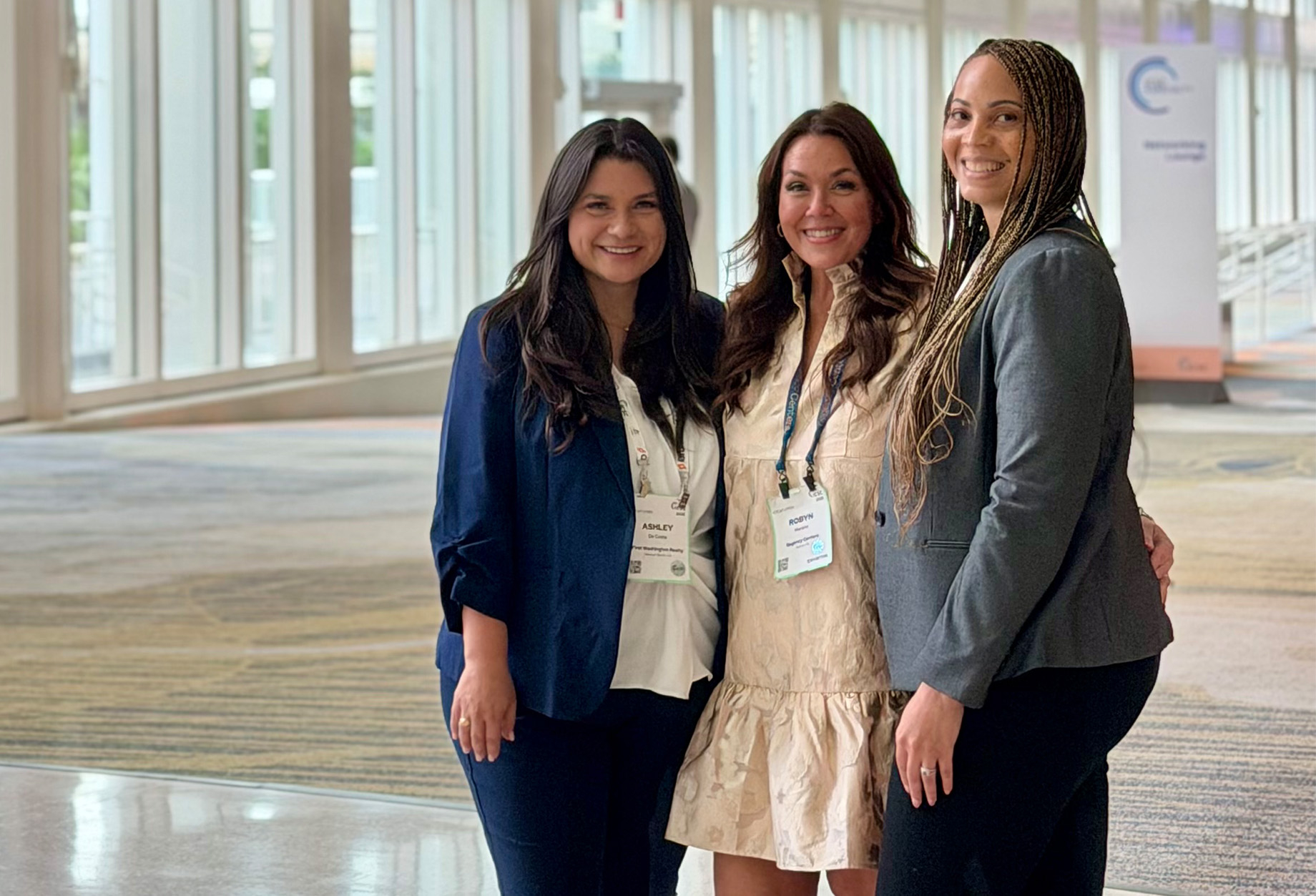
Pictured from left to right at ICSC+SPECIALTY are First Washington Realty’s Ashley Da Costa, Regency Centers’ Robyn Marano and Rappaport’s Dee Singletary. Photo courtesy of Ashley Da Costa
Marketing’s Role Starts With Site Selection
Regency Centers senior vice president of marketing and communications Jan Hanak said his company began integrating marketing into the development process about a decade ago. Today, his team, which includes market research, participates from “dirt to destination,” he said, from evaluating potential sites through promoting completed shopping centers.
Using neighborhood demographics and mobile location data that reveal how consumers move through a market and which shopping destinations they visit, the team identifies gaps in the market and assesses what kinds of tenants a proposed center could support. And as a project moves forward, communications team members may participate in town halls and community meetings to address residents’ questions, and marketing colleagues develop the property’s brand and campaigns to attract tenants. “That was unheard of 10, 15 years ago,” Hanak said.
At Mellody Farm in Vernon Hills, Illinois, for example, Regency set out to “bring the city to the suburbs.” In 2016, the marketing team already had created a brand reflecting the site's history as a dairy farm and launched a Facebook page that attracted more than 3,500 followers. The team posted to solicit feedback from residents about dining, public spaces and other amenities, and they also answered questions about traffic, tenants and the development timeline. The social media effort built anticipation for the property. “The leasing momentum really was able to follow the excitement of the community,” Hanak said. And that approach, considered new before the property opened in 2018, now has become standard practice, even at Regency’s smaller grocery-anchored centers.
Market Research Tests the Case for an Acquisition
Greenberg Gibbons vice president of marketing and communications Alicyn Emerick said marketing teams also can contribute to decisions about portfolio decisions. She offered an example during an ICSC+SPECIALTY panel. Her company was considering buying an existing shopping center as part of its expansion along the East Coast. The numbers looked encouraging — the surrounding market had a large population and high household incomes — but before committing, the acquisitions and leasing teams asked Emerick’s team to determine whether the shopping center could be repositioned to attract aspirational retailers.
The demographics suggested there was demand for new retailers, but the team’s research found that the entrance, local restrictions and costs associated with repositioning presented roadblocks to Greenberg Gibbons’ vision. “The market might support it, but the site itself doesn’t,” Emerick said. Ultimately, the company took her team’s recommendation against the acquisition.
The decision’s significant financial implications illustrate the evolution of marketing’s role. Rather than being brought in after a purchase to promote the property, marketing had helped determine whether the investment even made sense.
Shoppers’ Use of a Property’s Courtyard Shaped Its Redesign
Marketing also can impact shopping center design. First Washington Realty director of marketing Ashley Da Costa said her team participated in redevelopment discussions for Kansas’ open-air Shops of Prairie Village while plans still were taking shape. Her team contributed context on how people use the property’s courtyard; families linger there after getting ice cream, for example, and there’s community programming like the annual Prairie Village Art Show, which brings roughly 15,000 people to the center over a weekend.
These insights, which a designer might not grasp simply by looking at plans, helped shape the courtyard’s redesign. Movable chairs, tables and planters accommodate varied events, while new electrical outlets and room for a portable stage support programming. First Washington also removed portions of an overhang to expand event space and to improve visibility to surrounding tenants.
Earlier in her career, Da Costa said, marketing’s role was to “promote what’s already been decided.” Now, her team can shape those decisions to create spaces that accommodate the events and experiences marketing ultimately will promote.
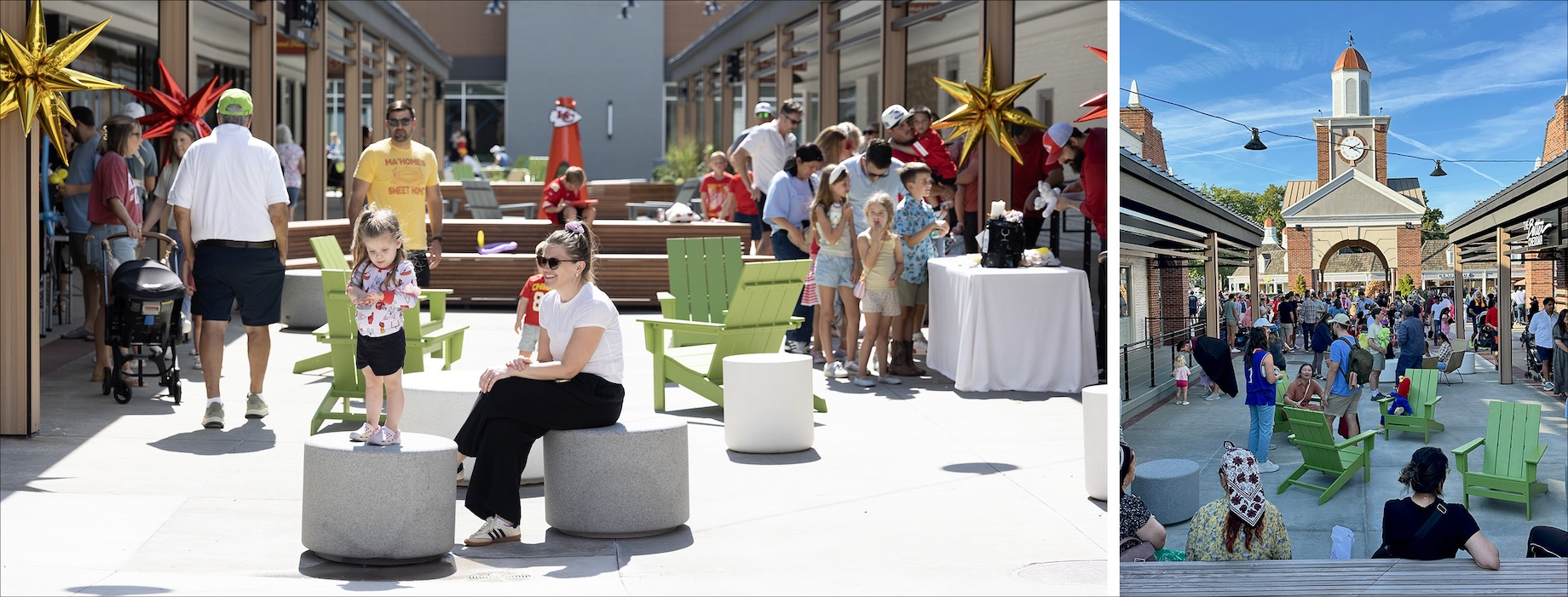
When First Washington Realty began redeveloping The Shops of Prairie Village in Kansas, the marketing team’s knowledge of how families and community groups use the courtyard helped shape a versatile space with movable seating, improved storefront visibility and larger event space. Photos above and at top courtesy of The Shops of Prairie Village
What Retail Real Estate Marketers Need To Know Now
The broadening role of marketing teams is changing what companies look for in marketing professionals. Da Costa described the modern retail real estate marketer as both “creative and commercially fluent.” Storytelling, branding and customer behavior still matter, she said, but so too do analytics, real estate fundamentals and an understanding of how ownership evaluates an investment.
For Hanak, the most important trait is curiosity about the customer, business and technology. That powers marketers’ contributions to business decisions. Moore noted: “If we know what the business problems are, then we figure out where we can help with that.”
By Rebecca Meiser
Contributor, Commerce + Communities Today