The Short Version
- Retail landlords are incorporating native plants into shopping center landscapes to create more natural, locally rooted environments.
- At Westfield Galleria at Roseville, California, URW is replacing portions of the existing hardscape with native plantings and outdoor gathering spaces as part of The Trails redevelopment.
- Developers including Specialized Real Estate Group are using native landscaping to support biodiversity, conserve water and strengthen connections to local ecosystems.
A More Natural Approach to Shopping Center Landscaping
Some landlords are embracing the pollinator-friendly “rewilding” trend that already was creating buzz — from the bumblebees, that is — around city parks, college campuses and rails-to-trails projects. The idea is to use flowers, grasses, trees and shrubs that fit the local ecosystem rather than ornamentals shipped in from far-flung locales.
Researchers and proponents say landscaping with native plants can save and retain water, reduce the need for herbicides and fungicides and support biodiversity by feeding charismatic creatures like goldfinches, ruby-throated hummingbirds and monarch butterflies. “We planted some milkweed in our garden at my house, and literally that day there were already monarch butterflies coming to it,” said McCullough Landscape Architecture principal David McCullough. “It’s crazy how well it actually works.”
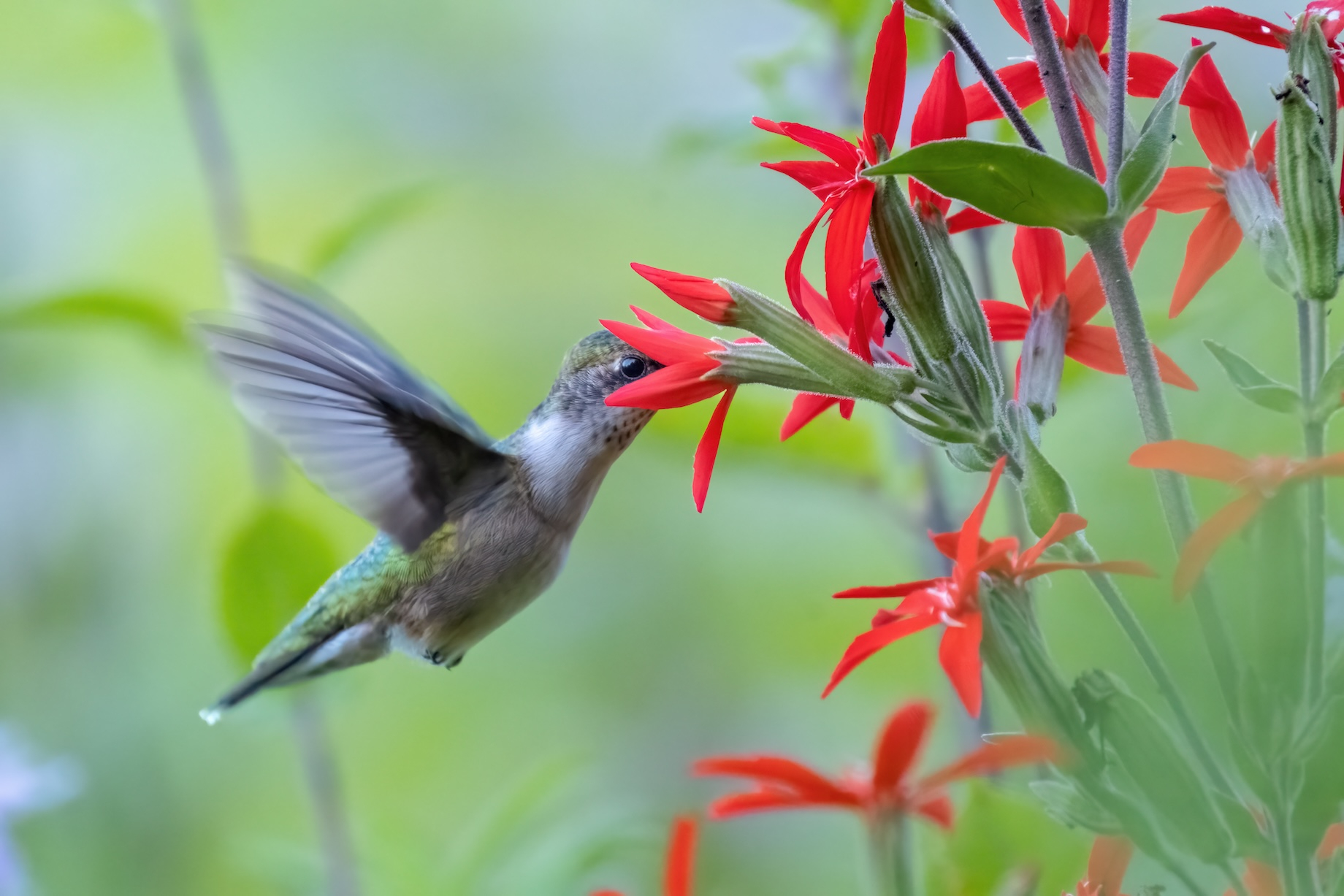
A ruby-throated hummingbird sips nectar from a native royal catchfly. Photo by Richard Bennett courtesy of Homegrown National Park
URW Brings a Northern California Landscape to The Trails
McCullough’s firm is relying on native plants and using locally sourced boulders in its designs for The Trails at Westfield Galleria at Roseville. The Trails, set to open next year, is Unibail-Rodamco-Westfield’s refresh of the west side of the 26-year-old California mall. URW senior vice president of development Kim Brewer said The Trails will transform an outdated outdoor district into a park-like destination that blends dining patios with a variety of gathering spaces. It hinges on partially demising and reconfiguring a long-vacant Borders and other buildings. Newly signed tenants include Arhaus, Design Within Reach, Sweetgreen, Italian restaurant Doppio Zero, King’s Fish House and the gelato shop Bacio di Latte. The patios will “benefit from the energy of the public realm while helping activate it, creating a dynamic experience both inside and outside the restaurants,” Brewer said.
All told, URW is reinventing about 80,000 square feet of common areas. Westfield Galleria at Roseville sits in the Sacramento Valley near the foothills of the Sierra Nevada range, and the goal is for The Trails “to feel like you’re in a natural Northern California landscape with all the beauty of the oaks, sages, sycamores, natural grasses and wildflowers that occur in this part of the state,” McCullough said.
Construction crews have been pulling up concrete hardscapes to make room for the gathering spots. “We wanted to move away from those disconnected hardscapes and create a landscape people could wander through, with generous softscapes that encourage discovery, connection and a stronger relationship with nature,” Brewer said.
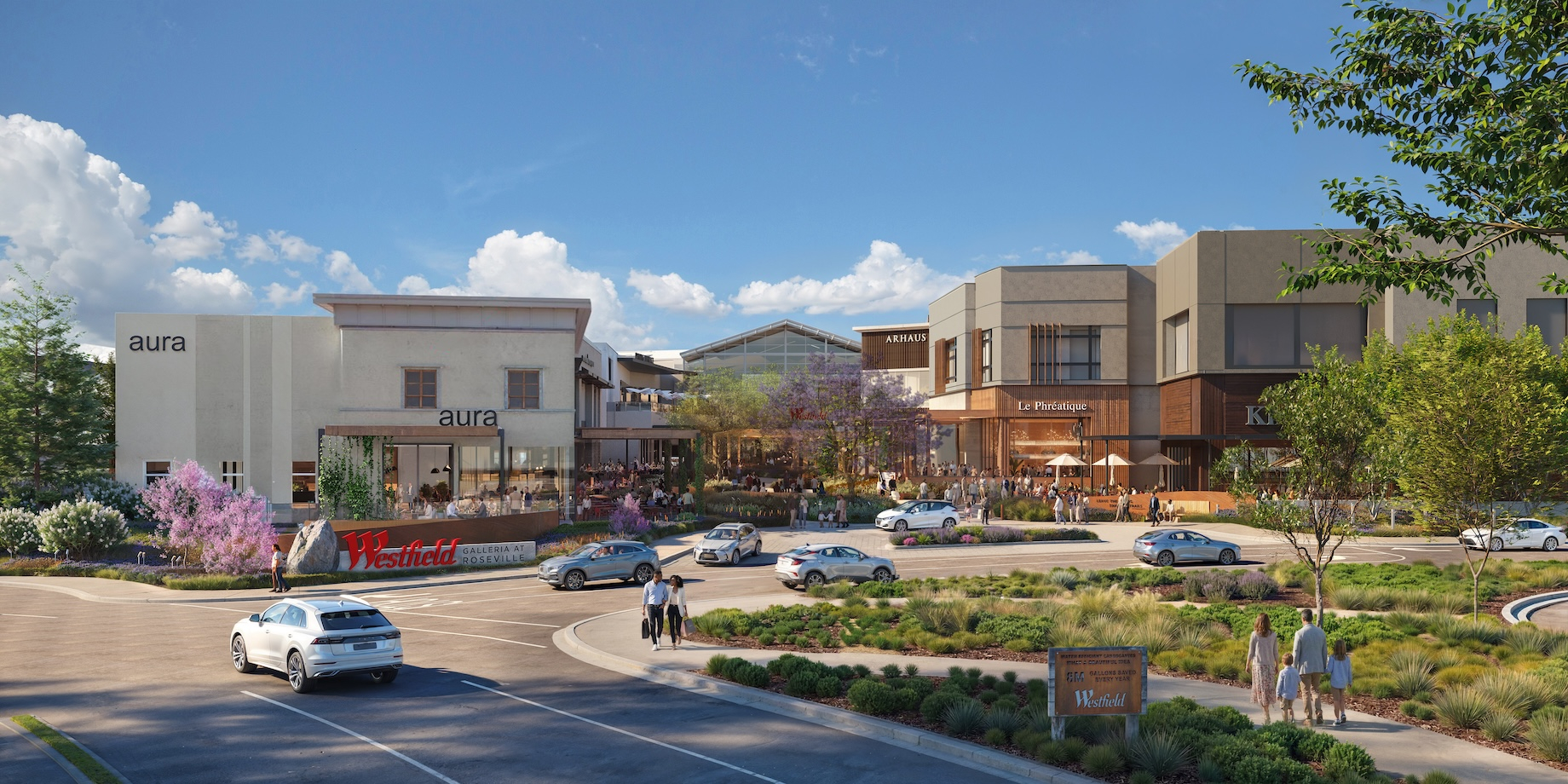
Native plantings by McCullough Landscape Architecture are a prominent feature of Unibail-Rodamco-Westfield’s Trails at Westfield Galleria at Roseville in California. RDC is the architecture firm for the exterior refresh project, set to open next year. Rendering courtesy of RDC
Native Plants Bring a Wilder Kind of Curb Appeal
Projects like The Trails point to the value of rethinking “formal and concise” landscaping designs that mirror the tidiness of building interiors, McCullough said. In such traditional approaches, a landscape architect might use neatly manicured boxwoods or crape myrtles interspersed with pansies, begonias or marigolds. Or the plan might call for lots of Chinese hibiscus, an ornamental that blooms from late spring through fall.
By contrast, the native plant aesthetic is wilder.
McCullough is a fan of the western redbud, which produces magenta-pink blooms just once per year, and he rhapsodizes about the gnarly, twisted beauty of western oak and sycamore trees. The landscape architect is unafraid of leaving native grasses uncut when they go dormant in the fall. “The first inclination of the gardeners is: ‘Well, cut them down to the ground,’” McCullough said. “I tell them not to do that. Those dormant grasses are a visual cue of the seasons. They allow for some contrast in the landscape, which is really dramatic.”
In McCullough’s view, contrast is part of what creates memorable experiences. His firm also has used native plantings on projects like the mixed-use Campus on Villa La Jolla at the main entrance of the University of California San Diego. “When you step outside [of a building], you should be experiencing a whole new world, and that’s where natives come in really handy,” he said. “Rather than taking ornamentals and clipping them into little perfect hedges — yes, there’s a place for that — let the natives grow wild. It gives people a real sense of connection to nature, which is important for health and well-being and for aesthetic reasons, too.”
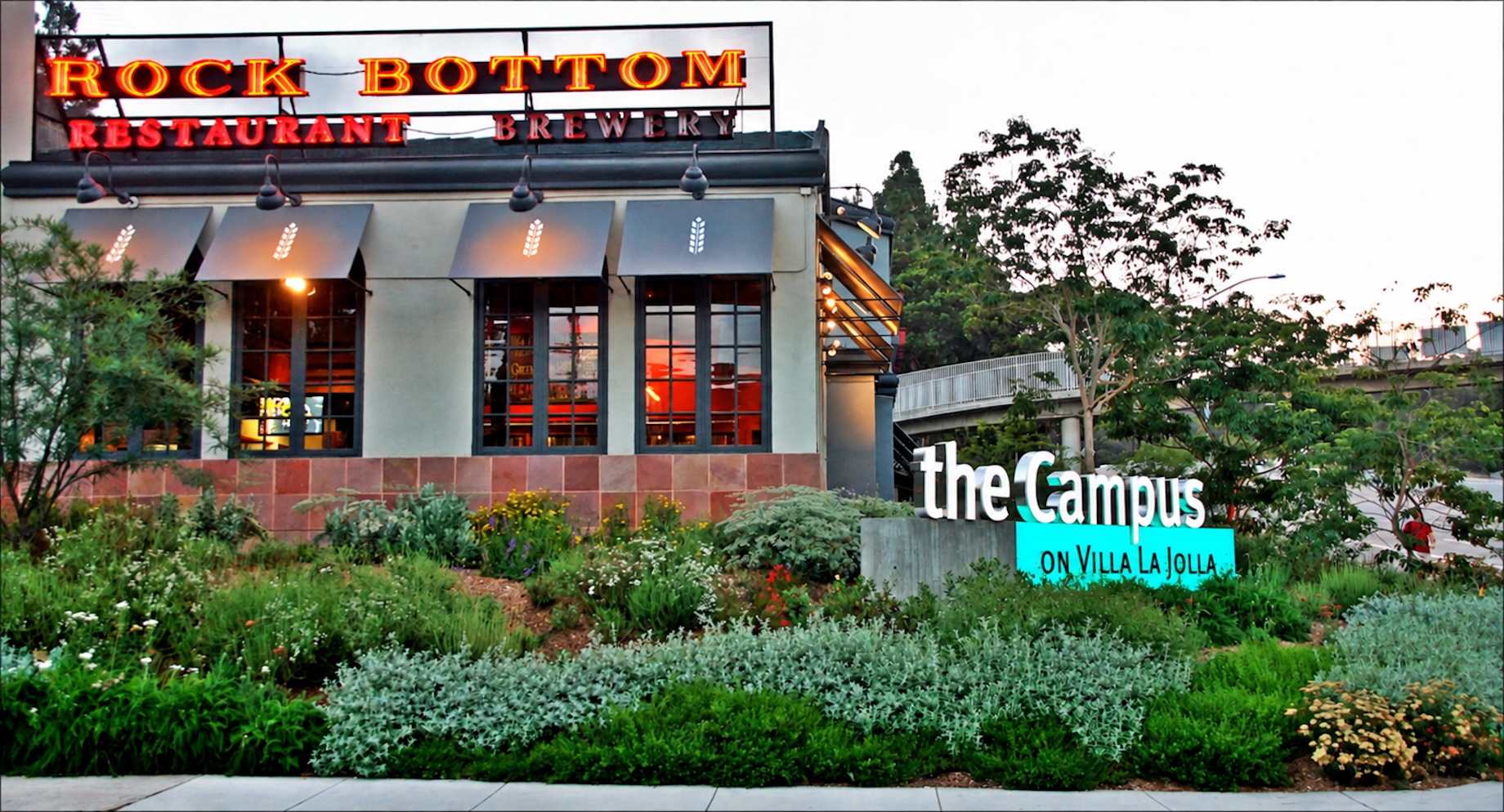
McCullough Landscape Architecture used native plants in its designs for The Campus on Villa La Jolla, a mixed-use renovation at the main entrance to the University of California San Diego. Photo courtesy of McCullough Landscape Architecture
SREG’s Landscape Pledge Puts Native Plants First
Landscaping with native plants is a top priority for developer and manager Specialized Real Estate Group, said chief customer officer Nicholas Sammer. He points to the company’s 194,000-square-foot South Yard in South Fayetteville, Arkansas, which offers a Moxy hotel, 128 apartments and 25,000 square feet of retail and restaurants, including Sweetgreen, HomeGrown daytime cafe, Fayetteville Taco & Tamale Co. and The Meteor bike and coffee shop.
The 9-acre adaptive reuse of a former farmers cooperative in the Ozarks boasts native, water-saving species like black gum, Indiangrass, big bluestem, American beautyberry and Virginia sweetspire. Hundreds of black-eyed Susans, inkberry hollies, blazing stars and echinacea purple coneflowers keep the project connected to the historical flora and landscapes of the region, Sammer said.
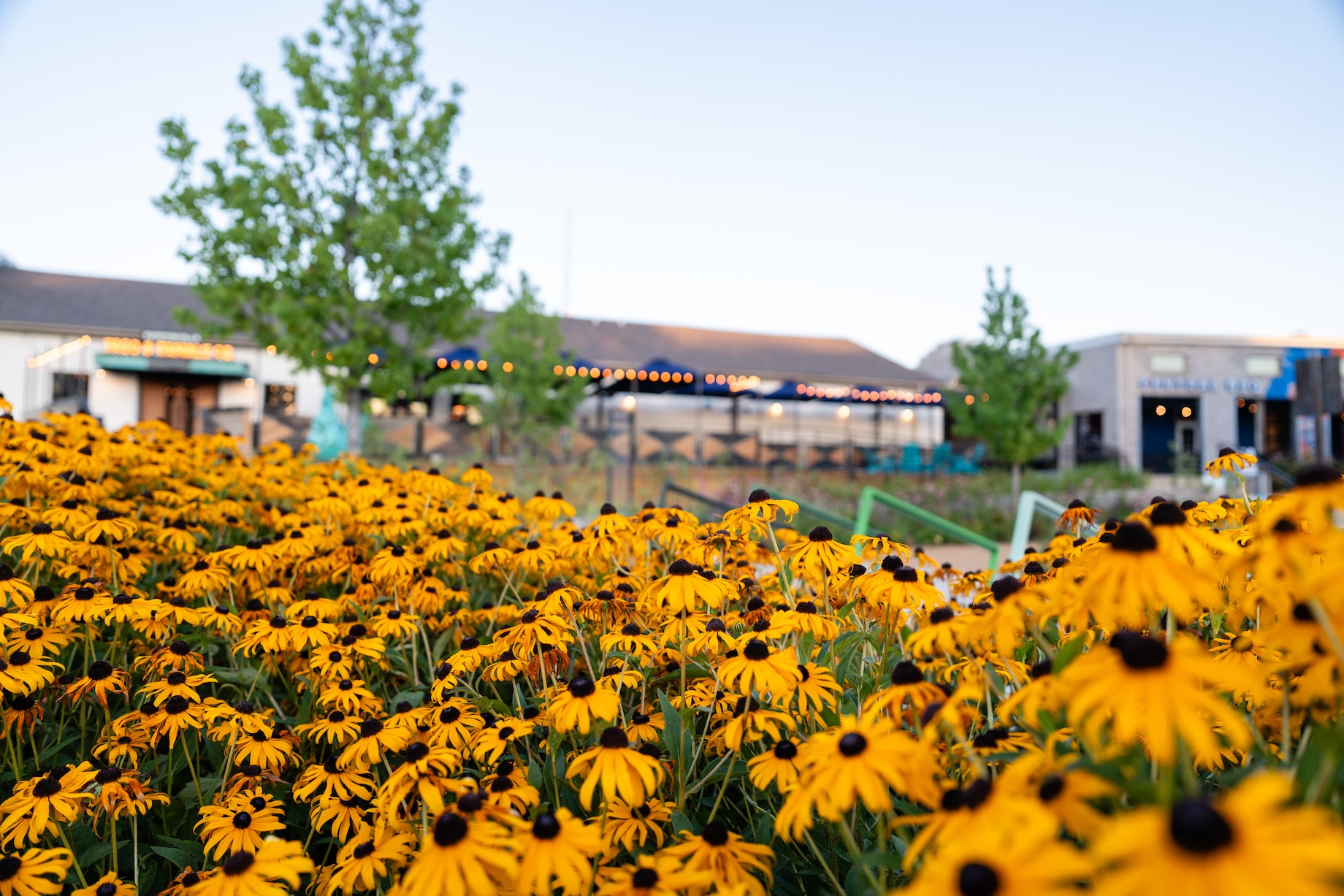
Black-eyed Susans help keep the mixed-use South Yard in South Fayetteville, Arkansas, connected to the region’s historical landscape. Photo above and at top by Travis Kersh courtesy of Specialized Real Estate Group
More than a decade ago, SREG worked with botanists, ecologists and landscape architects to develop its Landscape Pledge, based on the premise that “native plant communities are vital to wildlife, regional identity, water quality and the health of the entire ecosystem, including human health.”
SREG sources native plants from local seed stock, preserves and protects water and native trees and uses sustainably sourced landscaping materials. The company also combats invasives like privet, euonymus, bush honeysuckle and Bradford pear trees, all of which can outcompete natives and become difficult to control.
Another pillar of the pledge — using native plants to support biodiversity — translates into meaningful moments for tenants and visitors at SREG properties, said Sammer, whose office is at South Yard. “We see a lot of pollinators stop here for nourishment — for example, butterflies that are passing through on their migration,” he said. “And when the [black-eyed Susans] and echinacea go to seed, we just see a plethora of finches out feeding on those. It’s wonderful to see.”
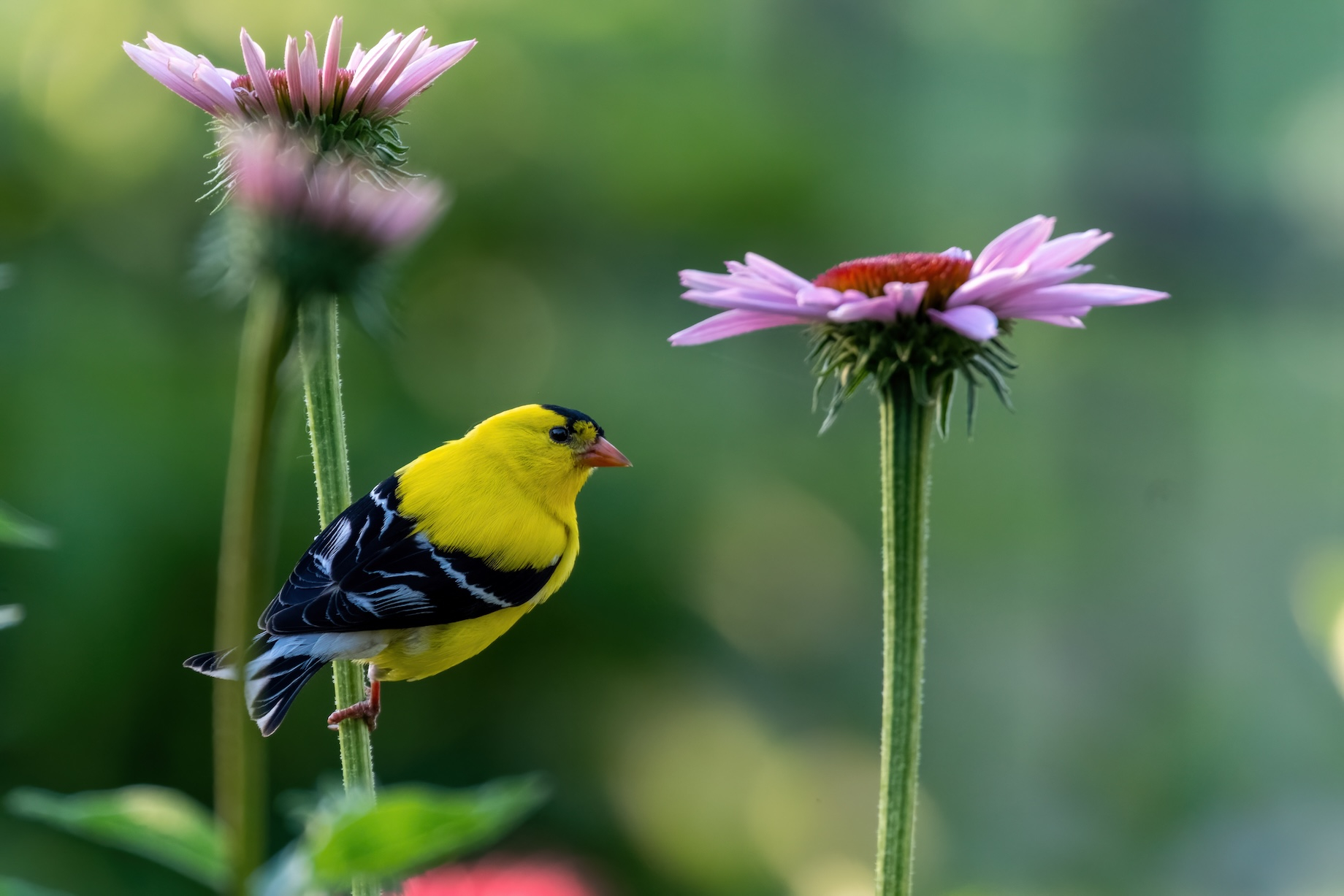
A seed-eating goldfinch hangs out on an echinacea purple coneflower. Photo by Richard Bennett courtesy of Homegrown National Park
Those experiences are in line with SREG’s stated mission, per its site, to “curate healthy places where people can connect with neighbors and nature.” Some visitors might even have read books like entomologist Douglas Tallamy’s “How Can I Help?: Saving Nature With Your Yard” or seen Instagram videos by nonprofits like Wild Ones, Re:wild Your Campus or Homegrown National Park.
Millions also have experienced native plant landscaping at public spaces like New York City’s High Line and Washington, D.C.’s National Museum of the American Indian. “There is an increasing understanding and appreciation for native habitats and what they bring,” Sammer said.
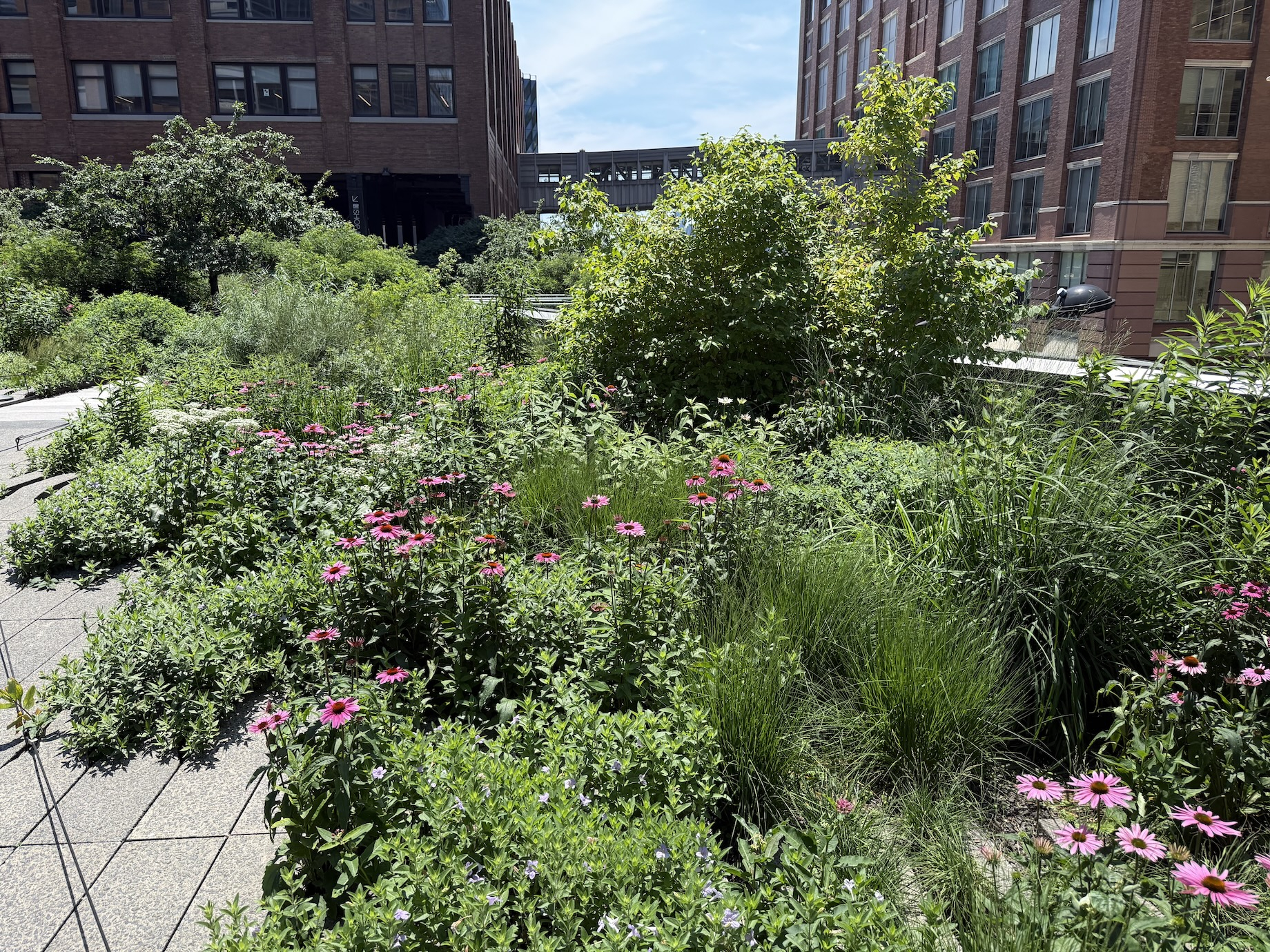
Shopping center visitors are growing more familiar with native plant landscaping, thanks in part to gardens and public spaces that feature them. Pictured are echinacea purple coneflowers, mountain mint and prairie grasses at the High Line in New York City. Photo by Joel Groover
Water Conservation Gives Native Landscaping Another Boost
Some landlords are enlivening the experiences at their centers by installing pocket gardens of native plants. At The Orchard Town Center in Westminster, Colorado, Vestar has partnered with Westminster’s Butterfly Pavilion to create and promote pollinator-friendly habitats, a spokesperson said. The developer sees this “as an opportunity to conserve resources, support local ecosystems and enhance the experience for the people who visit and use these spaces,” she said.
Another example is Del Monte shopping center in Monterey, California, where Gachina Landscape Management created a monarch butterfly garden certified by the North American Butterfly Association. At its Lincoln Centre office project in Dallas, Cushman & Wakefield planted a pollinator-friendly wildflower garden and keeps bees, said senior managing director Lynne Hejtmanek. The company asks its landscapers in Dallas-Fort Worth to use only drought-resistant native plants, she said.
Especially in drought-prone areas, some governments are encouraging such efforts. That includes the state of California as well as various municipalities. It is part of why more landscape architecture clients from around the country are asking about native plants, McCullough said.
Sustainability was part of the calculation for The Trails, for which URW hopes to receive a silver Sustainable Sites certification. That has meant paying close attention to the local climate, site conditions, water-management strategies and more, Brewer said. “When you start to look at these impacts, it’s amazing how much of it starts on the planting side.”
By Joel Groover
Contributor, Commerce + Communities Today