The Short Version
- Fast-growing exurbs are becoming key retail growth markets as residential development creates demand for grocery, restaurant, fitness, healthcare and service uses.
- Exurbs near Dallas-Fort Worth — including Celina, Princeton, Melissa, Anna and Forney — are among the fastest-growing U.S. communities.
- Developers are advancing major projects in high-growth exurban markets, including grocery-anchored, big-box, neighborhood retail and mixed-use centers.
- Retailers including Tractor Supply Co., Costco, Cava and Dutch Bros Coffee are targeting exurban and rural markets as migration and affordability trends support long-term demand.
- In underserved exurbs, retail supply is working to catch up with population growth and tenant demand.
Population Growth Creates New Retail Demand in Outer-Ring Communities
For retailers, landlords and developers, the U.S. exurb is no longer a footnote. It’s the new frontier, where retail is following rooftops.
U.S. Census Bureau estimates released in May showed that between July 2024 and July 2025, 11 of the 15 fastest-growing U.S. cities with at least 20,000 residents were exurbs: outer-ring communities near close-in suburbs and roughly 30 or more miles from a metro area’s urban core. About 33 million people, or nearly 10% of the U.S. population, live in exurbs, according to the American Communities Project, which is based at the Michigan State University School of Journalism and used Census Bureau estimates for its calculations. Census Bureau demographer Luke Rogers said exurbs sometimes have been among the fastest-growing U.S. cities, “but this appears to be even more true now than before the pandemic.”
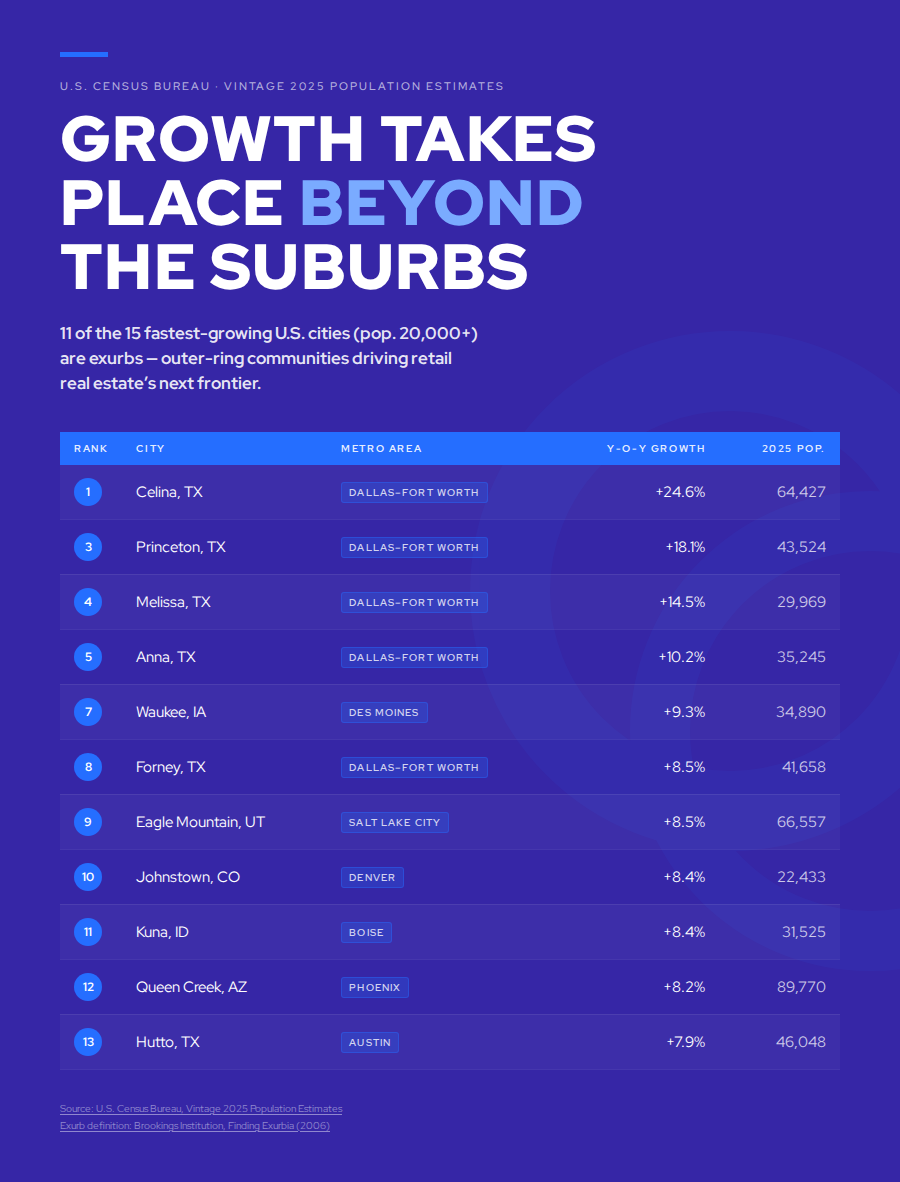
Created by Claude.ai/John Egan
Research scientist Ari Pinkus, project manager for the American Communities Project, described exurbs as family-friendly locales catering to affluent people hunting for places with both rural and urban characteristics. Retailers, landlords and developers are staking out territory in this land of opportunity, given the attractive demographics. Nowhere is that more apparent than in Dallas-Fort Worth, home to five of the 11 fastest-growing exurbs from 2024 to 2025: Celina, Princeton, Melissa, Anna and Forney. “As we can see by the retail projects opening or soon to open in these markets, it still holds true that retail follows rooftops. And these growth markets are creating a lot of rooftops,” said Weitzman executive chair Herb Weitzman, whose Dallas-based real estate firm does business in Texas’ four major metros.
Dallas-Fort Worth Shows How Exurban Growth Drives Retail Development
DFW’s Celina and Forney are poster children for retail growth in exurbs. Weitzman said the market covering Celina and next-door exurb Prosper contains 2.7 million square feet of retail and boasts a 99.7% occupancy rate. To keep up with pent-up demand in Celina and Forney, developers are investing in new grocery-anchored, big-box and neighborhood retail properties. Under-construction or recently opened projects in the two exurbs include:
• the Village at Gateway in Forney, a more than 820,000-square-foot development whose first-phase tenants will include Burlington, Costco, H-E-B, Ross Dress for Less and Target, according to the Dallas Business Journal
• the Kohl’s-anchored Victory Shops at Forney, a $145 million project that the Dallas Business Journal said spans roughly 235,000 square feet
• two master-planned developments that together span 77 acres in Celina — the mixed-use Crossing at Moore Farm and the Village at Ownsby Farms retail district
• Shawnee Trail, a 150-acre, mixed-use, grocery-anchored project in Celina
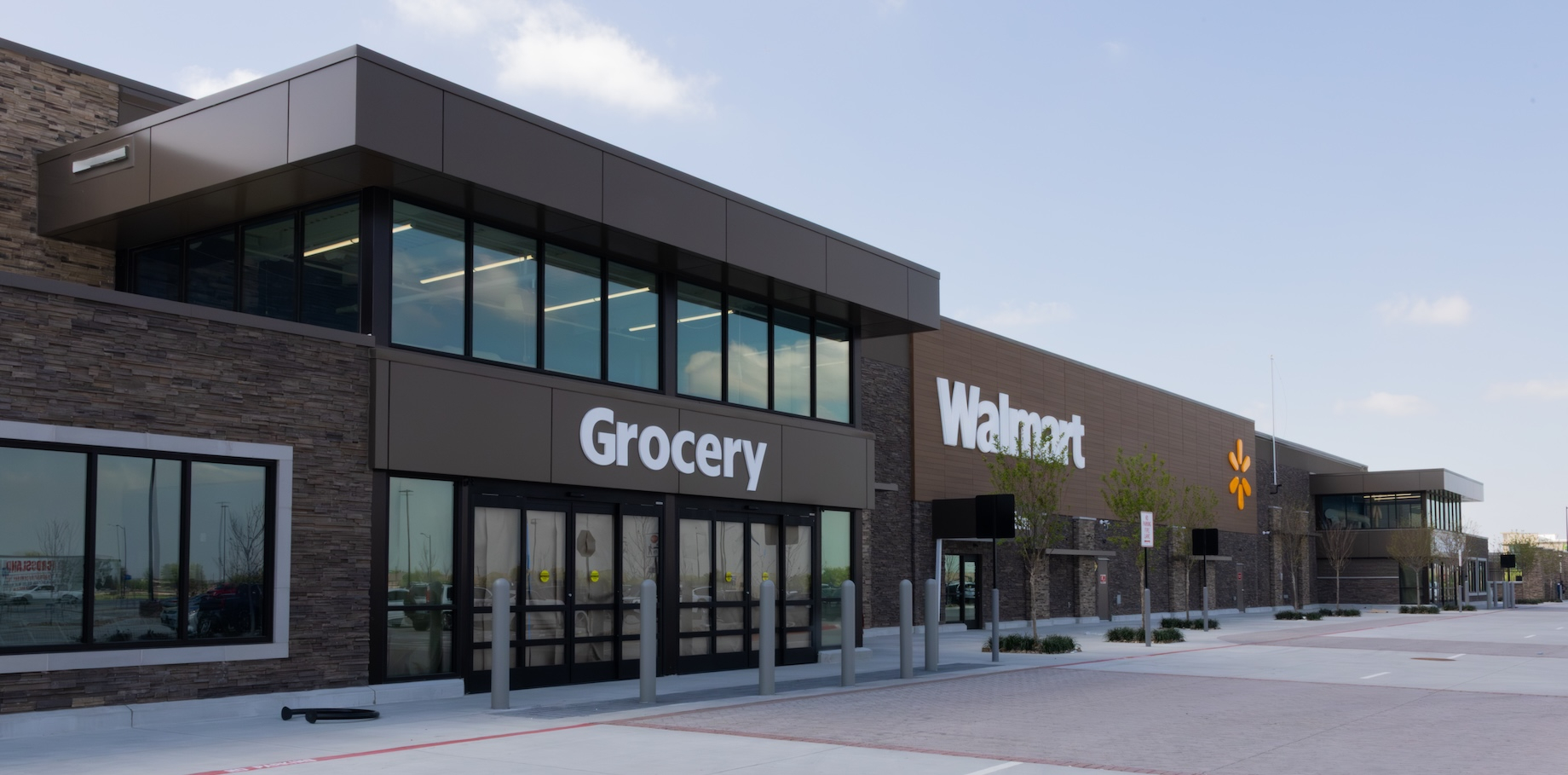
Walmart anchors the new Shawnee Trail development in Celina, Texas. Photo courtesy of Trademark Property Group
Matthews vice president of leasing Baylor Worman said much of the retail growth in Anna, Celina, Forney, Melissa and Princeton traces to a housing boom in the early 2020s that delivered thousands of homes across the five markets. The residential influx sparked interest in adding grocery-anchored retail centers, restaurants, healthcare facilities and fitness centers, Worman said. “In many ways, these markets are entering the next phase of their growth cycle,” he said, “where retail development follows the residential momentum that has already transformed these communities.”
More Fast-Growing Exurbs Draw Retail Investment
Explosive exurban growth isn’t confined to Dallas-Fort Worth. Other exurbs among the 15 cities that grew the fastest from 2024 to 2025, based on Census Bureau figures, were in the Des Moines, Iowa; Salt Lake City; Denver; Boise, Idaho; Phoenix; and Austin, Texas, metro areas.
In Queen Creek, Arizona, the fastest-growing Phoenix exurb, Vestar recently completed Vineyard Towne Center, a $100 million, 230,000-square-foot shopping center whose tenants include Pet Supplies Plus, McDonald’s, Mountain America Credit Union, Sprouts Farmers Market, Target and the chicken chain Zaxbys. Vestar owns two other retail projects in Queen Creek: the 400,000-square-foot, Costo-anchored Queen Creek Crossing and the 900,000-square-foot, Target-anchored Queen Creek Marketplace.
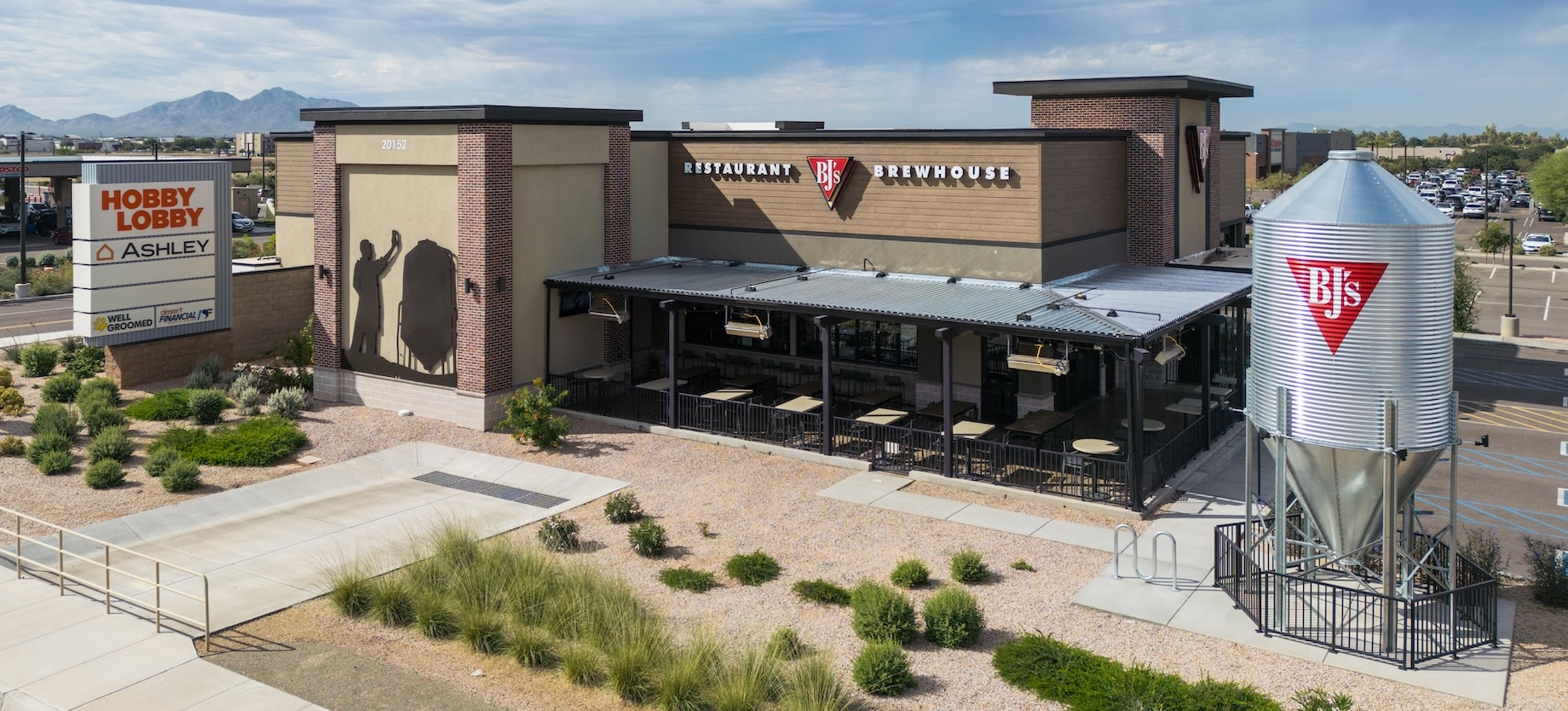
Tenants at Queen Creek Crossing include Ashley, BJ’s Restaurant & Brewhouse and Hobby Lobby. Image courtesy of Vestar
Vestar vice president of finance and development Kean Thomas said that as the market matures, he expects new leases in Queen Creek to lean toward tenants like specialty shops, contemporary fashion stores and high-end restaurants. “As a result, the volume of new development may be lower from a square-foot perspective, but what does get added will be high-quality,” he said.
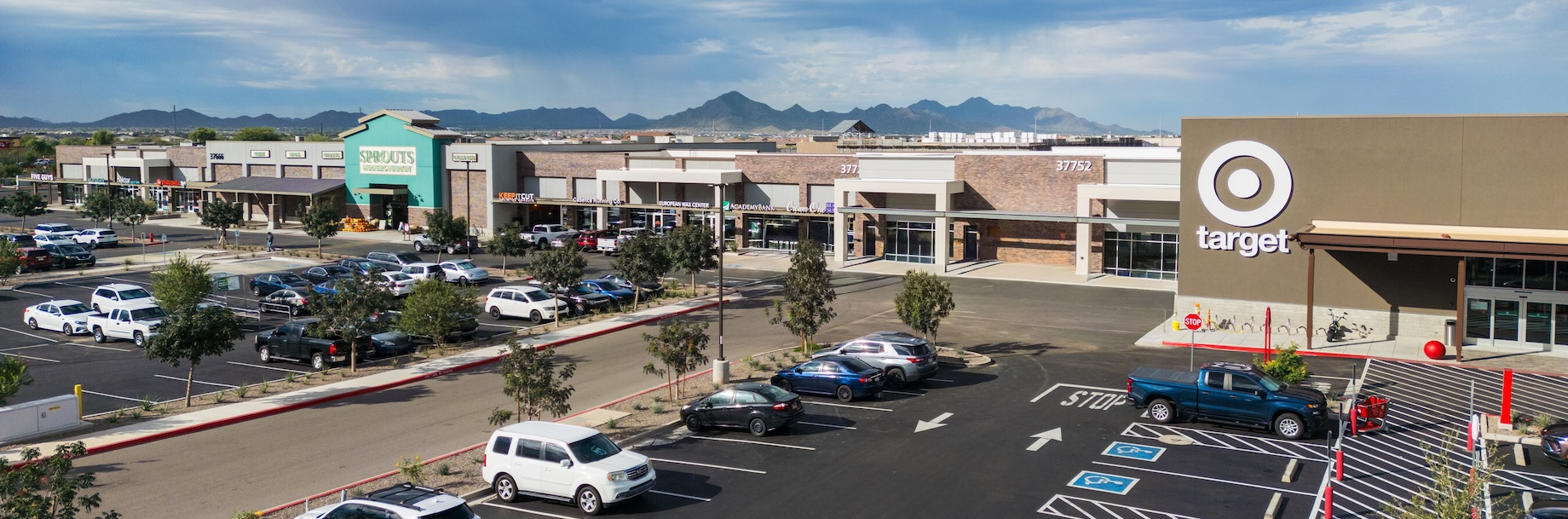
Vestar completed the 230,000-square-foot Vineyard Towne Center in early 2026. Image above and at top courtesy of Vestar/PR Newswire
The Denver exurb of Johnstown is witnessing similar retail growth. CBRE vice president Melissa Moran, a retail specialist who works in the company’s Northern Colorado office, said it is drawing interest from local and national retailers alike seeking small- and large-format spaces. Johnstown, 45 miles north of Denver, sits along heavily traveled Interstate 25. Projects under development there include the 200-acre, mixed-use Ledge Rock Center, which will offer more than 1 million square feet of retail. “The area’s explosive residential growth, combined with Buc-ee’s creating a new regional draw, has turned I‑25 into a true community connector,” said Moran. “I-25 has been functioning more like a Main Street than an interstate in recent years, linking towns across Northern Colorado like Johnstown and offering exposure to these communities from major cities in the region.”
How Retailers Are Targeting Exurban and Rural Growth Markets
Across the country, Tractor Supply Co. reigns as a pioneer of exurban retail, having wooed exurban consumers long before populations swelled in outer-ring communities. As of March 28, the rural lifestyle retailer operated 2,435 Tractor Supply stores and 206 Petsense by Tractor Supply stores in rural and exurban markets.
At the Piper Sandler’s Growth Frontiers Conference in September, Tractor Supply Co. executive vice president and CFO Kurt Barton said the retailer has been riding an exurban and rural population wave since the pandemic. Although there has been “significant growth in rural migration and the movement out of urban and suburban into exurban and rural markets, where a vast majority of our stores are, that growth in 2020 through 2022 was unprecedented,” he said. “Still, in the last three years, we’ve continued to see net migration into our markets.”
From the C+CT Archive
National Retailers Aren’t Flying Over Rural America Anymore
Telling the Community’s Story: Attracting Retailers to Rural Locations
According to Barton, relatively low home prices are attracting Millennials and other first-time homebuyers to exurban and rural markets. To capitalize on the influx to exurban and rural communities and maximum total long-term revenue of $225 billion, Tractor Supply Co. plans to open 100 stores in fiscal year 2026 as it chases an eventual store count of 3,200. Other retailers aboard the exurban train include Cava, Costco and Dutch Bros Coffee, according to Placer.ai’s Retail Trends to Watch in 2026, released in November.
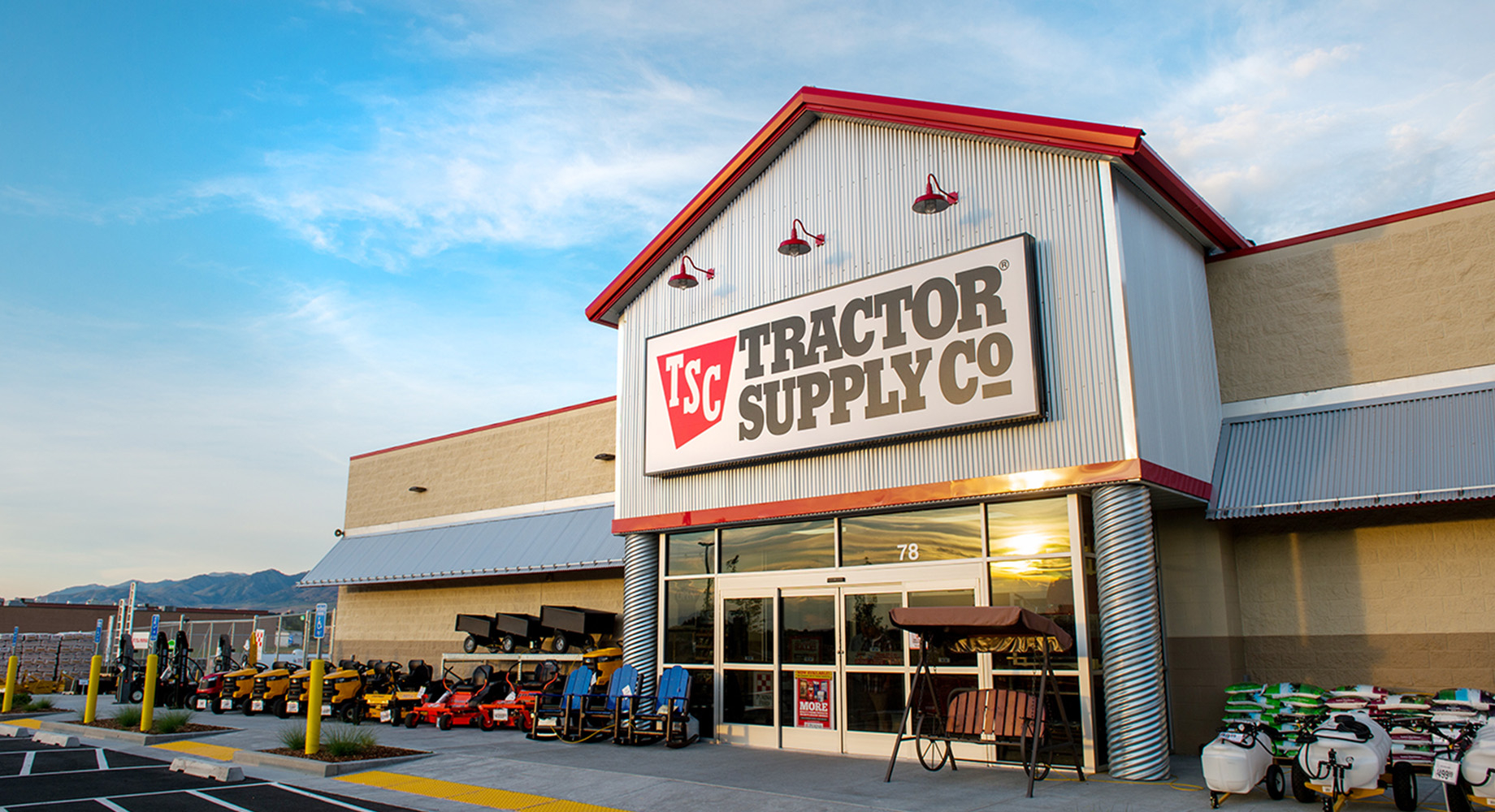
Tractor Supply Co. operates more than 2,600 stores in exurban and rural markets. Photo courtesy of Tractor Supply Co.
Retail Supply Works To Catch Up With Exurban Demand
In Dallas-Fort Worth, Big V Property Group CEO Jeff Rosenberg said he foresees exurbs creating “a powerful foundation for long-term retail demand” from the likes of Tractor Supply and Costco. In DFW’s fast-growing exurb of Anna, Big V and The Seitz Group are developing Rosamond Crossing and Rosamond Town Center, which together will deliver about 750,000 square feet of retail in a market where residential growth has outpaced ground-up retail development. “Historically, retailers often positioned themselves ahead of anticipated growth,” said Rosenberg. “Today, many are looking at markets where the growth has already arrived and where the customer base is already established. We believe that’s one of the reasons we’re seeing such strong interest in communities like Anna.”
Big V chief acquisitions officer Eric Zimmermann said tenants in the grocery, value retail, fitness, restaurant, home goods and services sectors are driving significant demand for space in DFW’s sizzling-hot exurbs. “Demand for space has effectively exceeded availability at various stages of the leasing process, which reinforces our view that this market remains underserved relative to its population growth,” he said. “When retailers are moving decisively into a market, it’s often a sign that the fundamentals are compelling and sustainable.”
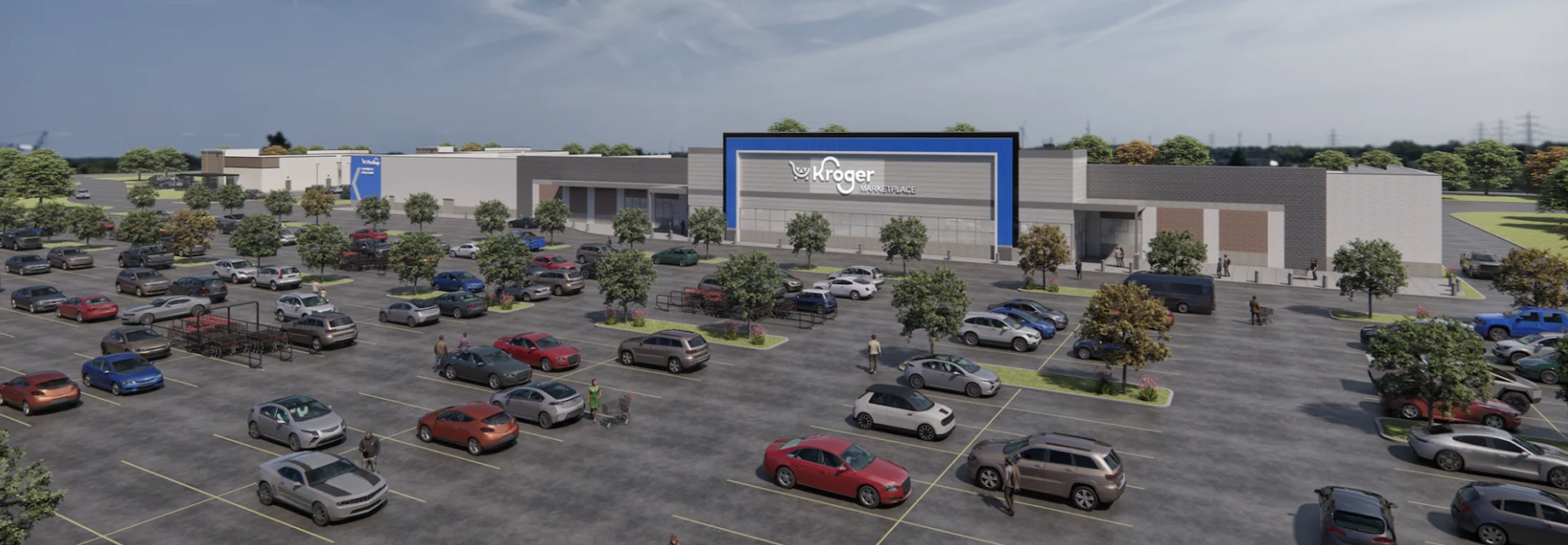
Kroger will anchor Rosamond Crossing in Anna, Texas, a Dallas-Fort Worth exurb. Image courtesy of Heights Venture Architecture + Design
By John Egan
Contributor, Commerce + Communities Today