The Short Version
- Color Me Mine opened its 150th studio this summer and aims to reach 300 by 2031. The company says it has 21 studios in development.
- Many new franchisees started out as customers who wanted a Color Me Mine studio closer to home, CEO Teresa Johnson said.
- The chain typically looks for 1,200 to 2,500 square feet with room for 40 to 70 painters. It prefers open-air lifestyle centers and also has had success in strip centers.
- A pottery project brings customers to a center twice, once to paint and again to pick up the finished piece.
Color Me Mine’s Sales Are Up and It’s Finding New Franchisees Among Its Customers
Color Me Mine has been putting paintbrushes in people’s hands since 1991, when it opened its first studio in Los Angeles. The pottery-painting chain aims to reach 300 studios by 2031 and has 21 in development.
CEO Teresa Johnson said the growth is organic. The company reinvested in franchise development in 2023, and since then, many new owners have come from its own customer base. They loved painting there so much that they wanted a studio closer to home. “We’re not manufacturing demand,” Johnson said. “We’re responding to demand that already exists.”
Color Me Mine said systemwide sales rose 31% from fiscal year 2023 to fiscal 2025. It opened its 150th studio in Marietta, Georgia, this summer, marking its entry into the state.
Johnson said the customer base has broadened from children to include more teens and adults, including Gen Z. Many adults who painted in studios decades ago as children now bring their own kids. Walk into a studio today, she said, and “you’ll see more adults painting than you do kids painting.”
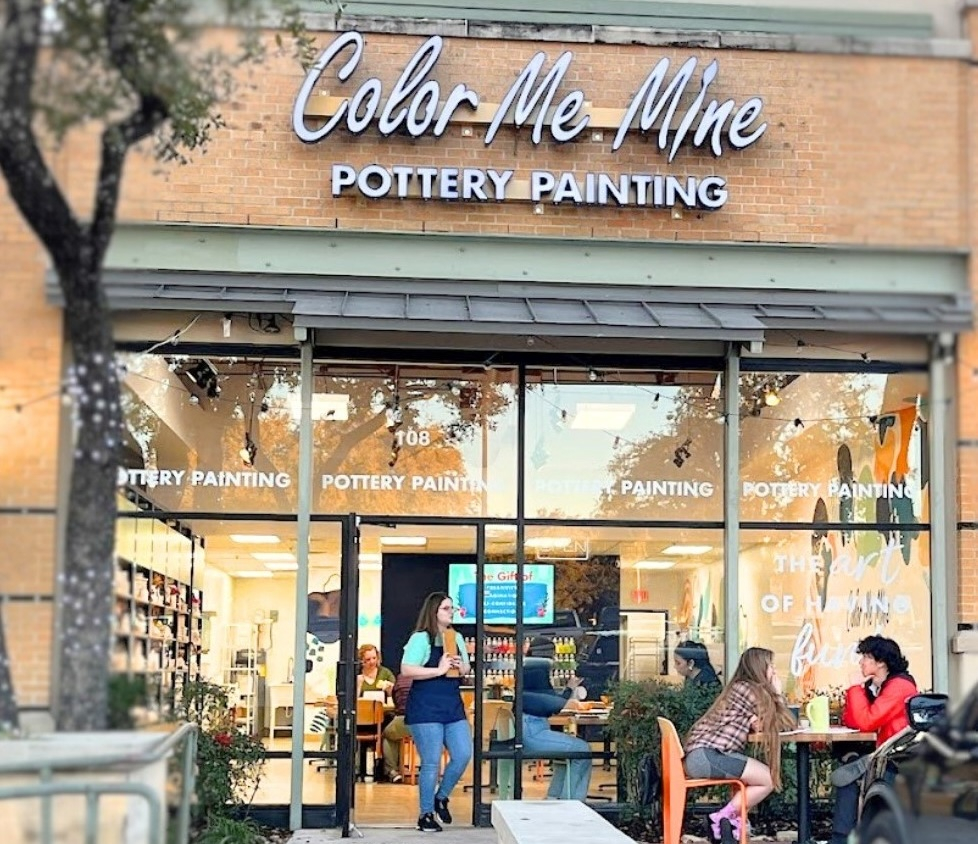
Color Me Mine has a pottery-painting studio at the Huebner Oaks lifestyle center in San Antonio. The pottery-painting franchise has 21 more locations in development. Photo courtesy of Color Me Mine
What Happens Inside a Color Me Mine Studio
Color Me Mine customers pick unpainted white pottery pieces, called bisque, from wall shelves. Options include mugs, plates, bowls, vases, seasonal decor, picture frames, dog bowls and figurines. Staff teach painting effects, such as the bubble technique and rubbing alcohol method, and customers choose from 60 colors. The studio applies a clear glaze and fires each piece on-site, and it’s ready for customer pickup in about a week. Color Me Mine studios also draw in extra traffic with experiences like birthday parties, girls’ nights, kids’ nights and theme nights, such as a recent Dolly Parton tribute at a studio in Tennessee’s The Avenue Murfreesboro shopping center. Johnson said the company is focused on weekday and daytime walk-in traffic so studios aren’t dependent on weekends and evenings.
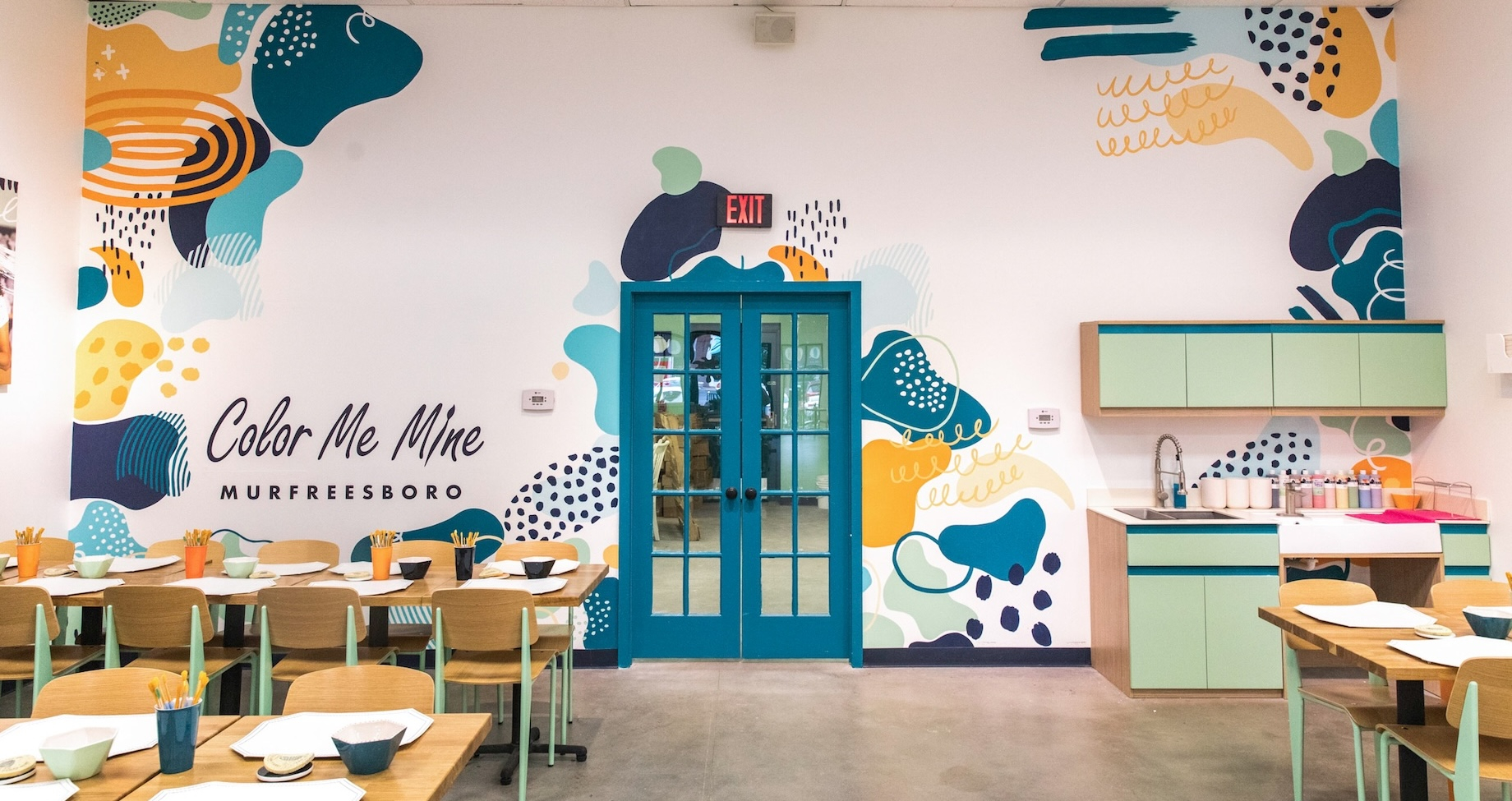
Color Me Mine paint-your-own-pottery studios typically range from 1,200 square feet in urban markets to 2,500 in the suburbs. This location at The Avenue Murfreesboro in Tennessee is 2,700 square feet. Photo above and at top courtesy of Color Me Mine
How Teresa Johnson Went From Studio Customer to Color Me Mine CEO
Johnson didn’t plan on making a living via pottery. After a career in marketing and HR at a large manufacturing corporation, she quit at age 39 to start a business. A one-year noncompete agreement locked her out of that industry. She filled the time with the activity she and her 7-year-old daughter already had been doing: She went painting at a pottery studio called Color Me Mine, a franchise started in California in 1991.
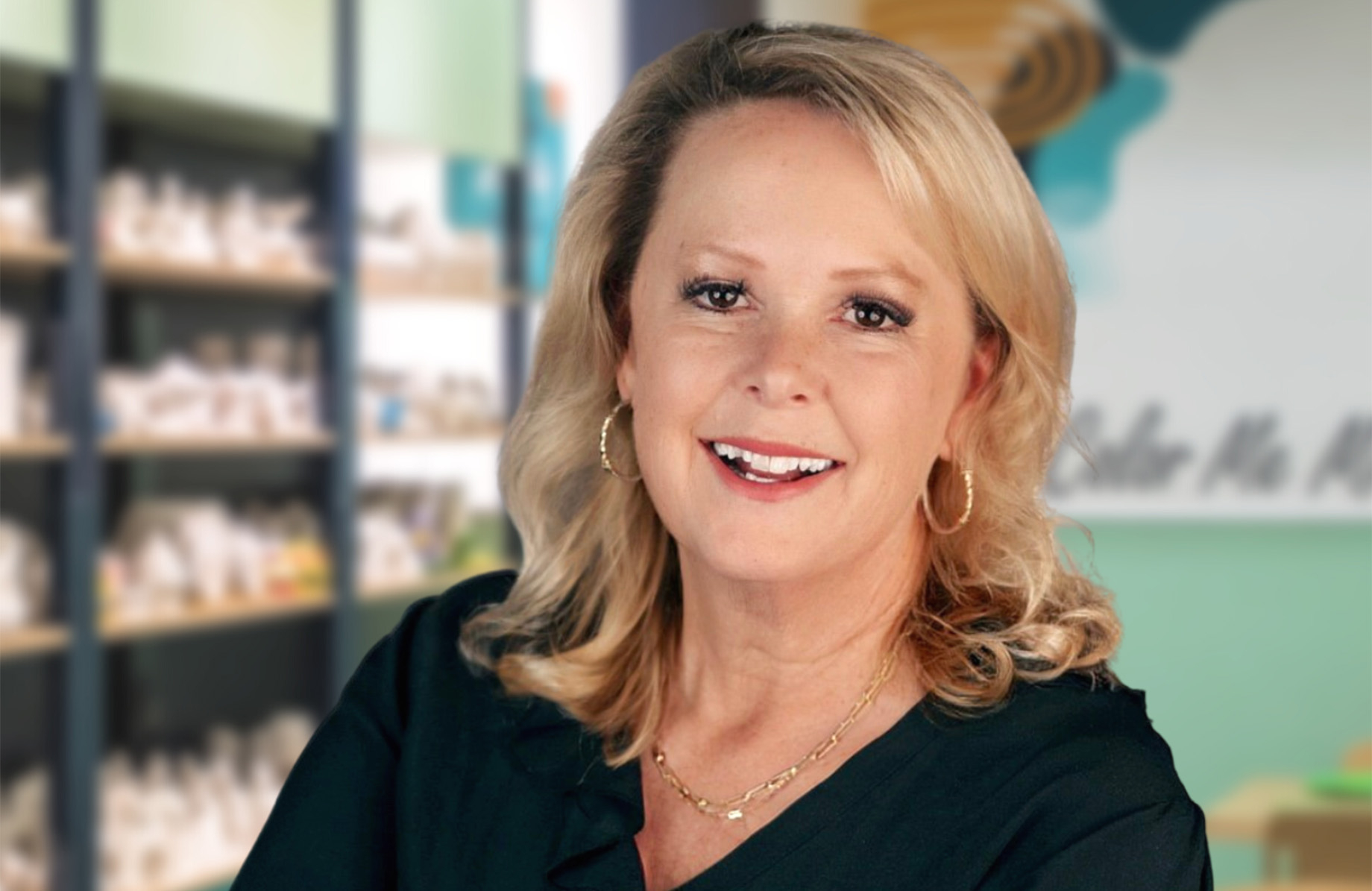
Color Me Mine’s Teresa Johnson used her credit card to buy a pottery-painting studio she and her daughter frequented as customers. Photo courtesy of Color Me Mine
Then an email arrived saying that the studio was for sale. Johnson, a single mom with a mortgage and no job, bought it with her credit card for $25,000 in 2005 as an independent location — not as a franchisee. “That studio really kind of raised me in entrepreneurship,” she said. “What began as a career transition turned into a passion for building businesses centered around creativity, community and customer experiences.”
Johnson’s studios multiplied quickly. She bought another independent Color Me Mine in Murfreesboro, Tennessee, in 2005. By 2009, she had four locations — including one in Bell Buckle, Tennessee, which she opened in partnership with her 15-year-old daughter, who managed the site. “If we can do it, anybody can do it,” Johnson said.
In 2010, Johnson opened a Painting with a Twist franchise to learn how franchising worked, and she added a second in 2017. She became CEO of Color Me Mine in 2021. The brand now has studios in 27 U.S. states, including Illinois, New Jersey and Florida and is pursuing open territories across the country, including more of Tennessee, Georgia, Alabama, Texas and Kansas, though Johnson said those are only a few of its targets.
Franchisees developing new studios meet with corporate weekly as they seek space, negotiate leases and build out. The chain, now headquartered in New Orleans, also brings franchise candidates in from around the country monthly and has about 30 prospective owners that haven’t signed commitments yet.
What Color Me Mine Looks for in a Location
The chain’s sweet spot, Johnson said, is 1,200 to 2,500 square feet with seating for 40 to 70 painters, noting that the shopping center, co-tenants, visibility and accessibility matter more than a specific position within the center. Open-air lifestyle centers are preferred, but she said strip centers also have worked well.
The kilns used to fire the pottery might sound like a utility burden, but Johnson said studios use about as much electricity as other retail or restaurant tenants, since kilns run in cycles. “From a landlord’s perspective, Color Me Mine is a relatively straightforward retail tenant,” she said. “The electrical requirements are predictable; the buildout is manageable.”
Natural neighbors include beauty and lifestyle retailers like Lululemon, Sephora and Ulta Beauty, as well as art-supply stores like Michaels. Johnson also pointed to restaurants and coffee shops, as guests can bring drinks and snacks into Color Me Mine and often pair a studio visit with a meal. She described the target customers as people with leisure dollars to spend who are looking for shared experiences.
Urban sites are part of the mix, too. Studios operate in downtown Denver, as well as in New York City’s Tribeca and Upper West Side neighborhoods. An Upper East Side location is in the works.
ESR Commercial president Richard Aries has acted as broker and real estate consultant for Color Me Mine nationwide for years. He described the brand’s criteria as “high-quality, high-end, lots of traffic.” Color Me Mine has strong franchiser backing to bolster locations’ success. Corporate does much of the site homework, including fieldwork on target markets, and the operations team approves each site before Aries sends a LOI on behalf of Color Me Mine to the landlord and the dealmaking begins. “They’ve done a lot of their homework before I even see these people, which is very rare,” he said. Color Me Mine vice president of operations Sean Goodwin often narrows a list to a handful of sites and asks Aries and his team to focus there.
Color Me Mine’s clarity on what it wants carries over to franchisee vetting, to the benefit of landlords. Aries said franchisees’ financials rarely raise concerns when landlords review them ahead of lease negotiations. “Color Me Mine does a great job of putting together a financial snapshot of the franchisee to get ahead of many of these questions, which is very unusual and very helpful.” The harder challenge is availability. “It’s still tough to get into some of these A-plus-plus centers,” he said, “and those are the ones we want.”
Gross revenue averaged about $513,000 per studio among the 109 franchised locations that operated and reported sales for all 12 months of the fiscal year ended Sept. 30, 2025, according to Color Me Mine’s franchise disclosure document.
How One Pottery Project Brings Shoppers Back
The main draw is what Johnson calls the two-visit model: Each transaction generates two trips — one to paint and one to pick up — which benefits the whole center, not just the studio.
Charles Cristella, managing director of national retail leasing in JLL’s Cherry Hill, New Jersey, office, said demand for experiential tenants is at a peak. “It’s the strongest it’s ever been, quite honestly,” he said. “These types of experiences get people out of their homes, off the computers and into the retail environment. One of the things we aspire to bring to our properties as landlords is extended dwell time. If we can keep you there longer, you’ll spend longer.” As Johnson put it: “I love saying: ‘Screens down, brushes up’ because there’s one thing you can’t do when you’re painting, and that’s hold your phone.”
Color Me Mine’s enduring family angle prompts cross-shopping, Cristella said. A parent dropping off a 12-year-old at a studio can kill time at a center’s other stores. “There’s a lot of value to having a tenant like that as a landlord in your project,” he said.
But the franchise’s audience is broadening. “Our customer base hasn’t shifted away from families, but it has broadened considerably,” Johnson said. “We’re seeing strong interest from teens, young adults, couples and older adults looking for creative ways to spend time together. Date nights, girls’ nights out and celebrations have become increasingly important.”
A Place To Gather and Stay Awhile
Brokers sometimes underestimate the concept, Johnson said, but she sees Color Me Mine as a destination rather than a quick stop. “When you have a business that gives people a reason to visit, stay awhile and come back again, that’s the kind of experiential retail that makes a shopping center a destination in its own right,” she said.
For landlords, she added, the pitch comes down to connection. “People really bond over this,” Johnson said. “I think we bring a sense of community to centers.”
By Halley Bondy
Contributor, Commerce + Communities Today