Paul Kurzawa will take over as CEO of Centennial on June 30, upon the retirement of Steven Levin, who founded the firm in 1997. Kurzawa, who studied arts, economics and public policy at Australian National University, has served as Centennial president since joining the company in November 2024, following three years as COO of CenterCal Properties. Kurzawa previously worked in management posts with Unibail-Rodamco-Westfield, DreamWorks, Caruso, Westfield Corp. and Lendlease. Acquired by Lincoln Property Co. in 2024, Centennial owns or controls more than 25 million square feet of retail and mixed-use across 18 states. Kurzawa sat with C+CT contributing editor Steve McLinden during ICSC LAS VEGAS to talk about his new post.
Paul Kurzawa will become CEO of Centennial on June 30. Photo above and at top courtesy of Centennial
How did your appointment as Centennial CEO come about?
When I joined the organization in 2024, Lincoln Property had just made its investment in Centennial. And as a part of that, my eventual CEO role — once Steven decided to move on — would become a part of our overall leadership strategy and the continued evolution of our company.
What are your challenges in driving Centennial forward?
Keeping all things steady and having the discipline to find the right deals but maybe being a little more aggressive once we find them. It’s a highly competitive market, and what’s becoming clear here [at ICSC LAS VEGAS], with so many good investors out there looking to place a lot of money, is that they’re all chasing the same deals. While Centennial will still be highly selective, we agree we need to be more aggressive in moving on the deals that make the most sense for us. We have strong existing capital relationships to facilitate this and are making new ones.
Centennial has been unlocking the value of its retail assets through renovations and remodeling. Will we see more of the same strategy?
Yes. The strategy remains the same, but it will become a little bit more than that as we plan to diversify our investment assets. Historically, the company looked for regional malls for value-add opportunities and typically converted these into different uses such as multifamily, grocery and medical offices. We are now expanding on that approach by looking in the open-air space for opportunities, as well, plus the necessity market and other segments.
Will the bulk of Centennial projects in the near future be adaptive reuses, teardowns/rebuilds or perhaps a combination of both?
There’s no single playbook for us when it comes to reimagining retail real estate, and that’s intentional. Centennial’s approach has always been to pursue the strategy that creates the most value for the asset, the community and our capital partners. Sometimes that means thoughtful adaptive reuse that preserves what’s already working; other times it means a more comprehensive redevelopment that unlocks a property’s full potential. More often than not, it’s a combination of both.
Centennial’s partnership with Lincoln has meaningfully expanded our ability to execute across that full spectrum. With Lincoln’s vertically integrated platform backing us and spanning everything from capital relationships to development and construction capabilities, we’re not constrained to a single solution. This gives us the ability to rightsize the strategy to the opportunity. The Shops at Willow Bend in Plano, [Texas], is a good example. What began as a traditional regional mall is now being evaluated as part of a broader vision for a sports and entertainment district that could incorporate retail, dining, residential, public gathering spaces and new community amenities. That’s not a teardown story or a preservation story; it’s an example of how we approach every opportunity: identifying an asset’s highest potential and creating destinations that serve their markets for the long term.
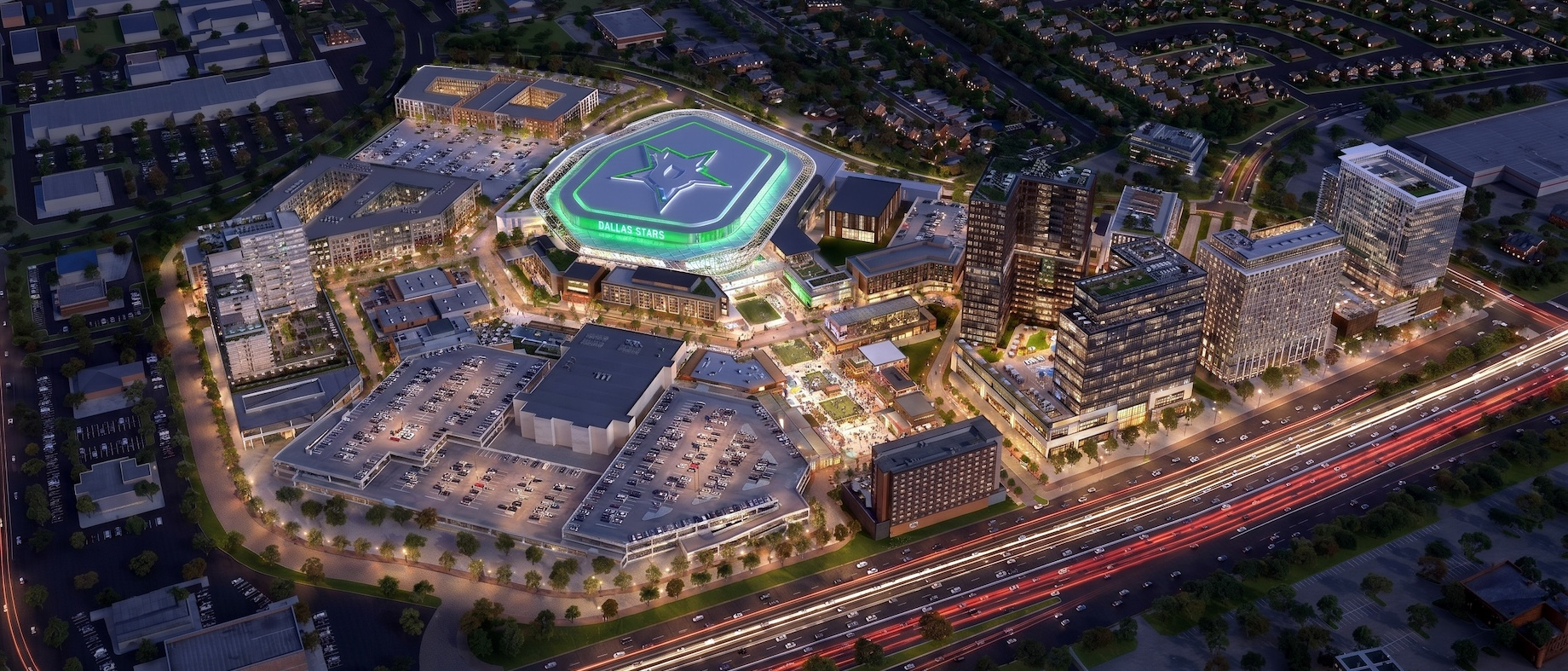
Centennial’s Shops at Willow Bend in Plano, Texas, will transform into a mixed-use community called The Bend with a proposed sports and entertainment district that would be anchored by a multipurpose arena for the NHL’s Dallas Stars. The deal awaits a special Plano election that would approve several venue-specific taxes. Image courtesy of Centennial
You’ve just announced a value-add revenue deal with Lamar Advertising to install digital billboards next to MainPlace mall in Santa Ana, California. How does this deal work?
MainPlace has two existing pylons, each with two freeway-facing, back-to-back digital faces for a total of four digital boards. The boards were previously restricted to on-premises content, but we’ve partnered with local and state authorities to create a pathway to expand board content to businesses and advertisers beyond the MainPlace site. With that in place, subject to final permitting and a signed operating agreement with Santa Ana, we’ve secured a multimillion-dollar revenue agreement with Lamar. Once converted, these boards, which will be located at the junction of Interstate 5 and CA-22, will rank as some of the most desirable outdoor-advertising assets in Southern California.
We’ve identified additional sites in our portfolio for similar revenue scenarios, but the process is complex and time-consuming and bespoke to each site, municipality and state. Where these make sense, we’ll partner with Lamar to leverage their national presence alongside Centennial’s in-house teams of value-creation experts. The real opportunity isn’t simply installing a billboard; it’s recognizing where significant media value can be created at a real estate asset by using experience, relationships and persistence to bring that vision to fruition.
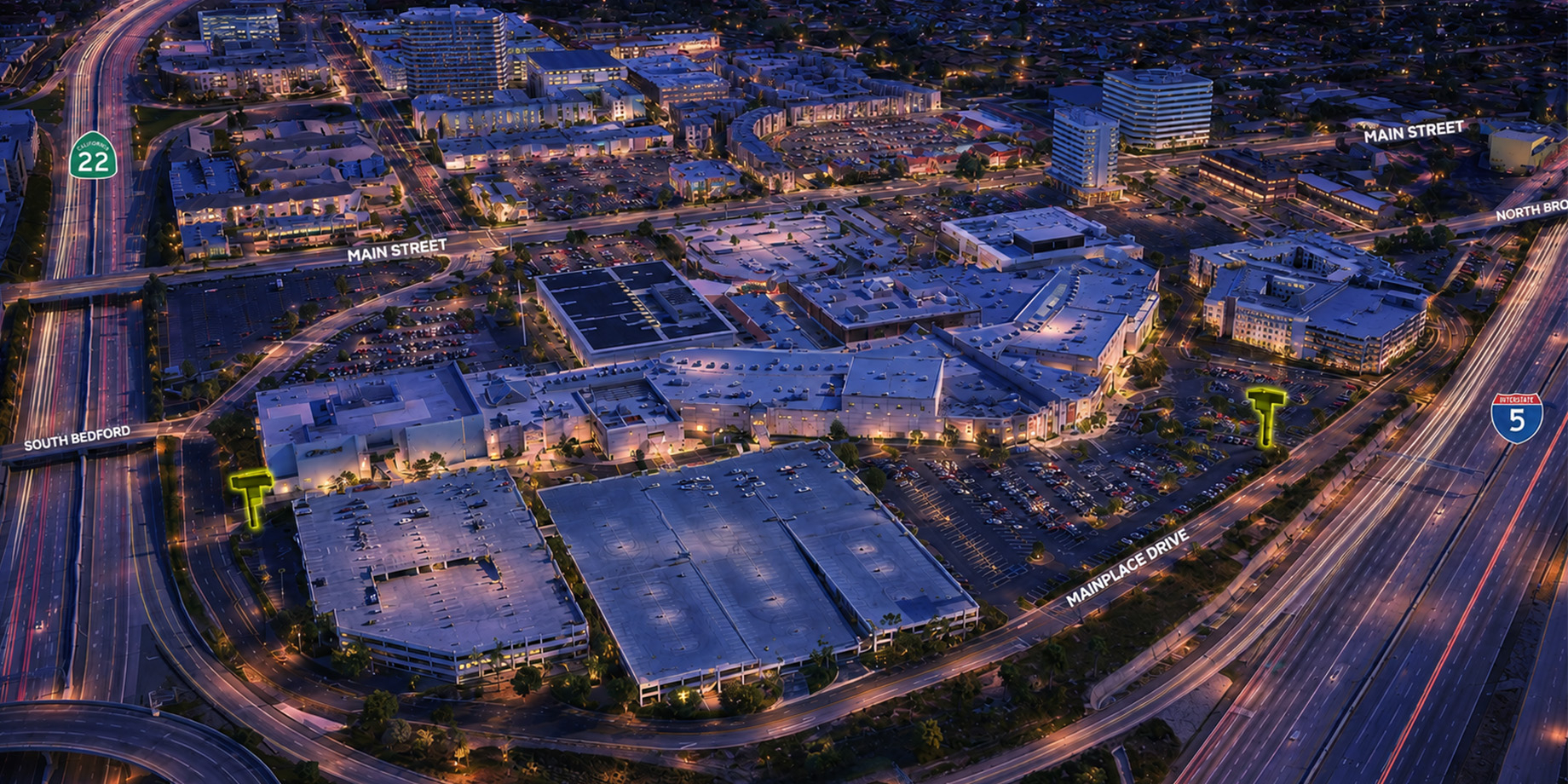
Lamar Advertising and Centennial will put up and operate digital billboards, highlighted in yellow above, at Centennial’s MainPlace mall in Santa Ana, California. Image courtesy Centennial
You’re an Australian native. What are some of the differences between Australian and U.S. centers?
I was just on an ICSC panel this morning, and we talked about this very thing. When I came to the U.S. 30 years ago, doing the shopping meant going to the mall to buy a pair of jeans, then stopping at the bank, then maybe at the pharmacy, then driving to the grocery store. You’d have to make four or five stops before you finished. In Australia, I grew up going to shopping centers where you could take care of all of those things in one trip. But now, what’s happened with repurposing real estate in the U.S., especially on the retail side, is more medical, grocery, entertainment and other uses going into centers. That kind of convenience has become essential as Americans find themselves more and more time strapped. At the same time, Australia has grown more heavily influenced by the maturing of American retail and its many strong brands.
Any plans to incorporate some of your Australian culture into Centennial as CEO?
[Laughs] There would be a revolt if I did that. Everybody, how about Vegemite sandwiches for lunch?
Your thoughts on this year’s ICSC LAS VEGAS?
It’s been busy! The activity level has been tremendous. With all that is going on economically with the high gas prices and other challenges, the level of enthusiasm and confidence in deal-making is encouraging for us and the industry.