The Short Version
- Established Asian retail brands are expanding into the U.S. to sustain growth as competition intensifies and consumer spending slows in parts of Asia.
- Retailers like Miniso, Daiso and Chagee are entering the market with capital, proven concepts and store-rollout plans.
- To succeed in the U.S., they are adapting store sizes, merchandising and marketing strategies to match local shopping patterns and real estate formats and build awareness.
Established Asian Retailers Are Turning to the U.S. To Keep Growing
Asian retail brands are accelerating their expansions into the U.S. As consumer spending slows across parts of Asia, companies that once relied on domestic growth are increasingly looking outward. The U.S. — with its scale, spending power and cultural influence — has become a critical next step, not just for growth but also for global validation.
Miniso, known for low-price lifestyle goods and licensed merchandise, was founded in 2013 in Guangzhou, China, and has grown to roughly 8,500 locations globally. The retailer entered the U.S. in 2017, has more than 370 locations there now and plans to open 100 to 115 more this year, according to Miniso USA head of real estate and franchise Shines Shen.
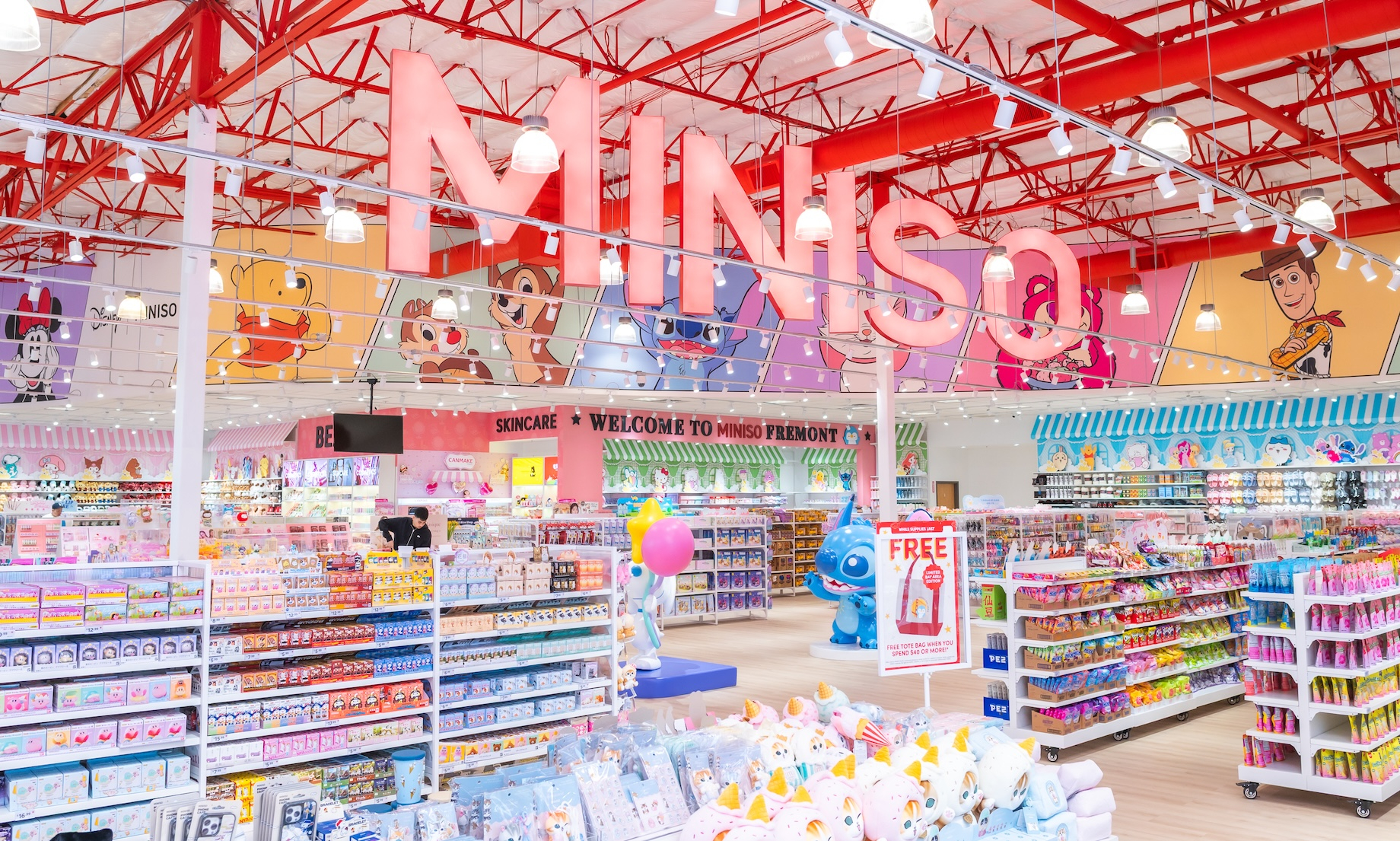
Disney characters and other familiar faces play a key role in Miniso’s U.S. expansion, as the China-based retailer grows its global store count from its current 8,500 stores. Photo courtesy of Miniso
Daiso, a Japanese value retailer, opened 60 stores across seven existing states and 13 new ones in 2025 alone. And Chagee — a premium tea chain founded in 2017 in Yunnan, China — opened its first U.S. location in April 2025 and already has grown to eight stores in the country. Globally, the brand operates more than 6,000 locations, primarily in Asia.
Such examples are not early-stage concepts testing the waters. Many are thriving in Asia’s competitive retail environment and arrive in the U.S. with capital, scale and aggressive expansion timelines. “The U.S. offers an opportunity to replicate proven concepts in a market with higher profitability potential,” said Colliers Retail Services national research manager Nicole Larson.
At the same time, U.S. consumers, particularly younger ones, are increasingly comfortable with Asian brands, influenced by global platforms like TikTok and the growing reach of cultural exports like anime and K-pop. That familiarity is lowering the barrier to entry, Larson said.
Miniso: Adapting Store Size and Merchandising for the U.S. Market
Miniso’s U.S. expansion illustrates not only the opportunity that the U.S. presents but also the adjustment required to make growth there work. When the company entered the U.S. in April 2017 in Old Pasadena, a 22-block downtown district in California, it brought the model that had brought the retailer success across Asia: smaller stores, dense shelves and a focus on low-price impulse buys. Back in Asia, “we were originally only in enclosed shopping malls or on the street,” said Shen. In the U.S., that approach produced friction. The smaller stores, often around 3,000 square feet, struggled to stand out in larger shopping centers. What worked in dense urban environments overseas felt easy to miss in the spread-out U.S. landscape.
So Miniso went big. “In the U.S., you can just blow out the size of the store because we’ve got land and overbuilt shopping centers,” said SRS Real Estate Partners executive vice president and principal Don Edrington, who works with Miniso and other international brands entering the U.S., as does Colliers.

Miniso opened in Fremont, California’s Pacific Commons on Jan. 17. The retailer’s early U.S. stores were small, around 3,000 square feet, which worked in Asia retail settings. This Pacific Commons location, at more than 12,000 square feet, reflects the retailer’s shift toward larger stores that are visible in U.S. retail settings. Photo courtesy of Miniso
Miniso began studying where U.S. retailers like Ulta Beauty, T.J.Maxx and Burlington locate and how their stores function, said Shen. After successful tests of 7,000- and 10,000-square-foot stores in 2025, Miniso now targets 10,000 to 12,000 square feet for power centers and 6,000 to 8,000 square feet for other spaces, Shen said. The larger footprint also allows space to suit U.S. consumers: wider aisles, more room to browse and stronger visual merchandising.
At the same time, the brand itself has evolved. The once straightforward value retailer now leans heavily on licensed merchandise of globally recognized brands from Disney to Hello Kitty. Thus, its stores feel more like pop culture destinations than traditional discount concepts.
The combination of space, experience and product mix translates into traffic, and that demand has supported larger, more prominent locations, including its roughly 9,600-square-foot Times Square flagship in New York City, which opened in 2023. The opening drew massive crowds. “I’ve never seen that many people in my life, maybe other than a music festival,” Shen said. The store generated nearly $80,000 in sales on opening day, setting a single-day sales record across Miniso’s global fleet, according to the company.
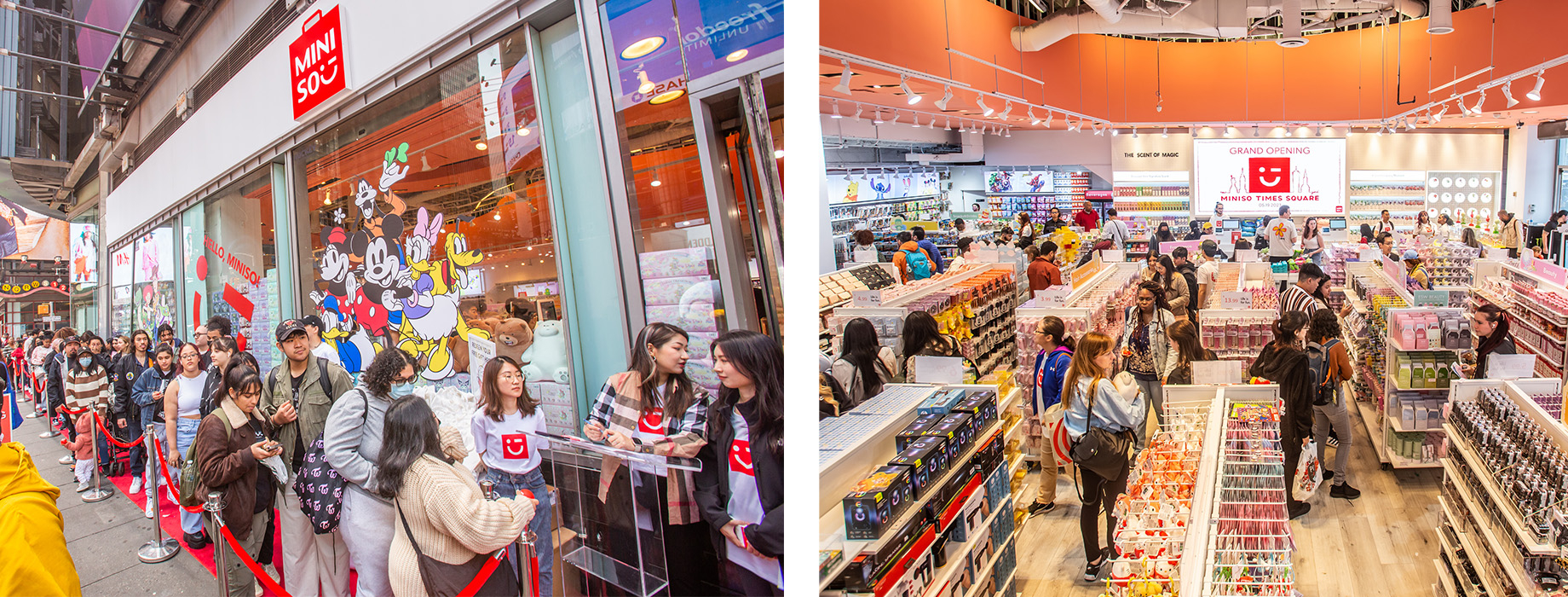
Lines stretched down the block at the 2023 opening of Miniso’s Times Square flagship in New York City. The store generated nearly $80,000 in sales on opening day, setting a single-day sales record across Miniso’s global fleet. Photos courtesy of Miniso
Chagee: Building Brand Awareness in the U.S.
While Miniso drew on the U.S. audience’s familiarity with its product mix and licensed merchandise, tea house Chagee is building awareness among U.S. consumers from the ground up. “People are still learning how to say the name,” said Chagee North America chief commercial officer Emily Chang.
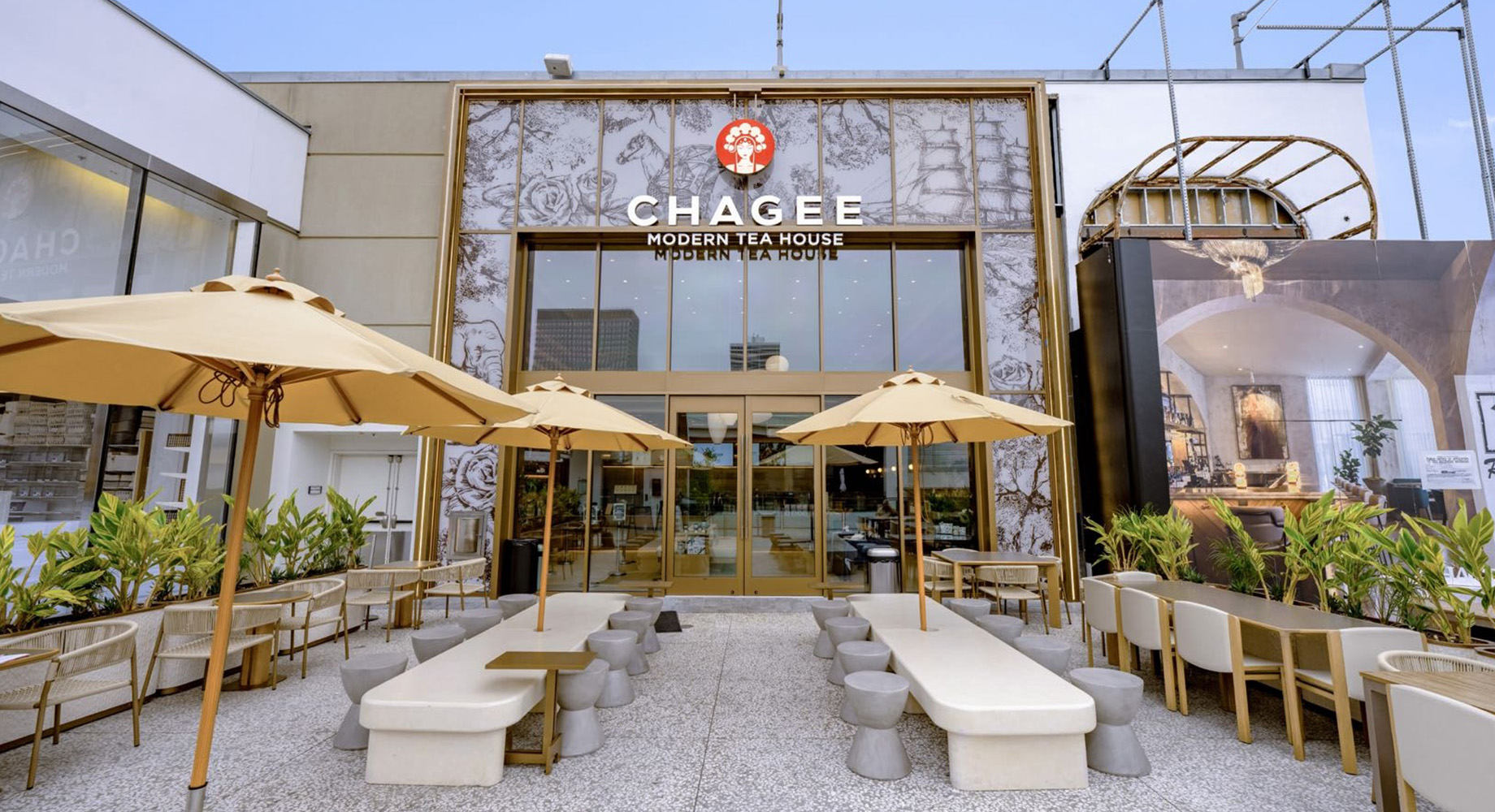
Chagee frames tea drinking as a shared experience, and its format prioritizes gathering over quick customer turnover. Chagee’s first U.S. store opened in Los Angeles’ Westfield Century City in April 2025, and the chain now has eight U.S. stores nationwide. Photo courtesy of Chagee
A current partnership with Grammy-winning singer Laufey positions the brand within a broader cultural conversation, as both aim to bring heritage into contemporary lifestyle — jazz for Laufey and tea and the tea house experience for Chagee — Chang said. The campaign also introduces the U.S. audience to the brand. In social media posts, for example, Laufey shows viewers how to pronounce Chagee. And in-store, certain purchases make available a QR code to enter for tickets to a private concert, turning a visit into ongoing engagement.
As Chagee expands in the U.S., omnichannel marketing efforts featuring Grammy-winning singer Laufey appear in brick-and-mortar locations like this shop in Ontario, California, which opened in March. Photo courtesy of Chagee
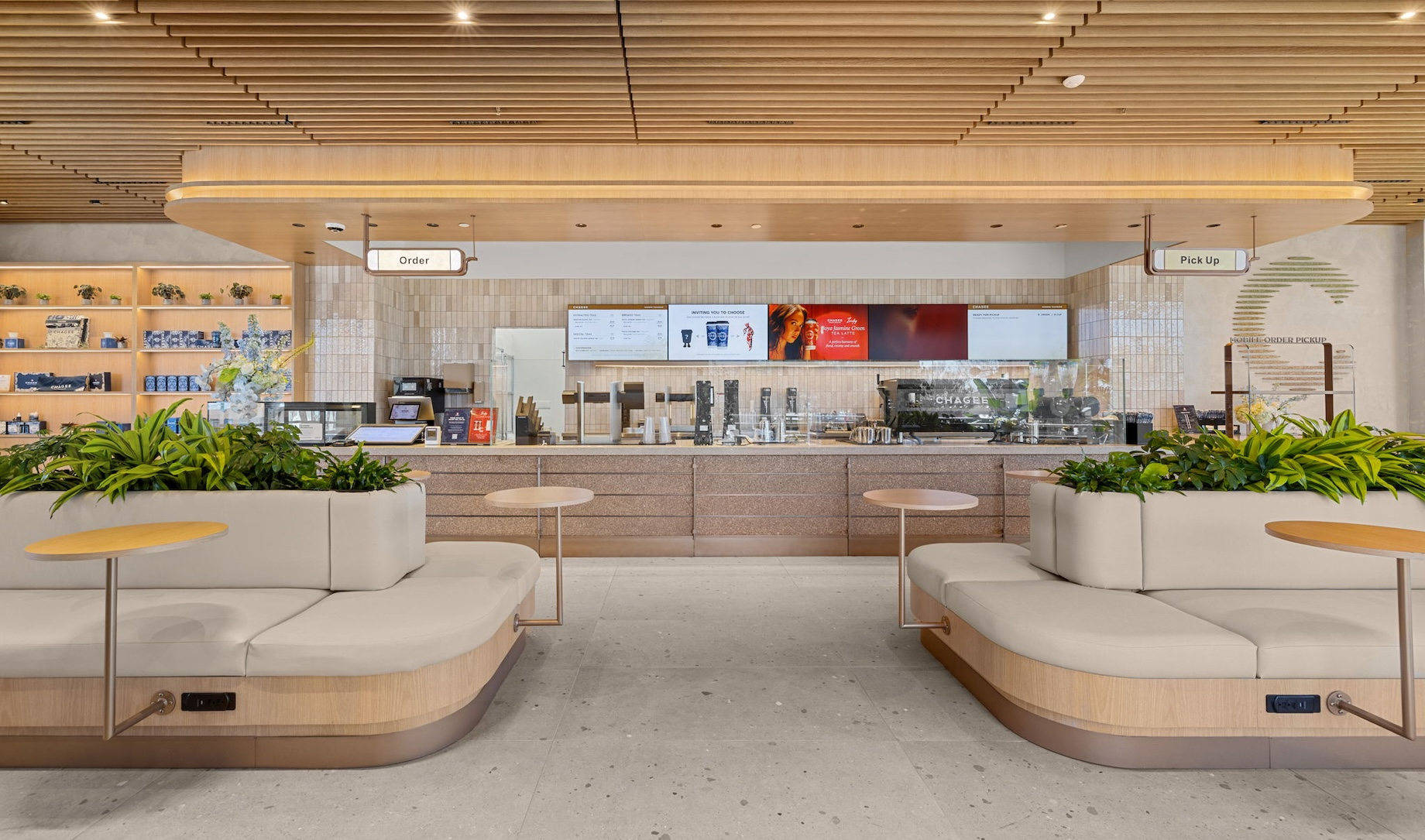
The stores’ aesthetics also communicate the brand’s identity to customers. Chagee refers to its locations as tea houses, and they are built accordingly, said Chang. Stores are designed for social groups rather than solo workers, and seating encourages people not only to gather but also to stay. Many include patios or indoor-outdoor layouts, and some are large enough to support programming like evening tea service. “You don’t see a lot of people going there to work,” Chang said. “It really is a community gathering place.”
Dwell time is a focus. The company still is testing prototypes from smaller tea houses to flagship locations, but the eight stores it has opened in the U.S. so far are larger than a typical beverage concept. “If you’re a modern tea house, you’ve got to be a house,” she said. “You've got to be a place where you can open the doors and welcome people to come together as individuals and as a community.”
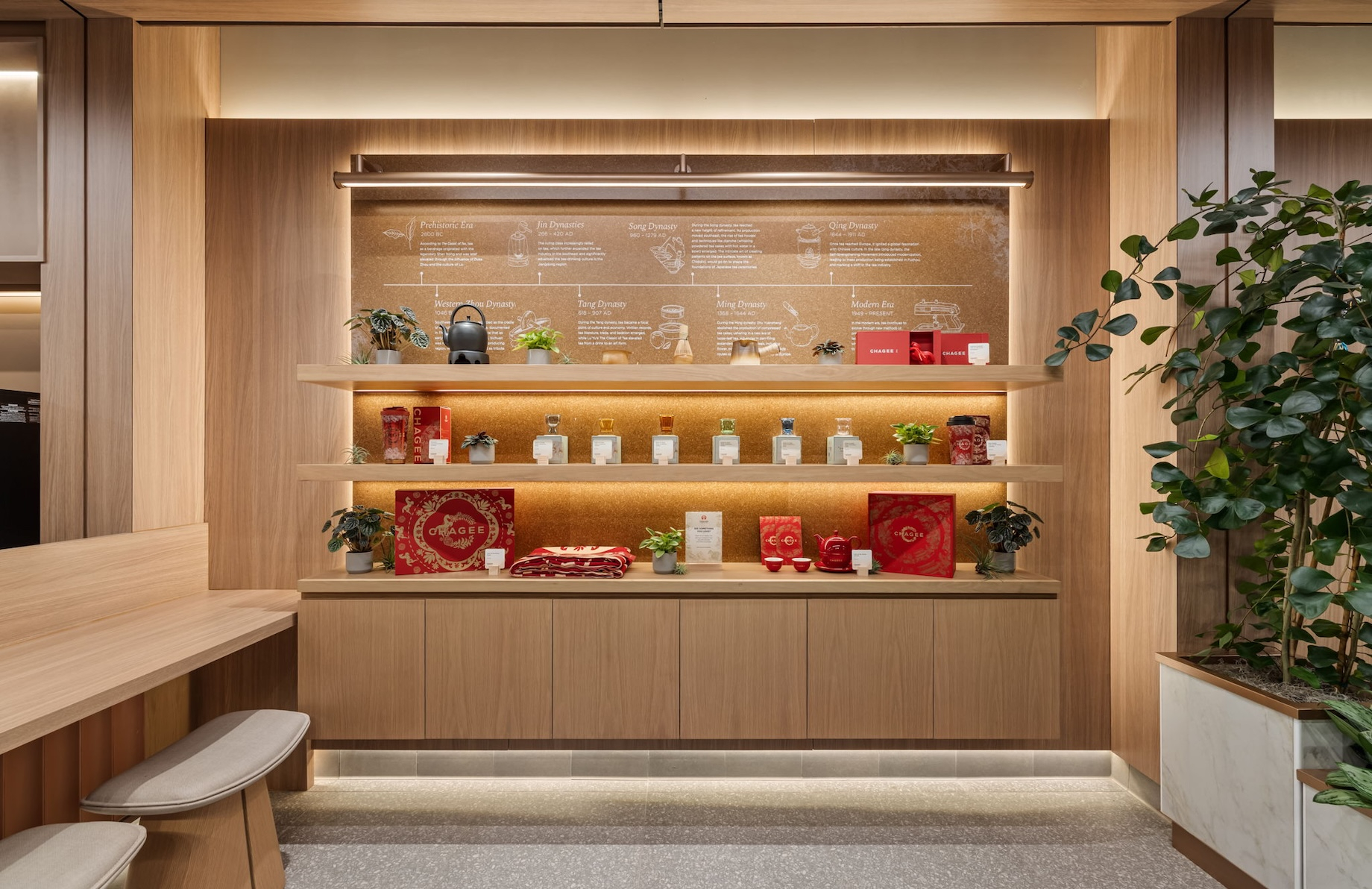
At Chagee’s Long Beach, California, tea house, which opened in February, warm wood, soft lighting and built-in seating create a modern interpretation of a traditional tea house. Photo above and at top courtesy of Chagee
Location strategy follows the same logic. “We are a destination in itself, rather than a food-and-beverage pit stop,” Chang said. For now, the company is focused on the West Coast. “In the short term, we’ll continue expanding across the West Coast, but our goal is to establish ourselves as a global brand,” Chang said.
How Landlords Evaluate and Lease to New-to-the-U.S. Brands
Many Asian brands follow a similar pattern in their entrances to the U.S.: a high-profile flagship, followed by clustering in key regions, often Southern California or the Northeast, before expanding nationally. “They’ll enter through high-traffic suburban malls or urban cores,” said SRS Real Estate Partners senior vice president and principal Dawn Greiner. “Then once they get recognition, they start peeling off into other parts of the country.”
But getting those first deals done isn’t always straightforward. New-to-the-U.S. brands may dream of rolling out into top-tier centers, but those landlords need to be convinced. “We’re seeing larger security deposits for international brands,” Edrington said. “Landlords don’t want to chase somebody in Hong Kong or Europe for a lease guarantee, so they’re requiring bigger deposits upfront.”
At the same time, the upside is hard to ignore. “These brands move quickly, and they create a lot of excitement,” Edrington said. “They can drive traffic in a way that a lot of traditional tenants don’t.”
By Rebecca Meiser
Contributor, Commerce + Communities Today