The Short Version
- Tecovas’ first New York City store in SoHo occupies a restored 1892 cast-iron building designed as an immersive retail destination.
- The 4,500-square-foot location prioritizes comfort, customization and social amenities over traditional transactional layouts.
- IA Interior Architects tailored the open design to the SoHo market while maintaining consistency across Tecovas’ expanding store portfolio.
- The store reflects the brand’s experience-led brick-and-mortar retail offering as demand for cowboy boots expands nationwide.
Why Tecovas’ First New York Store Is More Than a Flagship
When Tecovas opened its first New York City store in SoHo in August, the Western footwear and apparel brand wasn’t just planting a flag in one of the country’s most competitive retail neighborhoods — it was making a calculated bet on how physical retail performs when hospitality, heritage and real estate strategy align. Housed in an 1892 cast-iron building, the 4,500-square-foot outpost is Tecovas’ 50th location and its largest store to date.
Founded online in 2015, Tecovas opened its first brick-and-mortar store in Austin, Texas, in 2019 and has expanded its physical footprint rapidly in recent years. The retailer opened 10 stores in 2024 and now operates 56 locations nationwide. Other new markets added in 2025 include Detroit; Palm Beach Gardens, Florida; and Sacramento, California. Tecovas plans additional openings, like a second New York location in Brooklyn’s Williamsburg neighborhood, this year.
That expansion comes as demand for cowboy boots rises. The global cowboy boots market is projected to grow from approximately $289.7 million in 2025 to $538.6 million by 2035, according to Future Market Insights, driven by the return of Western-inspired fashion in mainstream culture and the footwear category’s evolution from niche workwear into everyday lifestyle fashion.
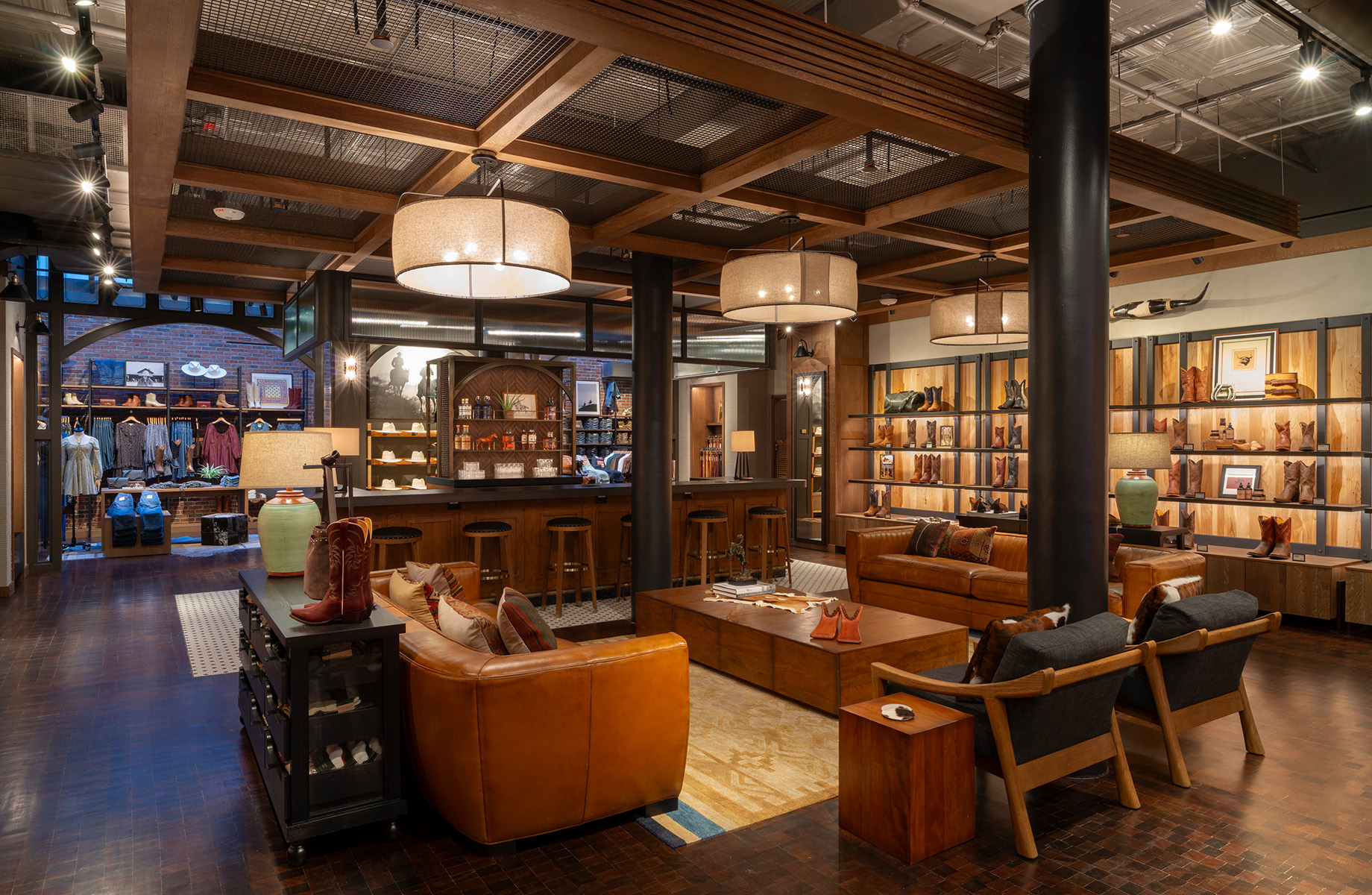
The IA-designed Tecovas’ SoHo location feels more like a curated home than a traditional retail store. Photos above and at top by Adrian Wilson for Cadan Creative
Designing for Comfort, Connection and Repeat Visits
Designed by IA, which is also behind Tecovas’ forthcoming Williamsburg location, the SoHo store reflects the company’s shift from a digitally native brand into a national brick-and-mortar retailer focused on relationship-building rather than quick purchases. “We didn’t want it to feel like a retail space,” said Kyle Jeffery, managing director of IA’s Dallas office. “It almost feels like a curated home. They invite people to come in, have a drink, sit down.”
This emphasis on comfort and a welcoming feel sets the tone for how customers interact with all of Tecovas’ stores, an approach that’s rooted in its “radical hospitality” ethos.
Why Tecovas Chose SoHo — and This Landmark Location
That mindset also shaped Tecovas’ real estate approach for its New York debut. The brand worked with Lantern Real Estate Advisors + Partners to identify a property that could function both as a flagship and as a long-term asset within one of New York’s most resilient retail districts.
Rather than pursuing Broadway frontage, the brand secured a space on Wooster Street, placing the store among SoHo’s dense mix of global brands and independent boutiques while offering a calmer setting better suited to experiential retail.
The building itself played a central role in the decision. Original cast-iron columns, deep floor plates and rear skylights provide flexibility, supporting Tecovas’ service-driven format without forcing a conventional layout. “The drive was just to get in the heart of SoHo, where fashion is really key and each store has such a unique offering,” Jeffery said. “This was an opportunity for Tecovas to really shine.”
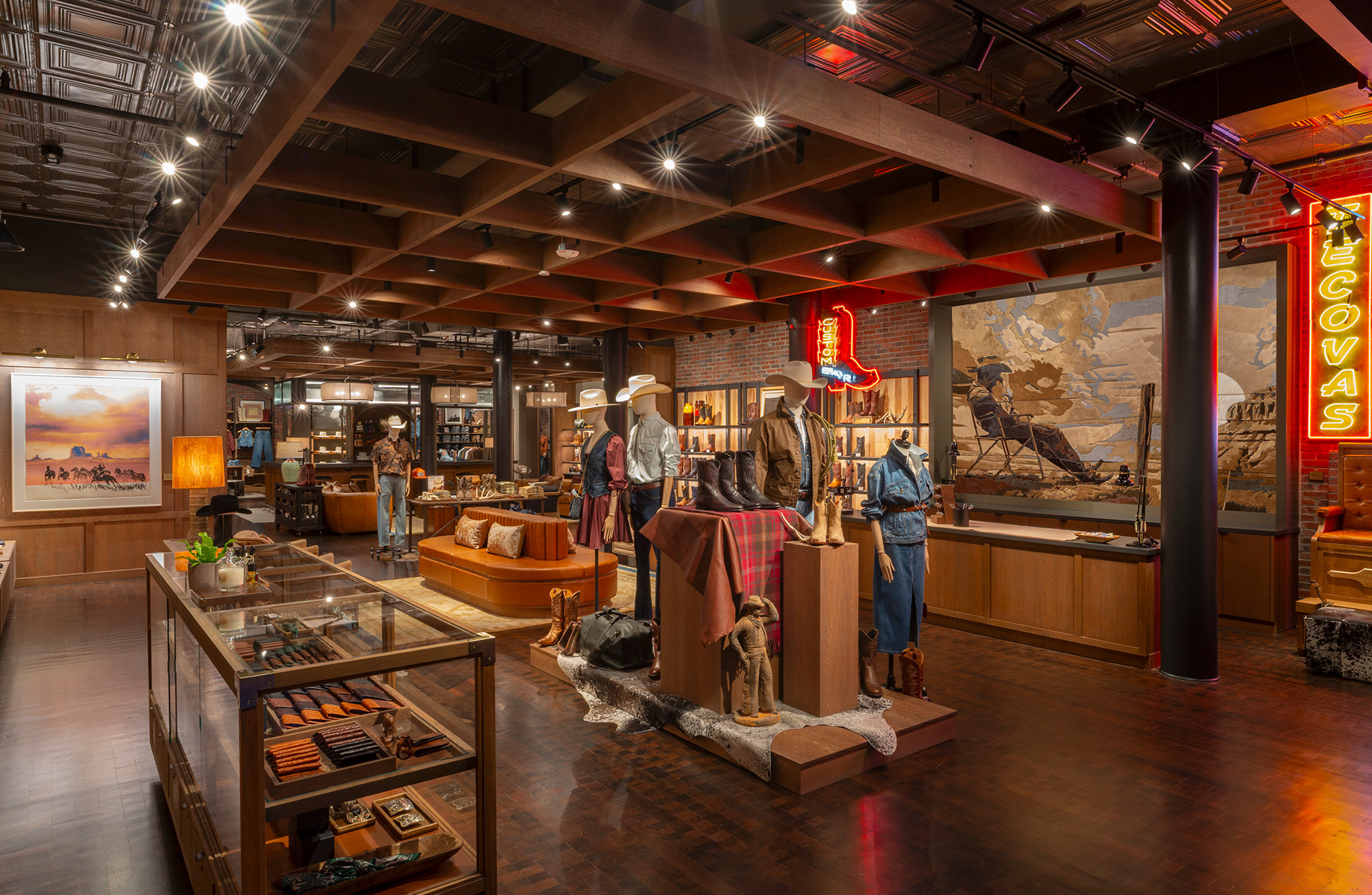
The store unfolds as a series of open zones designed to draw visitors into the space and foster a sense of discovery. Photo by Adrian Wilson for Cadan Creative
Revealing the Building’s Historical Character
Although the building carries historical pedigree, the interior had been stripped down during prior renovations, leaving a largely white-painted shell.
Rather than layering in decorative replicas, the design team focused on uncovering what remained. They exposed brick walls, restored columns, refinished flooring and revived ceiling details, allowing the architecture to shape the store’s identity.
Preservation requirements — including an untouchable historic storefront — limited their ability to make a statement on the exterior, heightening the importance of creating impact inside the space. “It’s pretty remarkable that it feels when you walk in there that it’s always been there,” Jeffery said.
A Layout Built To Encourage Dwell Time and Exploration
The SoHo store’s organization supports exploration and lingering rather than quick transactions. Instead of a traditional merchandising run, the layout unfolds through a series of open zones that feel more like rooms in a home than departments in a store.
The front of the space introduces visitors to Tecovas’ craftsmanship and customization services, while a central seating area anchors the store, providing a place to pause and socialize. Toward the rear, natural light from restored skylights draws shoppers into a relaxed apparel zone, reinforcing the sense of discovery.
According to Jeffery, the retailer has observed customers relaxing or having drinks on their first visits, then returning later to make purchases. The store’s design intentionally encourages this behavior. “It’s a very low-pressure shopping environment,” he said.
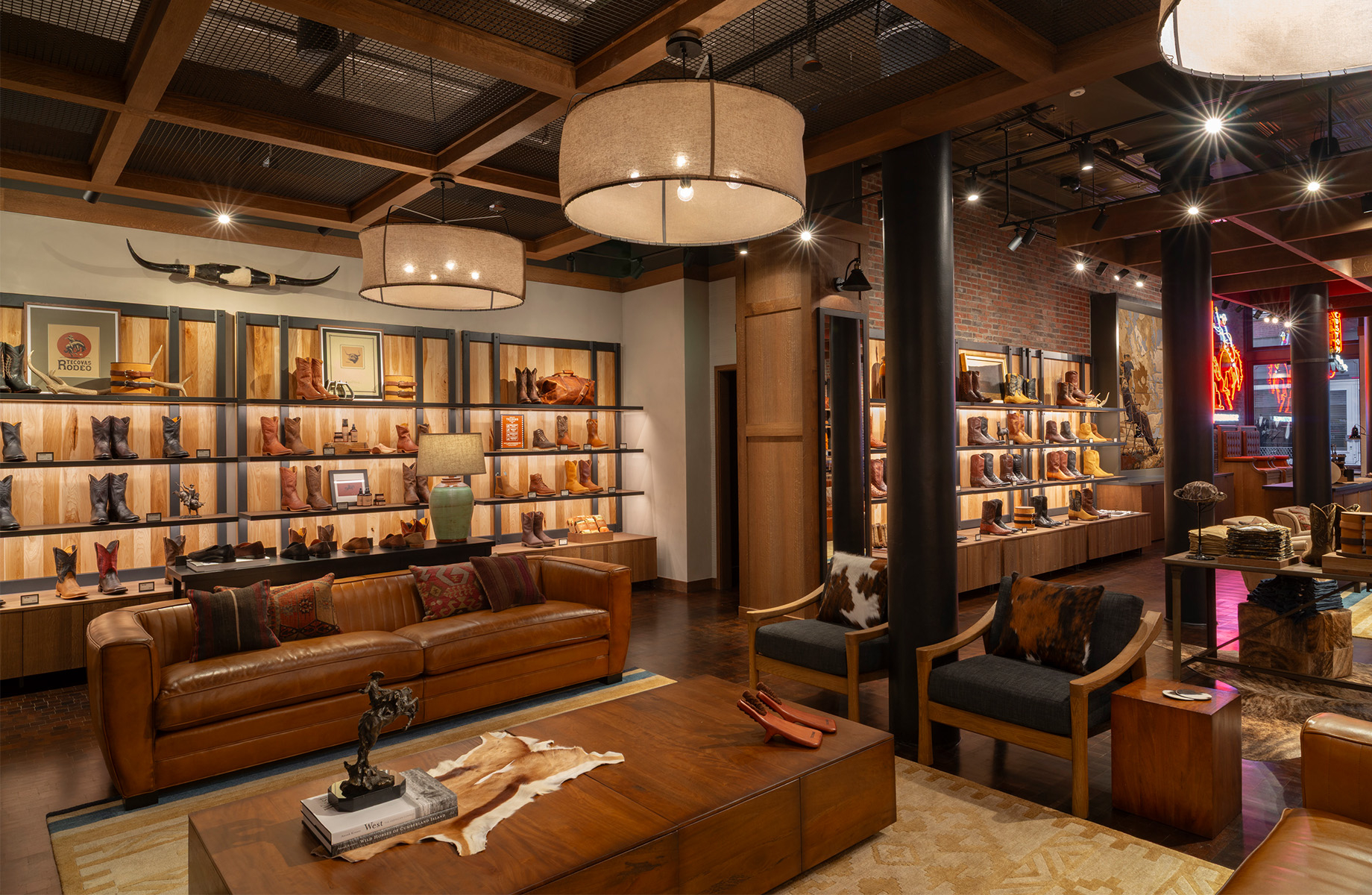
A central seating area anchors the store, encouraging visitors to pause, socialize and spend time in the space. Photo by Adrian Wilson for Cadan Creative
The Bar as a Strategic Retail Amenity
The store’s custom-built, full-service bar reinforces the location as a destination rather than a transactional stop. Incorporating a bar into a retail environment required navigating liquor licensing, health department regulations and operational considerations uncommon in most store buildouts. Thus, it was a significant real estate and planning decision that is applied selectively across Tecovas’ portfolio rather than built into every store format.
Its placement was equally strategic. Rather than positioning the bar at the front, the team located it farther back to draw customers through the store while keeping the social component integrated into the overall experience.
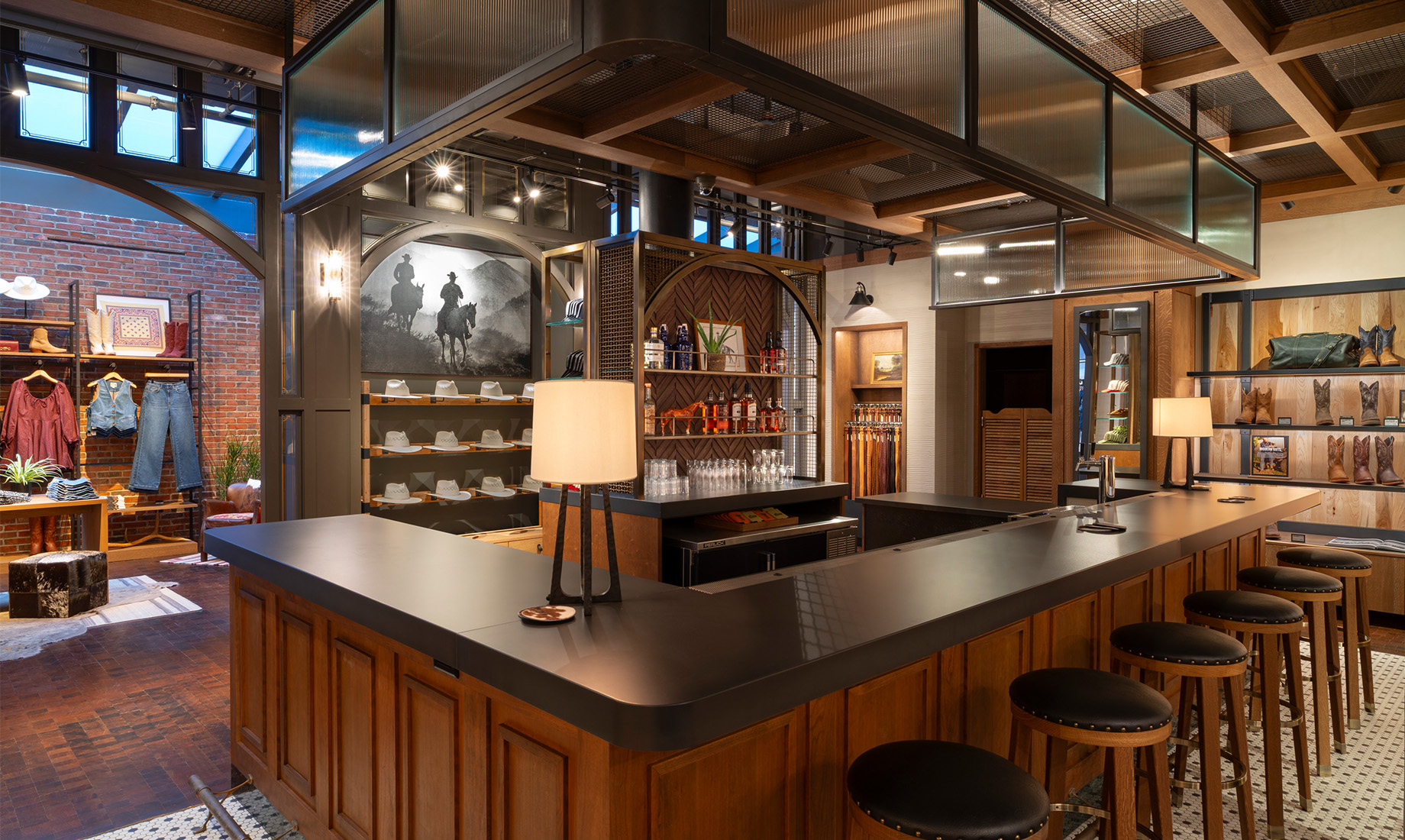
The custom-built bar reinforces the store’s destination feel, while restored skylights bring natural light into the apparel area. Photo by Adrian Wilson for Cadan Creative
Customization and Craft at the Center of the Store Experience
Customization of the goods available for purchase anchors Tecovas’ in-store offerings, with dedicated areas for boot shine, personalization and hat services.
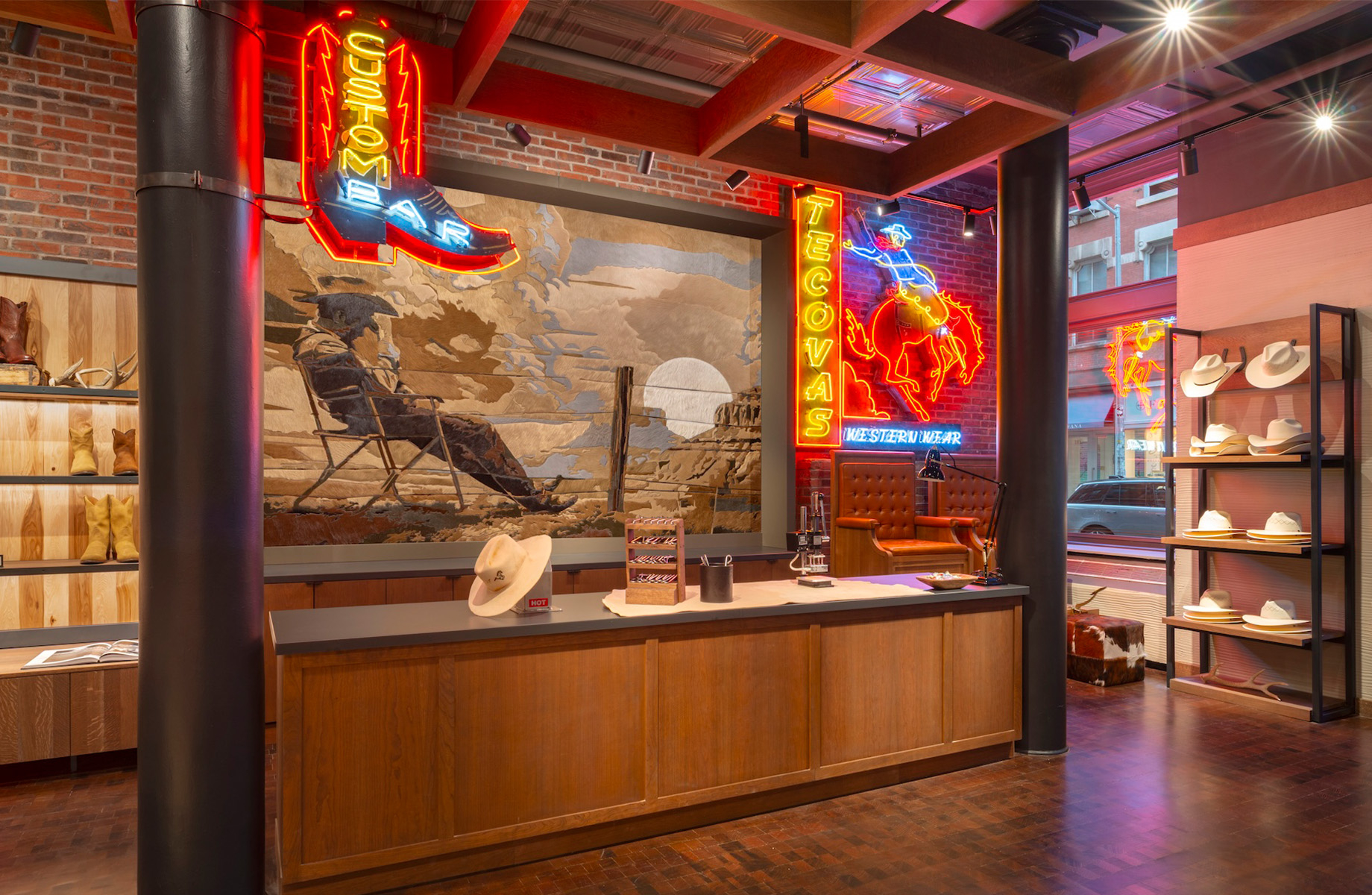
Neon signage highlights the boot- and hat-customization zone near the front of the store. Photo by Adrian Wilson for Cadan Creative
The team designed or selected many furnishings and finishes specifically for the space, incorporating work from local artisans across custom rugs, seating, neon signage and feature installations like the hide wall behind the bar. They enhanced the fitting rooms with wood paneling and artwork, while Western influences appear in selective moments, including saloon-style doors and framed millwork archways.
“Most of the furniture is custom,” Jeffery said. “We don’t shift it too much per store, but here, there’s a really large, circular leather couch that’s a centerpiece that we wanted to be a 360 where people can sit all the way around and enjoy the space.”
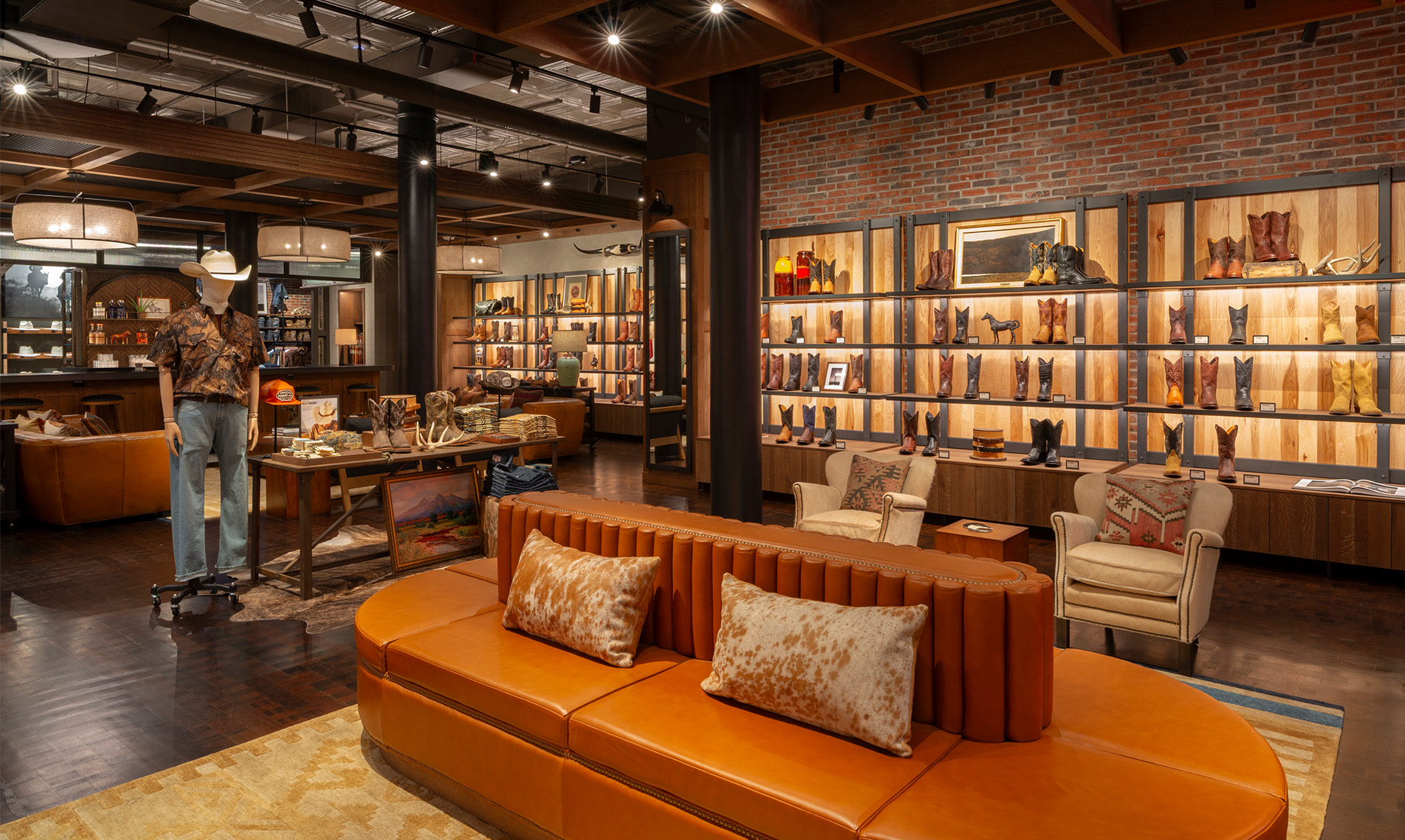
A circular leather sofa serves as a custom centerpiece, offering a gathering spot at the heart of the store. Photo by Adrian Wilson for Cadan Creative
A Model Built for Long-Term Engagement
While Tecovas maintains consistent brand elements across locations, each store is designed to reflect its market and setting. “Each store feels the same, but they have different personalities,” Jeffery said. “Like a sibling that has its own character.”
For Tecovas, the SoHo location serves less as a spectacle and more as a blueprint for how experience-led design and real estate strategy can work together to drive performance. As Tecovas continues to scale nationally, that balance remains central to its physical retail strategy. “You’ve got to stay true to who you are as a brand,” Jeffery said. “Every space should feel familiar but special in its own way.”
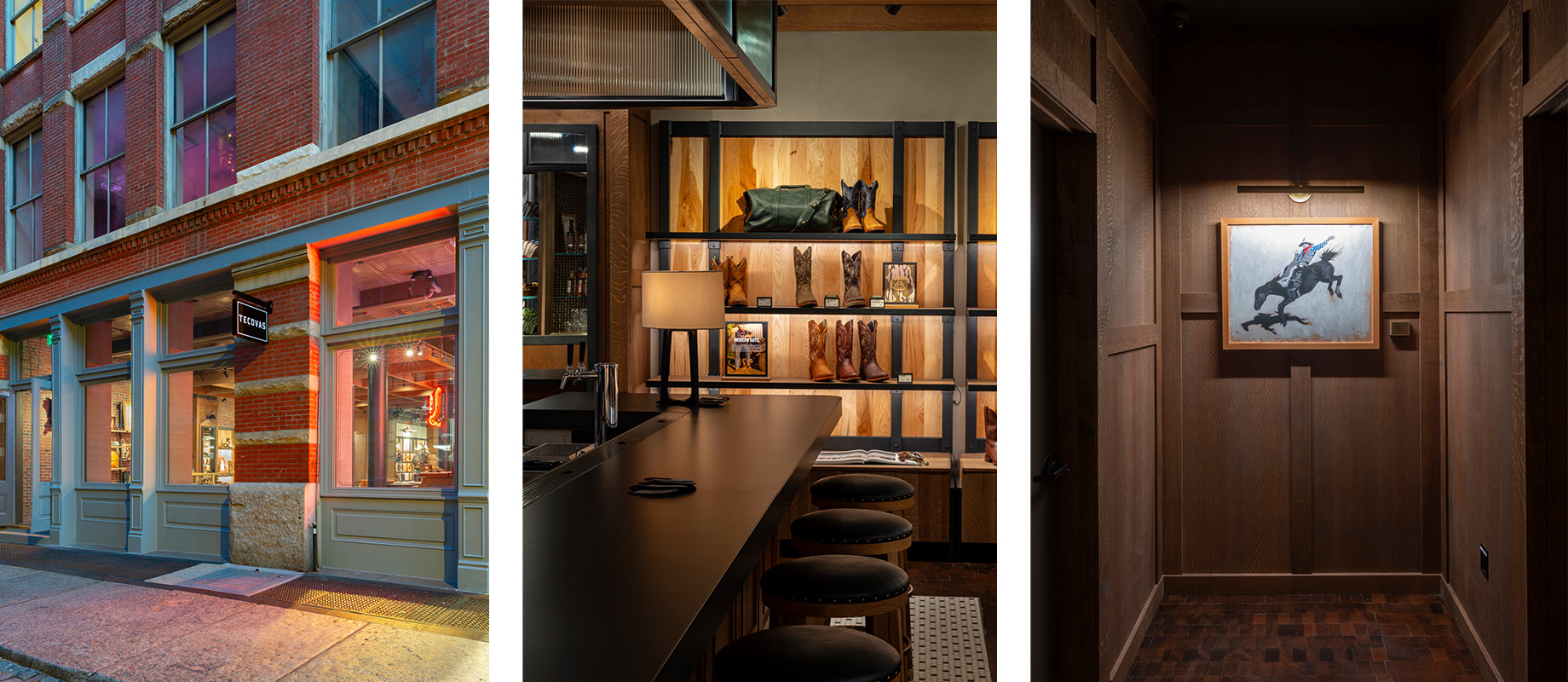
Photos by Adrian Wilson for Cadan Creative
By Katie Kervin
Managing Editor, Commerce + Communities Today