The Short Version
- After a hot streak, overexpansion and a fall from favor, frozen yogurt brands are returning to growth with more disciplined franchise and real estate strategies.
- Concepts like 16 Handles and Yogurtland are targeting high-income trade areas, grocery-anchored centers and select growth markets.
- Foot traffic suggests renewed consumer interest, as brands focus on unit economics, premium experiences and sustainable expansion.
Demand for a Frozen Yogurt Resurgence
After an overexuberant expansion chilled the frozen yogurt fad of yesteryear, demand for healthier frozen dessert options is fueling store growth once again. A few examples of longstanding, reinvigorated and reimagined brands:
- TCBY, arguably the poster child of the former froyo rage, is generating fanfare amid new corporate ownership and a handful of U.S. franchise openings over the past two years. In November, a TCBY franchise returned to Oswego, Illinois.
- After closing around 60 stores during the pandemic, self-serve chain Yogurtland hired franchise-development veterans Chuck Ballard and Shae Schultz in 2024 to build upon its U.S. footprint of roughly 200 locations, some 80% of which are in California.
- Former Wall Street investment banker Neil Hershman purchased self-serve chain 16 Handles in 2022 and is pursuing an ambitious franchise expansion to high-growth states beyond its existing Northeast concentration.
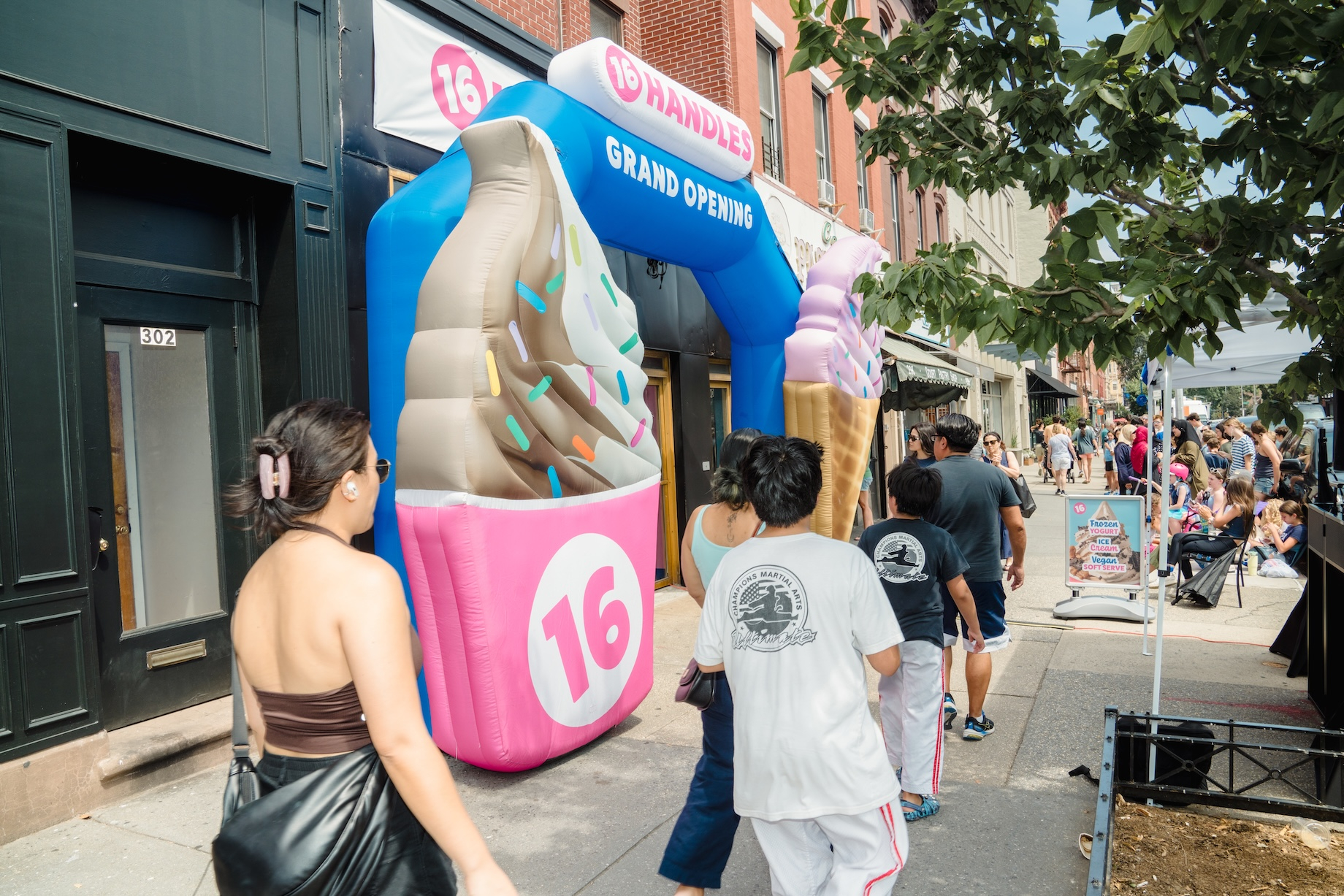
A 16 Handles franchise opened in Brooklyn’s Cobble Hill in July 2025. Photo courtesy of 16 Handles
Those and similar franchising efforts by frozen yogurt concepts like Spain’s Myka Greek Frozen Yogurt, which recently received equity funding from MSC 3 Capital Investments and Go Greek Yogurt, appear well-timed. For 15 of the 23 months starting in January 2024, froyo shop traffic grew faster year over year compared to traffic for the general dessert category, according to Placer.ai. It tracked froyo brands like Yogurtland, Menchie’s and Forever Yogurt, and its broader dessert category covered ice cream, frozen yogurt, doughnuts, cupcakes, smoothies and juice bars and others.
What’s more, froyo brands experienced positive month-over-month traffic growth in all but four of those 23 months, the analytics firm reported. “Consumers are aware of frozen yogurt in terms of the product and its benefits, but a lot of chains over the past several years went stale and stopped growing,” Hershman observed. “But there’s a demand curve now for a more premium product and a better experience where families or friends can hang out.”
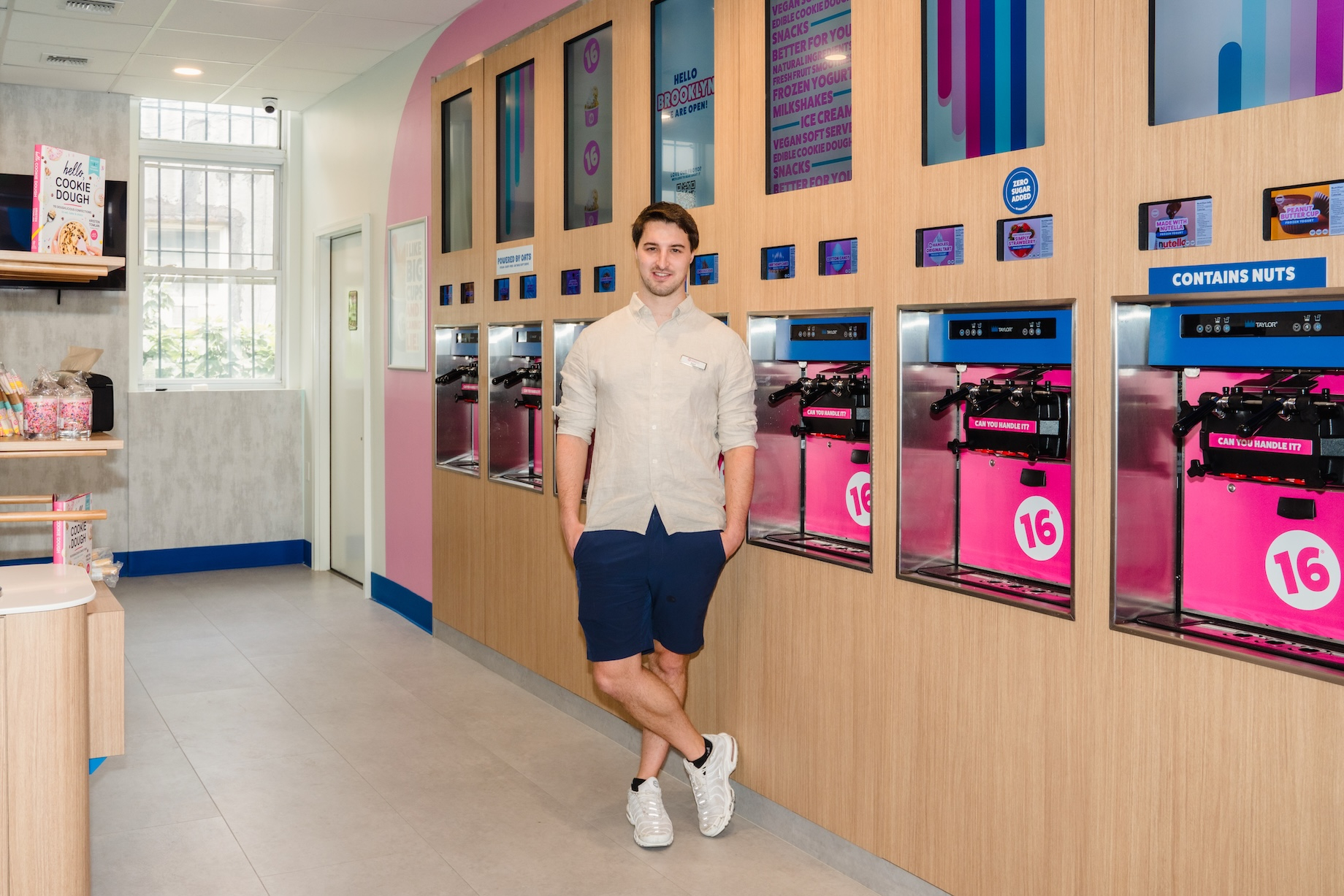
Neil Hershman traded analyzing companies as an investment banker for running franchises and eventually buying 16 Handles in 2022. Photo courtesy of 16 Handles
A Second Life for 16 Handles
He should know. While working on Wall Street, Hershman and his friends often topped off a night of barhopping with a stop at 16 Handles. Later, when he wanted to try his hand at running businesses rather than analyzing them, he explored franchise concepts and chose 16 Handles. But then he met the brand’s founder, who had launched the concept in 2008, and noted a difference in their enthusiasm for the concept. “He was focused on other ventures like a cookie concept he told me about, but I saw opportunity,” Hershman said. “16 Handles had a lot going for it but not much of a focus on operations.”
So Hershman purchased and converted a corporate-owned 16 Handles location in New York City and converted it to a franchise. He doubled its profit by working and learning every job in the operation, shoring up labor management, upgrading point-of-sale technologies and amping up its online and social media presences. He then applied the same formula at five additional corporate locations. When he acquired the entire 16 Handles brand, it boasted 29 franchises, most of them in the Northeast.
A Disciplined Real Estate and Franchise Strategy
Since then, more than a dozen 16 Handles franchise locations have opened, primarily in Arizona, Texas and the Florida suburbs, among other Sunbelt territories. Average annual store sales — $660,000 when Hershman purchased the brand in 2022 — eclipsed $805,000 in 2024, he said. Last March, he brought on franchise development veteran Fred Frey, previously with Shipley Donuts, and he anticipates achieving a pace of 25 annual openings by 2027.
FROM THE C+CT ARCHIVE: Shipley Donuts Is Ready to Grow in the Southeast. What It’s Looking For
A typical 16 Handles location is around 1,500 square feet and sits in centers anchored by grocers or other uses for which operating hours extend beyond 8 or 9 p.m., Hershman said. He added that the company also will consider smaller franchises in alternative settings like malls.
“Our leases tend to be in A-plus locations where there is more disposable income,” he reported. “Our customers see us as an affordable luxury that offers the best bang for their dessert buck that they can visit a few times a week.”
Yogurtland’s Next Growth Markets
Yogurtland — a 20-year-old brand founded by Phillip Chang in Fullerton, California — has similar plans, and a distribution partnership it forged last year will allow it to enlarge its territory by delivering its in-house-crafted froyo to franchisees more efficiently, said Schultz, manager of franchise development. In 2024, Yogurtland relocated its headquarters to suburban Dallas, and now it’s focused on growth in Texas, Colorado, Utah, Arizona and New Jersey. It also has a presence in Louisiana but now has set its sights on the broader Southeast, particularly Florida and Georgia.
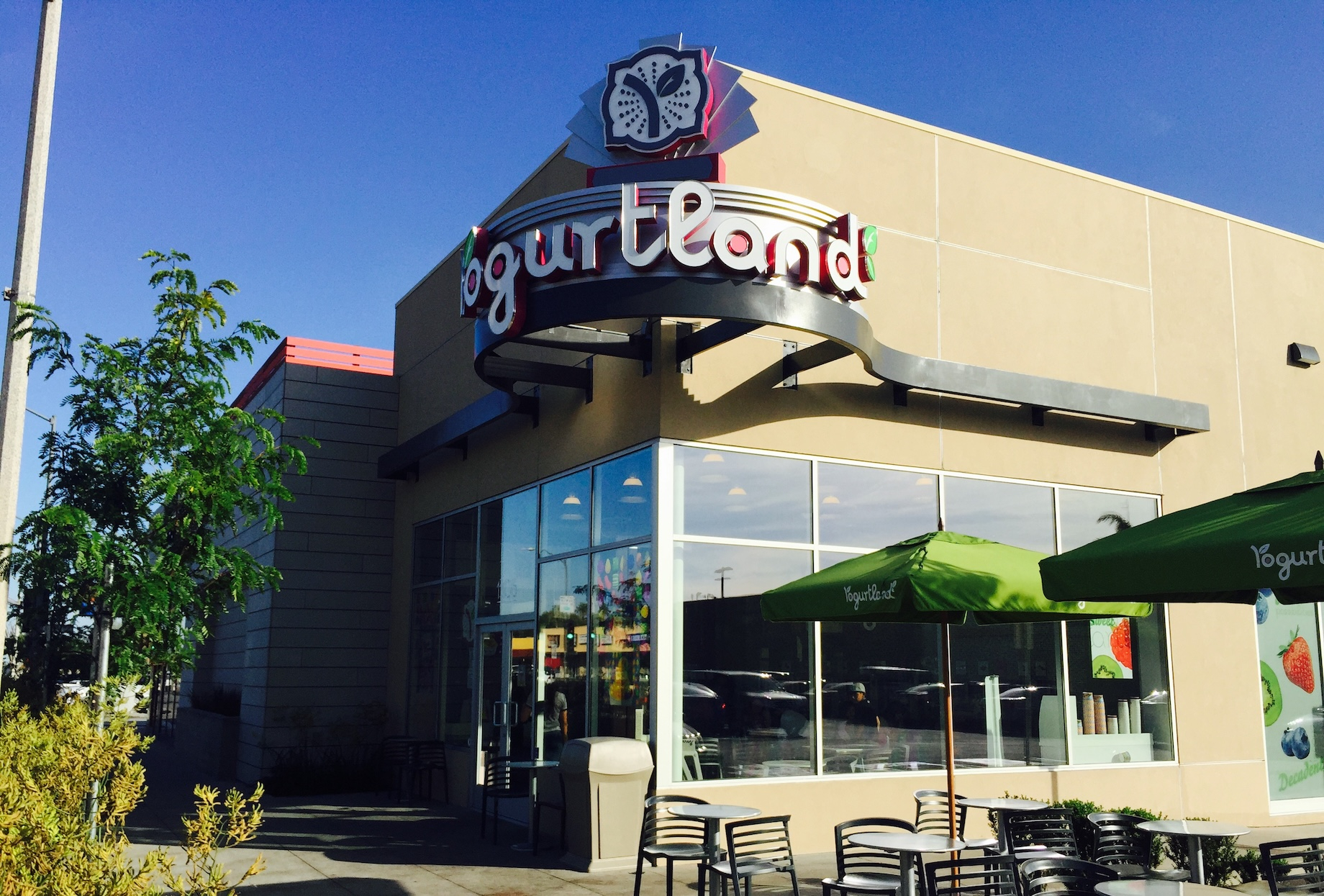
Most Yogurtland locations are in California, including this store in San Fernando, though the company is expanding in other regions of the U.S. Photos above and at top courtesy of Yogurtland
Yogurtland generally seeks 1,000 to 1,400 square feet in grocery-anchored, neighborhood, lifestyle and regional shopping centers, as well as urban storefronts in areas with above-average household income. Three franchise locations opened in 2025, and in December, it announced it had reached agreements for 13 stores in California, Nevada, Arizona and, for the first time, Idaho. Those deals along with other agreements with new and existing franchisees should translate into 22 store openings in 2026 and fuel openings through 2028, she added.
Prioritizing Unit Economics Over Unit Count
At the same time, Chang wants to see Yogurtland’s average annual revenue per store increase from $875,000 today to $1 million, Schultz reported. But the brand is avoiding the addition of stores just for growth’s sake. “Some of the past yogurt franchises grew too quickly and not very responsibly,” she said. “We look at growth not from how many units we can put on the earth but from how strong each individual unit is.”
Can TCBY Regain Its Footing?
TCBY’s comeback received a lift when Pearl Street Equity bought its parent, Famous Brands International, in 2023. TCBY struggled after selling to private equity in the late 1990s. At its peak, the chain boasted some 3,000 locations globally, but by 2013, 84% had closed, according to press reports. More TCBY stores have closed than have opened over the past few years, according to its 2025 franchise disclosure document, which listed 125 domestic outlets operating at the end of 2024. But along with the Illinois location that reopened in November, a veteran TCBY and Mrs. Fields franchisee in 2024 opened the first store featuring both concepts, at Carolina Place mall in Pineville, North Carolina. The brand also continues to pursue international expansion: In late 2024, it inked an agreement with an existing franchisee to open 10 locations in Qatar over five years.
By Joe Gose
Contributor, Commerce + Communities Today